🧶 Yarn Calculator

Try

Visit our Etsy Shops

Pick a shop to browse. Each one opens on Etsy in a new tab.

Yarn & Materials

Crochet Yarn and Materials: The Complete Buyer's Guide

Crochet yarn guide: choose yarn weight, hook size, fiber and label. Compare cotton and acrylic, swap yarn safely and find the right yarn for your project.

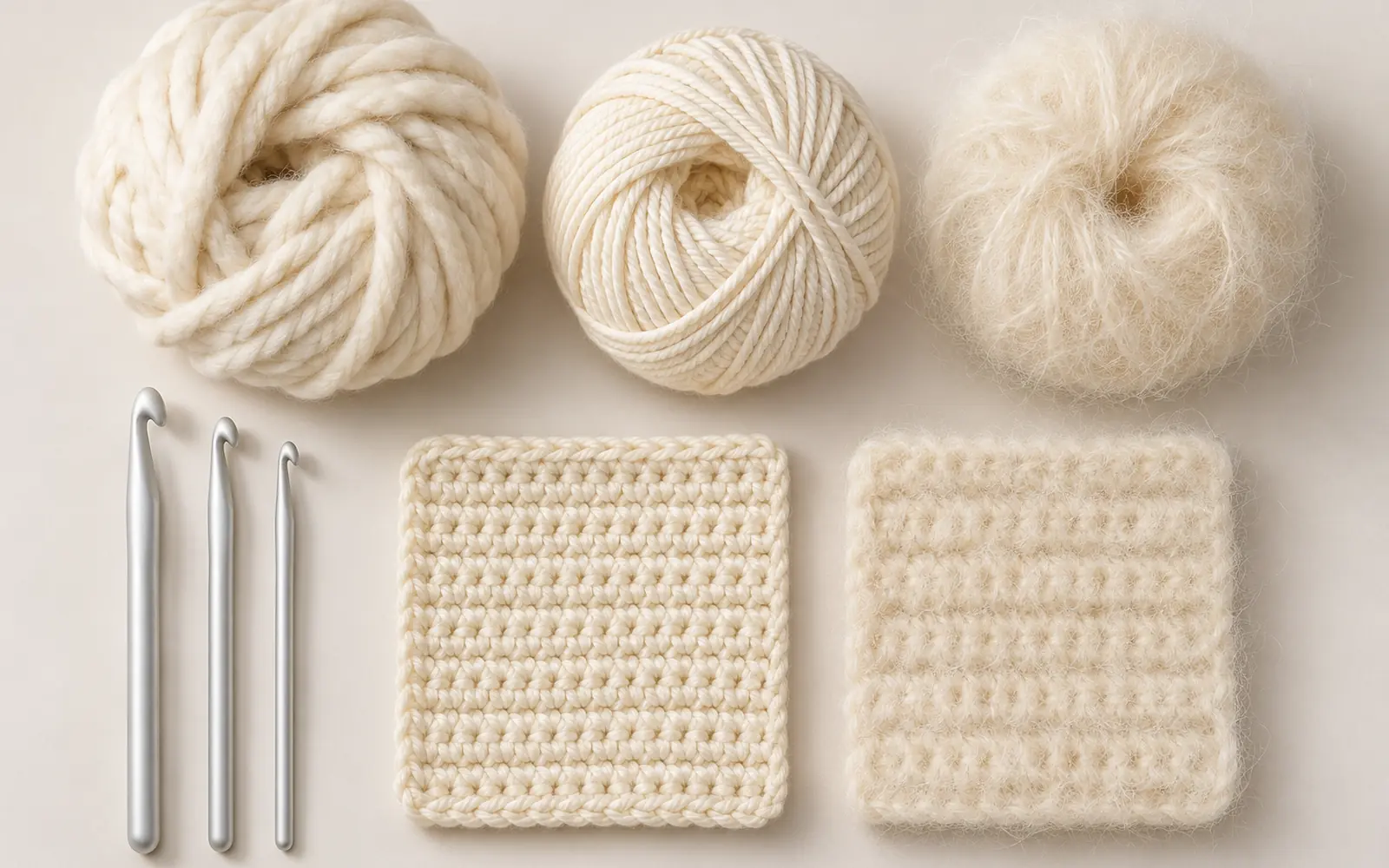
Three cream yarns of different thickness, three aluminum crochet hooks and two cream single crochet swatches, one smooth and one fuzzy, laid flat on an off-white surface
Table of Contents
  1. Start Here: The Four Choices Behind Every Yarn Purchase
  2. Yarn Weight: What the Numbers Mean
  3. Hook Size: Letters, Numbers and Millimeters
  4. Reading a Yarn Label
  5. Worsted Weight: The All-Purpose Choice
  6. DK Weight: Lighter Than Worsted
  7. Fiber: Cotton, Acrylic, Wool and Blends
  8. Swapping Yarn Without Wrecking the Pattern
  9. Yarn for Amigurumi
  10. Yarn for Baby Items
  11. Yarn for Granny Squares
  12. Hooks, Tools and Other Materials
  13. Frequently Asked Questions
  14. What to Read Next

Quick answer: A crochet yarn guide comes down to four choices: weight, fiber, hook size and the label. Pick the weight first, because it sets the hook and the look. Then match the fiber to how the item is used and washed, and read the label for yardage, gauge and dye lot.

You stand in the yarn aisle with a pattern in your hand, and the shelf is a wall of numbers, fiber names and hook sizes. Two skeins can look alike and behave nothing alike, and a wrong guess means a whole project in the wrong yarn.

This page puts the choices in order: weight, hook, label and fiber, then swapping yarn and the best yarn for amigurumi, babies and granny squares. Each section gives the short answer and links to the full guide for that choice.

I buy every skein for a project at once and check the dye lot number on each band. A shade that looks the same on the shelf can show up as a stripe in the finished piece.

Start Here: The Four Choices Behind Every Yarn Purchase

Every crochet yarn purchase comes down to four choices: weight, hook, fiber and label. The sections below take each one in turn, then look at yarn for a few common projects. If you are brand new, see best yarn for beginners for the first skein to buy.

The Four Choices in Order

Choose the weight first, then the hook, then the fiber, and confirm all three on the label.

  1. Weight sets the thickness and the kind of project the yarn suits; the crochet yarn weight guide has the full table.
  2. Hook size follows from the weight and sets how firm the fabric is.
  3. Fiber sets the feel, the drape and how the item is washed.
  4. The label confirms all three and adds yardage and the dye lot.

Weight comes first because the other choices depend on it, and each choice has its own section below. Skipping a step can leave a blanket too small or too stiff.

A Starter Kit for New Crocheters

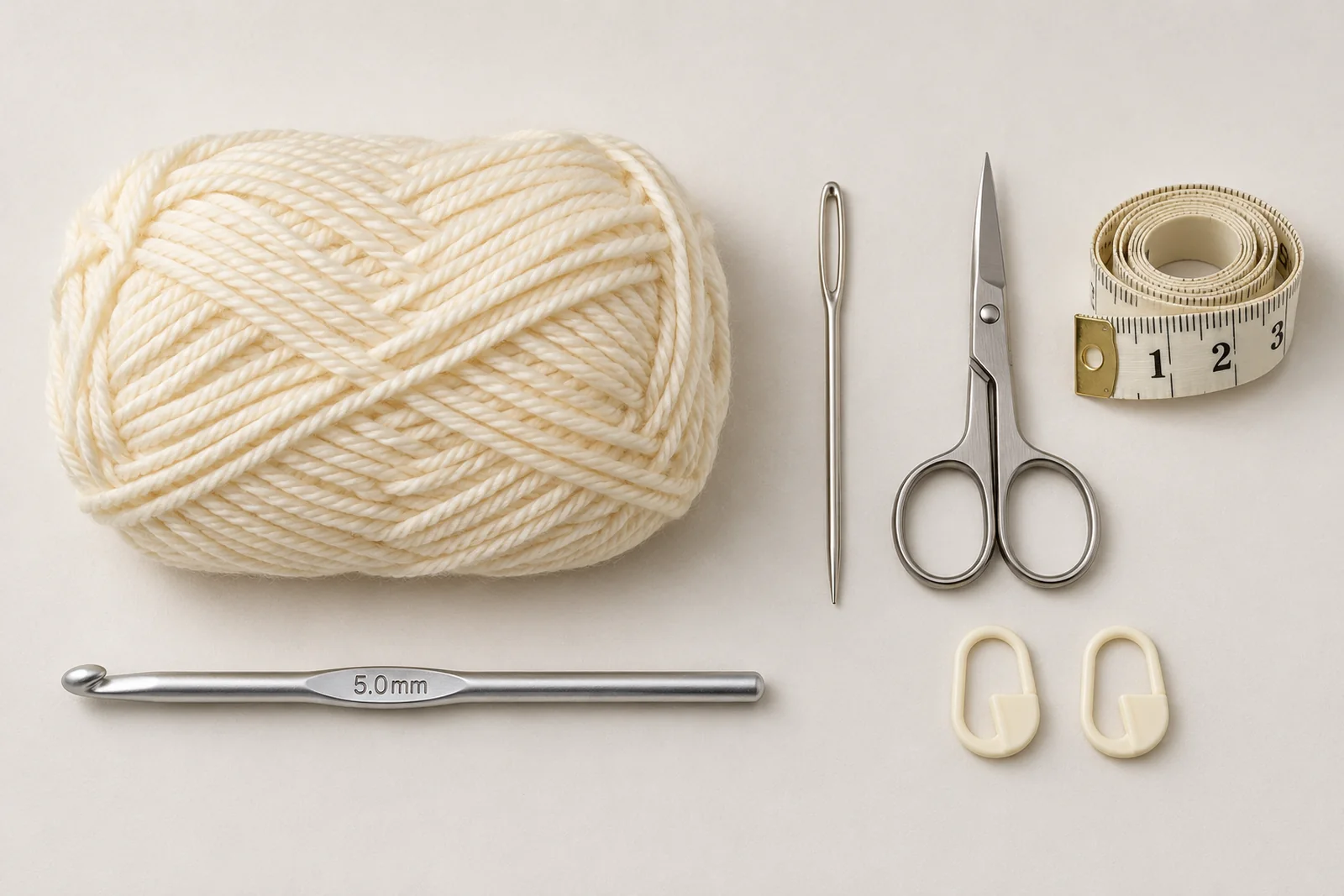
A starter kit is smooth, light-colored worsted yarn, a 5.0 or 5.5 mm hook, a yarn needle, scissors, a tape measure and stitch markers. Bulky (category 5) yarn also works, because both weights show every stitch. A 5.0 mm hook is H/8 and a 5.5 mm hook is I/9. Skip fuzzy, novelty, very dark, loosely spun and very thin yarns for now. For anything new, I reach for smooth, light-colored worsted, so I can see every stitch. See best yarn for beginners for the first skein, crochet tools for beginners for the full tool list and the beginner crochet patterns for a first project.

A crochet starter kit laid flat: a ball of cream worsted yarn, a 5.0 mm aluminum hook, a yarn needle, scissors, a tape measure and two stitch markers A starter kit: worsted yarn, a 5.0 mm hook and the small tools.
Yarn Weight: What the Numbers Mean

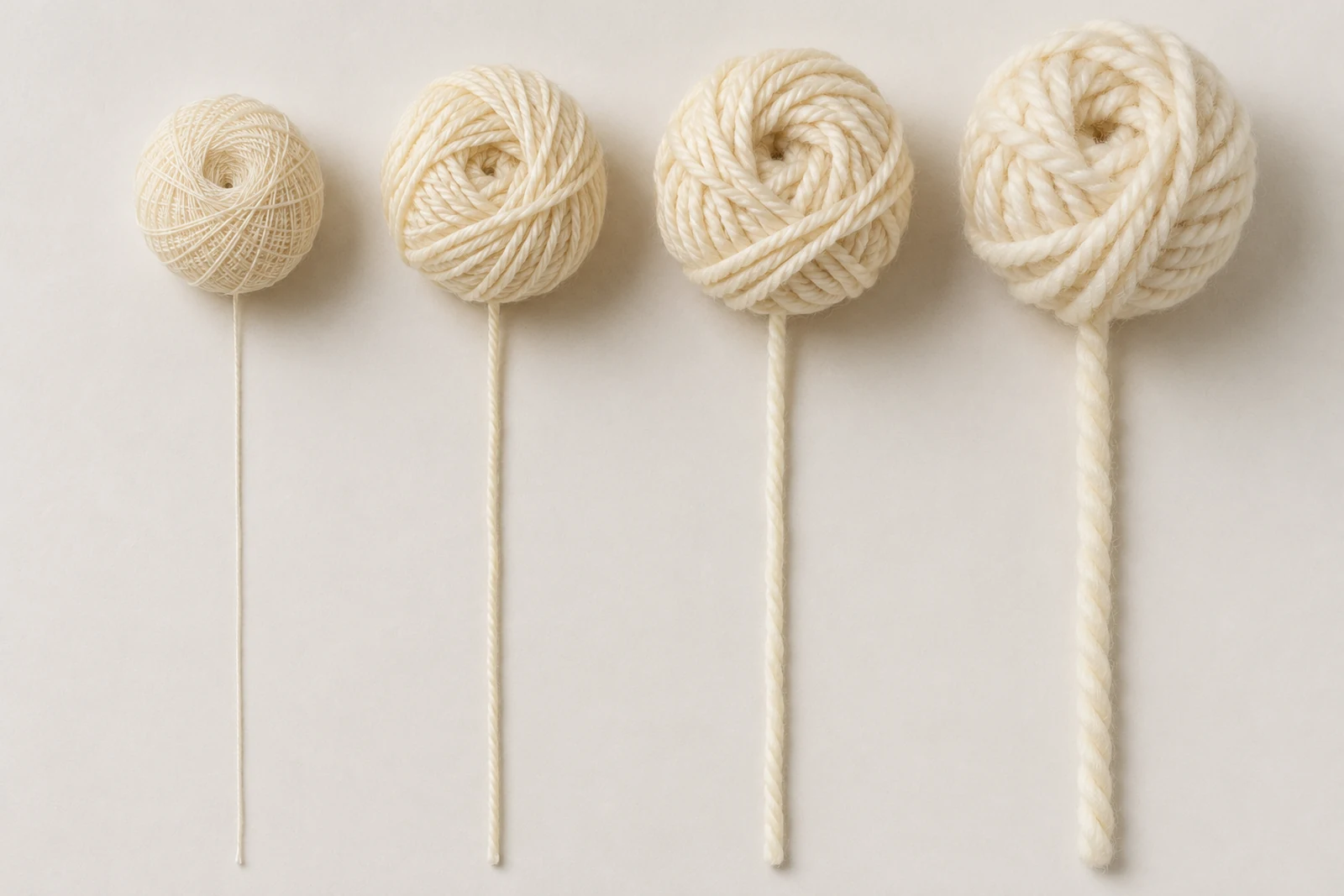
Yarn weight means how thick the strand is, and the label shows it as a number from 0 to 7. It describes thickness, not heaviness, and it is the first thing to check on a label. The crochet yarn weight guide has every weight and its projects.

The Standard Weights at a Glance

Weight Also called Hook in mm Stitches in 4 in of single crochet
0 Lace Fingering, 10-count crochet thread Steel 1.4–1.6 mm or regular 2.25 mm 32–42 (double crochet)
1 Super fine Sock, fingering, baby 2.25–3.5 mm 21–32
2 Fine Sport, baby 3.5–4.5 mm 16–20
3 Light DK, light worsted 4.5–5.5 mm 12–17
4 Medium Worsted, afghan, aran 5.5–6.5 mm 11–14
5 Bulky Chunky, craft, rug 6.5–9 mm 8–11
6 Super bulky Roving 9–15 mm 7–9

Weights follow the Craft Yarn Council system. A 7 Jumbo category (15 mm and larger, 6 stitches or fewer) is in the current list, but older printed guides stop at 6, and all ranges are guidelines. See the crochet yarn weight guide for the full table and project matching.

Same Weight, Different Names

The same yarn weight has different names in the US, UK and Australia: US worsted is aran in the UK and 10-ply in Australia. US DK is DK in the UK and 8-ply in Australia. Ply is the number of strands twisted together, and it does not tell you thickness, because a four-ply yarn can be thick or thin. Two yarns in the same category can also differ slightly in thickness, so read the label instead of trusting the name alone. Charts that treat ply as a rough match are only a starting point. When a pattern comes from another country, match it by category number or by name in the table above, then confirm it against the gauge on the label.

Crochet yarn guide comparison of four cream yarns in super fine, light, medium and bulky weights laid side by side so the thickness differences show Left to right: super fine (1), light (3), medium (4) and bulky (5).
Hook Size: Letters, Numbers and Millimeters

Crochet hooks are sized in millimeters, US letters and numbers, and old UK numbers, and the millimeter size is the one to compare. One hook can carry all three on its handle. The crochet hook size chart lists every size and its conversions.

Three Naming Systems

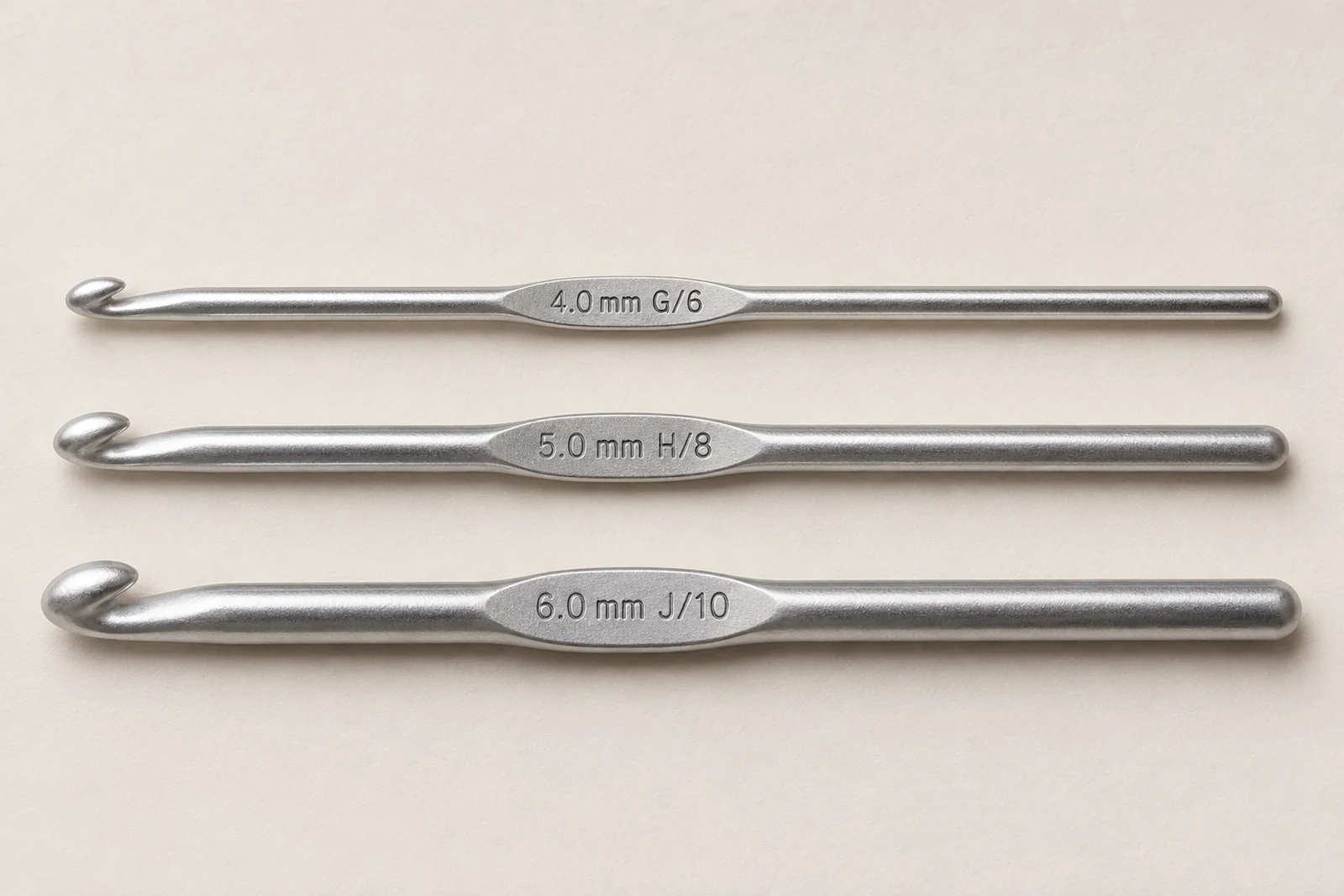
Crochet hook size is printed in millimeters, US letters and numbers, and old UK numbers; 5.0 mm is H/8 in the US. Millimeters measure the diameter of the hook shank and set the size of the stitch. US sizes pair a letter with a number, and old UK sizes run the other way, so a bigger number is a smaller hook. Five common sizes: 4.0 mm is G/6 (UK 8), 5.0 mm is H/8 (UK 6), 5.5 mm is I/9 (UK 5), 6.0 mm is J/10 (UK 4) and 6.5 mm is K/10½ (UK 3). Where no exact match exists, the crochet hook size chart gives the nearest size. Steel hooks for fine thread also run the other way: 14 steel is 0.6 mm and 5 steel is 1.75 mm.

Three aluminum crochet hooks of 4.0, 5.0 and 6.0 mm side by side with the size stamps visible on each handle Three hook sizes: 4.0 mm (G/6), 5.0 mm (H/8) and 6.0 mm (J/10).
Use the Label’s Hook as a Starting Point

The hook size on a yarn label is a starting point; match your swatch to the pattern’s gauge. Work a swatch with the label’s hook, count the stitches in 4 in (10 cm) and compare the count with the pattern’s gauge. More stitches than the gauge means the fabric is tight, so go up a hook size; fewer stitches means go down. A drapey blanket may want a larger hook than the label suggests, and a toy or bag a smaller one. I treat the hook on the label as a starting point, work a swatch, and move a size up or down to match the gauge. For how gauge appears in patterns, see how to read a crochet pattern.

Reading a Yarn Label

A yarn label shows the weight, fiber, length, gauge, care instructions, color and dye lot. It holds almost everything a pattern asks about the yarn, so it is worth reading before the yarn goes in the basket. See how to read a yarn label for every symbol.

What the Ball Band Tells You

A yarn label, or ball band, shows the weight symbol, fiber content, ball weight and length, gauge, care symbols, color number and dye lot. The parts, numbered to match the diagram:

  1. Weight symbol and category name
  2. Fiber content
  3. Ball weight and yardage
  4. Gauge square and suggested hook
  5. Care symbols
  6. Color number
  7. Dye lot number

Compare yardage, not ball weight, when you compare skeins, because the same ball weight can hold different lengths. Labels vary, and vintage, imported or handspun yarn may lack some parts. The diagram uses a generic sample label. See how to read a yarn label for what each symbol means.

4 Medium Color 123 Dye lot 456 100% acrylic 100 g (3.5 oz) / 200 yd (183 m) 13 sts and 15 rows = 4 in (10 cm) Hook 5.5 mm (I/9) 1 6 7 2 3 4 5 1 Weight symbol 2 Fiber content 3 Ball weight and length 4 Gauge and hook 5 Care symbols 6 Color number 7 Dye lot
A sample ball band with its parts numbered.

Dye Lots and Keeping the Band

Buy all the yarn for a project at once, from one dye lot, because shades can vary between lots. A dye lot is a batch of yarn dyed together, and a small difference in shade can show in the finished piece. If you mix yarns, choose ones with similar washing instructions. Keep the bands: they carry the care instructions and the dye lot if you run short. New yarn should match the dye lot number of the original purchase. I pin one band to my gauge swatch and keep the bands with the leftover yarn in a labeled bag, so the care instructions and dye lot stay with the project.

Worsted Weight: The All-Purpose Choice

Worsted weight is category 4, also called medium, afghan or aran, and it is the usual first choice for crochet. It is the weight most beginner books start with and the one this site’s practice photos use. See worsted weight yarn for the full guide.

Why Worsted Is the Default

Worsted weight is thick enough to show each stitch and thin enough to make a fabric that is not heavy. That balance suits blankets, hats, bags and amigurumi, which is why many learner guides start with medium worsted. It is also easy to find in solid, light colors, which show the stitches while you learn. The weight goes by three names, worsted, afghan or aran, and all three point to category 4 on the Craft Yarn Council list. Always use the weight a pattern names, and keep worsted for practice. Heavier and finer weights come later, for patterns that call for them.

Worsted Hook and Gauge

Worsted weight yarn is crocheted with a 5.5 to 6.5 mm hook, and learners often start with 5.0 or 5.5 mm. The Craft Yarn Council range is 5.5 to 6.5 mm (I/9 to K/10½) and 11 to 14 single crochet stitches in 4 in (10 cm). Some guides tell a learner to use 5.0 mm (H/8) or 5.5 mm (I/9), so both are in use. A smaller hook gives a firmer fabric. Always follow the hook and gauge in the pattern. Swatch first, because the label’s hook is only a starting point. See worsted weight yarn for the full guide and the crochet hook size chart for conversions.

DK Weight: Lighter Than Worsted

DK stands for double knit, and DK yarn is category 3, between sport and worsted. It appears in many patterns, especially UK and baby patterns, and it is a step lighter than worsted. See DK weight yarn for the full guide, including what to make with it.

What DK Is

DK weight yarn, short for double knit, is category 3 and is crocheted with a 4.5 to 5.5 mm hook. The Craft Yarn Council calls it light or light worsted. It is DK in the UK and 8-ply in Australia. Its gauge is 12 to 17 single crochet stitches in 4 in (10 cm), and the US hook range runs from 7 to I/9. DK suits baby items, garments, lighter blankets and small toys, and some guides use it for many of their projects. A DK yarn is thinner than worsted, so it needs a smaller hook and more stitches for the same width. Check the label’s weight number, because names vary between countries.

DK or Worsted?

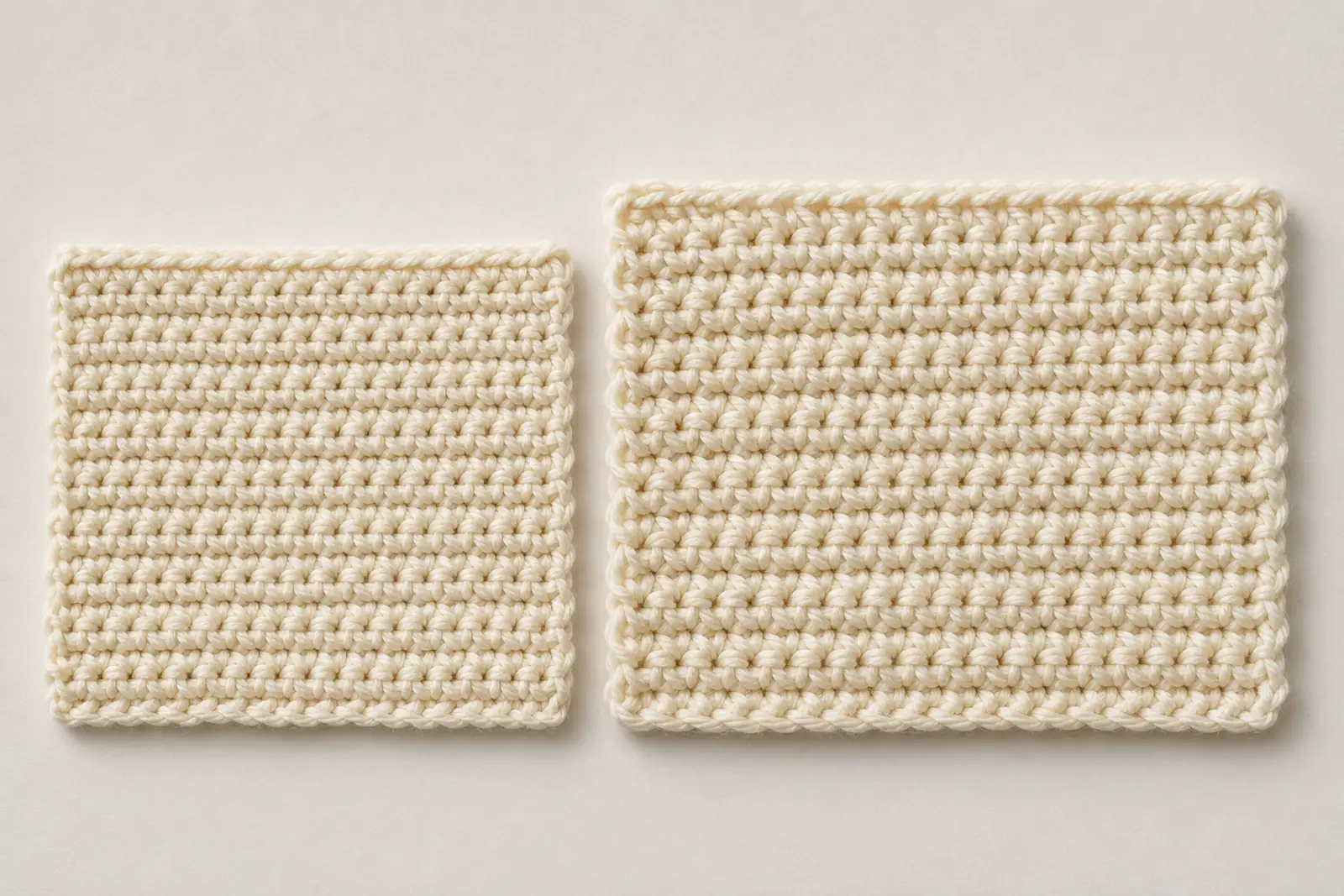
DK yarn makes a lighter, finer fabric than worsted, and worsted works up faster. A DK piece has more stitches per inch, so a pattern written for worsted comes out smaller in DK unless the hook or the stitch count changes. Check the pattern before you swap one for the other, and see how to substitute yarn for the method. If a pattern gives a size, a swatch in the new yarn shows whether it will fit. The photo below uses the same hook and the same stitch count in both yarns, so only the yarn changes. For a closer look at DK, see DK weight yarn.

Two single crochet swatches with the same stitch count and the same hook: a smaller, finer DK swatch on the left and a larger worsted swatch on the right Same hook, same stitch count: DK (left) and worsted (right).
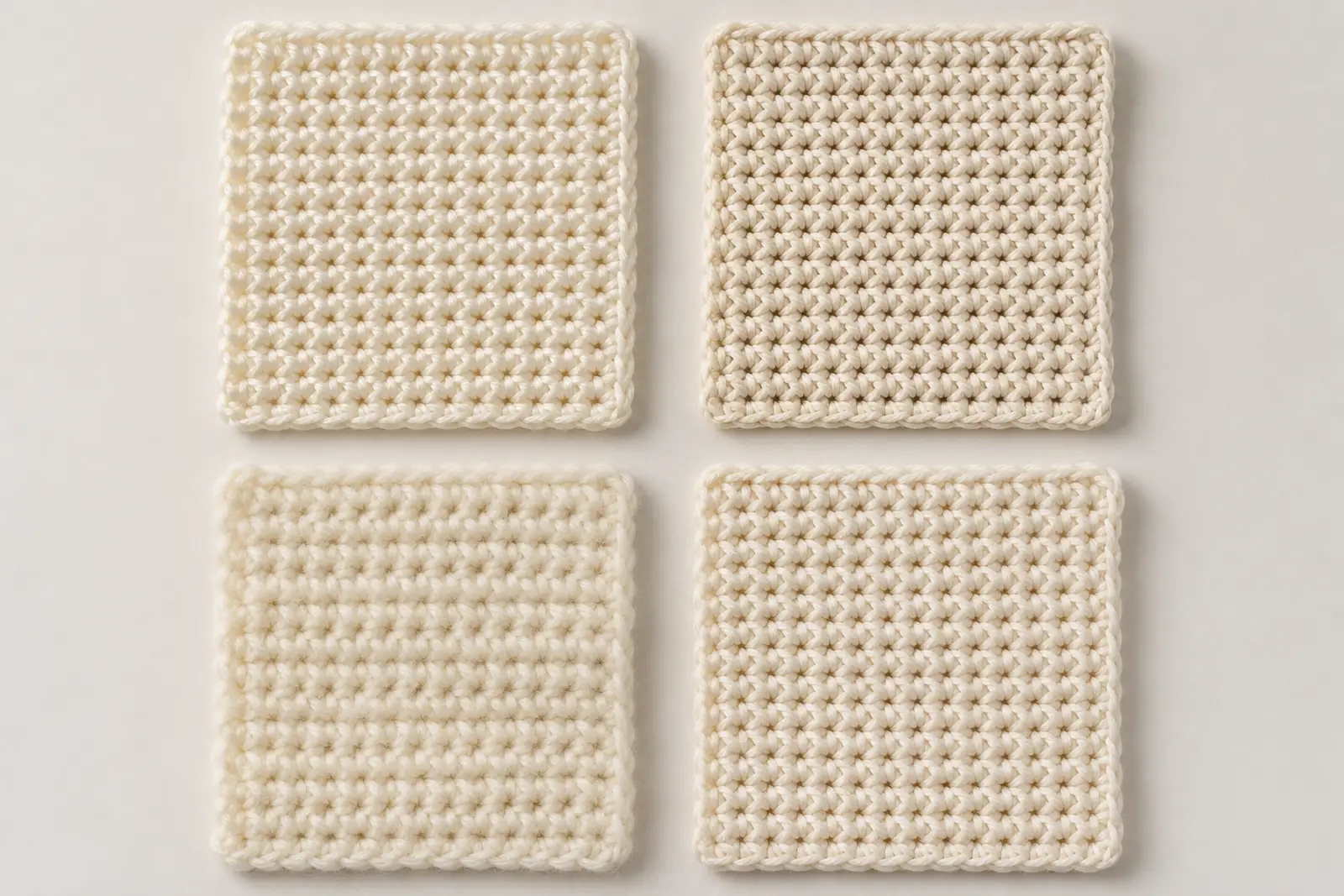
Fiber: Cotton, Acrylic, Wool and Blends

Fiber decides how a yarn feels, drapes, washes and wears, and the label gives the percentages. Acrylic, cotton and wool are the fibers most crochet guides cover, with bamboo and blends filling the gaps. See cotton vs acrylic yarn for the most common choice in depth.

Fibers at a Glance

Fiber How it feels and behaves Good for Watch for
Acrylic Affordable, many colors, strong, machine washable Blankets, scarves and practice Less breathable, can pill, melts under high heat
Cotton Soft, breathable, little stretch Dishcloths, warm-weather items Shrinks in hot water, hard on the hands for some
Wool Warm, elastic, durable Hats, sweaters, scarves Can shrink or felt, can itch, costs more (superwash is machine washable)
Bamboo Silky, drapey, little elasticity Shawls and summer garments May need gentle care
Blends Combine strengths, such as acrylic and cotton Everyday items The percentages set the care

All five rows are general rules, and the label’s fiber percentages and care symbols settle the details for a given skein.

Four single crochet swatches in a two by two grid made with acrylic, cotton, wool and a cotton-acrylic blend yarn so the fabrics can be compared Four fibers in the same stitch: acrylic, cotton, wool and a blend.
Cotton or Acrylic?

Acrylic is affordable and washable, and cotton gives crisp stitches but has little stretch. They are the two most common crochet fibers. Acrylic is also soft, forgiving and available in many colors, which makes it a good choice for practice, blankets and toys. Cotton shows stitch texture well and suits dishcloths and warm-weather items, but it shrinks in hot water. Some guides describe acrylic as robust and moth-resistant, ideal for toys and budget projects. A cotton-acrylic blend can sit between the two. Neither is better for every project, so match the fiber to how the item will be used and washed. See cotton vs acrylic yarn for a full comparison.

Swapping Yarn Without Wrecking the Pattern

You can swap a pattern’s yarn when the new yarn matches the weight, the yardage and the gauge. A swatch settles the rest, and it is best done before you buy more than one skein. See how to substitute yarn for the full method.

Match Weight, Then Yardage

Pick a yarn in the same weight category, then compare yardage, not ball weight. Divide the pattern’s total yardage by the yardage in your skein and round up. For example, 700 yards divided by 175 yards per skein is 4 skeins. Ball weight misleads because the same weight can hold different lengths, so find the yardage on the label (see how to read a yarn label). Similar fibers keep the drape close to the original, while a different fiber changes how the finished piece hangs. If the pattern lists a range of sizes, work out the yardage for the size you are making.

Swatch Before You Start

Swatch with the pattern’s hook, wash it the way you will wash the finished piece, then count the stitches in 4 inches. Make the swatch about 6 in (15 cm) square in the pattern stitch, so the edges do not distort the count. More stitches than the gauge means go up a hook size; fewer means go down (see the crochet hook size chart). For a thinner yarn, some patterns hold two strands together, and a thicker yarn may need a bigger hook. Both ideas suit blankets and scarves better than fitted pieces. A swatch that matches the gauge is a good sign the piece will come out the pattern’s size.

Yarn for Amigurumi

Amigurumi needs a smooth, tightly plied yarn worked into a firm fabric so the stuffing does not show. Pick a yarn that shows each stitch and keeps its shape. See best yarn for amigurumi for the full comparison and how to make amigurumi for construction.

What Amigurumi Asks of Yarn

Amigurumi works best in smooth, tightly plied yarn, because it shows each stitch and holds its shape. Fluffy yarns make small details hard to build and hard to count. Light colors show the stitches while you work. A firm fabric keeps stuffing from showing through, so a smaller hook than the label suggests is common for toys. A yarn that splits under the hook makes tiny stitches hard to place, so test a few stitches before you commit. A toy will be washed, so check the label for care instructions before you buy. If the toy will have safety eyes, see amigurumi safety eyes for how to choose and place them.

Cotton, Acrylic or a Blend?

Cotton holds its shape and shows stitches clearly, and acrylic is cheaper and washable but can let the shape pull out if the stitches are loose. Mercerized cotton gives especially good stitch definition. A cotton-acrylic mix sits between the two and suits small pieces. Worsted is the common weight, with DK for smaller pieces. Acrylic suits first toys when budget matters, and cotton suits pieces that must keep a crisp shape. Tight stitches and a smaller hook help any fiber keep the stuffing hidden. See best yarn for amigurumi for a full comparison and how to make amigurumi for the stitches. Browse the amigurumi patterns or start with the Minimal Frog Amigurumi pattern.

Yarn for Baby Items

Yarn for baby items should be machine washable and soft, because baby items are washed often. Washing comes first, then softness, then the weight that suits the item. See best yarn for baby crochet for the full guide and the crochet baby blanket guide for blanket builds.

What Makes a Yarn Baby-Friendly

Baby yarn should be machine washable first and soft second. Yarns that need hand washing are a poor fit for items that are washed often. Smooth, soft fibers are the usual choice, and premium acrylic, cotton, polyester blends and superwash wool are common ones. Plain wool may be too warm or too scratchy for some items. Some yarns carry a certification such as OEKO-TEX, so look for it on the label if that matters to you. Avoid novelty and furry yarns for now. Always follow the label’s care instructions, and wash a swatch before you start. See best yarn for baby crochet for more.

Weights and Fibers That Work

Most baby yarns are DK or worsted weight, chosen to balance warmth and lightness. Match the weight to the item: a lightweight cotton for summer pieces and a thicker yarn for a winter layer. Follow the label’s care instructions and wash a swatch first, so you know how the yarn behaves before the whole piece is made. Baby items are washed often, so the swatch wash is worth the time. Both DK and worsted suit blankets, hats and small garments. See cotton vs acrylic yarn for the fiber decision and the crochet baby blanket guide for blanket builds. The Baby Romper pattern is a wearable project to try.

Yarn for Granny Squares

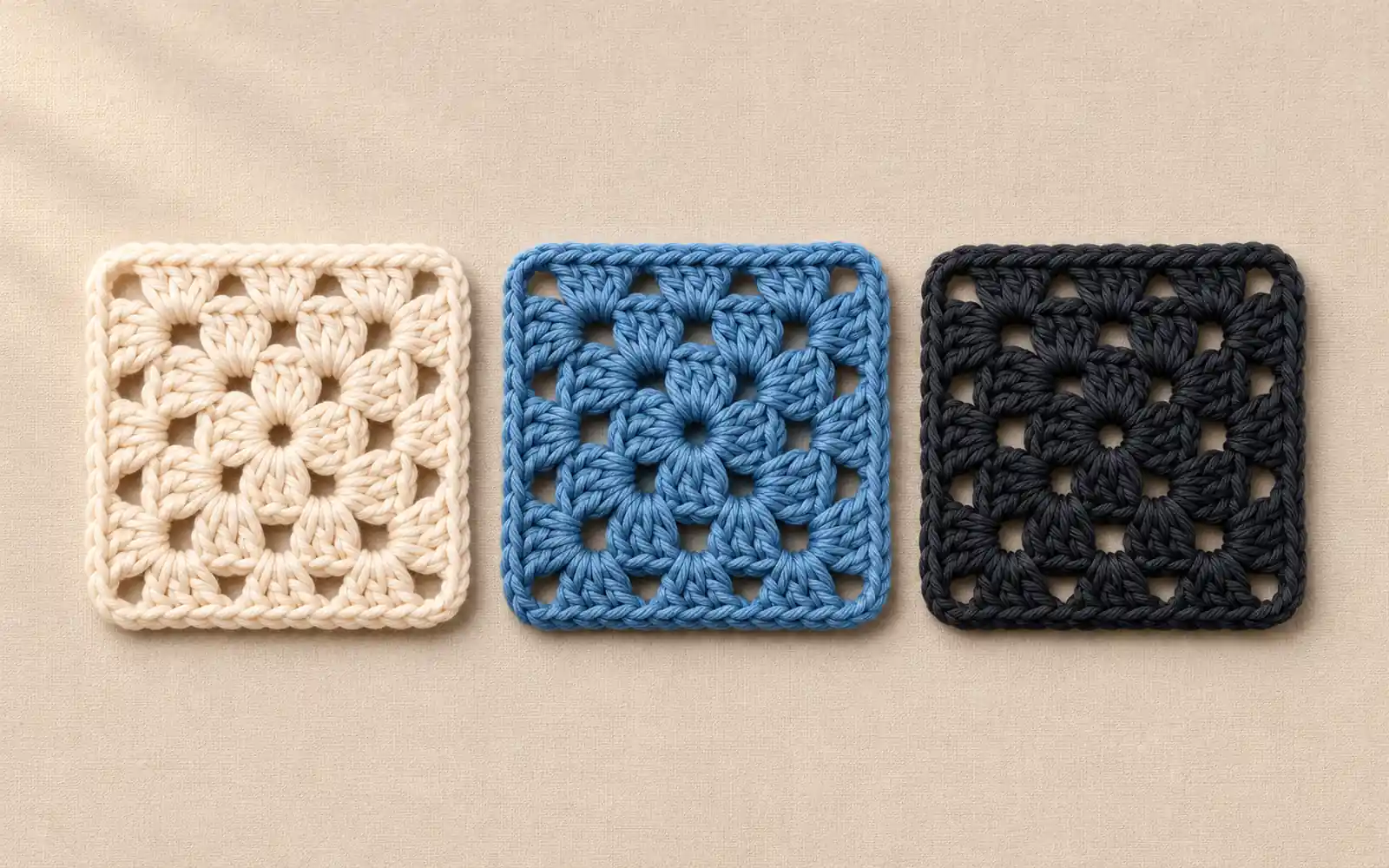
A granny square is made of small groups of stitches, so the yarn must show each group clearly. Several colors make a square show both a good yarn and a poor one. See best yarn for granny squares and how to crochet granny squares for more.

Why Squares Show Off the Yarn

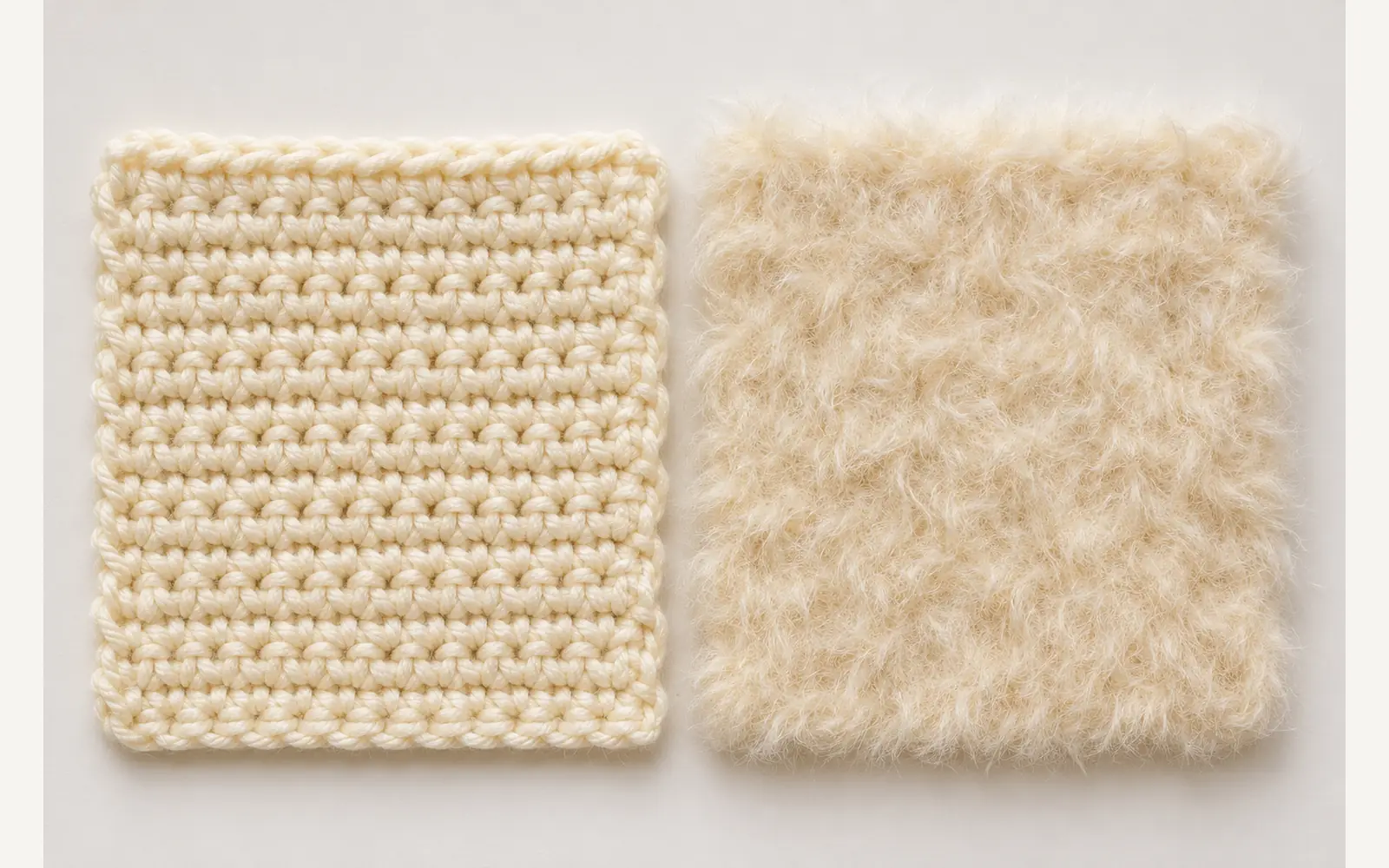
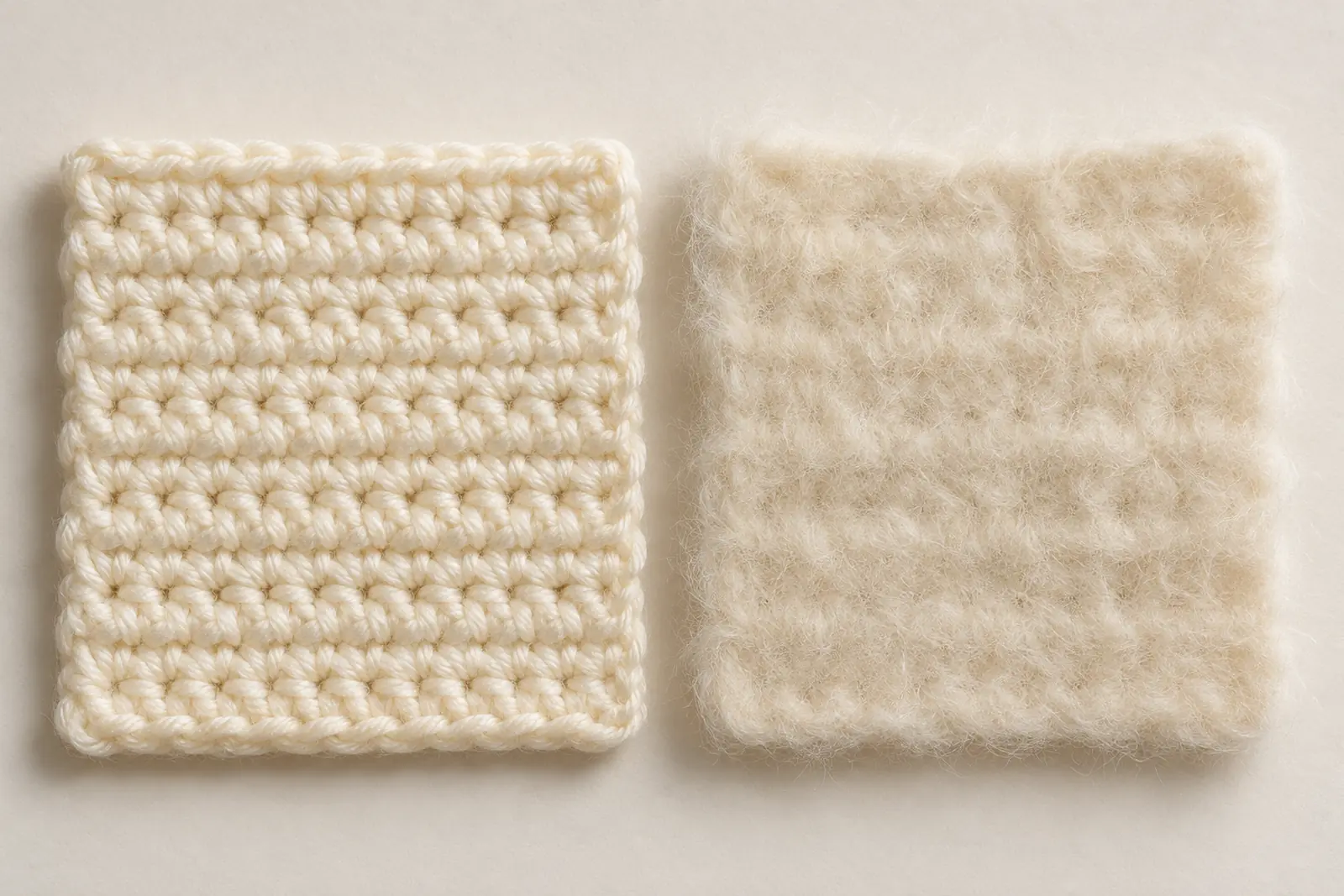
Smooth yarn with a firm twist shows each cluster of a granny square, and fuzzy yarn hides it. Fuzzy, textured or novelty yarns make the stitches hard to read, which also makes mistakes hard to find. Light solid colors are the easiest to see while you learn. DK and worsted are the usual weights. The photo below shows the same stitch in smooth and in fuzzy yarn, so you can compare how much each hides. A square worked in a plain yarn also makes it easier to count rounds and spot a missed cluster. See best yarn for granny squares for more.

Close-up of two single crochet swatches: smooth worsted yarn on the left with clearly visible stitches and fuzzy yarn on the right where the stitches are hard to see Smooth yarn (left) shows every stitch; fuzzy yarn (right) hides them.
Color, Washing and Dye Lots

Buy enough of each color at once from one dye lot, and choose yarns with the same washing instructions. A square uses several colors, so a shade shift in one color can show across the whole blanket. Squares are often made over many weeks, so mixing lots is an easy mistake. Keep one band from each color with the leftover yarn, in case you run short. Weave in the ends as you go, as in how to crochet granny squares, so the finishing does not pile up at the end. For choosing and pairing colors, see crochet color theory and design. Browse the blanket patterns or try the Island Time Blanket as a larger project.

Hooks, Tools and Other Materials

Beyond yarn, you need a hook and a small kit of tools. The choices are smaller than the yarn choices, but they still matter, because a hook that suits your hand makes every row easier. See ergonomic crochet hooks if a standard hook feels uncomfortable.

Hook Materials and Handles

Crochet hooks come in aluminum, wood or bamboo, plastic and steel, and the handle shape changes how the hook feels in the hand. Aluminum hooks are smooth and common. Wooden and bamboo hooks are lighter and may grip the yarn more. Plastic hooks are another option, and jumbo sizes are often plastic because the material keeps them light. Fine steel hooks are used for lace and thread. Jumbo hooks from N/15 (10 mm) to S (20 mm) are made of plastic. Comfort handles help if a standard hook feels too narrow, and trying a few styles shows what suits your grip. See ergonomic crochet hooks for more on handle shapes.

The Small Kit and Materials Beyond Yarn

A basic crochet kit is a hook, a blunt yarn needle, sharp scissors, a tape measure and stitch markers. The needle weaves in ends, and a row counter helps on long projects. Crochet is not limited to yarn. String makes stiff baskets and bowls, and fabric strips make rugs. String often gives a stiff fabric. Plastic bag strips need a large hook, N/15 (10 mm) or bigger, and wire is another option. Each material changes how the hook and the fabric behave, so work a small swatch before a big project. See crochet tools for beginners for the starter list.

Frequently Asked Questions

What is the best yarn for crochet beginners?

A smooth, solid, light-colored worsted (category 4) yarn in acrylic or an acrylic blend, such as a cotton-acrylic mix, with a 5.0 or 5.5 mm hook. It shows each stitch and is forgiving to undo. Avoid fuzzy, novelty and very dark yarns for the first projects. The starter kit section above lists the tools, and best yarn for beginners covers the first skein in depth.

What do the yarn weight numbers mean?

The number from 0 to 7 shows how thick the yarn is, and a higher number means a thicker yarn. A 4 is medium, or worsted; a 3 is light, or DK; a 5 is bulky. The label also names a hook range for each weight. The yarn weight section above has the table, and crochet yarn weight guide covers every weight.

Can I use a different yarn than the pattern says?

Yes, if the new yarn matches the weight, the yardage and the gauge. Start with the same weight category, compare yardage rather than ball weight, then swatch with the pattern’s hook. A different fiber changes the drape, so keep it close to the original. The swapping section above gives the steps, and how to substitute yarn covers the full method.

Is cotton or acrylic better for crochet?

Neither is better for every project: acrylic suits blankets and practice, and cotton suits dishcloths and warm weather. Acrylic is affordable and machine washable. Cotton gives crisp stitches, though it has little stretch and shrinks in hot water. A blend sits between them. The fiber section above has the table, and cotton vs acrylic yarn compares them in full.

What size hook do I use with worsted yarn?

The Craft Yarn Council range for worsted is 5.5 to 6.5 mm (I/9 to K/10½). Learner guides often suggest 5.0 mm (H/8) or 5.5 mm (I/9). Swatch with the pattern’s hook, count the stitches in 4 in (10 cm) and go up a size if you have too many. The hook section above has the basics, and crochet hook size chart lists every size.

Do I need all my yarn from the same dye lot?

Yes, for any piece where a color change would show. A dye lot is one batch, and shades can vary slightly between batches. Buy all the skeins you need at once and check the dye lot number on each band. Keep one band with the project in case you run short. The label section above shows where to find it, and how to read a yarn label explains the rest.

The ten guides behind this page, in decision order:

New to crochet? Start with the beginner’s guide to crochet and best yarn for beginners. For tools, see crochet tools for beginners; for stitches, crochet stitches and techniques; and for projects, crochet project guides. Browse the beginner crochet patterns or all free crochet patterns.

Portrait of Linda Davidsen

Written by

Linda Davidsen

Designer & founder

Linda has been crocheting for over 15 years and designs cozy, beginner-friendly patterns that anyone can finish in a weekend.

Keep reading

All posts