🧶 Yarn Calculator

Try

Visit our Etsy Shops

Pick a shop to browse. Each one opens on Etsy in a new tab.

Yarn & Materials

Worsted Weight Yarn: The All-Purpose Crochet Choice

Worsted weight yarn crochet guide: category 4, other names, hook and gauge, how much yarn projects need, and when DK or bulky is the better pick.

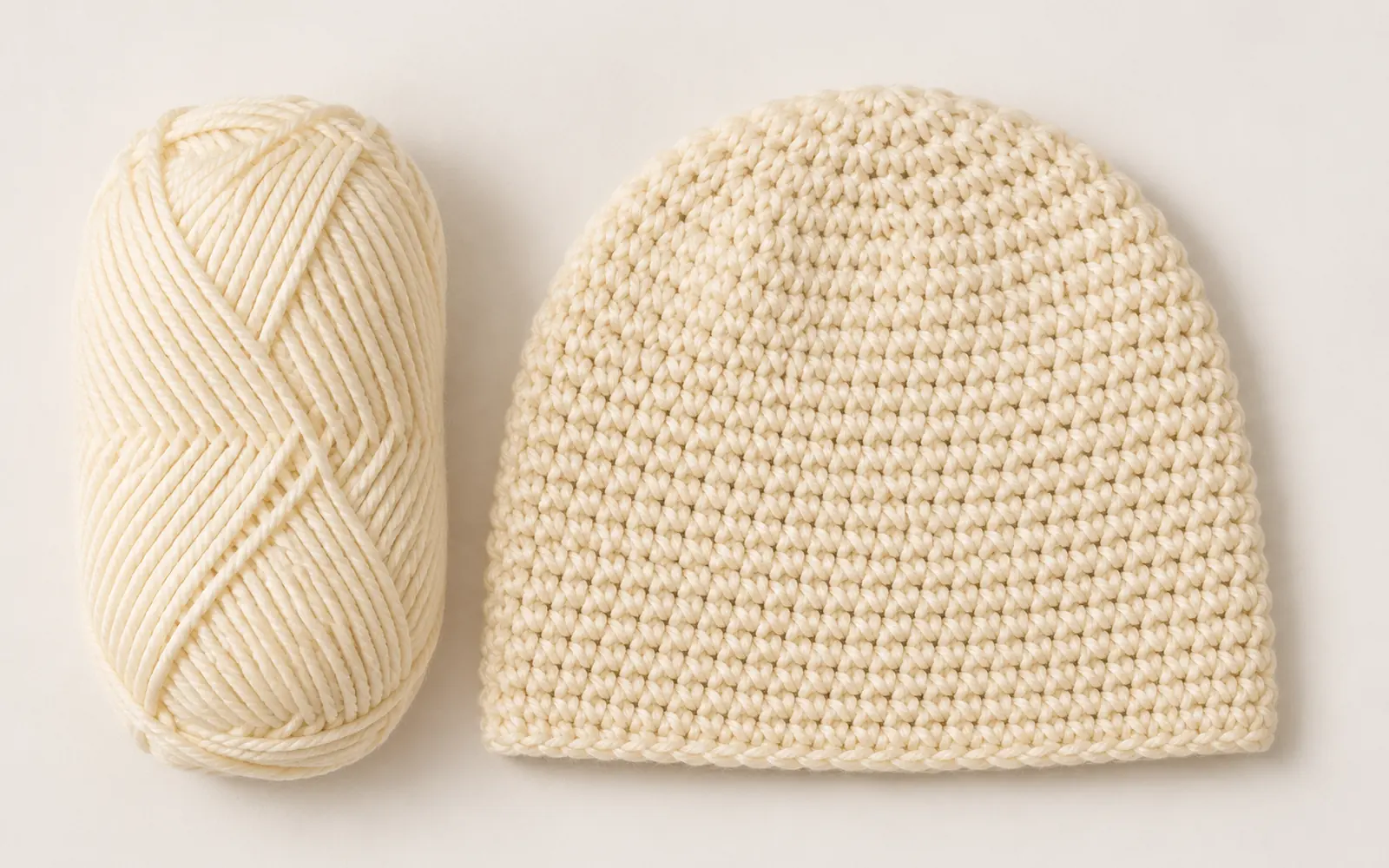
One cream skein of worsted yarn beside a plain cream single crochet beanie, flat on an off-white surface
Table of Contents
  1. What Worsted Weight Is
  2. Hook and Gauge for Worsted
  3. Worsted Compared With Aran, DK and Bulky
  4. What to Make With Worsted
  5. How Much Worsted Yarn You Need
  6. Worsted Is a Weight, Not a Fiber
  7. Key Takeaways
  8. Frequently Asked Questions

Quick answer: Worsted weight yarn crochet projects use category 4 (medium) yarn, also called afghan or aran, with a 5.5 to 6.5 mm hook and about 11 to 14 single crochet stitches in 4 inches. It is thick enough to show every stitch and light enough for blankets, hats, bags and toys.

Worsted turns up in pattern after pattern and on every beginner list, yet the skein in your hand says medium, 4 or aran, and the hook on the band is not the one a book told you to use. Is worsted really the weight to buy?

This guide explains what worsted weight is, which other names mean the same thing, the hook and gauge to expect, how much yarn common projects need, and when DK or bulky is the better choice for what you are making.

Worsted is my default, but I still work a swatch. Yarns labeled worsted vary from brand to brand, and a swatch shows me whether my hook and tension match the pattern before I commit to a whole project.

What Worsted Weight Is

Worsted weight is category 4 on the Craft Yarn Council scale, a medium thickness between DK and bulky. The word worsted names a thickness, not a fiber, so you will find it in many materials. For every weight side by side, see the crochet yarn weight guide.

Category 4: Medium, Afghan and Aran

Worsted weight is category 4 (medium), also sold as afghan or aran. The word comes from a spinning method that combs the fibers smooth, but today it describes thickness, and not every worsted-spun yarn is worsted weight. The weight is not limited to wool: worsted yarns come in acrylic, cotton, wool and blends. Look for the word worsted or the number 4 on the band. For fibers and labels, see the crochet yarn and materials guide.

Why Worsted Is the Default

Worsted weight is thick enough to show every stitch and thin enough to make a light fabric. That is why it suits blankets, hats, bags and toys alike. It is easy to find in many fibers and light solid colors, and many patterns are written for it. Some guides suggest a smooth medium yarn described as worsted, aran or 10-ply, with a hook of 5 mm or larger, for a first project. See best yarn for beginners for the first skein.

Hook and Gauge for Worsted

Worsted weight yarn is crocheted with a 5.5 to 6.5 mm hook, and the same yarn can make a firm toy or a soft blanket depending on the hook. The band’s hook and gauge are a starting point. For conversions, see the crochet hook size chart.

The Hook Range and Stitch Count

Worsted weight yarn gives 11 to 14 single crochet stitches in 4 inches (10 cm) on a 5.5 to 6.5 mm hook (I/9 to K/10½). Some guides suggest a hook of 5 mm or larger for a first project, and project hooks quoted online run from about 3.5 to 4 mm for firm items up to 6.5 to 7 mm for soft ones. The range is a guideline, because gauge also depends on fiber and on your own tension. Always follow the pattern’s hook and gauge. The crochet yarn weight guide has the whole chart.

Match the Hook to the Project

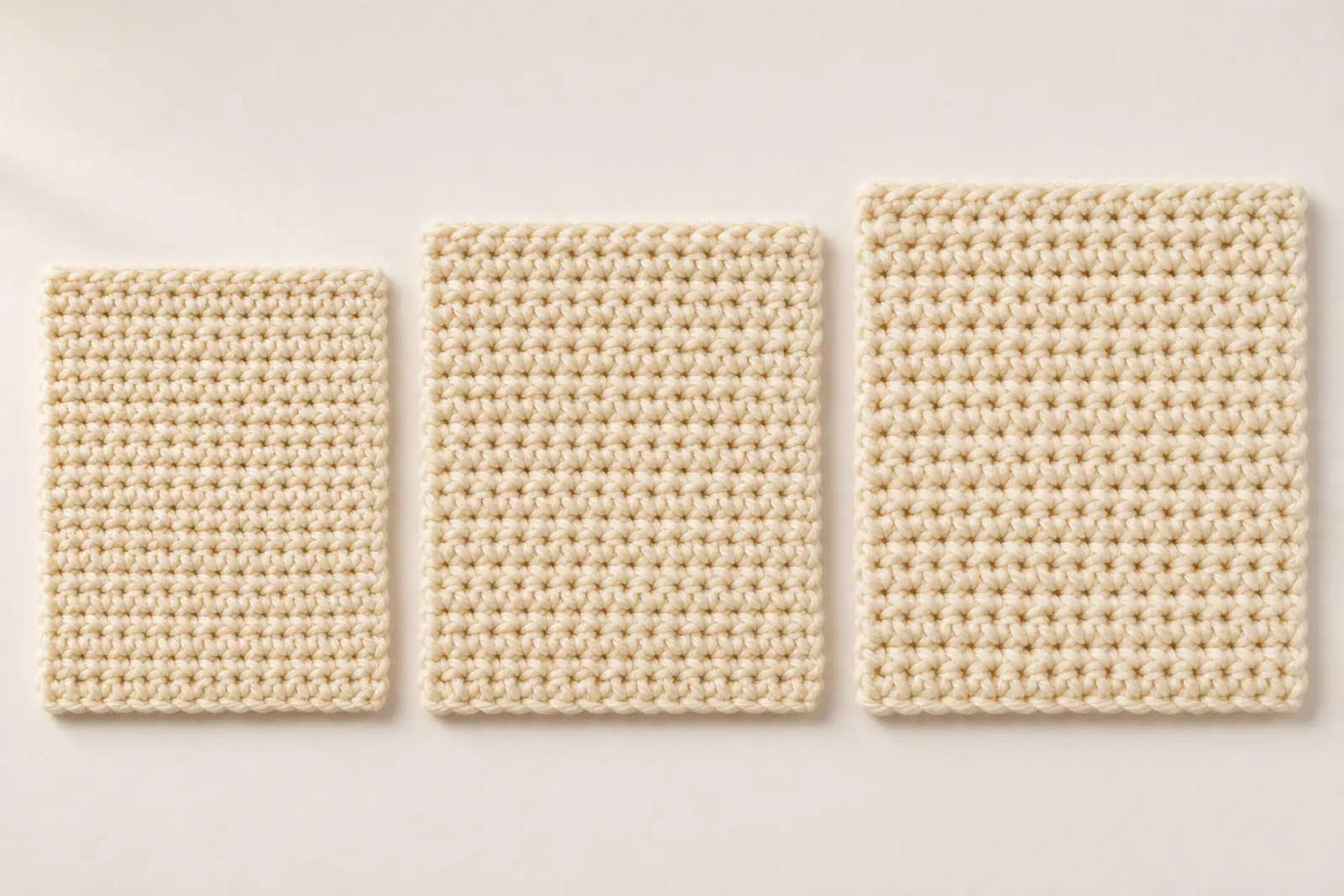
A larger hook gives worsted a softer, drapier fabric, and a smaller hook gives a firmer one. Use a larger hook for wearables and blankets, and a smaller one for toys, bags and dishcloths; for toys, some guides choose a hook one to two sizes smaller than the usual size. A hook that is too small can split the yarn, and one that is too large leaves gaps. I start at the label’s hook for wearables and blankets, and I go smaller for toys and bags. The photo below shows one worsted yarn at three hook sizes: 4.0, 5.5 and 6.5 mm. If your swatch is off, see how to substitute yarn.

Worsted weight yarn crochet swatches: three single crochet swatches with the same stitch count in the same cream yarn, made with 4.0, 5.5 and 6.5 mm hooks, the smallest firm and the largest soft and open Same worsted yarn and stitch count, three hooks: 4.0 mm (left), 5.5 mm (center) and 6.5 mm (right).
Worsted Compared With Aran, DK and Bulky

Worsted sits between DK, which is a little thinner, and bulky, which is clearly thicker. Aran is the same category with a slightly different feel. For DK in depth, see DK weight yarn. Each neighbor changes the hook, the stitch count and the look of the fabric.

Worsted and Aran

Worsted and aran share category 4, but aran is usually a little thicker. Some makers call a heavier aran heavy worsted. One guide lists a worsted at 220 yards per 100 g and an aran at 186 yards per 100 g, though the fibers differ. Two yarns with the same name can still work up differently, so check the gauge and the yards per skein before you swap. See how to substitute yarn for the swap method and the crochet yarn weight guide for names across countries.

Worsted, DK and Bulky at a Glance

Weight Hook in mm (US size) Stitches in 4 in (10 cm) What it makes
3 Light (DK) 4.5–5.5 mm (7 to I/9) 12–17 A finer, lighter fabric for baby items and lighter garments, and it uses more stitches
4 Medium (worsted) 5.5–6.5 mm (I/9 to K/10½) 11–14 The all-purpose middle for blankets, hats, bags and toys
5 Bulky 6.5–9 mm (K/10½ to M/13) 8–11 A thick, warm fabric that works up fast and can be too heavy for some projects

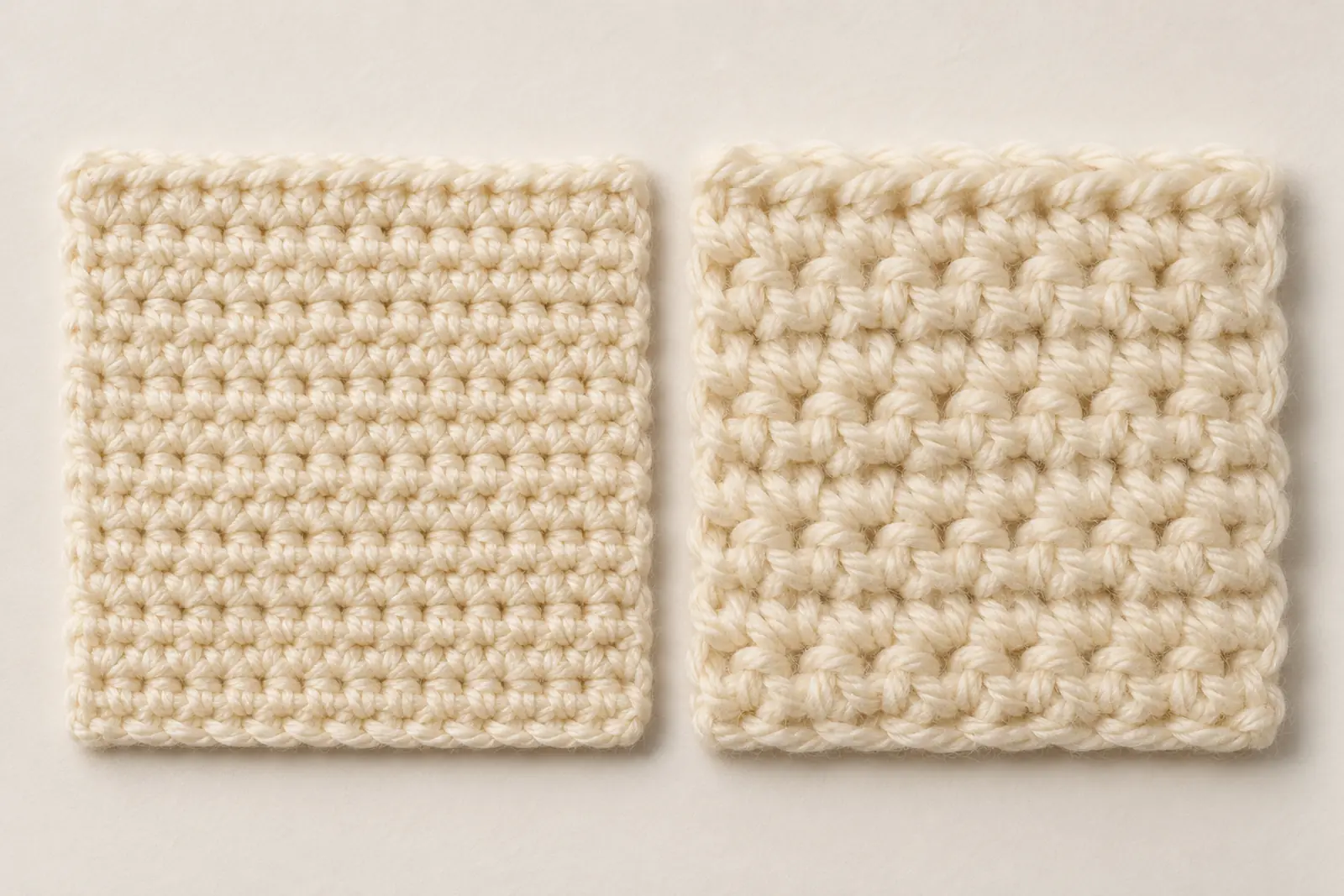
The neighbors overlap at the edges: 11 stitches in 4 inches falls in both medium and bulky, and the ranges are guidelines. The photo below shows two swatches, each 4 inches (10 cm) wide: worsted needs more stitches than bulky. For DK, see DK weight yarn, and for every weight, the crochet yarn weight guide.

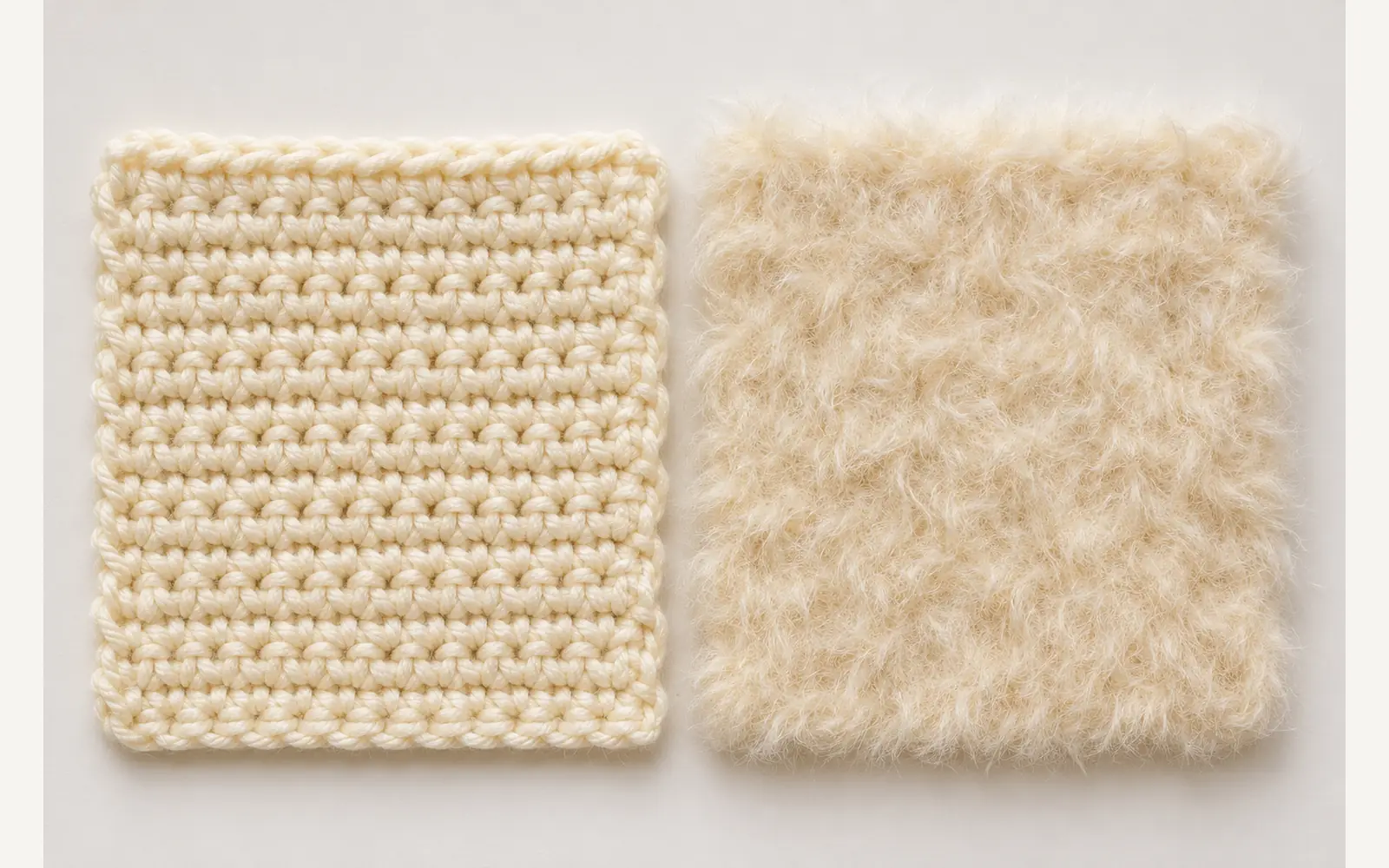
Two cream single crochet swatches each 4 inches wide side by side, a worsted swatch with many small stitches on the left and a bulky swatch with fewer, larger stitches on the right Both swatches are 4 inches (10 cm) wide: worsted (left) needs more stitches than bulky (right).
What to Make With Worsted

Worsted weight yarn suits blankets, hats, scarves, bags, toys and small home pieces. It is the weight many patterns are written for, so it covers the widest range of projects, unless a project needs finer detail or more speed. For a first skein, see best yarn for beginners.

Projects Worsted Does Well

Worsted works well for blankets and afghans, hats and beanies, scarves and cowls, bags and totes, toys, coasters and potholders, and garments such as sweaters. Sturdy items that get heavy wear suit it well. For baby blankets, see the crochet baby blanket guide; for bags, how to crochet a bag; and for toys, how to make amigurumi. To try a project, browse free blanket patterns and beginner crochet patterns, or start with the Rainbow Afghan or the Hot Cocoa Memory Game.

When Another Weight Is Better

Choose a thinner yarn for fine detail and a lighter drape, and bulky yarn for a quick, warm project. Thinner means DK or finer, and bulky can be too heavy for some items. Lace and thread weights suit doilies and fine lace. The pattern’s weight sets the finished size, so change it only when you plan to change the size. See the crochet yarn weight guide for the chart and how to substitute yarn for what changes when the weight changes.

How Much Worsted Yarn You Need

Yarn is sold by weight but patterns are written in yards, so compare yardage rather than the number of skeins. The number of yards in a skein changes with the fiber. Below are a typical skein length and approximate yardage for common projects.

Yards in a Skein

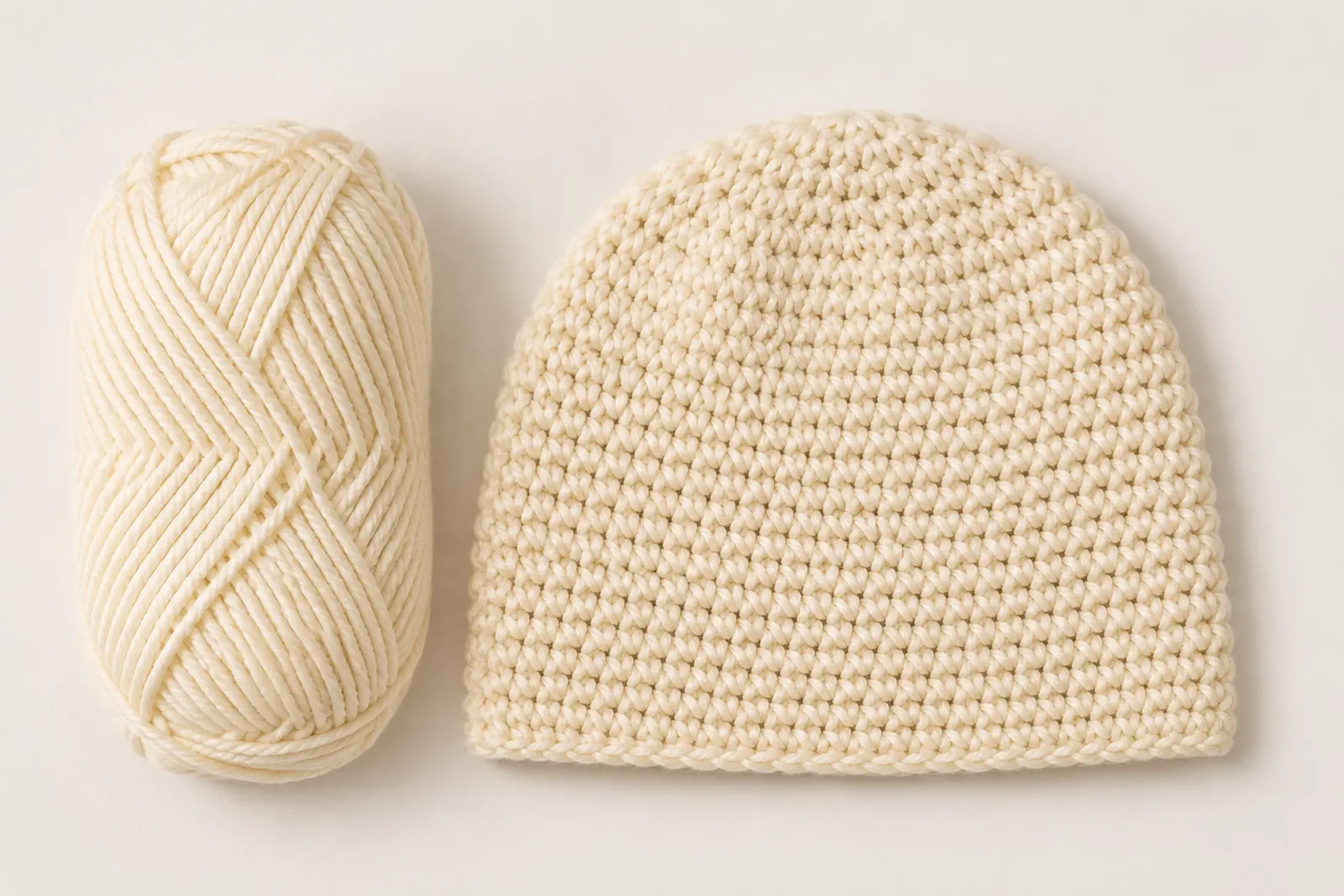
A 100 g (3.5 oz) skein of worsted usually holds about 170 to 240 yards, and fiber changes that. Dense fibers such as cotton give fewer yards, and lofty fibers give more, so read the band. Skeins can differ in length, so do not count on a fixed number. I buy the pattern’s yardage plus one extra skein, all from one dye lot, so I do not run short. The photo below shows one 100 g skein beside a plain adult hat made from it. For bands and dye lots, see the crochet yarn and materials guide.

A cream 100 gram skein of smooth yarn lying beside a plain cream crocheted adult beanie made from one skein, flat on a neutral surface One 100 g skein of worsted and the plain adult hat made from it.
Approximate Yardage by Project

Project Approximate worsted yardage Notes
Adult hat 200–250 yd A child’s hat takes less
Scarf 300–650 yd A wide or long scarf takes more; one guide gives sizes from about 320 to 1,200 yd
Baby blanket 900–1,500 yd Size and stitch type change the total
Adult sweater About 1,500 yd Sources run wide
Afghan or throw 2,000–4,000 yd About 2,500 to 3,000 yd is a common figure

These figures are approximate, and stitch type, hook size and your tension change them. Taller stitches, bobbles and popcorn use more yarn than single crochet, and a smaller hook uses more. Add a little extra if you crochet tightly. When a pattern gives a yardage, use that and round up. To turn yardage into skeins, divide the total by the yards in one skein and round up: 1,000 yards in 200-yard skeins is 5 skeins. For swapping yarn by yardage, see how to substitute yarn, and for baby blankets, the crochet baby blanket guide.

Worsted Is a Weight, Not a Fiber

Worsted names a thickness, so two worsted yarns can differ in fiber, spin and feel. Two skeins that both say worsted can work up very differently, and fiber, spin and brand all play a part. For the fiber and label map, see the crochet yarn and materials guide.

One Weight, Many Fibers

Worsted weight yarn comes in acrylic, cotton, wool and blends, and the fiber changes the feel and the care. Acrylic is affordable and easy to wash. Cotton gives crisp stitches and suits dishcloths and kitchen items. Wool and alpaca suit garments and accessories, and wool can felt or lose shape if washed hot. The fiber also changes the yardage and the drape, so read the band. See the crochet yarn and materials guide for fibers and how to substitute yarn for swapping.

Why Two Worsted Yarns Behave Differently

Two yarns labeled worsted can differ in thickness, so swatch before you commit. They can also bloom differently when washed, changing the gauge. Hand-dyed and loftier yarns labeled worsted can run thinner than commercial worsted, and some yarns sit between worsted and aran or between worsted and bulky. The only reliable check is a swatch in the pattern stitch, washed the way you will wash the finished piece. See the crochet yarn weight guide for category variation and how to substitute yarn for the swatch method.

Key Takeaways

  • Worsted weight is category 4 (medium), also sold as afghan or aran, and it names a thickness, not a fiber.
  • The Craft Yarn Council range is a 5.5 to 6.5 mm hook and 11 to 14 single crochet stitches in 4 inches; use a smaller hook for toys and bags and the label’s hook for blankets and wearables.
  • Worsted sits between DK, which is thinner, and bulky, which is thicker; aran is usually a little thicker than worsted.
  • A 100 g skein of worsted usually holds about 170 to 240 yards, so buy by yards and add one skein from the same dye lot.
  • Two yarns labeled worsted can work up differently, so swatch before you start.

Frequently Asked Questions

What is worsted weight yarn?

Worsted weight yarn is category 4 (medium) on the Craft Yarn Council scale, also sold as afghan or aran. It sits between DK and bulky, takes a 5.5 to 6.5 mm hook and gives 11 to 14 single crochet stitches in 4 inches. Worsted names the thickness, not the fiber, so it comes in acrylic, cotton, wool and blends. The first section above covers the definition.

What size hook do I use with worsted weight yarn?

The Craft Yarn Council range for worsted is 5.5 to 6.5 mm (I/9 to K/10½). Some guides suggest 5.0 or 5.5 mm for learners, and toys and bags use a smaller hook for a firm fabric. Swatch with the pattern’s hook, count the stitches in 4 inches, and go up a size if you have too many. The hook section above has more, and the crochet hook size chart lists every size.

How many yards are in a skein of worsted yarn?

A 100 g (3.5 oz) skein of worsted usually holds about 170 to 240 yards. Dense fibers such as cotton give fewer yards, and lighter or loftier fibers give more, so read the yardage on the band. Buy by total yards, not by the number of skeins, and add one skein from the same dye lot. The yardage section above has more.

How much worsted yarn do I need for a blanket?

A baby blanket usually takes about 900 to 1,500 yards of worsted, and an afghan or throw about 2,000 to 4,000 yards. Use the pattern’s yardage when it gives one and round up. Taller stitches, bobbles and a smaller hook use more yarn, so buy extra for those. The yardage table above has the other projects, and the crochet baby blanket guide covers baby blankets.

Is worsted weight yarn good for beginners?

Yes. Worsted is thick enough that each stitch is easy to see, it is easy to find in smooth light colors, and it works up faster than DK. Start with a smooth, solid, light-colored worsted and a hook of 5.0 mm or larger, and swatch before you begin. See best yarn for beginners for the full first-yarn guide.

Portrait of Linda Davidsen

Written by

Linda Davidsen

Designer & founder

Linda has been crocheting for over 15 years and designs cozy, beginner-friendly patterns that anyone can finish in a weekend.

Keep reading

All posts