đź§¶ Yarn Calculator

Try

Visit our Etsy Shops

Pick a shop to browse. Each one opens on Etsy in a new tab.

Crochet Projects

Crochet Project Guides: What to Make and How to Start

Crochet project guides for what to make next: choose by time and skill, then go to keychains, amigurumi, toys, hats, bags, blankets and cardigans.

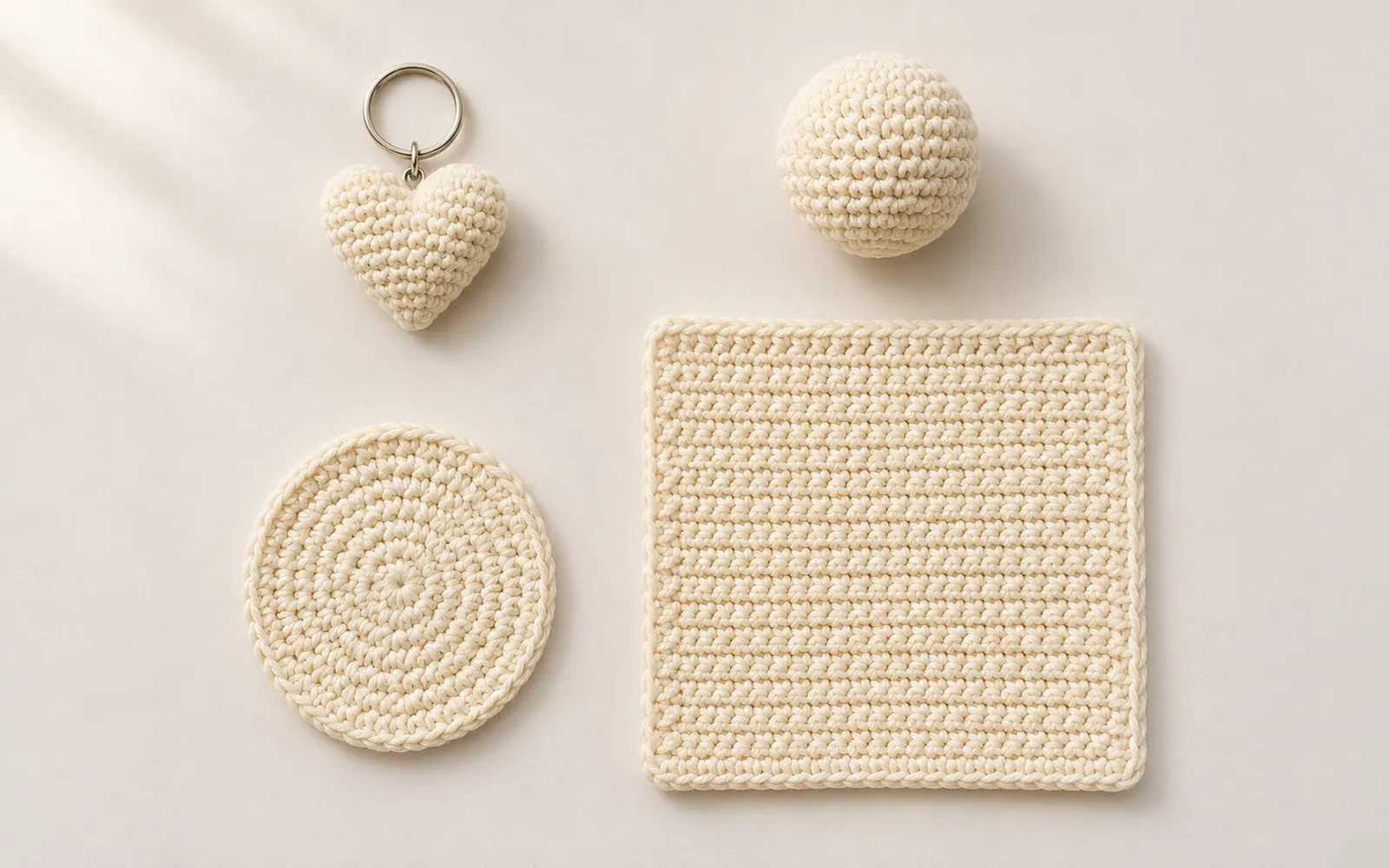
Four small cream crochet pieces laid flat: a heart keychain, a round coaster, a small stuffed ball and a square dishcloth, on an off-white surface
Table of Contents
  1. How to Pick Your Next Crochet Project
  2. Skill Levels and Practice Projects
  3. Keychains: The Smallest Project That Still Gets Used
  4. Home Decor: Coasters, Pillows, Baskets and Rugs
  5. Amigurumi: Small Stuffed Shapes
  6. Eyes and Small Parts on Crochet Toys
  7. Toys and Games
  8. Hats: The First Project Where Fit Matters
  9. Bags: From Market Totes to Crossbodies
  10. Baby Blankets: Size, Stitch and Patience
  11. Cardigans: When Fit, Shaping and Yarn Amount All Count
  12. Holiday and Seasonal Projects
  13. Frequently Asked Questions
  14. What to Read Next

Quick answer: Crochet project guides help you pick what to make by time, skill and yarn. Start small, such as a keychain, a coaster or a small toy, then add one new thing per project: a stitch, a shape or a yarn. Each project type below links to its own guide with the full steps.

You can chain, single crochet and double crochet, and now the pattern shelf is full. Hats, bags, toys, blankets and cardigans all look possible, and none of them looks like the next step. Picking wrong means a project that stalls halfway or comes out the wrong size.

This page sorts crochet projects by type and by what each one asks of you. It starts with how to choose, then gives a short section on keychains, home decor, amigurumi, toys, hats, bags, blankets and cardigans, with a link to the full guide for each.

I pick my next project by the time I have, then by the one skill I want to practice. That keeps each project small enough to finish and gives it one clear lesson.

How to Pick Your Next Crochet Project

To choose a crochet project, start with the time you have, then the skill you want to practice, then whether it has to fit, then the yarn you own. See free crochet patterns for beginners and crochet tools for beginners.

Four Questions Before You Choose

Four questions pick a crochet project: how much time you have, which skill you want to practice, whether it has to fit, and how much yarn you own.

  1. How much time do I have: an evening, a weekend or several weeks?
  2. Which one skill do I want to practice: a stitch, a shape or a yarn?
  3. Does it have to fit a person or a space, so that gauge matters?
  4. How much yarn do I have, and what weight?

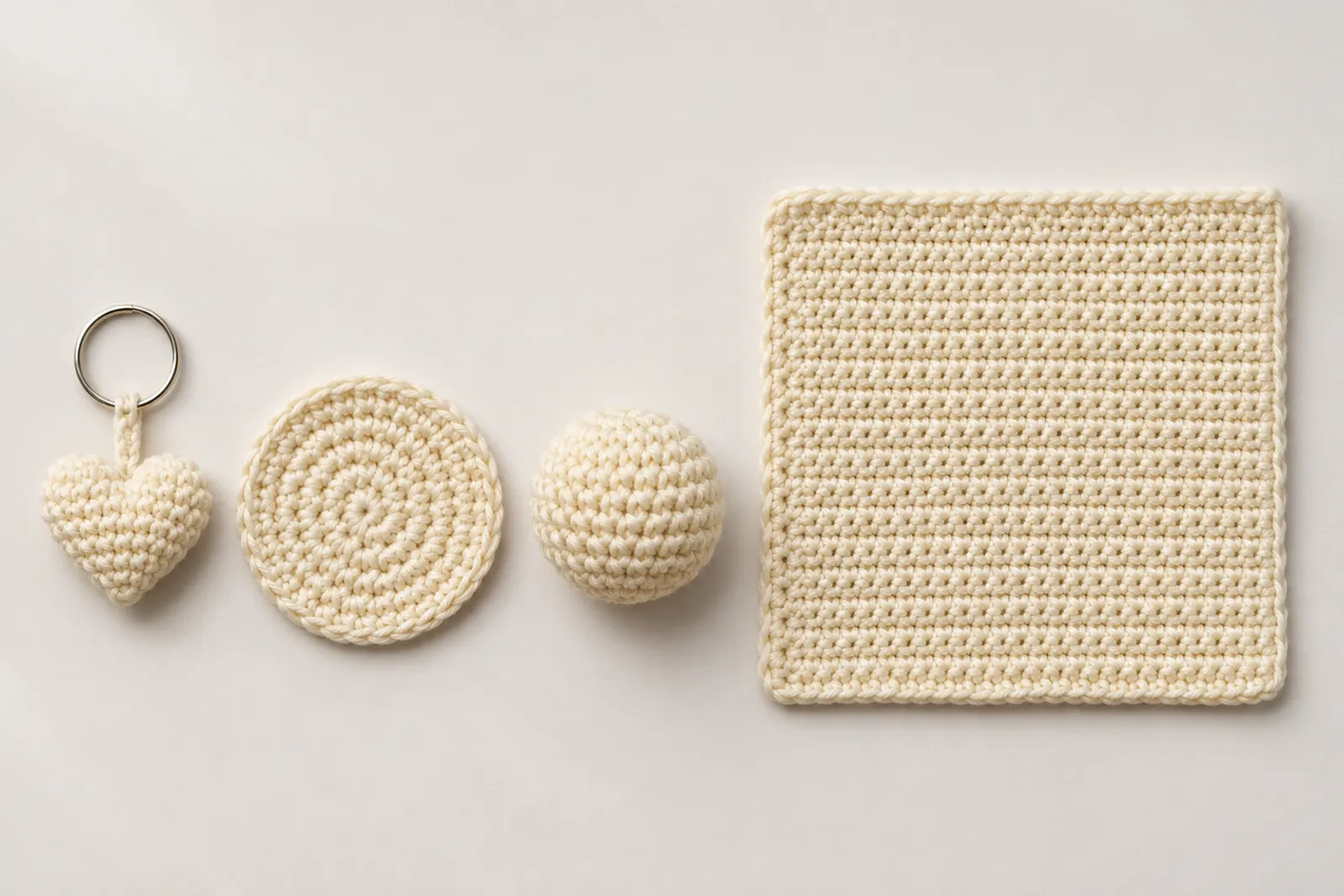
Count yarn by yardage, not ball weight, because weights differ. The crochet yarn weight guide and best yarn for beginners cover the choices. Leftover yarn makes another small project. The photo below shows four small projects.

Crochet project guides starter set: a heart keychain, a round coaster, a small stuffed ball and a square dishcloth laid in a row, all in cream yarn Four small first projects: a keychain, a coaster, a small amigurumi and a dishcloth.
Project Types at a Glance

Crochet projects fall into eight common types, and they differ most in how much time they take and whether size matters. Levels and times are rough and vary by pattern and maker.

Project type Usual level Typical time (varies) Does gauge matter? Guide
Keychains Beginner Under an hour to an evening No Keychain guide
Home decor Beginner to intermediate An evening to a weekend Only for pillow covers Home decor guide
Amigurumi Beginner to intermediate An evening to a weekend Test piece Amigurumi guide
Toys and games Beginner to intermediate An evening to a weekend Test piece Toys and games guide
Hats Beginner to intermediate An evening to a weekend Yes Hat guide
Bags Beginner to intermediate A weekend For shape and size Bag guide
Baby blankets Beginner to intermediate Several weeks Helps with size and yarn amount Baby blanket guide
Cardigans Intermediate to advanced Several weeks Yes, essential Cardigan guide

I swatch for anything that has to fit, like hats and cardigans, and I test a small piece for toys.

Skill Levels and Practice Projects

A skill level is the pattern maker’s opinion, so use it as a hint and check the stitches the pattern uses. See how to read a crochet pattern for what a pattern asks, and the beginner’s guide to crochet if you are still learning the basics.

What the Skill Levels Mean

The Craft Yarn Council describes four project levels, basic, easy, intermediate and complex, and the site sorts patterns into beginner, intermediate and advanced. Basic projects use basic stitches, such as washcloths, simple blankets, hats and scarves. Easy ones add simple stitch patterns, color work or shaping, and intermediate ones use involved versions of those. Complex projects, such as sweaters and detailed amigurumi, combine complex stitch patterns, color work and shaping. Browse beginner crochet patterns, intermediate crochet patterns and advanced crochet patterns to see the site’s levels. The Council’s yarn-label skill symbol runs from beginner to experienced, so the names differ between sources. Levels are subjective, and another site may rate the same pattern differently.

1 Beginner Keychains Coasters Dishcloths Simple hats and blankets 2 Intermediate Amigurumi Toys Bags Shaped hats 3 Advanced Cardigans Detailed amigurumi Colorwork bags Add one new thing per step: a stitch, a shape or a yarn.
Typical projects by level. Levels are a rough guide, not a rule.

Practice Projects for Each New Stitch

Practice each new stitch on a small project you can finish, and change only one thing at a time: the stitch, the shape or the yarn. Many learner books pair each new stitch with a small project: a chain-stitch bracelet near the start, dishcloths and a scarf for the basic stitches, a hat once you can work in rounds, and a pillow with a color-change technique at the far end. I add one new thing per project, a new stitch, a new shape or a new yarn, never all three. See crochet stitches and techniques for the stitches and free crochet patterns for beginners for ten free beginner patterns.

Keychains: The Smallest Project That Still Gets Used

A crochet keychain is small enough to finish in one sitting and still ends as something you use or give. It is the smallest project in this guide that still gets used. The crochet keychain tutorial has the full steps.

Why Start With a Keychain

A crochet keychain uses a few yards of yarn, needs no gauge and practices the same small shapes as amigurumi. Scraps work, because nothing has to fit, and a mistake costs only a few minutes of work, so you can undo it and try again. It teaches tiny shapes, working in rounds and the magic ring, the same moves amigurumi uses; the magic ring crochet tutorial shows the start. A keychain also makes a quick gift, and it is a low-risk way to try a new stitch or yarn. Most take under an hour to an evening, though time varies with the pattern and how fast you work. The keychain guide has the steps.

What You Need and Where to Go Next

A crochet keychain needs a hook, scrap yarn, a yarn needle and a key ring or clasp. The yarn needle weaves in the ends, and a craft store sells the key ring or clasp. A hook in the size the pattern asks for is the only other thing to check. Crochet tools for beginners lists the rest of a starter kit. The Heart Keychain is one place to start, and the keychain patterns hub has more. Keep a small bag of scraps sorted by weight, and the next keychain is ready to start. The next step up is a small animal or fruit keychain, which leads into amigurumi, covered below.

Home Decor: Coasters, Pillows, Baskets and Rugs

Most crochet home decor does not have to fit a person, so it forgives uneven gauge. It runs from flat coasters to pillow covers, baskets and rugs, and size matters only for some. The crochet home decor guide gives the full steps.

Coasters, Dishcloths and Pot Holders

Coasters, dishcloths and pot holders are flat, small and forgiving, so they suit practicing a new stitch. They are small squares and circles worked in rows or rounds, and a coaster does not need to be an exact size. A dishcloth is a good place to try a new stitch pattern, because a small piece shows the stitch clearly and finishes fast. Fiber matters more than gauge for anything that meets heat or gets washed, so read cotton vs acrylic yarn before you choose. Make one in a plain yarn first, then try a stitch with more texture, and compare the two. Try the Citrus Slice Coaster.

Pillows, Baskets and Rugs

A crochet pillow cover has to fit its insert, so check gauge, while baskets and rugs can be made from string, fabric strips or plastic bag strips. A swatch helps with the cover. A pillow cover can be worked as one flat piece or as joined squares, then closed around the insert, so measure the insert before you start and compare it with your swatch. Strings make stiff baskets, fabric strips make rugs, and plastic bag strips need a large hook, N/15 or 10 mm and up; the crochet hook size chart has the sizes. Try the Cactus Pillow or browse home decor patterns. The home decor guide has the steps for each.

Amigurumi: Small Stuffed Shapes

Amigurumi is the craft of small stuffed crochet shapes, usually worked in rounds from a magic ring. It rests on a few repeated moves rather than many different stitches, so it suits a small, finished project. For the full construction, see how to make amigurumi.

What Amigurumi Asks of You

Amigurumi asks you to work in rounds, shape with increases and decreases, stuff the piece and sew parts together. The first two come from the stitch pages: the magic ring crochet tutorial and the amigurumi invisible decrease. Treat it as an intermediate step if you have not worked in rounds, and a beginner one if you have. Stuffing and sewing are learned by doing, so make the first piece small. A small animal shows the whole process, from the first ring to the last seam, and each part is a skill you can practice on its own. Try the Minimalist Frog Amigurumi or browse amigurumi patterns. The amigurumi guide covers the full steps.

Choosing Yarn and Hook for Amigurumi

Amigurumi works best in smooth, tightly twisted yarn and a hook smaller than the label suggests, so the fabric is firm and the stuffing does not show. Smooth yarn also shows each stitch, which helps when you count rounds. A test piece before you start shows whether the stitches are tight enough, and if you can see stuffing between them, go down a hook size and try again. Pick one weight and one fiber for the whole piece, so every part has the same firmness, and check the label’s care line too, because stuffed pieces are handled often. See best yarn for amigurumi for the yarn comparison and the amigurumi color guide for choosing colors.

Eyes and Small Parts on Crochet Toys

Eyes, noses and other small parts decide who a crochet toy is suitable for, so choose them before you start. This is common maker guidance, not a safety standard, so check the rules in your own country. The sections below split eyes from other small parts.

Eyes: Safety Eyes or Embroidered

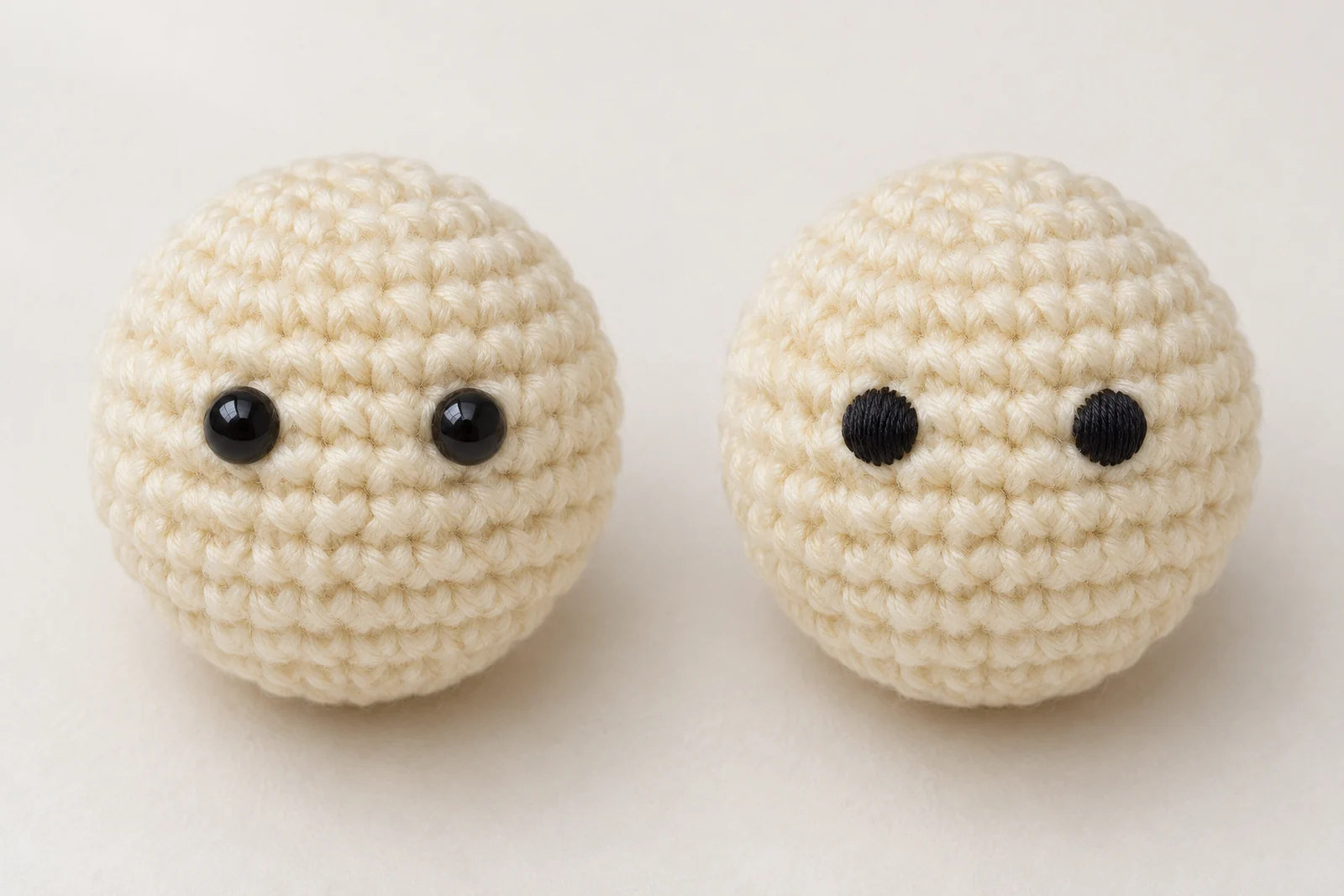
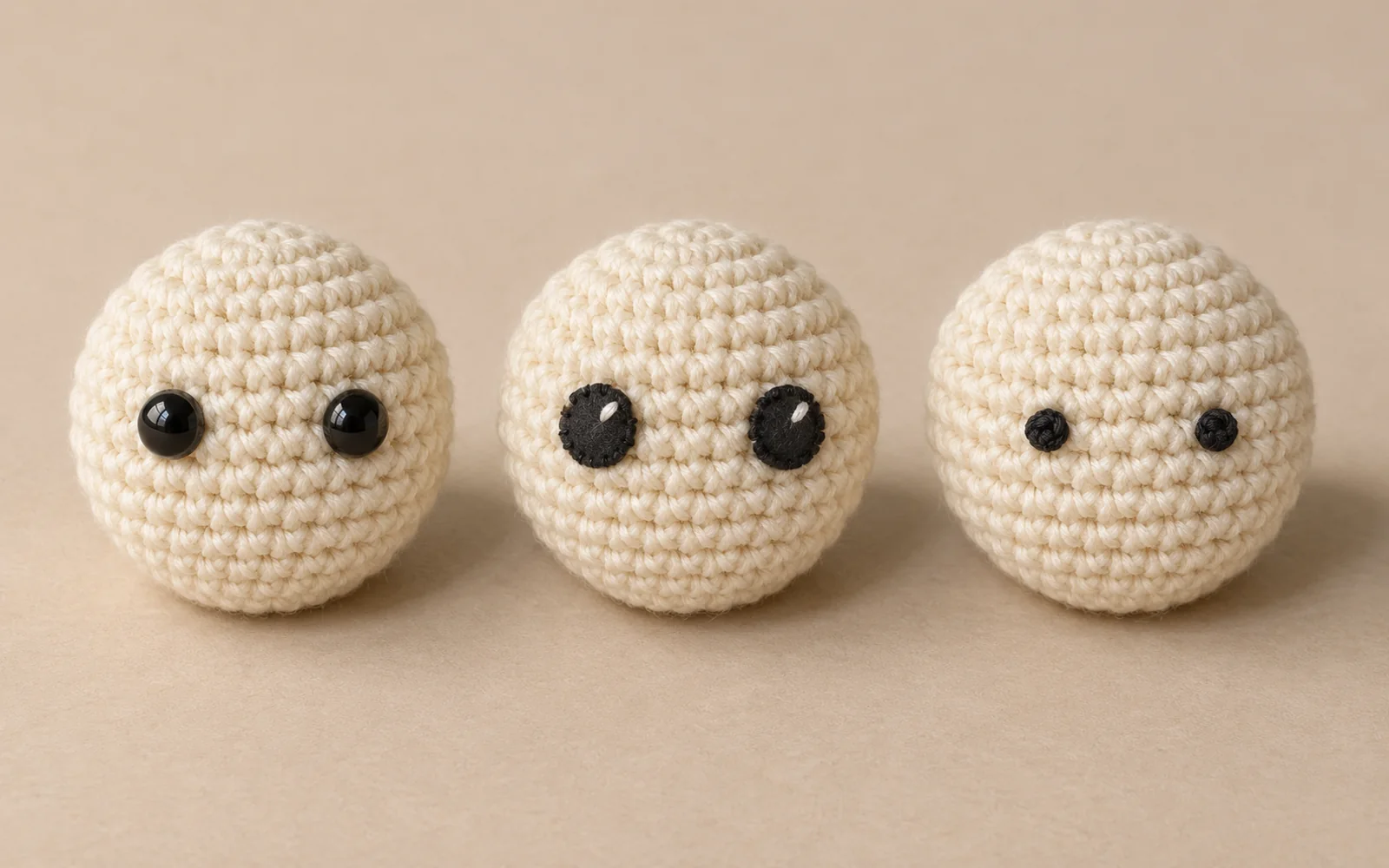
For babies and very young children, guides say to embroider the eyes with yarn, and never to use buttons. Some guides also allow special safety eyes that meet your country’s rules. For under one year, guides prefer yarn eyes to plastic ones. Safety eyes have a locking ring on the back and cannot be moved once locked, so place them with care. One guide calls “safety eye” a marketing term, and any safety eyes should comply with current regulations in your country. Neither kind is a guarantee of safety, so the rules for your country still apply. The photo below shows both kinds on the same shape, made on purpose. For sizes, placement and alternatives, see amigurumi safety eyes.

Two small cream stuffed crochet balls side by side, the left one with black plastic eyes and the right one with embroidered eyes in the same place Made on purpose: plastic safety eyes (left) and embroidered eyes (right) on the same small shape.
Other Small Parts and Stuffing

For children under three, guides say to avoid small parts that could come off, use fiberfill only, work tight stitches and weave in every end. Fiberfill only means no pellets or beads. Many guides call about 1¼ in (3 cm) a small part and keep ribbons and strings under 12 in (30 cm), though sources vary. Rules differ by country, so check your own country’s toy rules; nothing here claims a toy is safe. If you sell what you make, those rules can apply to children’s items too. See the safety eyes guide for eyes and the toys and games guide for toy materials.

Toys and Games

Crochet toys go beyond stuffed animals to stacking toys, rattles, memory games and tic tac toe sets. Most are small shapes made in rounds or flat, so they build on the earlier basics. See the crochet toys and games guide for the full guide.

Soft Toys, Stacking Toys and Games

Crochet toys include stacking toys, baby rattles, memory games and tic tac toe sets as well as soft animals. Memory and tic tac toe pieces are small flat or round shapes, the same shape repeated in different colors. Rattles and stacking toys are also built from a few shapes, so one skill carries across the kinds. That repetition makes them good practice for even stitches, because every piece should match the last. Soft animals work like the amigurumi above, and the same small-parts guidance applies. Pieces for very young children follow the eyes and small parts section above. Try the Hot Cocoa Memory Game or browse toy and game patterns.

Materials and Care for Toys

Acrylic is a common choice for crochet toys because it is affordable and often machine washable, so check the label for care. Toys are handled and washed often, so washability matters; best yarn for baby crochet covers baby yarn and best yarn for amigurumi covers amigurumi yarn. Use tight stitches and make a test piece before you commit. Wash a swatch first, the way you plan to wash the toy, because yarn can change in the wash. Choose one yarn weight for the whole toy so the pieces match. The toys and games guide covers toy materials. Keep the care label with the leftover yarn.

Hats: The First Project Where Fit Matters

A hat is often the first crochet project that has to fit a head, so it is where gauge starts to pay off. Hats also use the stitches you already know. See how to crochet a hat for sizes and steps.

Why a Hat Makes a Good Next Project

A first crochet hat can be worked flat with stitches you already know, and shaped hats add increases and decreases in the round. The Craft Yarn Council lists hats among basic projects. Learner books give a first hat worked flat, with the ends joined by a slip stitch, and label it beginner. Shaped hats worked in rounds are a step up. Choose the flat version first if you have not worked in rounds, and the shaped one once you have. Either way, start with a yarn you have used before, so the shape is the only new thing. Browse hat and wearable patterns.

Fit, Gauge and Fiber

A crochet hat has to fit, so swatch first and go up a hook size if you have more stitches than the gauge calls for. More stitches than the gauge means the fabric is tight, so a larger hook loosens it. Measure the swatch over 4 in (10 cm) and count the stitches before you compare it with the pattern. Some guides suggest wool for hats and merino for children’s pieces; fiber changes warmth and care, so see crochet yarn and materials and cotton vs acrylic yarn before you choose. The crochet hook size chart covers hook sizes, and the hat guide covers fit. Try the Modern Diamond Beanie.

Bags: From Market Totes to Crossbodies

A crochet bag is flat pieces joined into a container, so it teaches shaping and finishing without a body measurement. A bag also gives you a practical result without the risk of a poor fit. See how to crochet a bag for the full steps.

Totes, Market Bags and Crossbodies

Common crochet bags are the mesh market bag, the tote and the small crossbody. A mesh market bag is open and stretchy, a tote has a flat base and two handles, and a small crossbody has a strap and a closed shape. The base and the handles are the parts that teach most: the base teaches you to keep a flat piece flat, and the handles teach you to attach a strong strip. Pick the kind by how you plan to use it, because each one asks for a different fabric. Try the Mesh Market Bag or the Mini Crossbody Bag, or browse bag patterns. The bag guide has the steps.

What a Bag Needs From the Fabric

A crochet bag carries weight, so it needs a dense fabric and strong handles. A tighter fabric needs a smaller hook, and the crochet hook size chart has the sizes. Handles take the most strain, so work them firmly. If the handles stretch when you load the bag, the fabric is too loose, so go down a hook size. Colorwork bags use tapestry crochet, covered in the tapestry crochet tutorial, and granny square bags use motifs, covered in how to crochet granny squares. Learner books label a simple bag easy. Make a swatch first, and check that it holds its shape when you pick it up.

Baby Blankets: Size, Stitch and Patience

A crochet blanket is one simple repeat worked for a long time, so it asks for patience more than skill. That makes it a good project for learning one stitch well. The crochet baby blanket guide has sizes, yarn amounts and borders.

Sizes and Builds

A crochet blanket can be one large piece, a set of joined squares or a set of strips, and its size depends on how it will be used. A stroller or crib blanket is smaller than a lap throw, and this page gives no sizes. A large piece worked in rows or rounds needs no joining, while squares and strips are made in parts and joined; how to crochet granny squares covers the squares. Choose the build that fits the way you like to work, and pick the size before the yarn, because the size sets how much yarn you need. Try the Boho Rainbow Baby Blanket or browse blanket patterns.

Yarn, Washing and Time

A baby blanket takes several weeks of evenings and a lot of yarn, so work out the amount by yardage and choose a machine washable yarn. Buy all the skeins at once so the dye lot matches; crochet yarn and materials covers the label rules. Baby items are washed often, so machine washable comes first, and best yarn for baby crochet covers baby yarn. The crochet yarn weight guide covers weights. Sources disagree on the hours, so treat the time as rough, and count your progress in weeks, not evenings, so a slow week does not feel like a failure. The baby blanket guide covers the rest.

Cardigans: When Fit, Shaping and Yarn Amount All Count

A crochet cardigan uses every earlier skill at once: stitch pattern, shaping, fit and yarn amount. It is a project to work toward once the earlier ones feel comfortable. See how to make a crochet cardigan for the full guide.

What Makes a Cardigan Harder

A crochet cardigan is harder than a hat or a bag because it must fit, it needs shaping and it takes several weeks. The Craft Yarn Council gives sweaters as an example of complex projects. Gauge is essential, and the shaping at the neck, armholes and sleeves adds new moves. Informal reports put the time at many hours spread over several weeks. Sizes in some guides run by bust measurement, so read the pattern’s size notes; see how to read a crochet pattern. Read the size notes before you buy any yarn. Each of those parts is something you can practice on a smaller project first.

Before You Cast On

Before you cast on a crochet cardigan, swatch and wash the swatch, choose a size from your measurements and check the yardage. Measure the swatch over 4 in (10 cm) after washing, because the fabric can change, and go up or down a hook size if the count is off. Buy all the yarn at once so the dye lot matches. A small size is a lower-risk way to learn the construction before an adult one. See the crochet hook size chart for hooks and the crochet yarn weight guide for weights. Try the Baby Cardigan or the Crew Neck Cardigan. The cardigan guide covers sizing and construction.

Holiday and Seasonal Projects

Seasonal crochet projects follow the calendar, so the question is when to start. Count back from the date, using the times in the table above, and browse holiday patterns for what is available. See seasonal crochet patterns for the full guide.

Planning Backward From the Date

Plan a holiday crochet project by counting back from the date, using a week for a keychain or coaster and several weeks for a blanket or cardigan. A hat or a small toy needs a weekend. Small holiday shapes make good practice, since they repeat the same small moves. Start the biggest piece first and finish the small ones last, since they are quick. Leave a few spare days for finishing and for buying more yarn if you run short. Write the finish date on a calendar and work back to a start date for each piece. The seasonal crochet patterns guide has the ideas.

Gifts and Handmade Sales

Small crochet pieces suit gifts and craft markets because they use little yarn and finish quickly. If you sell what you make, check your own country’s rules for children’s items, and treat the maker guidance in the eyes and small parts section above as a starting point only. Keep each piece simple enough to repeat, so you can make several in the same yarn. A small piece in a plain yarn is easier to repeat than a detailed one. When you give a handmade piece, include a label from the yarn so the person knows how to wash it. See seasonal crochet patterns for gift ideas and the toys and games guide for toy materials.

Frequently Asked Questions

What should I crochet first?

Start with something small that you can finish in one or two sittings, such as a keychain, a coaster or a dishcloth. Small pieces show every stitch, use little yarn and give a quick finish. Add only one new thing next time, then move to a hat or a small toy. See the keychain guide and free crochet patterns for beginners, and the How to Pick Your Next Crochet Project section above.

How do I know if a crochet project is too hard for me?

Check the stitches and the shaping: if the pattern uses only stitches you have made and adds at most one new thing, a stitch, a shape or a yarn, it is within reach. See how to read a crochet pattern and the Skill Levels and Practice Projects section above for what to check. Levels are only a hint, because makers label their own patterns, so a project rated easy on one site may be rated intermediate on another.

Do I need to check gauge for every crochet project?

No, only when size matters. Swatch for anything that has to fit, such as hats and cardigans, and for pillow covers. Coasters, keychains and baskets need not be an exact size. For toys, make a test piece to check the stitches are tight enough. See the crochet hook size chart for hook sizes and the table in the How to Pick Your Next Crochet Project section above.

How long does it take to crochet a project?

A keychain can take under an hour, a coaster or small toy an evening, a hat or bag a weekend, and a blanket or cardigan several weeks. Times vary with the pattern, the stitch, the yarn and how often you crochet, and sources disagree, so treat these as rough. The table in the How to Pick Your Next Crochet Project section above gives the ranges by project type.

What can I crochet with leftover yarn?

Small projects that use a few yards of yarn, such as keychains, coasters and small amigurumi. The squares of a scrap blanket work too. Check the amount by yardage rather than ball weight, because weights differ, and keep to one weight so the fabric stays even. See the crochet yarn weight guide for weights and the Keychains section above for the smallest projects.

What should I check before crocheting a toy for a baby?

Guides say to embroider the eyes with yarn for babies under one year and avoid small parts that could come off for children under three. They also say to use fiberfill only, work tight stitches and weave in every end. Rules differ by country, so check your own. This is maker guidance, not a safety standard. See the safety eyes guide and the Eyes and Small Parts on Crochet Toys section above.

The nine project guides behind this page, in decision order:

For holiday projects, see seasonal crochet patterns. For ten free beginner patterns, see free crochet patterns for beginners, and browse all free crochet patterns. For stitches, see crochet stitches and techniques, and for yarn, crochet yarn and materials.

Portrait of Linda Davidsen

Written by

Linda Davidsen

Designer & founder

Linda has been crocheting for over 15 years and designs cozy, beginner-friendly patterns that anyone can finish in a weekend.

Keep reading

All posts