🧶 Yarn Calculator

Try

Visit our Etsy Shops

Pick a shop to browse. Each one opens on Etsy in a new tab.

Crochet Projects

Crochet Baby Blanket Guide: Sizes, Stitches & Yarn

Crochet baby blanket guide: sizes by use, three ways to build, stitches without big holes, how much yarn to buy, borders, washing and a sleep note.

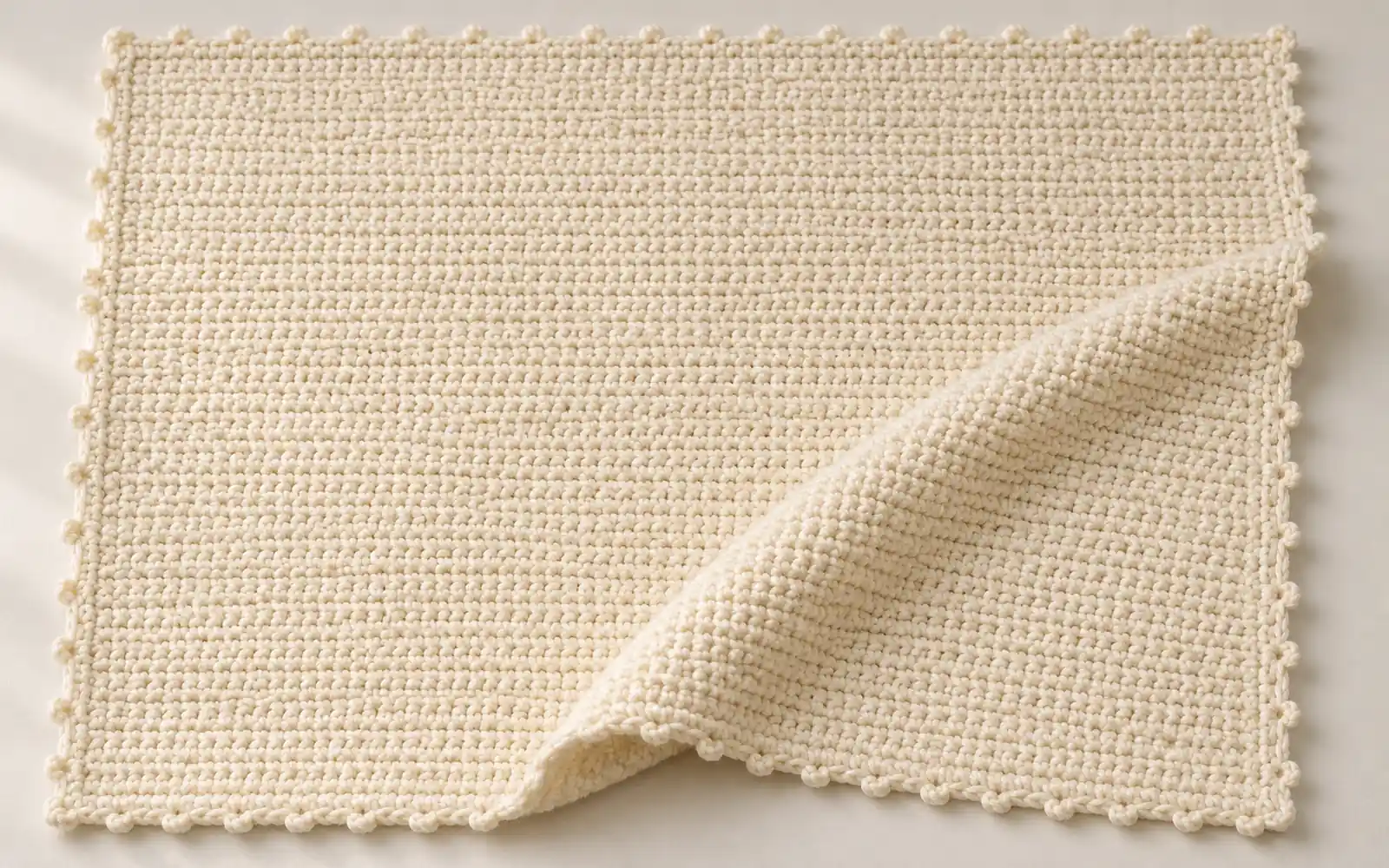
A cream crochet baby blanket with a small picot edge lying flat, with one corner folded back, on an off-white surface
Table of Contents
  1. How Big Should a Baby Blanket Be?
  2. Three Ways to Build a Baby Blanket
  3. Stitches That Suit a Baby Blanket
  4. How Much Yarn to Buy
  5. Borders That Finish the Edge
  6. Using and Washing the Blanket
  7. Common Problems and Fixes
  8. Key Takeaways
  9. Frequently Asked Questions

Quick answer: A crochet baby blanket guide starts with the use: choose a size, a build and a simple closed stitch, then work out the yarn by weighing a swatch. Finish with a plain single crochet border, wash it by the yarn label, and check your country’s safe-sleep guidance before it goes in a crib.

You want to make a blanket for a new baby and the questions pile up before the first chain: how big, which stitch, how many skeins, and what to do about the edge. Every pattern answers them differently, and a blanket is a long project to get wrong.

This guide goes in the order you decide: size by use, three ways to build, stitches, how much yarn to buy, borders, and care. A size table, a yarn method, a problem table and baby blanket patterns to try are included.

I make a swatch and weigh it before I buy the yarn. That small square tells me how much the whole blanket needs, and I would rather know before I start.

How Big Should a Baby Blanket Be?

There is no single baby blanket size: a lovey is about a foot square and a toddler throw is about 40 by 50 inches or more, and sources differ. The right size depends on use. To choose a project, see crochet project guides.

Sizes by Use

Use Rough size in the sources Often used for
Lovey or security blanket 10 to 18 in square (25 to 45 cm) A small square for a baby to hold
Car seat or stroller 20 × 24 to 30 × 36 in (50 × 60 to 75 × 90 cm) A cover for a seat or pram
Receiving 30 to 40 in square (75 to 100 cm) A square to lay down or wrap
Crib 30 × 36 to 45 × 60 in (75 × 90 to 115 × 150 cm) A cot-size throw; see sleep below
Toddler or baby throw 40 × 50 to 44 × 60 in (100 × 125 to 110 × 150 cm) A blanket a child grows into

Crib sizes run from about 28 × 52 to 45 × 60 in, and two guides show about 30½ × 41 and 36¼ × 42 in, so treat it as a range. See blankets and throws patterns or the Sheep Lovey. A lovey with a toy head: see the crochet toys and games guide.

Lovey 12 × 12 in 30 × 30 cm Stroller 30 × 36 in 75 × 90 cm Receiving 36 × 36 in 90 × 90 cm Crib 36 × 54 in 90 × 135 cm Toddler 42 × 52 in 105 × 130 cm Examples from the table's ranges
Five baby blanket sizes drawn to the same scale.

Choosing and Adjusting Your Size

Choose the size by how the blanket will be used, then adjust it by adding foundation chains to widen it or rows to lengthen it. The finished size depends on the hook, tension and gauge, so a pattern’s size is only an estimate; see how to read a crochet pattern. A baby blanket is a long project more than a hard one; see the project guides for time and skill.

Three Ways to Build a Baby Blanket

A crochet baby blanket is built as one large piece, as joined squares or as joined strips. The choice depends on how you like to work and where you crochet, and all three can use the same stitch and yarn. The sections below take each in turn.

One Piece, Worked in Rows

A one-piece crochet baby blanket is a foundation chain worked in rows to the length you want, and the chain count comes from your swatch. Multiply the stitches per inch by the width in inches, then adjust to the pattern’s multiple if it has one; see reading a pattern. Work the first row into the chain, turn and repeat, and count the stitches every few rows so the edges stay straight. It can also be worked in rounds from the center out. Left-handed makers work the rows in the opposite direction; the stitches are the same. Try the Boho Rainbow Baby Blanket or the Bunny Baby Blanket.

Joined Squares

A joined-squares baby blanket is made of motifs, such as granny squares, crocheted one at a time and joined as you go. Squares suit small bags of yarn and a lap project. One guide’s baby blanket uses 168 granny squares in DK yarn for about 36¼ × 42 in, joined as you go, and advises planning the colors and crocheting a few sample squares before buying yarn. The number of squares and the finished size depend on the pattern; see how to crochet granny squares for the squares and joining.

Strips

A strip blanket is made of long narrow panels worked one at a time and joined along the sides, so you only carry one strip at a time. One guide joins double crochet strips as you go and calls them portable, easy to handle, scrap-friendly and quick. Single crochet at the start of each row keeps the edges straight. Details vary by pattern; try the Bear Baby Blanket.

Stitches That Suit a Baby Blanket

Choose a baby blanket stitch that lies flat, has small gaps and is easy to repeat for weeks. A baby blanket is one simple repeat worked for a long time. The sections below cover closed stitches, open stitches and texture.

Closed Stitches That Lie Flat

Single crochet, half double crochet and double crochet all make a flat baby blanket, and single crochet is the densest. Half double crochet is softer, and double crochet is taller, works up faster and drapes more. Shell stitch is beginner-friendly and a granny stripe is forgiving; see shell stitch crochet. Test the stitch on your swatch, because a good baby blanket stitch lies flat without curling. I choose a stitch without big holes for a baby blanket, so a small finger or toe cannot catch in it. Single crochet vs double crochet compares the first two.

Open Stitches and Holes

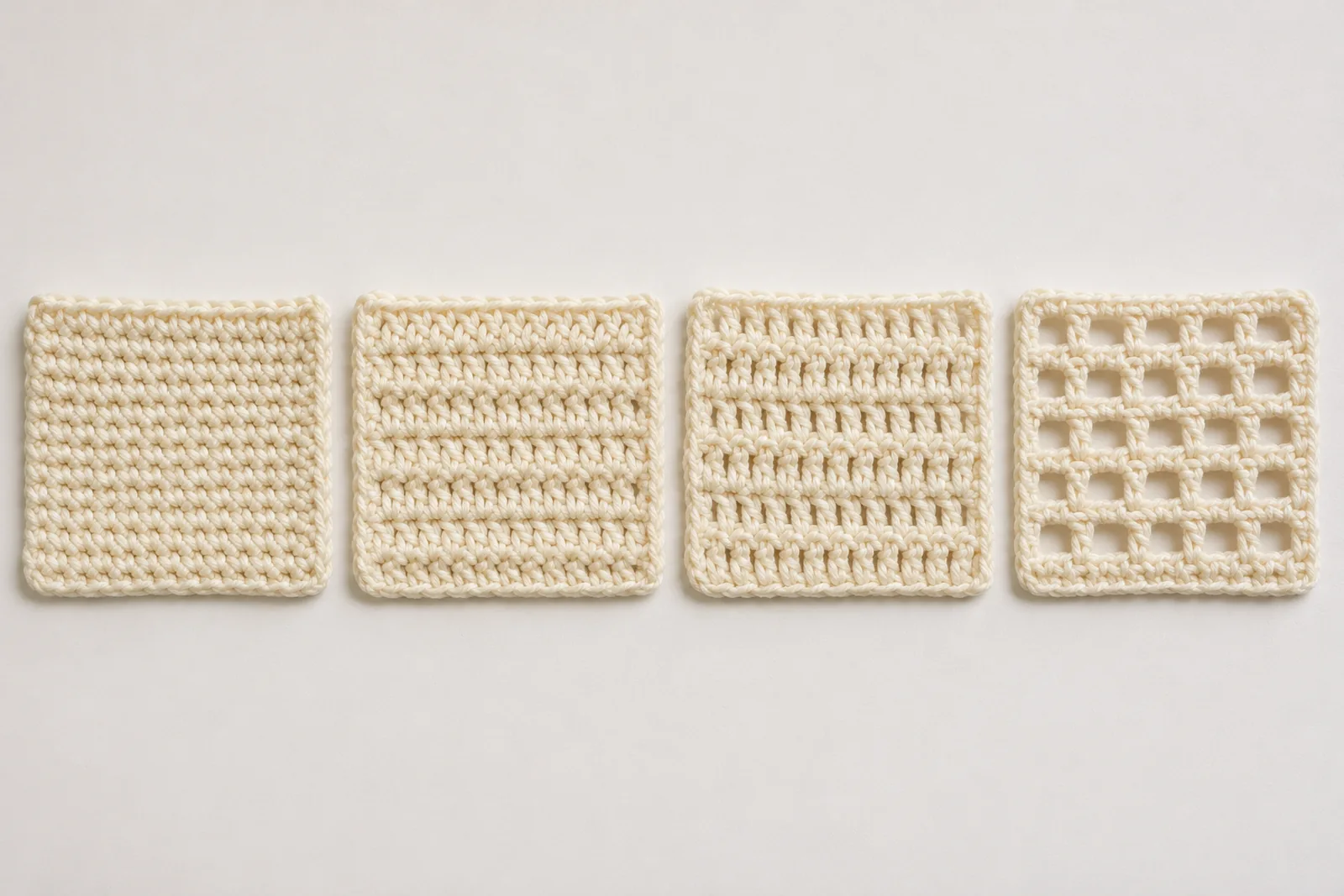
Guides differ on open stitches: some say a lacy blanket breathes, and another warns that small fingers and toes can catch in large holes. Another page says textured stitches should not leave gaps where small fingers could catch. Choose small gaps and test a swatch by poking a finger through it, which is a swatch check, not a safety test. A mesh stitch, double crochet with chain spaces, is open, while half double and single crochet are closed. Even lacy varies: one guide’s lacy baby blanket is single crochet and chain with a large hook. The photo below shows four swatches in one yarn, three closed and one open.

Crochet baby blanket guide to stitches: four cream swatches in a row, single crochet, half double crochet, double crochet and an open mesh, with the gaps growing larger from left to right Four swatches in one yarn: single crochet, half double crochet, double crochet and an open mesh.
Texture, Stripes and Color

Add interest to a baby blanket with a plain stitch in stripes, or with bobbles that are firmly anchored. Stripes in a plain stitch let the colors do the decorating; see how to change yarn color in crochet. Bobbles add texture a baby can feel, but raised parts must leave no gaps; see bobble stitch crochet. Neutral palettes suit any baby; see neutral crochet colors. Keep any trim off the blanket, as the sleep notes below explain.

How Much Yarn to Buy

To estimate the yarn for a baby blanket, crochet a swatch, weigh it and scale the weight up by area. A blanket uses a lot of yarn, so work out the amount before you buy. The sections below give the method, the extra to buy and the weights.

Weigh a Swatch in Five Steps

  1. Crochet a swatch in the blanket’s stitch, yarn and hook, about 6 in (15 cm) square.
  2. Measure it flat and unstretched, and weigh it in grams.
  3. Divide the blanket’s area (width times length) by the swatch’s area.
  4. Multiply the swatch’s weight by that number.
  5. Divide the result by the weight of one ball, round up, and add extra for the border.

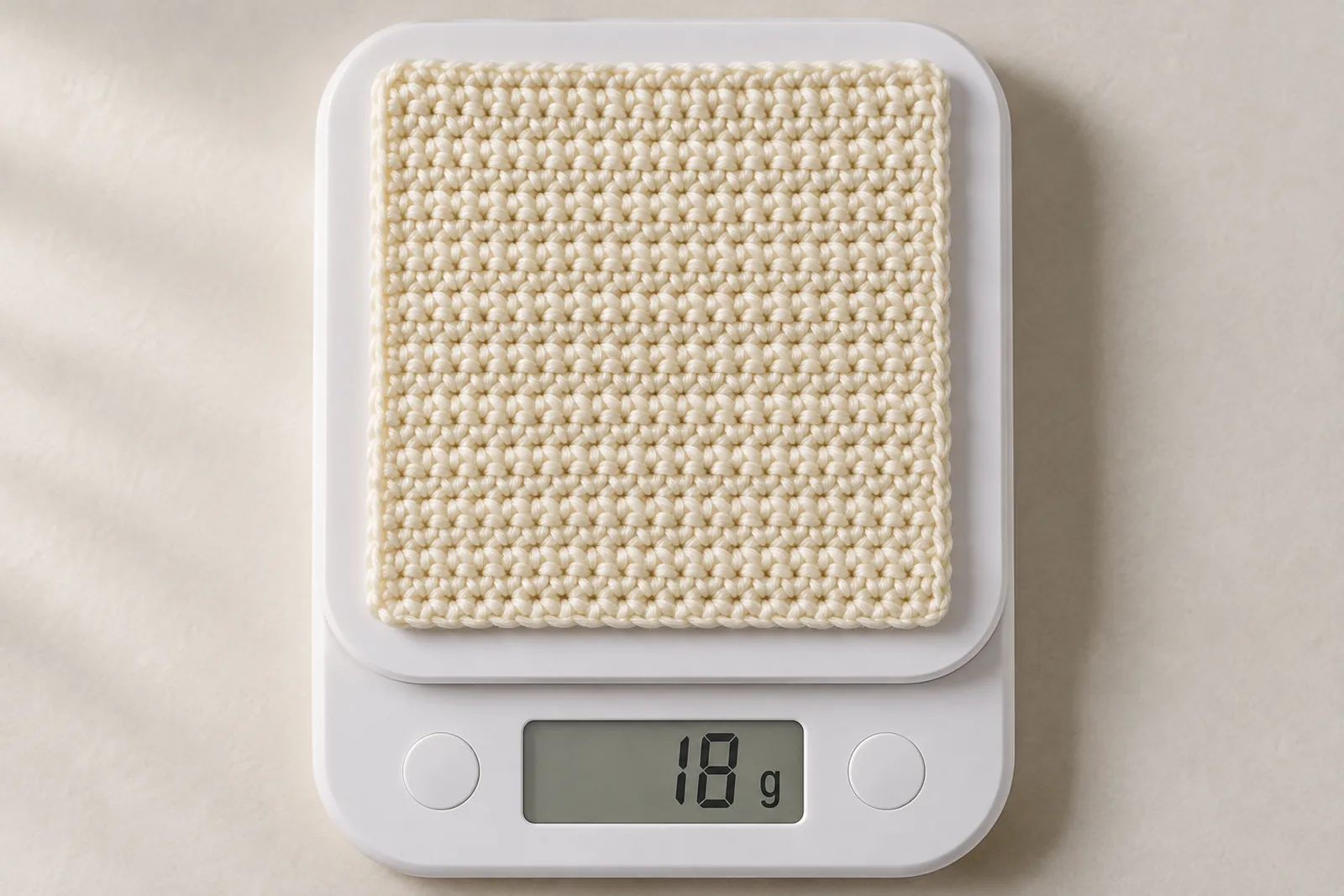
Example only: a 36 × 40 in blanket has an area of 1,440 sq in and a 6 × 6 in swatch has 36 sq in, so 1,440 ÷ 36 = 40. A swatch that weighs 6 g gives 40 × 6 = 240 g, and with 100 g balls that is 2.4, so buy 3. If the pattern gives yards, use the yardage per ball on the label. The photo below shows a swatch on a kitchen scale.

A square cream single crochet swatch lying on a small white kitchen scale with the display showing its weight in grams A swatch weighed in grams.

Buy Extra and Match the Dye Lot

Buy at least one extra ball of yarn and buy all of it at once from the same dye lot, because a border and a textured stitch use more than you expect. How to read a yarn label covers the dye lot rule. One chart gives about 600 to 1,500 yards for most baby blankets, but its ranges overlap, so the pattern’s yardage is the first check. Leftover yarn can make a matching hat; see how to crochet a hat.

Weight and Fiber: Where to Look

Most baby blanket patterns use DK or worsted weight yarn, and a machine washable yarn comes first. See DK weight yarn, worsted weight yarn and the crochet yarn weight guide. Best yarn for baby crochet covers the choice, and how to substitute yarn in crochet covers swaps, which change the size and the amount. A blanket takes several weeks of evenings, more or less.

Borders That Finish the Edge

A baby blanket border starts with one round of single crochet, because it evens out the edge for any border that follows. The edge count decides whether it lies flat. The sections below cover the plain round, then simple border choices.

One Plain Round First

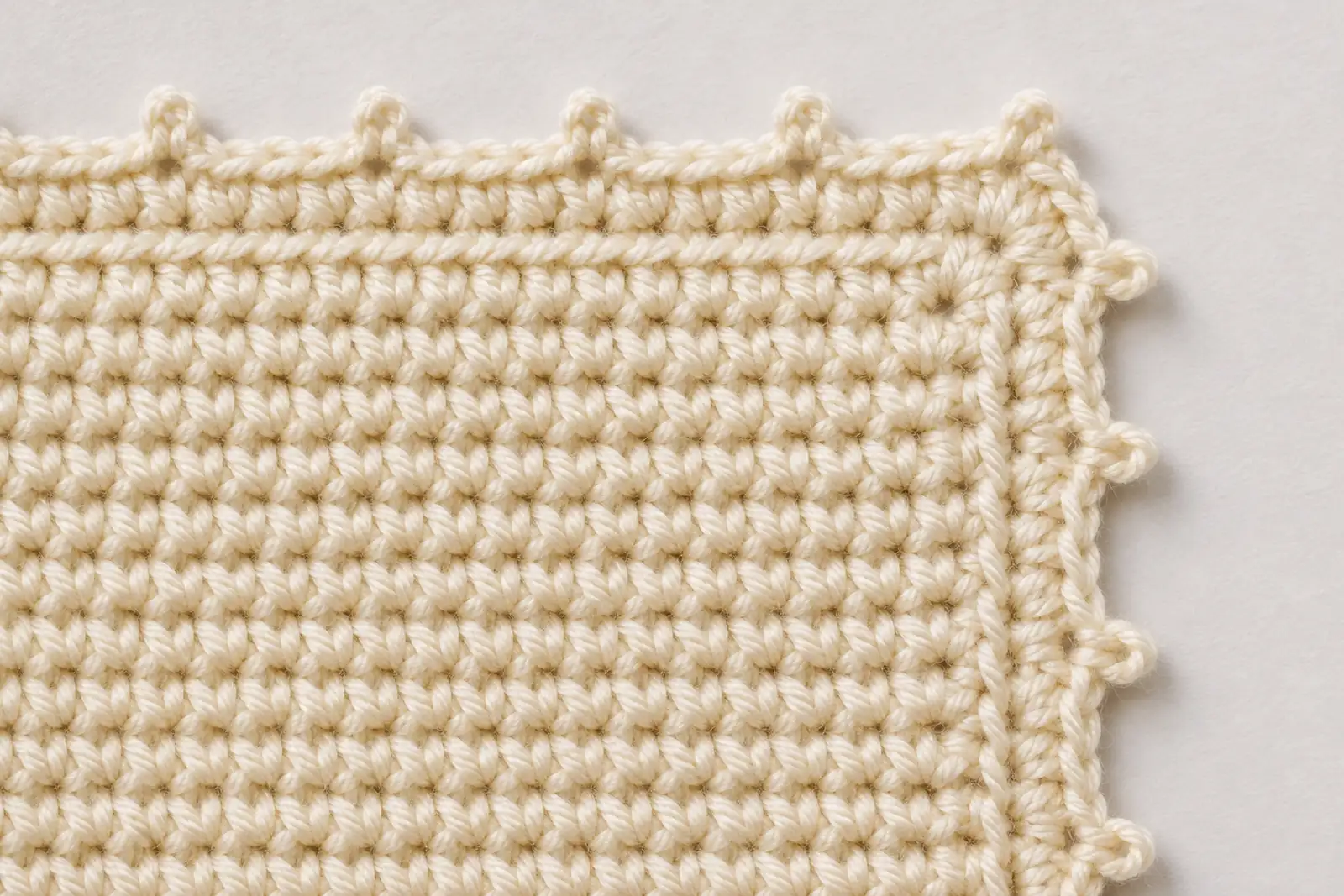
Start every border with one round of single crochet in the main color, working one stitch per single crochet row end and three stitches in each corner. Do not fasten off after the last row; carry on. Along the sides, work 1 single crochet per single crochet row and 2 per double crochet row, usually 1 per half double crochet row, and 1 per chain along the foundation edge. Count each side so the four sides match, then slip stitch into the first stitch. If the edge pulls in, add stitches or go up a hook size; if it ruffles, use fewer. I work one round of single crochet around the edge in the main color before any decorative border. It evens out the edge so the border lies flat. The photo below shows a corner.

Close view of the corner of a small cream crochet blanket sample with a plain single crochet round and a picot round on top, lying flat A plain single crochet round under a picot border, at a corner.
Choosing a Border

A simple border for a baby blanket is one or two more rounds of single or double crochet, a picot round, a shell edge or a crab stitch round. A picot edge is single crochet with a small chain loop, a shell edge makes a scallop (see shell stitch crochet) and a crab stitch round, single crochet worked backward, gives a corded edge. A plain edge is easier to wash and has nothing to catch, so skip beads, ribbons and tassels. Each is a choice.

Using and Washing the Blanket

Before a crochet baby blanket is given, check how it will be used, that nothing can come loose and how it is washed. A baby blanket is used and washed often. The sections below cover sleep, holes and trims, then washing and drying.

Sleep, Holes and Trims

US safe-sleep guidance says to keep loose blankets and soft objects out of a baby’s sleep area, and rules differ by country, so check your own. It says to use a wearable blanket instead of loose bedding, some guides give under 12 months as the age, and another says daytime use under adult supervision is the usual alternative. Ask the child’s doctor too. On holes, sources differ, and small gaps are the cautious choice. Guides say to avoid beads, ribbons, tassels and woven-in ornaments that can come loose, and a lovey with a toy head has small-parts rules; see the toys and games guide. This is maker guidance, not a safety standard, and it does not make any blanket safe.

Washing and Drying

Wash a crochet baby blanket by the yarn label, and when the label allows machine washing, use a gentle cycle in cool water and dry it flat. Labels differ by fiber; see the label guide and the baby yarn guide. Sturdy yarns such as acrylic or some cotton blends can usually go in the machine in a mesh bag; delicate yarns are washed by hand in lukewarm water without wringing. One guide says to avoid hot water. A dryer depends on the fiber, so use it only if the label allows. One page suggests washing a new blanket before gifting.

Common Problems and Fixes

Most crochet baby blanket problems come from the edge count, the tension or the yarn estimate, and each has a quick fix. The table pairs each problem with its likely cause and a fix. A swatch and a count catch most early.

Problem, Cause and Fix

Curling edges, a changing width and a ruffling border are the most common problems, each from the stitch, count or tension.

Problem Likely cause Fix
Edges curl A stitch that does not lie flat Test the stitch on a swatch, choose a flatter one, and add a border round
Blanket gets narrower A stitch dropped at a row end Count the stitches every few rows and mark the first stitch
Blanket gets wider An extra stitch at a row end Count the stitches every few rows
Border pulls in A round that is too tight or has too few stitches Add stitches or go up a hook size
Border ruffles Too many stitches on a side Use fewer stitches per side and count each side
Yarn runs short A guess, or a different dye lot Weigh a swatch, buy extra and match the dye lot

Key Takeaways

  • Baby blanket sizes run from about 10 to 18 inches square for a lovey to about 40 by 50 inches or more for a toddler throw, and sources differ, so decide by use.
  • A blanket can be one large piece, joined squares or joined strips, and all three can use the same simple, closed stitch.
  • To estimate yarn, weigh a swatch, divide the blanket’s area by the swatch’s area, multiply the swatch’s weight by that number and add extra.
  • Start the border with one round of single crochet in the main color, with three stitches in each corner, and count each side.
  • Guides say to keep loose blankets out of a baby’s sleep area and to wash by the yarn label, and rules differ by country, so check your own.

Frequently Asked Questions

What size is a crochet baby blanket?

It depends on the use, and sources differ. A lovey is about 10 to 18 inches square and a stroller blanket about 30 by 36 inches. A receiving blanket is about 30 to 40 inches square, a crib blanket about 30 by 36 to 45 by 60 inches and a toddler throw about 40 by 50 inches or more. The How Big Should a Baby Blanket Be? section above has the table.

What is the best stitch for a crochet baby blanket?

A closed stitch that lies flat, such as single crochet, half double crochet or double crochet; shell stitch and a granny stripe are also common. Single crochet is the densest. Choose small gaps, and test a swatch. The Stitches That Suit a Baby Blanket section above has more, and the single vs double crochet comparison sets the two side by side.

How much yarn do I need for a crochet baby blanket?

Weigh a swatch, divide the blanket’s area by the swatch’s area and multiply the swatch’s weight by that number. Then divide by the weight of one ball, round up and add extra for the border. One chart gives about 600 to 1,500 yards for most baby blankets, and amounts vary with the stitch and weight. The How Much Yarn to Buy section above has an example.

Can a crochet baby blanket go in the crib?

Safe-sleep guidance in the US says to keep loose blankets and soft objects out of a baby’s sleep area, and some guides give under 12 months as the age. Rules differ by country, so check your own and ask the child’s doctor. This guide does not call any blanket safe. The Using and Washing the Blanket section above covers sleep, holes and trims.

How do I wash a crochet baby blanket?

Follow the yarn label. Sturdy yarns such as acrylic or some cotton blends can usually go in the machine on a gentle cycle in cool water, in a mesh bag; delicate yarns are washed by hand. Avoid hot water, dry flat on a towel and use the dryer only if the label allows. The Using and Washing the Blanket section above has more, and the label guide explains the symbols.

Portrait of Linda Davidsen

Written by

Linda Davidsen

Designer & founder

Linda has been crocheting for over 15 years and designs cozy, beginner-friendly patterns that anyone can finish in a weekend.

Keep reading

All posts