đź§¶ Yarn Calculator

Try

Visit our Etsy Shops

Pick a shop to browse. Each one opens on Etsy in a new tab.

Yarn & Materials

How to Substitute Yarn in a Crochet Pattern

How to substitute yarn in a crochet pattern: match the weight, compare yardage, check fiber and gauge, work a swatch and buy the right amount.

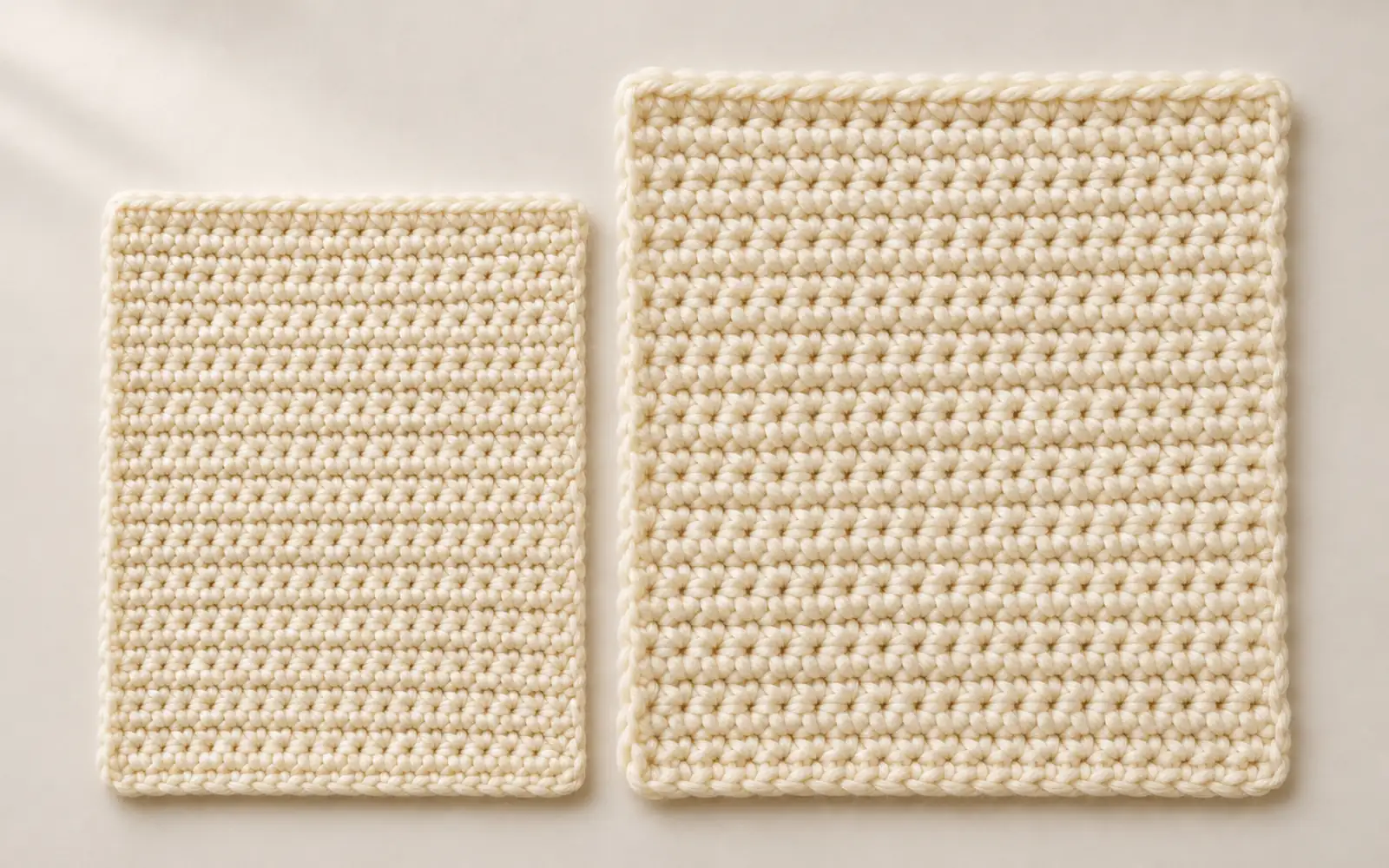
Two cream single crochet swatches side by side, a smaller one on the left and a larger one on the right, on an off-white surface
Table of Contents
  1. What Has to Match When You Swap Yarn
  2. How to Substitute Yarn: Step by Step
  3. Check the Substitute: Thickness and Gauge
  4. Swapping a Different Weight, or Two Strands
  5. When a Swap Goes Wrong
  6. Key Takeaways
  7. Frequently Asked Questions

Quick answer: When you learn how to substitute yarn crochet patterns name, three matches matter: the same weight category, the same total yardage (not ball weight) and the same gauge from a swatch. Match the fiber too when drape matters. Buy one extra skein from the same dye lot.

The pattern names a yarn you cannot find, it costs more than the whole project is worth, or you have three half-used skeins in a bag and want to use them. Swapping yarn seems easy until the blanket comes out the wrong size.

This guide gives a six-step method: match the weight, compare yardage, check thickness, swatch, work out how much to buy and keep the band. It also covers two strands for a thinner yarn, which projects tolerate a swap and what to do when the numbers do not match.

I match the weight first, then compare yards per skein with the pattern’s total yardage, never the ball weight. Two skeins of the same weight can hold very different lengths, and the yardage is what tells me whether I will run out.

What Has to Match When You Swap Yarn

A crochet pattern is written for one yarn, so a substitute has to match its weight, yardage, fiber and gauge. The size, the drape and the amount of yarn all depend on it. For the wider yarn map, see the crochet yarn and materials guide.

Weight, Yardage and Gauge

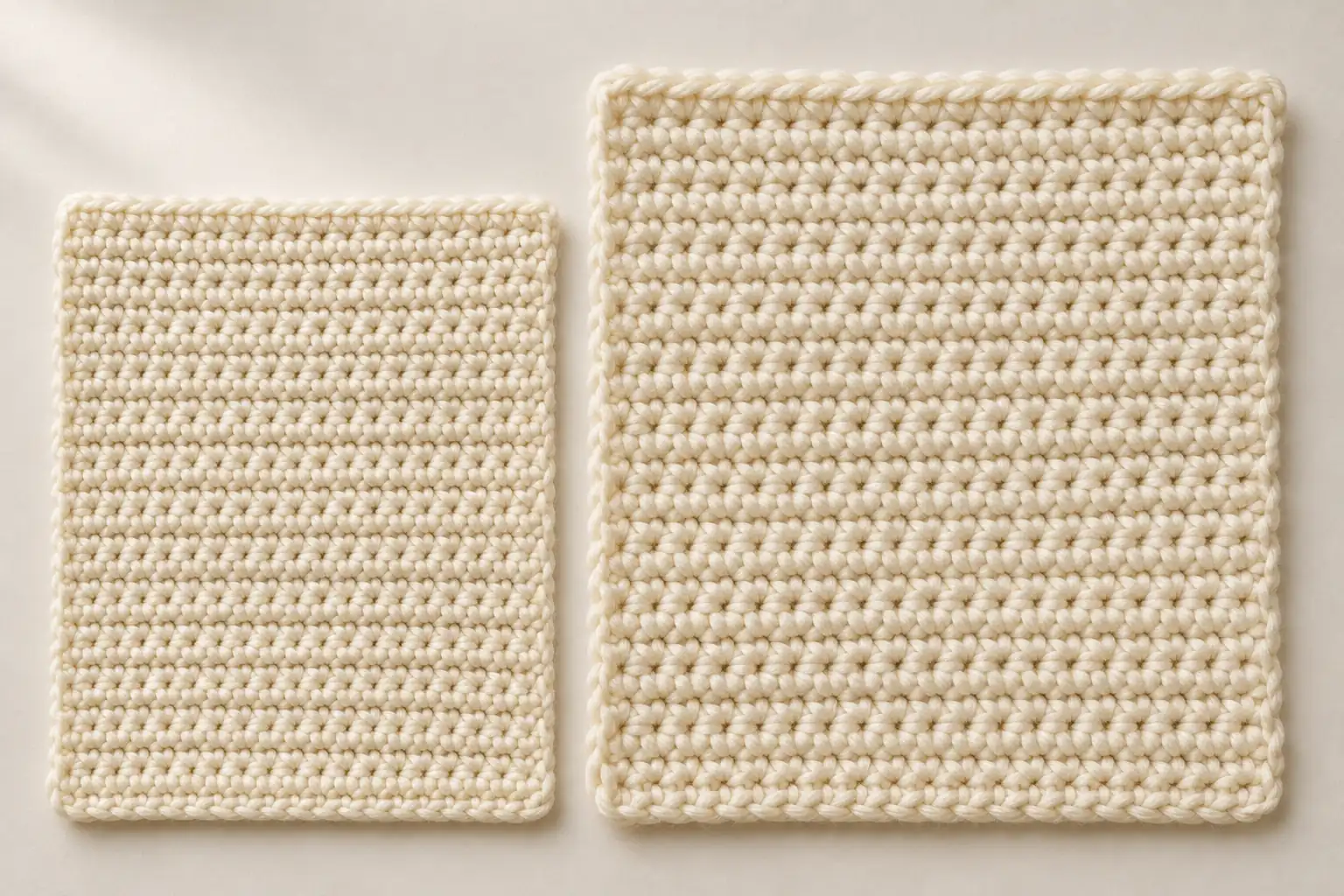
A substitute yarn has to match the pattern’s weight category, its total yardage and its gauge. Weight is the thickness of the strand, so choose the same Craft Yarn Council category (see the crochet yarn weight guide). Yardage is the length in the skein, so buy the same total yardage, not the same ball weight. Gauge is the number of stitches in 4 inches (10 cm), and it is only a guide until you swatch. Two yarns in one category can work up at different sizes. The photo below shows two worsted swatches, same stitch count and hook.

Two cream single crochet swatches made in different worsted yarns with the same hook and stitch count, one visibly larger than the other Both yarns are labeled worsted and both swatches have 20 stitches on the same hook, but the sizes differ.
Fiber, Drape and Care

Fiber changes the drape, the weight of the finished piece and how it is washed. Cotton has little stretch and a heavy hang, and acrylic is usually light, so a swap between them changes how the piece hangs; see cotton vs acrylic yarn. Match the fiber when drape matters, as in garments, or when a pattern relies on it, as a cotton dishcloth does. If you combine yarns in one project, choose ones with the same washing instructions; see how to read a yarn label for care symbols.

Read the Pattern’s Yarn Line

Before you shop, write down the pattern’s weight, total yardage, fiber and gauge. The materials line gives the yarn’s weight, the total yardage or number of skeins, the fiber and often a brand, plus the hook and the gauge. Older and foreign patterns may use measurements that do not match today’s yarns, so check the numbers rather than the name. The colors a pattern lists are only suggestions. For finding the yarn line in a pattern, see how to read a crochet pattern.

How to Substitute Yarn: Step by Step

Substituting yarn takes six steps, and the first four rule out a poor choice before you buy the rest. The method checks the cheap things first: weight, yardage and thickness, then a swatch. A table after the steps works the yardage out.

The Six Steps

To substitute yarn in a crochet pattern, follow six steps: read the pattern, choose the weight, compare yardage, swatch, calculate and buy.

  1. Read the pattern’s yarn details: weight, total yardage, fiber, hook and gauge.
  2. Choose a yarn in the same weight category, and in a similar fiber if drape matters.
  3. Compare the yards per skein with the pattern’s yardage, and compare the thickness of the two yarns side by side.
  4. Buy one skein, swatch with the pattern’s hook, wash the swatch like the finished piece, then count the stitches in 4 inches and compare them with the gauge, changing the hook one size if needed (see the crochet hook size chart).
  5. Work out how much to buy: the total yardage divided by the yards per skein, rounded up, plus one extra.
  6. Buy the rest from one dye lot and keep the band; see how to read a yarn label for the dye lot and care symbols.

The Yardage Worked Out

Pattern asks for Your skein Sum Buy
700 yd 175 yd per skein 700 Ă· 175 = 4.0 4, plus 1 extra = 5
5 skeins of 100 yd (500 yd) 160 yd per skein 500 Ă· 160 = 3.13 4, plus 1 extra = 5
480 yd 110 yd per skein 480 Ă· 110 = 4.36 5, plus 1 extra = 6

Always round up. When the pattern gives skeins, multiply the skeins by the yards per skein to find the total, as in the second row. The extra skein covers differences in how much yarn a hook, stitch or tension uses, and it should come from the same dye lot. One maker suggests staying within about 20 percent of the original yards per skein as a rule of thumb.

Check the Substitute: Thickness and Gauge

The label gives a yarn’s weight and yardage, but only a swatch shows the size your fabric will be. So the last checks are done with your own hands: first thickness, then gauge. For what the label’s symbols mean, see how to read a yarn label.

Compare Thickness Side by Side

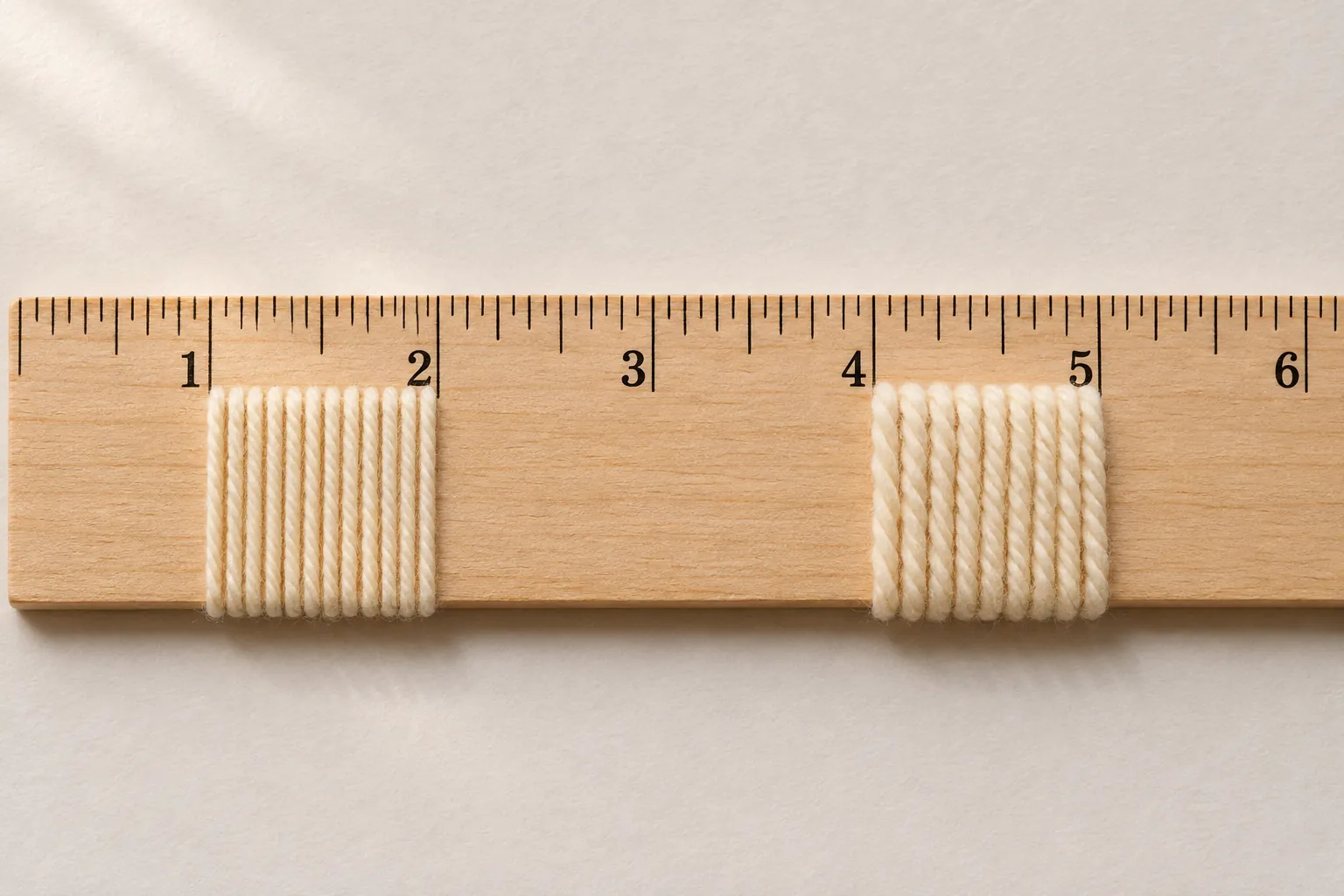
To compare two yarns, wrap each around a ruler for 1 inch and count the wraps. Two yarns in the same weight category can still differ in thickness. Keep the wraps side by side, without overlapping and without pulling, and the yarn with more wraps is the thinner one. Another check divides the grams in a skein by its yards, and a close result suggests a similar thickness. These are quick screens and do not replace a swatch. The photo below shows two yarns wrapped on a ruler.
Two cream yarns each wrapped around a ruler for one inch, one with more wraps than the other, with the inch marks visible Two yarns wrapped around a ruler for 1 inch: the yarn with more wraps is the thinner one.

Swatch and Compare Gauge

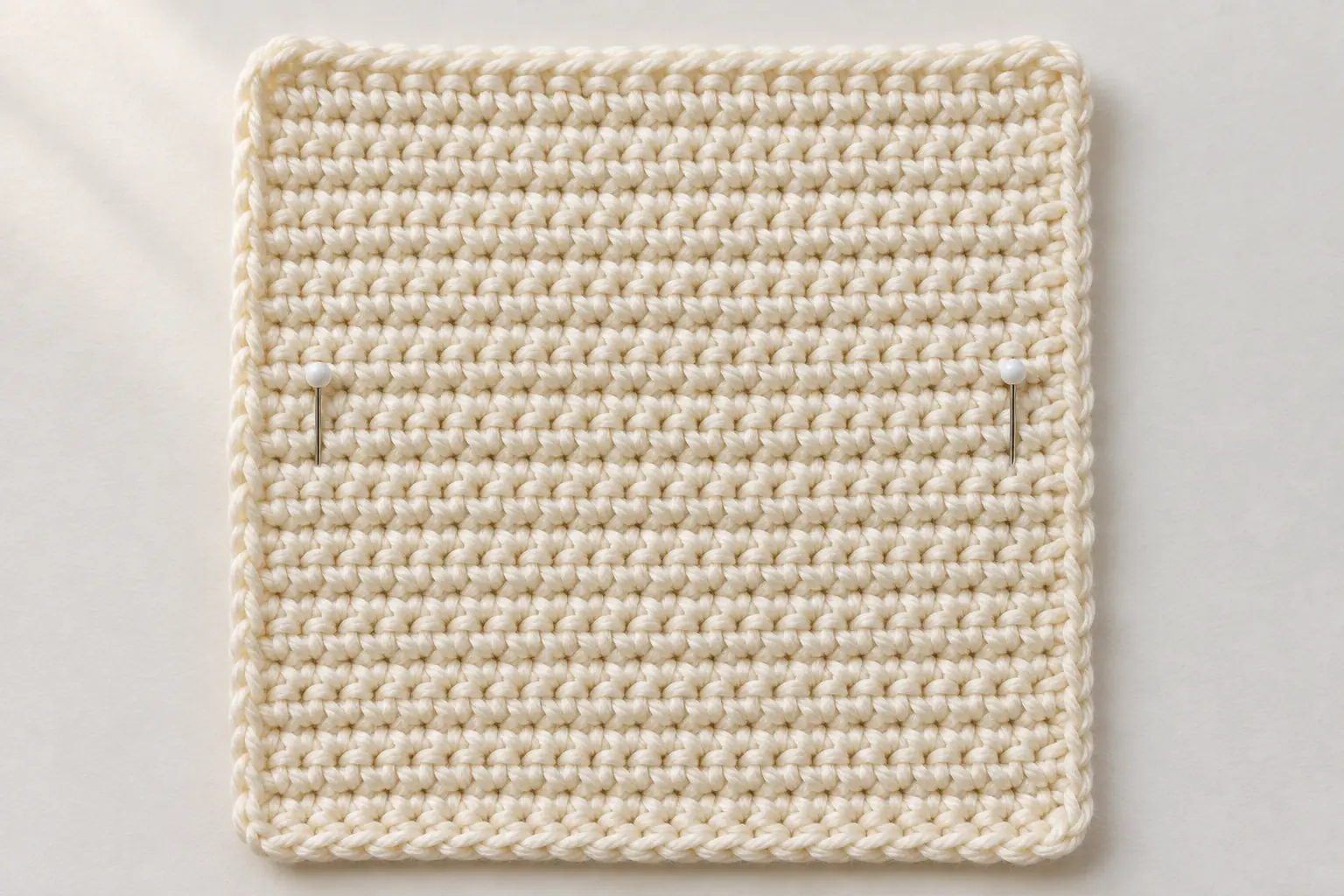
To check a substitute yarn, work a swatch with the pattern’s hook, pin 4 inches across the middle and count the stitches between the pins. Make it about 5 to 6 inches (13 to 15 cm) square in the pattern stitch. Matching the stitch count matters much more than matching the rows. More stitches than the gauge means go up a hook size, and fewer means go down; see the crochet hook size chart. Measure it again after washing or blocking, since yarns can change in the wash; see cotton vs acrylic yarn. I wash the swatch the way I will wash the finished piece, and I keep the yarn band pinned to it. The photo below shows pins set 4 inches apart on a swatch.

How to substitute yarn crochet gauge check: a cream single crochet swatch with two pins set 4 inches apart across the middle, the stitches between them countable Pins set 4 inches apart mark the stitches to count.
Swapping a Different Weight, or Two Strands

The easiest swap is the same weight, and a different weight changes the stitch count and the amount of yarn. Some projects forgive that and some do not, as the sections below show. For the weight chart, see the crochet yarn weight guide.

When the Weight Changes

A thinner yarn needs more stitches for the same size, and a thicker yarn needs fewer. The stitches you need equal the stitches per inch times the width: a pattern at 3 stitches per inch for a 48-inch blanket has 144 stitches, and a yarn that gives 4 stitches per inch needs 192 for the same width. A thinner yarn usually needs more yardage and a thicker one less, so buy extra. If you do not change the counts, the piece will come out a different size. Stitch patterns repeat in multiples, so round to the nearest repeat. If adjusting the counts feels like too much, look for a pattern written for your yarn. See the crochet yarn weight guide for the weights.

Two Strands for a Thinner Yarn

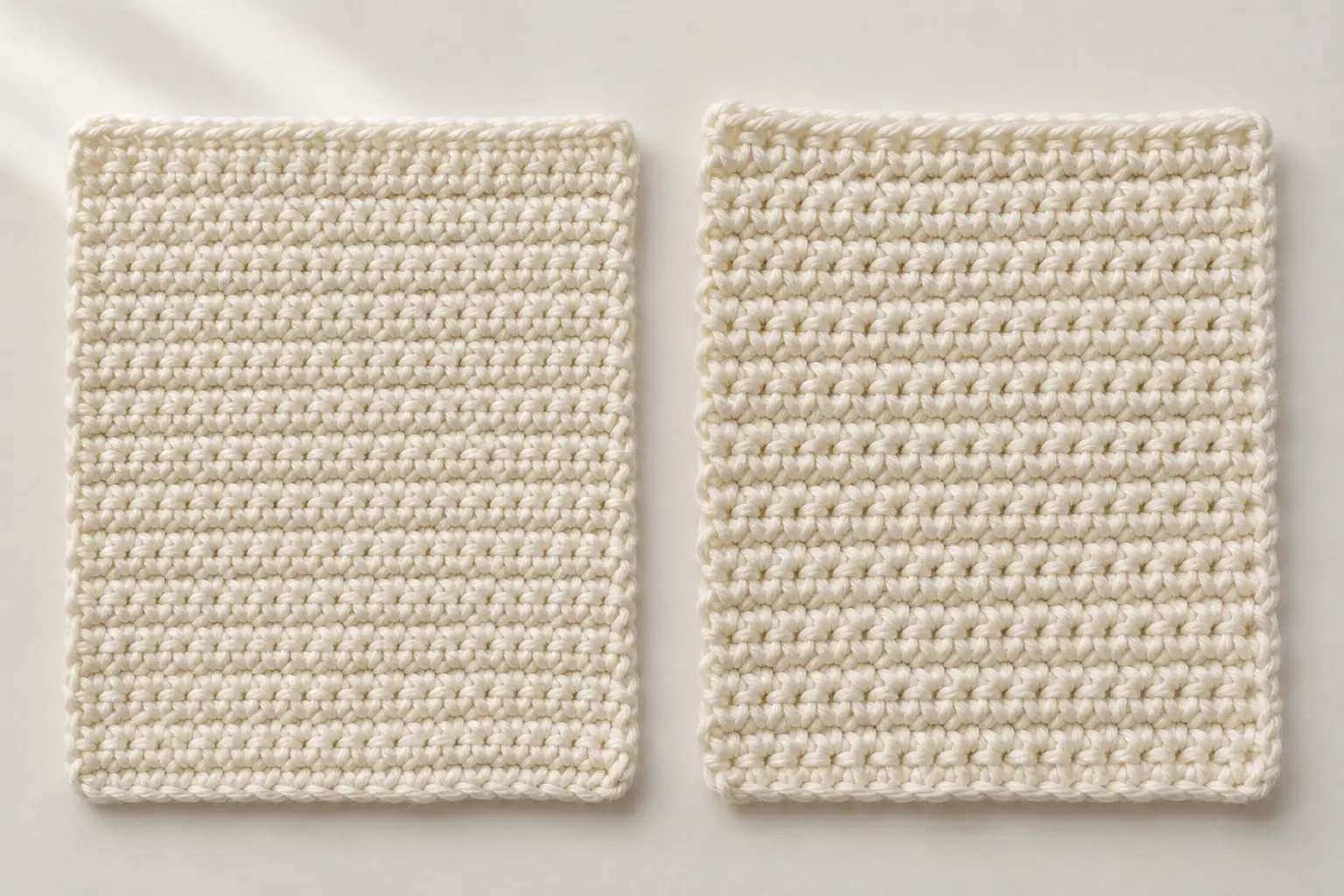
Two strands of a finer yarn held together can stand in for one thicker strand, but you must swatch to check. One maker’s approximate equivalents are two strands of fingering for one sport, two sport for one worsted and two worsted for one chunky to super bulky, though sources disagree. Each strand runs the pattern’s full length, so buy about twice the pattern’s yardage in the finer yarn. A skein held double covers about half its label yardage. Two strands change drape and look. The photo below shows two strands of a fine yarn beside one strand of worsted.

Two cream crocheted swatches made with the same hook, the left with two strands of a fine yarn held together and the right with one strand of worsted yarn Two strands of a fine yarn held together (left) beside one strand of worsted (right), same hook.

Which Projects Tolerate a Swap

Project Swap risk What to watch
Blankets and throws Low The size changes with the weight, so adjust the counts or accept a different size
Scarves and cowls Low The width and length are easy to adjust
Coasters and small décor Low Exact gauge is not essential
Bags and toys Medium Firmness and shape change with the yarn and hook, and gaps show stuffing
Hats, gloves and socks Higher Fitted pieces need the gauge
Sweaters and cardigans Highest Gauge, fiber and drape all change the fit, and shaped styles such as raglans, top-down yokes and colorwork are harder to change than boxy or drop-shoulder shapes

The first two rows are the safest place to start swapping. I swap freely for blankets, scarves and bags, and I stay close to the original yarn for sweaters and anything fitted. Try the Rainbow Afghan or Heart Sweater, or browse free blanket patterns and free sweater and cardigan patterns. See the crochet baby blanket guide and how to make a crochet cardigan.

When a Swap Goes Wrong

Most yarn swap problems show up in the swatch or at the last skein, and both can be fixed early. The two sections below cover a swatch that will not match and what to do about running short or colors that differ.

The Swatch Does Not Match

If the swatch does not match, change the hook by one size and swatch again. More stitches than the gauge means go up a size, and fewer means go down; see the crochet hook size chart. Do not chase a number by crocheting tighter or looser if it feels forced. If two sizes do not help, the yarn may be too thick or too thin, so choose another yarn or weight. If the stitches match but the fabric is stiff or floppy, try a different fiber; see cotton vs acrylic yarn. Row height matters less than stitch width.

Running Short or Colors That Differ

Keep the yarn bands and buy all the yarn for a project from one dye lot. The bands show the dye lot and shade, and you need them to find more yarn. A new skein needs the same dye lot number, or the color can differ slightly. If you run short and cannot match the lot, work the last rows in stripes, or alternate skeins every few rows if the piece is not fitted. See how to read a yarn label for the dye lot symbol.

Key Takeaways

  • Match the pattern’s weight category first, then compare total yardage, because the amount you need is a length and not a ball weight.
  • Divide the pattern’s total yardage by the yards in your skein, round up and add one extra skein from the same dye lot.
  • Two yarns in the same weight can still work up at different sizes, so swatch with the pattern’s hook and compare the stitches in 4 inches.
  • More stitches than the gauge means go up a hook size, and fewer means go down; matching stitch width matters more than row height.
  • Blankets and scarves tolerate a swap best, and sweaters and fitted pieces tolerate it least.

Frequently Asked Questions

Can I use a different yarn than the pattern calls for?

Yes, if the substitute matches in weight, total yardage and gauge. Choose the same weight category, buy the same total yardage and swatch with the pattern’s hook before you start. Match the fiber too when drape matters, as in garments. The sections above on what has to match and on the six steps cover each check.

How much yarn do I need when I substitute?

Divide the pattern’s total yardage by the yards in one skein of your yarn and round up, then add one extra skein from the same dye lot. For example, 700 yards divided by 175 yards per skein is 4 skeins, so buy 5. Compare yards, not ball weight. The yardage table above works out two more examples.

Can I use a different weight yarn than the pattern says?

Yes, but the stitch count and the amount of yarn change. A thinner yarn needs more stitches for the same size, and a thicker yarn needs fewer. Blankets and scarves forgive this best, and fitted garments forgive it least. Swatch and recalculate the counts first. The section above on swapping a different weight has the arithmetic.

Can I use two strands of thin yarn instead of one thick yarn?

Often, yes. Two strands of a finer yarn held together can stand in for a thicker one; one maker gives two sport as a worsted and two worsted as a chunky or bulkier, though sources differ. Swatch to check the gauge, and buy about twice the pattern’s yardage in the finer yarn. Expect a different drape. The two strands section above has more.

Does the fiber matter when I substitute yarn?

Yes, because fiber changes the drape, the weight of the finished piece and the care. Cotton hangs heavy and has little stretch, and acrylic is usually light, so swapping one for the other changes how a garment hangs. Match the fiber for fitted pieces and follow the band’s washing instructions. See cotton vs acrylic yarn for the comparison.

Portrait of Linda Davidsen

Written by

Linda Davidsen

Designer & founder

Linda has been crocheting for over 15 years and designs cozy, beginner-friendly patterns that anyone can finish in a weekend.

Keep reading

All posts