đź§¶ Yarn Calculator

Try

Visit our Etsy Shops

Pick a shop to browse. Each one opens on Etsy in a new tab.

Yarn & Materials

Cotton vs Acrylic Yarn for Crochet: Which to Choose?

Cotton vs acrylic yarn for crochet, compared on feel, stretch, washing, shrinking, heat, pilling and cost, with the best projects for each.

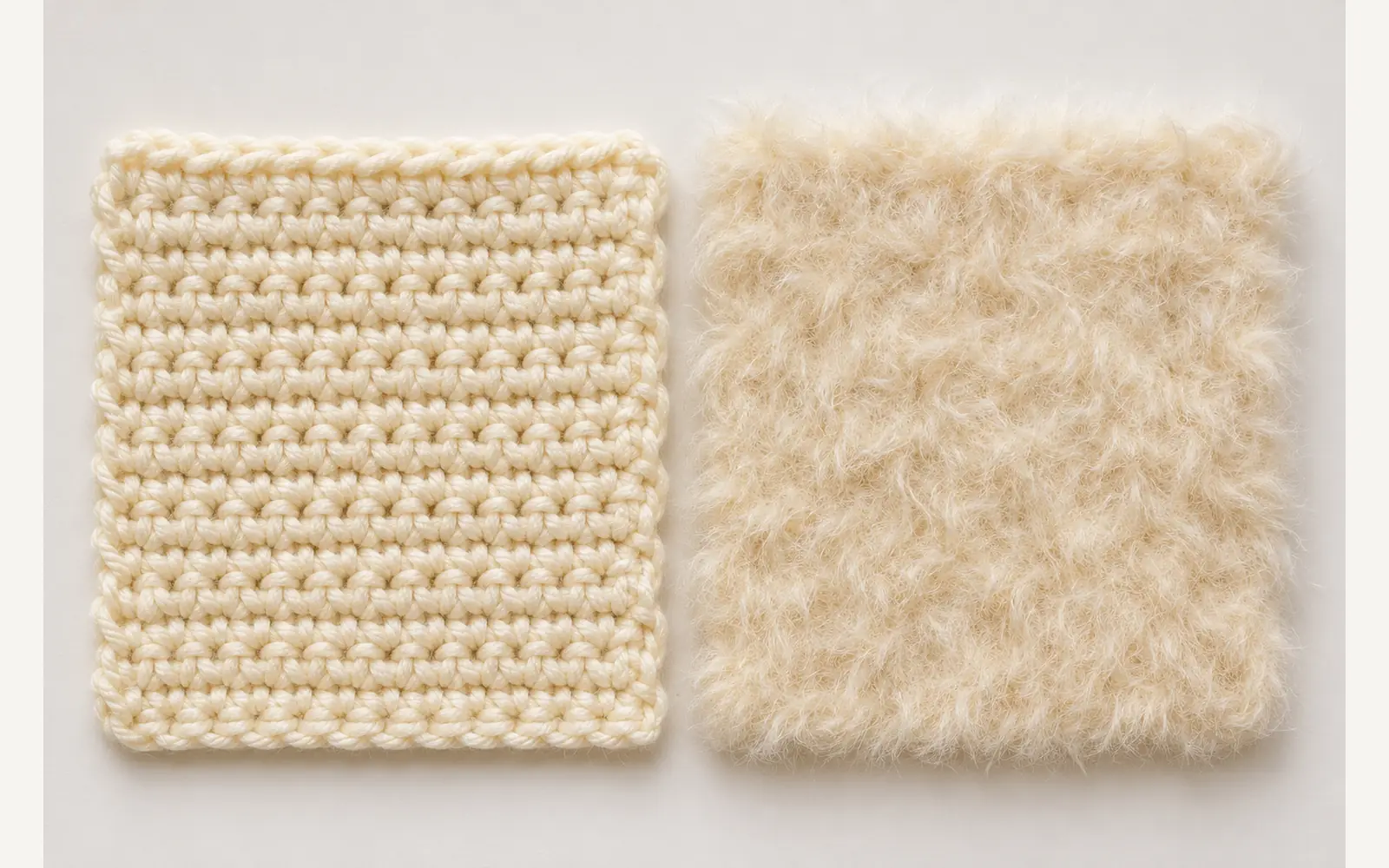
Two cream single crochet swatches side by side, a cotton swatch on the left and an acrylic swatch on the right, on an off-white surface
Table of Contents
  1. Cotton and Acrylic at a Glance
  2. Feel, Stretch and Drape
  3. Washing and Shrinking
  4. Blocking and Heat
  5. Cost, Pilling and Wear
  6. Which Fiber for Which Project
  7. Key Takeaways
  8. Frequently Asked Questions

Quick answer: In cotton vs acrylic yarn crochet, the choice comes down to use. Acrylic is affordable, soft and machine washable, so it suits blankets and everyday pieces. Cotton gives crisp stitches and absorbs water, so it suits dishcloths and warm-weather items, though it has little stretch and can shrink. A blend sits between them.

The pattern says cotton, the shelf is full of acrylic at a lower price, and every comment section has a different opinion. One person swears cotton dishcloths last for years, another says acrylic is the only yarn that survives the washing machine.

This guide compares the two fibers on feel, stretch, washing, shrinking, heat, pilling and cost, shows how to block each one safely, and matches each fiber to the projects it suits, with a note on blends and a short wash test you can repeat with your own swatches.

I start with how the item will be used and washed, and only then think about how the yarn feels. Washing and wear decide the fiber more often than softness does, so I settle that first.

Cotton and Acrylic at a Glance

Cotton and acrylic differ most in feel, washing and how they react to heat. The table below summarizes the sections that follow, and the band on a given yarn always has the last word. For wool, bamboo and the other fibers, see the crochet yarn and materials guide.

Side-by-Side Comparison

Quality Cotton Acrylic
Feel Cool and breathable; soft to firm depending on the spin, and often softer after washing Soft and smooth, glides on the hook; cheaper acrylic can feel rougher
Stretch and weight Little stretch, and hangs heavy when wet Usually light
Washing Machine washable, absorbent and stronger wet than dry Machine washable and low-maintenance
Shrinking Can shrink if washed hot Does not shrink like wool
Heat Can be pressed damp with care Can melt, so never iron it
Pilling Pills less, and mercerized cotton pills least Can pill, and cheaper acrylic more
Cost Usually costs more Usually costs less
Breathability Cool and breathable Warm and less breathable

These are general tendencies, and the band decides for a given yarn; see how to read a yarn label for the care symbols. Neither fiber wins every row: cotton leads on breathability and pilling, and acrylic leads on cost and easy care. Each row is expanded in the sections below, so use the table as a quick check and the sections for the reasons.

What Each Fiber Is

Acrylic is a synthetic fiber, and cotton is a natural fiber from the cotton plant. Acrylic is a plastic made from oil-based chemicals, and it comes in bright shades that are hard to get with natural fibers. It is strong and moth-resistant, though it can build up static. Mercerized cotton is treated to be stronger, shinier and less likely to pill. Natural and synthetic fibers are often blended to add structure, strength and washability. For wool, bamboo and the rest, see the crochet yarn and materials guide.

Feel, Stretch and Drape

Cotton and acrylic feel different in the hand and hang differently, and both change how stitches look. A yarn’s feel and stretch change how the fabric looks and how hard it is on the hands. The two sections below cover each in turn.

Feel and Stitch Definition

Acrylic is soft and glides on the hook, while cotton is cool and firm and softens with washing. Some guides say acrylic feels slightly rougher than other synthetics, cheaper acrylic can feel harsh, and it can build up static. Cotton can feel stiff while you work it, and fluffier cottons feel softer after washing. Smooth, tightly twisted cotton shows each stitch clearly, while fluffy cotton hides some definition. The photo below shows the same stitch and hook in cotton and acrylic. For a first yarn, see best yarn for beginners.

Cotton vs acrylic yarn crochet swatches: close-up of two cream single crochet swatches made with the same hook, cotton on the left and acrylic on the right The same stitch and hook: cotton (left) and acrylic (right).
Stretch and Drape

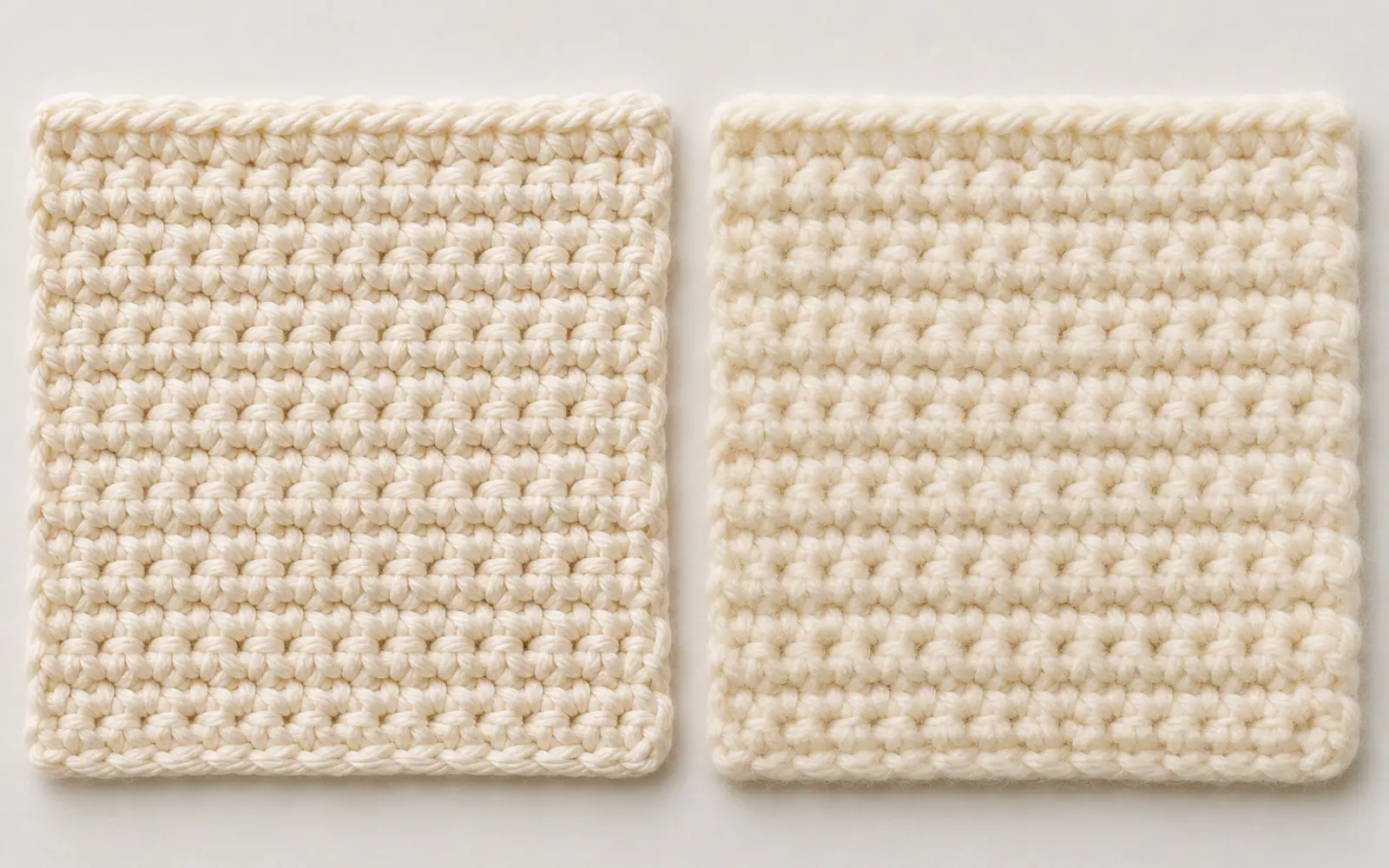
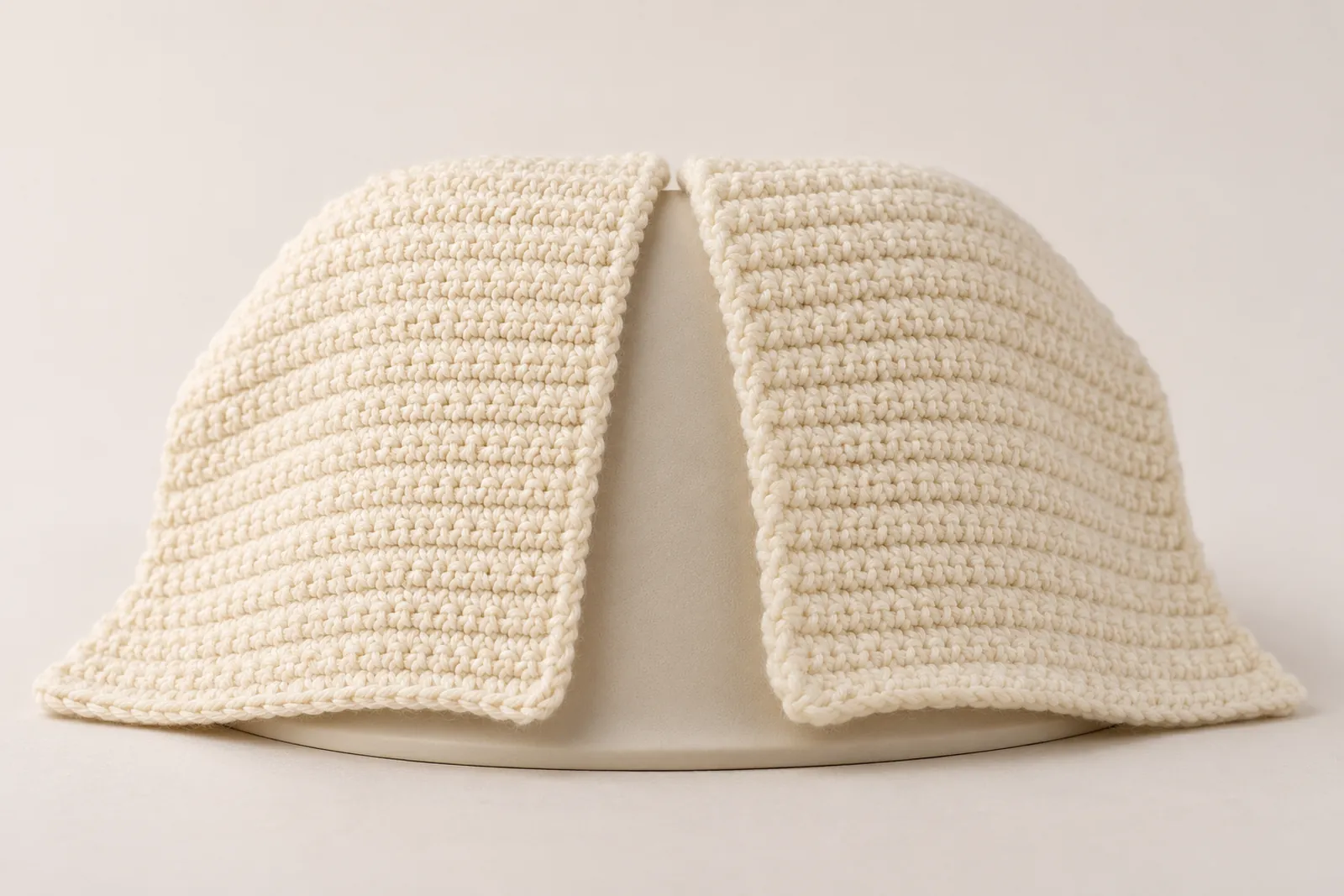
Cotton has little stretch and hangs heavy, especially when wet. It is not elastic, which makes an even tension harder to keep, and it does not give the way wool does. Acrylic is usually light, and its drape depends on the yarn. The same stitch with a larger hook drapes more in either fiber, so match the hook to the fabric you want. The photo below shows two same-size swatches draped over a bowl. To swap one fiber for the other, see how to substitute yarn.

Two cream crocheted swatches of the same size draped over the curve of an upturned bowl, a cotton swatch on the left and an acrylic swatch on the right Same stitch and hook: a cotton swatch (left) and an acrylic swatch (right) draped over a bowl.
Washing and Shrinking

Both cotton and acrylic are usually machine washable, and the care label and a washed swatch tell you how your yarn will behave. For what the care symbols mean, see how to read a yarn label. The sections below cover each fiber and then blends and mixed projects.

Washing and Shrinking

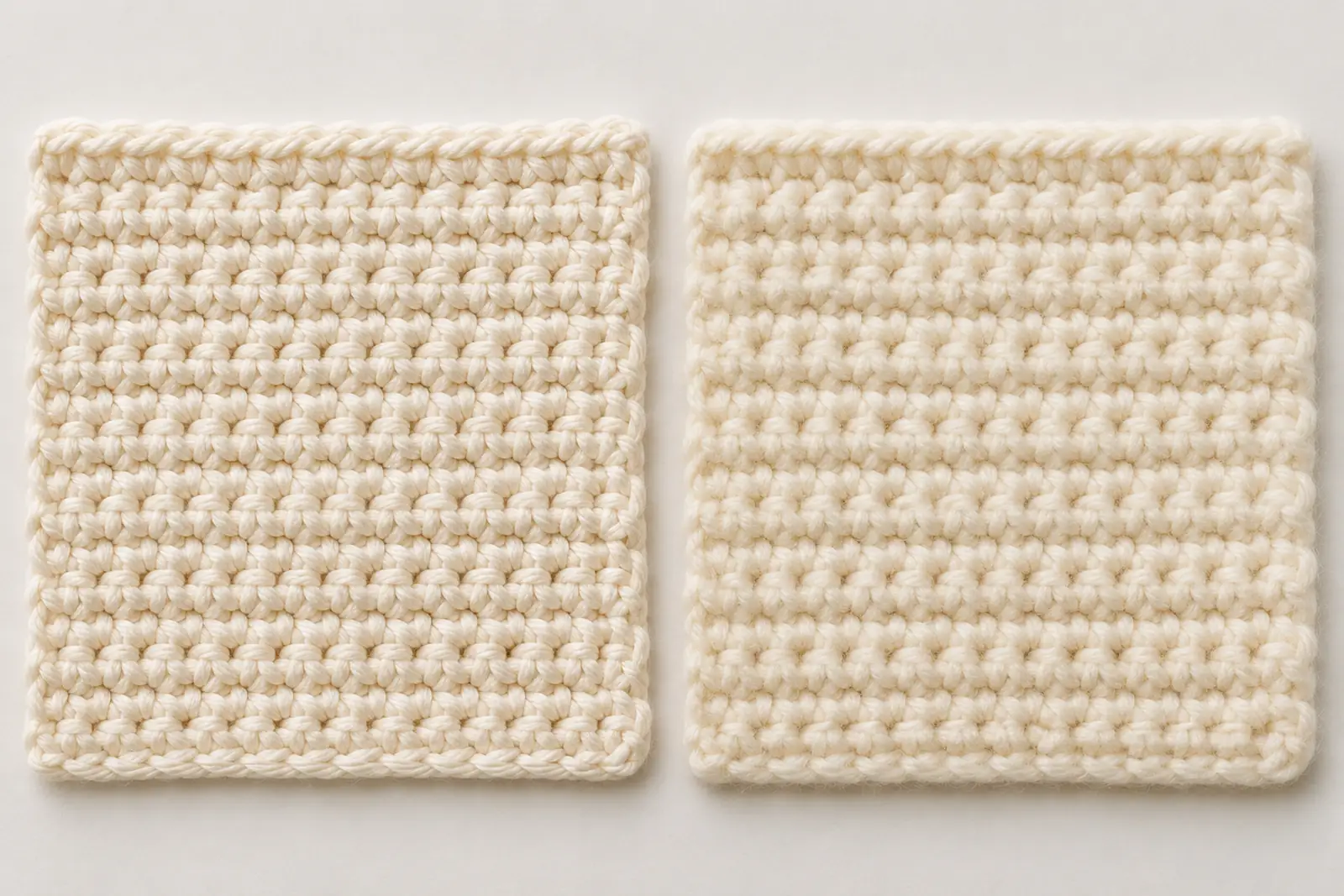
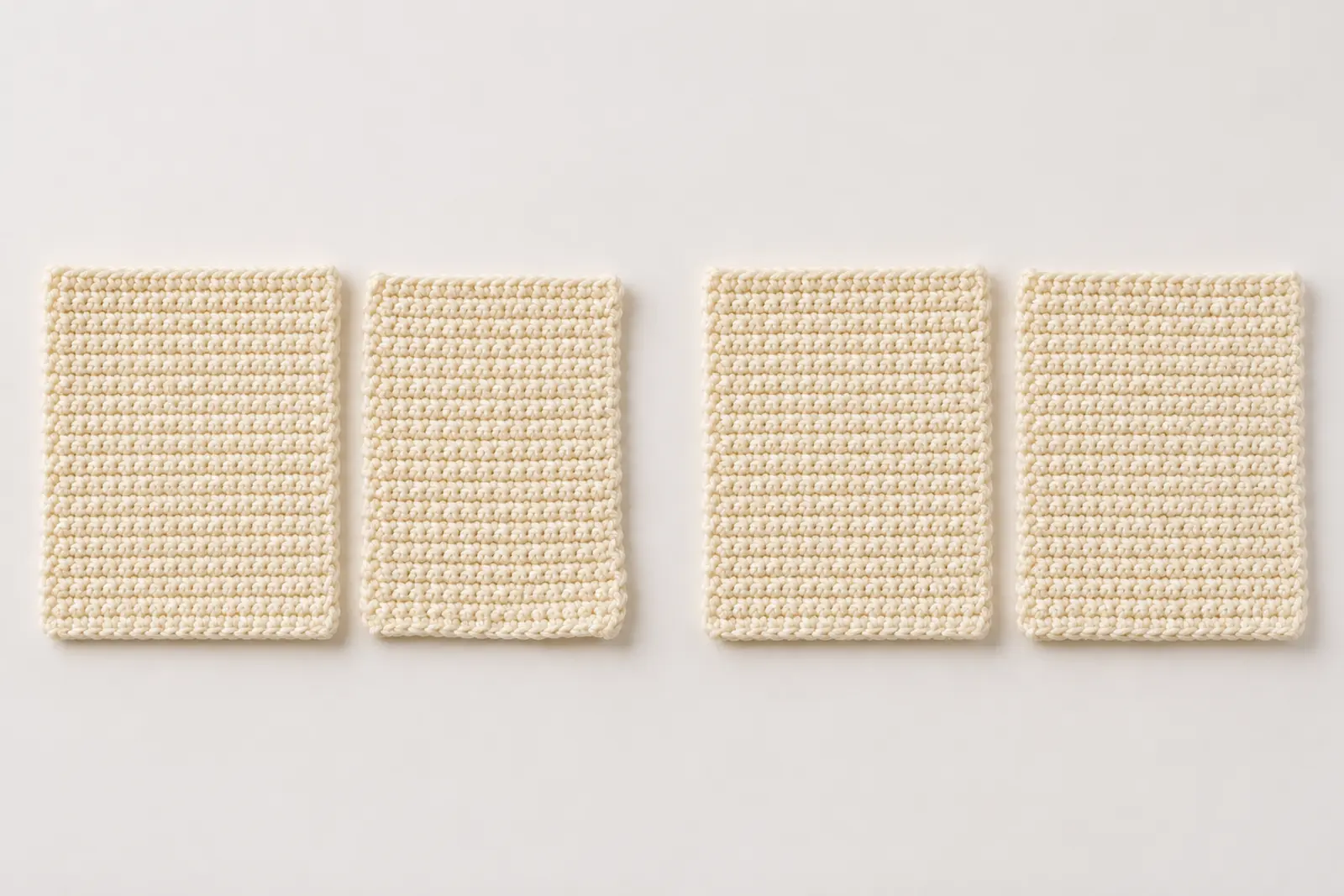
Cotton can shrink if it is washed hot, and acrylic does not shrink like wool but heat can warp it. Cotton is absorbent, stronger wet than dry and machine washable. Multicolor cotton projects can bleed, so single-color pieces are the safest. Acrylic is machine washable and low-maintenance, though high-heat drying can make it stiff and heavy washing can make it pill. Wet cotton is heavy and slow to dry, and acrylic also holds water, so follow the band for drying. I wash a swatch the way I will wash the finished piece. The photo below shows a test made on purpose: a cotton swatch and an acrylic swatch, each before and after a hot wash and hot dry. For swapping yarns, see how to substitute yarn.

Four cream crocheted swatches in a row: a cotton swatch before and after a hot wash and dry, then an acrylic swatch before and after the same wash and dry Made on purpose: cotton (left pair) and acrylic (right pair), each shown before and after a hot wash and hot dry.

Blends and Mixed-Fiber Projects

A blend should be washed like its most delicate fiber. An acrylic blend with wool, for example, should be washed like wool. Blends of natural and synthetic fibers can add structure, strength and washability, and can reduce shrinking. When you combine different yarns in one project, choose ones with the same washing instructions, and buy all the yarn for a project at one time because dye lots can vary. See how to read a yarn label for the care symbols and how to substitute yarn for swapping.

Blocking and Heat

Heat sets cotton and can ruin acrylic, so block each fiber differently. Blocking means shaping a finished piece to its measurements with moisture or steam. The two sections below cover cotton and then acrylic. For the wider fiber map, see the crochet yarn and materials guide.

Blocking Cotton

Block cotton by pinning it damp on a padded surface and letting it dry completely. Lay the piece wrong side up, shape it gently to the measurements, pin it with rustproof pins and dampen it. Some guides allow pressing cotton with a hot iron, but not with the full weight of the iron on the work, especially on bobbles and popcorns. Check the iron symbol on the band; see how to read a yarn label.

Blocking Acrylic Without Killing It

Never touch an iron to acrylic, because it can melt and the change is permanent. Acrylic is a plastic that deforms under heat, and some crafters call this killing the yarn. Blocking acrylic is often not needed. If it helps, some guides say to hold a steam iron about an inch or more above the work without touching it, or to wet block it, and not to press. Test on a swatch first. I never put an iron on acrylic. Check the iron symbol on the band; see how to read a yarn label.

Cost, Pilling and Wear

Acrylic usually costs less, and cotton usually wears with less pilling. Price is the most obvious difference, and wear is the one that shows later. Both depend on the specific yarn as well as the fiber. The two sections below cover cost and colors first, then pilling, splitting and wear.

Cost and Choice of Colors

Acrylic is usually cheaper than cotton and comes in a wide range of bright colors. It is also easy to find, which makes it a good choice for budget projects and large ones such as blankets. Cotton usually costs more, and very bright shades are harder to make with natural fibers. Price varies by yarn, so compare yards per skein, not the price per ball; see how to substitute yarn.

Pilling, Splitting and Wear

Acrylic can pill with heavy wear and washing, and cotton pills less. Cheaper acrylic pills more, because rough agitation breaks the fibers into small balls, and mercerized cotton pills least. Splitting seems to depend on the yarn’s twist more than its fiber: in one maker’s test, an organic cotton was extremely splitty and tightly twisted cottons were not splitty at all. A firm, smooth, tightly twisted yarn usually wears well in either fiber. For toys that get heavy handling, see best yarn for amigurumi.

Which Fiber for Which Project

Choose the fiber by what the finished piece will do, and follow the fiber a pattern names. The table below matches common projects to a fiber, and the sections after it cover patterns to try and blends. For a first yarn, see best yarn for beginners.

Project Matcher

Project Usually better Why
Dishcloths and scrubbers Cotton Absorbent, stronger wet than dry and bleachable
Coasters and trivets Cotton Lightweight and a good insulator
Summer tops and lightweight bags Cotton Breathable, with crisp stitches
Blankets and throws Acrylic Affordable, warm and machine washable
Cushions and décor Acrylic Holds color and is easy to wash
Hats and scarves for cold weather Acrylic Warm and easy to care for
Baby items Either, if machine washable Soft and washable matter most; see best yarn for baby crochet
Toys Cotton for small figures, acrylic for larger cuddly toys Depends on size and handling; see best yarn for amigurumi

“Usually better” is a tendency, not a rule, and the pattern’s fiber wins. Cotton suits pieces that get wet or hot, and acrylic suits large pieces that are washed often. Baby items and toys depend on the yarn, so check the band and wash a swatch.

Cotton Projects and Acrylic Projects

Cotton suits dishcloths, coasters and warm-weather clothes, and acrylic suits blankets, cushions and hats. Cotton suits pieces that get wet or hot: dishcloths and scrubbers because it is absorbent and stronger wet than dry, and coasters because it is lightweight and a good insulator. One guide picks a non-mercerized cotton for its coaster pattern. Acrylic suits large pieces that are washed often, such as blankets, throws, cushions and hats. I use cotton for dishcloths and coasters and acrylic for blankets. To try a project, make the Citrus Slice Coaster or the Rainbow Afghan, or browse free home decor patterns and free blanket patterns. For more, see the crochet home decor guide and the crochet baby blanket guide.

When a Blend Is the Answer

A cotton-acrylic blend sits between the two fibers, with some of cotton’s structure and acrylic’s easy care. Some guides describe a blend as lighter and softer than pure cotton, with more structure than pure acrylic, and many everyday yarns are blends. Choose one when a pattern wants cotton’s crisp stitch but you want easier care, and read the band for the percentages. For baby items, see best yarn for baby crochet, and for a pattern to try, the Baby Romper or baby and wearable patterns.

Key Takeaways

  • Acrylic is usually cheaper, soft and machine washable; cotton is breathable and absorbent, with little stretch and a crisp stitch.
  • Cotton can shrink if washed hot, and acrylic does not shrink like wool but heat can warp it, so wash a swatch first.
  • Never touch an iron to acrylic: it can melt, and the damage is permanent.
  • Acrylic can pill with heavy wear; cotton pills less, and a tightly twisted yarn tends to split least.
  • Use cotton for dishcloths, coasters and warm-weather pieces, acrylic for blankets and cushions, and a blend when you want a bit of both.

Frequently Asked Questions

Is cotton or acrylic yarn better for crochet?

Neither is better for every project. Choose acrylic for blankets, cushions and hats, because it is affordable, soft and machine washable. Choose cotton for dishcloths, coasters and warm-weather pieces, because it is absorbent and gives crisp stitches, though it has little stretch. A blend sits between them. The project section above matches each fiber to its best uses.

Does cotton or acrylic yarn shrink in the wash?

Cotton can shrink in hot water, and acrylic does not shrink like wool. Wash a swatch the way you plan to wash the finished piece, since high heat can also warp acrylic and make it stiff. Follow the care label for each yarn, and see how to read a yarn label for the symbols. The washing section above has more.

Can you iron acrylic yarn?

No. Acrylic is a plastic fiber that can melt under a hot iron, and the damage is permanent. If a piece needs shaping, some guides say to hold a steam iron above it without touching it, or to wet block it, and to test on a swatch first. Cotton can be pressed damp, but not with the full weight of the iron. The blocking section above has the steps.

Is cotton or acrylic better for dishcloths?

Cotton is the usual choice for dishcloths. It is absorbent, stronger wet than dry and machine washable, and some guides say it can be bleached if needed. A smooth, firm cotton is a good fit for scrubbing, and a washed swatch shows how much it shrinks. The project table above lists the cotton dishcloth with the other common projects.

Is cotton or acrylic better for baby items?

Either can work if the yarn is soft and machine washable, so the label and the care symbols decide. Some baby yarns are cotton-acrylic blends. Check the band and wash a swatch, and some guides suggest choosing a smooth yarn over fuzzy or novelty yarns for baby items. For more, see best yarn for baby crochet. The project section above covers the choice.

Portrait of Linda Davidsen

Written by

Linda Davidsen

Designer & founder

Linda has been crocheting for over 15 years and designs cozy, beginner-friendly patterns that anyone can finish in a weekend.

Keep reading

All posts