
đź§¶ Yarn Calculator

Try

Visit our Etsy Shops

Pick a shop to browse. Each one opens on Etsy in a new tab.

Yarn & Materials

What Is DK Weight Yarn and When Should You Use It?

DK weight yarn crochet guide: what DK means, its hook and gauge, how it differs from sport and worsted, and the projects where DK works best.

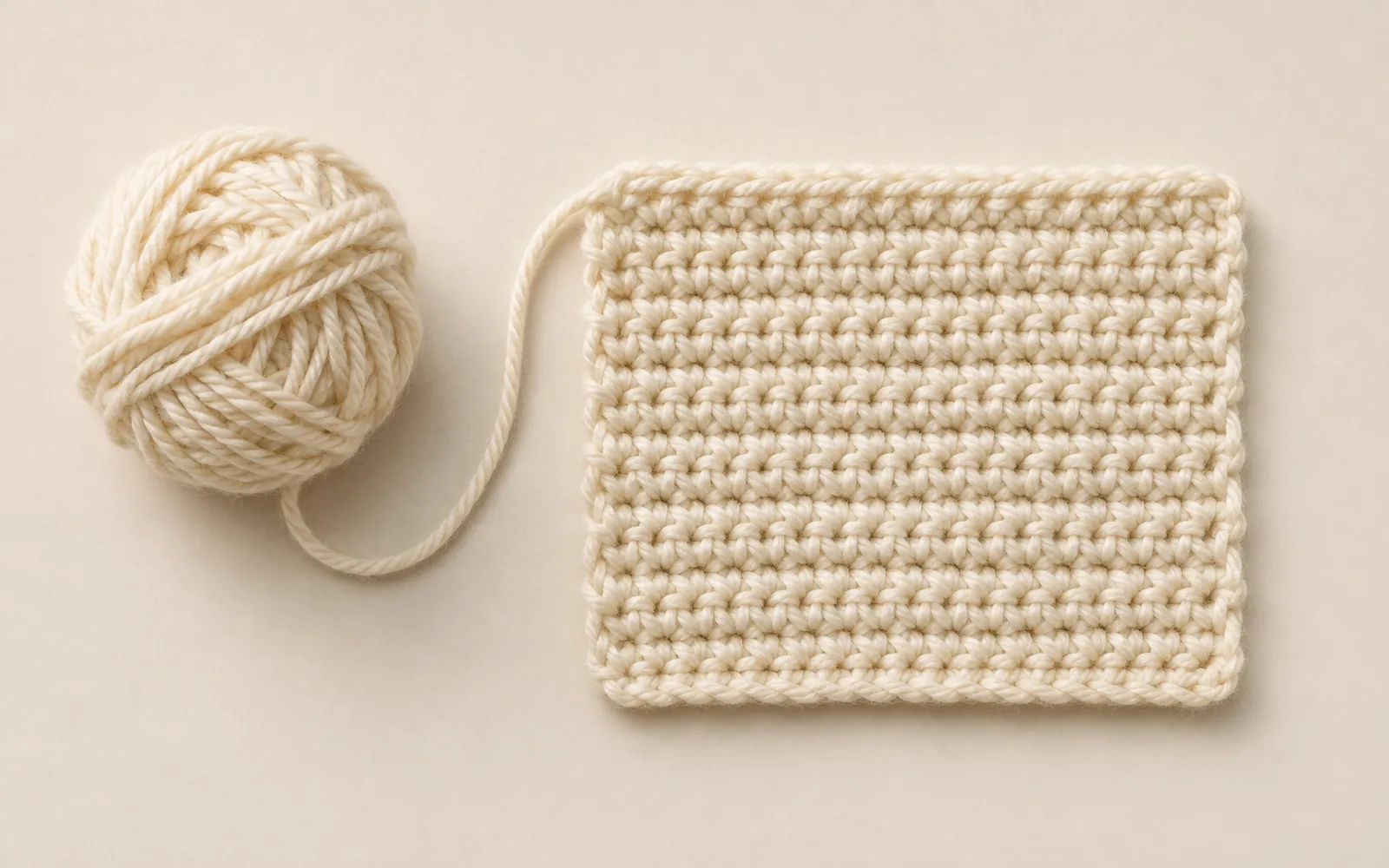
A ball of cream DK yarn beside a cream single crochet swatch, joined by a strand of yarn, on an off-white surface
Table of Contents
  1. What DK Weight Yarn Is
  2. Hook and Gauge for DK
  3. DK or Worsted?
  4. What to Make With DK
  5. Buying DK Yarn
  6. Key Takeaways
  7. Frequently Asked Questions

Quick answer: DK weight yarn crochet starts with category 3, a light yarn between sport and worsted. DK stands for double knit, and the Craft Yarn Council pairs it with a 4.5 to 5.5 mm hook and 12 to 17 single crochet stitches in 4 inches. Some patterns use a smaller hook.

Pattern after pattern asks for DK, but the band on the shelf may say 3, light worsted or 8-ply, and the hook in the pattern may be smaller than the chart suggests. Swap it for worsted and the finished piece can come out too big. So what is DK?

This guide explains what DK stands for, where it sits between sport and worsted, which hook and gauge to expect, and why some patterns use a smaller hook. It also compares DK with worsted, lists the projects DK suits and covers yards per ball and fibers.

I reach for DK when I want a lighter, finer fabric, and worsted when I want a project to work up fast. DK takes more stitches for the same size, so I choose it when the extra time is worth the softer result.

What DK Weight Yarn Is

DK is a yarn thickness, not a fiber, and it sits in the middle of the Craft Yarn Council scale as category 3. For the wider map, see the crochet yarn and materials guide, and for every weight in one chart, the crochet yarn weight guide.

What DK Means

DK weight yarn is category 3 on the Craft Yarn Council scale, and DK stands for double knit. The term comes from UK usage. In the Council system the category is called light, and its names are DK and light worsted. A higher category number means a thicker yarn, so sport (2) is thinner than DK and worsted (4) is thicker. The weight names a thickness and says nothing about fiber, which is why DK comes in cotton, wool, acrylic and blends. A DK pattern therefore tells you how thick a yarn to buy, and the band tells you what it is made of.

Other Names for DK

DK is also called light worsted in the Craft Yarn Council system and 8-ply in Australia and New Zealand. The same thickness goes by other names, and the shop label may use any of them. Ply is the number of strands twisted together and does not tell you thickness, so an 8-ply yarn is not always DK. Trust the category number on the band, not the ply count. The terms overlap in shops, so a yarn sold as light worsted and one sold as DK can be the same weight. As a weight name, 4-ply usually means a yarn thinner than DK. For the names across countries, see the crochet yarn weight guide.

DK Among Its Neighbors

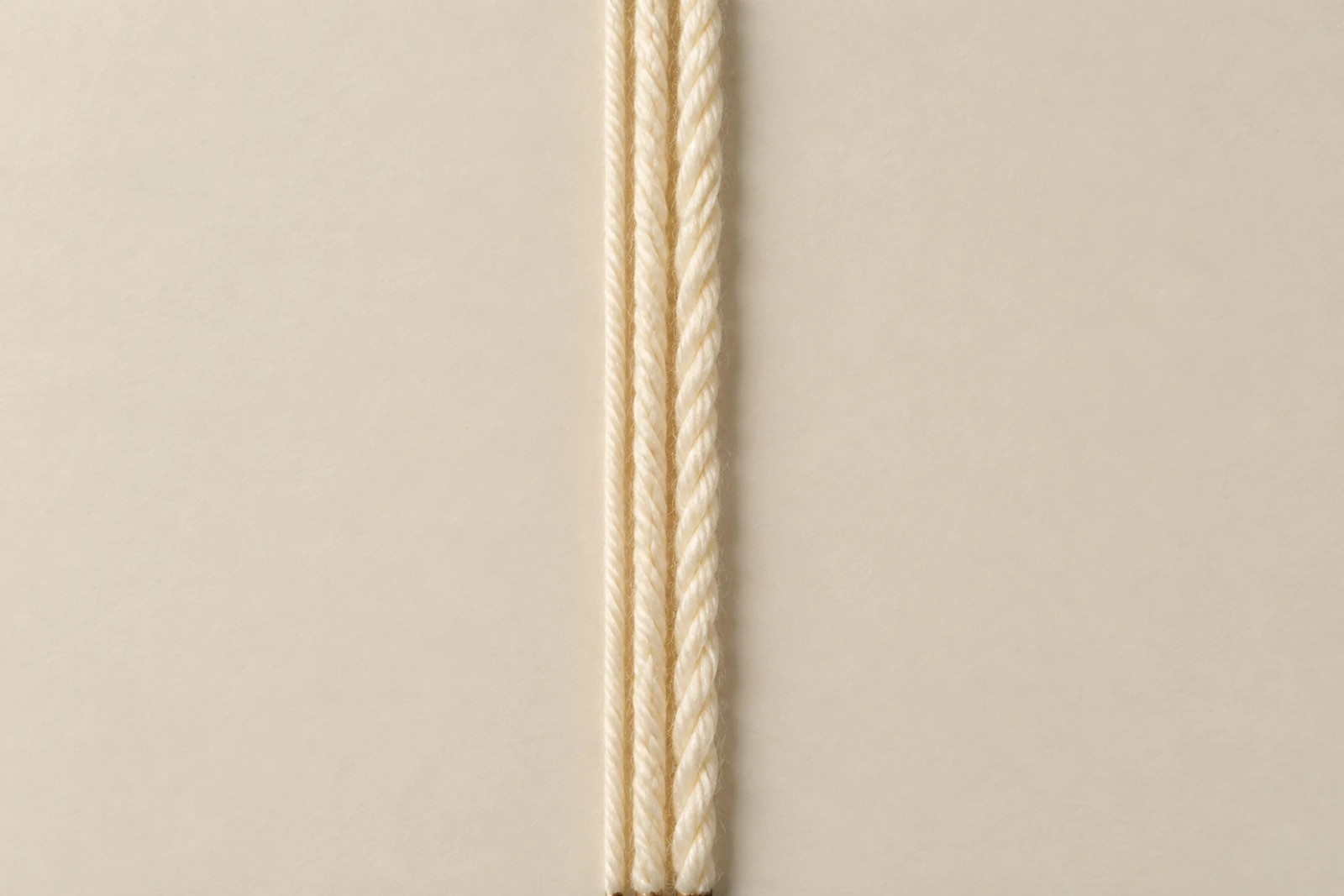
DK sits one step thicker than sport and one step thinner than worsted, which makes it a light, versatile middle weight. The three are close in thickness, and their hook and stitch ranges overlap at the edges, so a swatch matters more than the label. Each step is small, so a pattern written for one weight can look close to another, and that is where size problems start. Sport is the finer neighbor and worsted the sturdier one, with DK as the compromise between them. The photo below shows lengths of sport, DK and worsted yarn laid side by side, thinnest on the left.

DK weight yarn crochet comparison: three lengths of cream yarn in sport, DK and worsted weight laid side by side, getting thicker from left to right Sport, DK and worsted (left to right), thinnest to thickest.
Hook and Gauge for DK

The Craft Yarn Council pairs DK with a 4.5 to 5.5 mm hook, but some patterns call for a different one. The table sets DK beside its neighbors, and the section after it explains why a pattern’s hook can differ from the chart.

DK Next to Sport and Worsted

Weight Hook (mm and US) Single crochet stitches in 4 in Fabric
Sport (2, fine) 3.5–4.5 mm (E/4 to 7) 16–20 A finer, lighter fabric than DK
DK (3, light) 4.5–5.5 mm (7 to I/9) 12–17 A light, versatile middle weight
Worsted (4, medium) 5.5–6.5 mm (I/9 to K/10½) 11–14 The all-purpose weight that works up faster

The ranges overlap and are guidelines, and the figures are for crochet. A thicker yarn takes a larger hook and gives fewer stitches in 4 inches, and 4.5 mm and 5.5 mm each close one weight and open the next. Knitting needle sizes listed for DK on many pages are not hook sizes. Use it as a starting point, not a rule, and check it against your own swatch. For the full table, see the crochet yarn weight guide.

Why DK Patterns Use Different Hooks

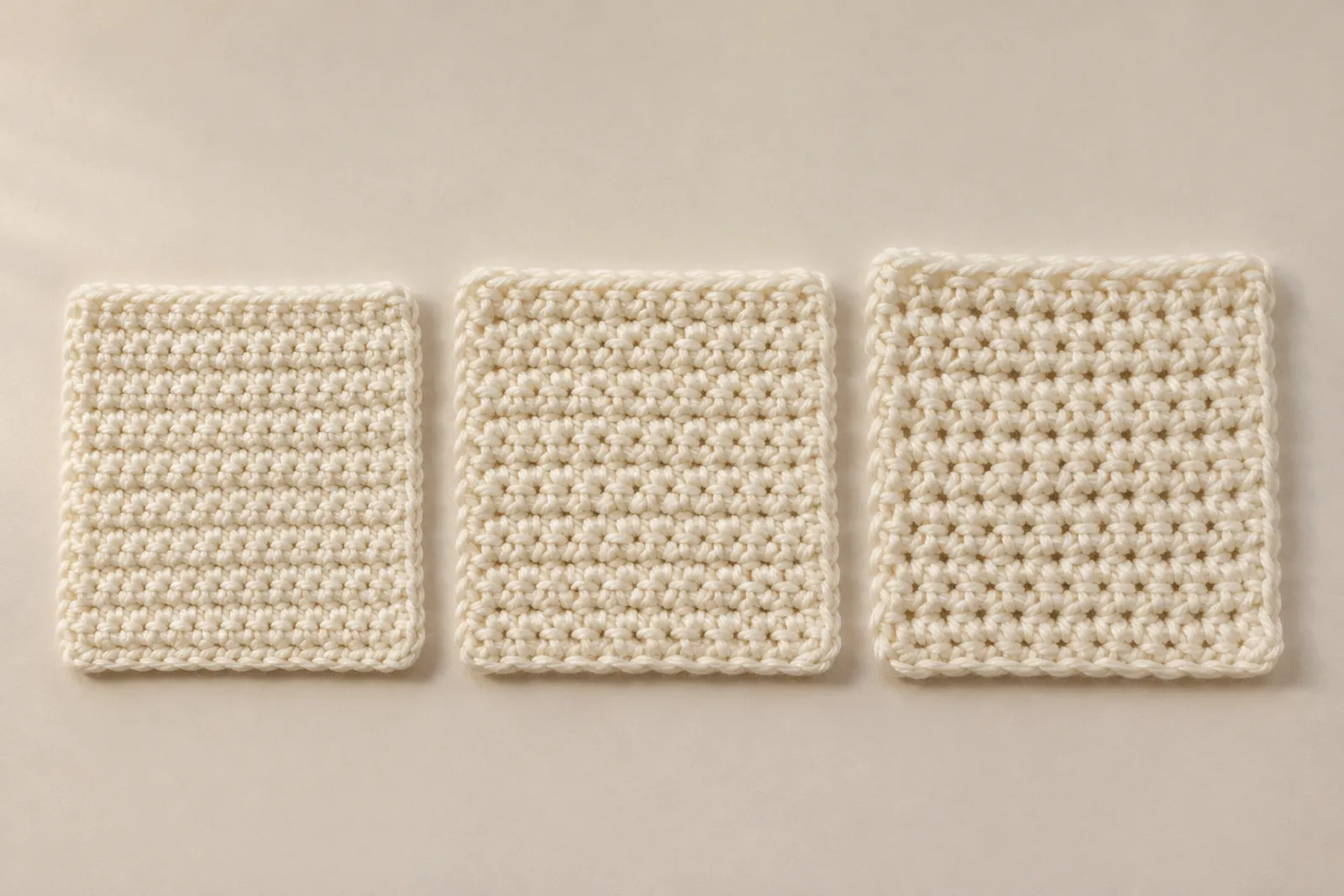
Some DK patterns call for a hook smaller than the Craft Yarn Council range, so follow the pattern and swatch. The range is a starting point. In one guide, several DK projects list hooks of about 3.5 to 4 mm, below the Council range, to get a firmer fabric. A smaller hook than the band gives a tighter fabric, and a larger one gives a more open fabric. Too many stitches in 4 inches means go up a hook size, and too few means go down. A pattern’s own hook and gauge win. I swatch with the pattern’s hook first, then I go up or down one size. The photo below shows one DK yarn worked with 3.5, 4.0 and 5.0 mm hooks.

Three cream single crochet swatches of the same DK yarn and stitch count, worked with 3.5 mm, 4.0 mm and 5.0 mm hooks from left to right One DK yarn and one stitch count, worked with 3.5, 4.0 and 5.0 mm hooks (left to right).
DK or Worsted?

DK and worsted are close in thickness, but DK makes a finer fabric with more stitches for the same size. They are not interchangeable, and worsted is the weight to reach for when speed matters. For worsted on its own, see worsted weight yarn.

Choosing Between DK and Worsted

DK gives a lighter, finer fabric than worsted, and worsted works up faster. DK has more stitches per inch, so the same width takes longer. Worsted suits sturdy items such as blankets, hats and bags. Choose DK for baby items, lighter garments, fine detail and small toys, and worsted when speed and warmth matter more than finesse. Warmth is partly the fiber, though, so check the band before you assume a thicker yarn is warmer. The pattern’s weight sets the finished size, so change it only when you plan to change the size. For worsted in depth, see worsted weight yarn.

Swapping One for the Other

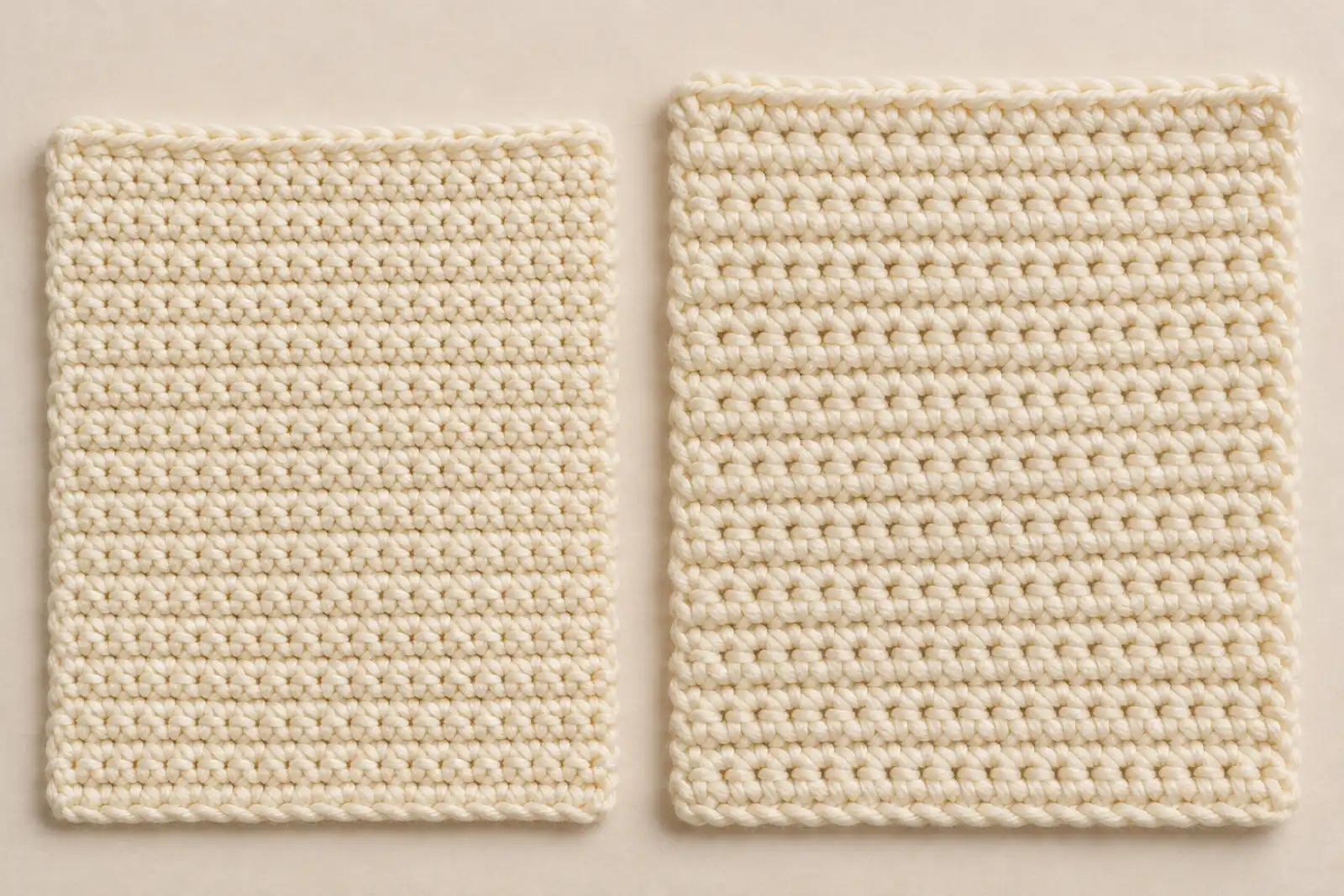
Worsted in place of DK makes a bigger piece from the same stitch count, and DK in place of worsted makes a smaller one. Check the gauge before you start, because the size follows from it. A smaller hook used to match the gauge can make the fabric feel firm. Two strands of DK do not reliably equal worsted weight, so swatch before you commit. Blankets and scarves tolerate a swap best, and fitted garments tolerate it least. The photo below shows a DK swatch and a worsted swatch worked with the same hook and stitch count. For the swap method and the yardage calculation, see how to substitute yarn.

Two cream single crochet swatches made with the same hook and stitch count, a DK yarn swatch on the left and a worsted yarn swatch on the right Same hook, same stitch count: DK (left) and worsted (right).
What to Make With DK

DK suits projects that gain from a light, finer fabric, such as baby items, cardigans, small toys and shawls. For toys, see how to make amigurumi, and for garments, how to make a crochet cardigan. The table lists six groups and what to watch for in each.

Projects That Suit DK

Project Why DK suits it Watch for
Baby items Light, often soft fabric Check the care line before you buy
Cardigans and lighter sweaters A lighter drape than worsted More stitches and time, so swatch for gauge
Small toys Fine detail A smaller hook gives a tight fabric
Hats, scarves, cowls and mitts Light layers Warmth depends on the fiber
Shawls and wraps A light, drapey fabric The hook sets the drape
Lighter blankets and squares A lighter result than worsted Many balls and a long project

“Why DK suits it” is a tendency, and the pattern’s weight wins. Treat each row as a starting point. One guide suggests a hook one to two sizes smaller than usual for toys. For toy yarn, see best yarn for amigurumi, and for baby blankets, the crochet baby blanket guide.

Try the Minimalist Frog Amigurumi, Teddy Bear Amigurumi or Baby Cardigan, or browse free amigurumi patterns and free sweater and cardigan patterns.

Baby Items and Lighter Garments

DK is often called for in baby items and lighter garments, where a light, usually soft fabric helps. Check the care line, because baby items are washed often, and wash a swatch before you start. I use DK mostly for baby items and lighter garments. A cardigan in DK usually takes more stitches and more time than one in worsted, so the swatch decides whether the size will work. Gauge matters most for a fitted garment, because a small difference in stitches adds up across the width.

Buying DK Yarn

DK comes in many fibers and ball sizes, so the yardage and the care line on the band matter more than the name. To work out how much to buy, see how to substitute yarn. The two sections below cover yards per ball and fibers.

Yards per Ball

In some guides’ examples, a 50 g ball of DK holds about 91 yards in cotton, 118 in bamboo and 142 in wool, and other examples fall in between. The length in a ball changes with the fiber and the ball size, so read the band and do not rely on one fixed figure. Guides also quote ranges per 100 g, often without naming the unit, which is another reason to trust the band. Compare yards, not grams, when you buy. One ball of one DK yarn can hold far less than a ball of another.

Fibers and Care

DK comes in cotton, bamboo, wool, wool blends, acrylic and silk blends, and the fiber sets the drape, warmth and care. The care line on the band says how to wash it. A yarn that must be hand washed is a poor fit for a baby item or anything washed often, so read the line before you buy. Read it again before you press a finished piece. One guide suggests a non-mercerized cotton DK for its coasters. The same weight can behave very differently in cotton and in wool, so the label tells you more than the name does.

Key Takeaways

  • DK stands for double knit and is Craft Yarn Council category 3 (light), between sport and worsted; in Australia and New Zealand it is 8-ply.
  • The Council pairs DK with a 4.5 to 5.5 mm hook and 12 to 17 single crochet stitches in 4 inches, but some patterns use a smaller hook.
  • Follow the pattern’s hook and swatch to check gauge, because a smaller hook gives a firmer fabric and a larger one a more open fabric.
  • Worsted in place of DK makes a bigger piece from the same stitch count, so check the gauge before you swap.
  • In some guides’ examples, a 50 g ball of DK holds about 91 to 142 yards depending on fiber, so compare yards and read the care line.

Frequently Asked Questions

What does DK mean in yarn?

DK stands for double knit. It is category 3 (light) on the Craft Yarn Council scale, a thickness between sport (2) and worsted (4), and it is called 8-ply in Australia and New Zealand. DK names a thickness, not a fiber, so it comes in cotton, wool, acrylic and blends. The What DK Weight Yarn Is section above has the details.

Is DK the same as light worsted?

Mostly yes. The Craft Yarn Council lists DK and light worsted together in category 3, so they are the same weight on paper. In shops the names overlap, and some makers use light worsted loosely, so read the category number and the gauge on the band. The Other Names for DK section above covers the other labels.

What hook should I use with DK yarn?

The Craft Yarn Council pairs DK with a 4.5 to 5.5 mm hook (US 7 to I/9), and some patterns list a smaller one, around 3.5 to 4 mm, for a firmer fabric. Use the pattern’s hook, work a swatch and go up or down one size to match the gauge. The Hook and Gauge for DK section above has the table.

Can I use worsted instead of DK?

Yes, but the finished size changes. Worsted is thicker, so the same stitch count makes a bigger piece, and a smaller hook to match the gauge can make the fabric firm. Blankets and scarves forgive this best and fitted garments least. Swatch first. The Swapping One for the Other section above covers the size change, and how to substitute yarn gives the method.

Is DK the same as 8-ply?

In Australia and New Zealand, yes: 8-ply is the name for DK. Ply is the number of strands twisted together and does not tell you thickness, so an 8-ply yarn from elsewhere may not be DK. Trust the category number and the gauge on the band. The Other Names for DK section above has the full picture.

Portrait of Linda Davidsen

Written by

Linda Davidsen

Designer & founder

Linda has been crocheting for over 15 years and designs cozy, beginner-friendly patterns that anyone can finish in a weekend.

Keep reading

All posts