🧶 Yarn Calculator

Try

Visit our Etsy Shops

Pick a shop to browse. Each one opens on Etsy in a new tab.

Yarn & Materials

Best Yarn for Amigurumi: Cotton, Acrylic, or Blend?

Best yarn for amigurumi: compare cotton, acrylic and blends for stitch definition, shape and washing, plus the right weight and a hook that hides stuffing.

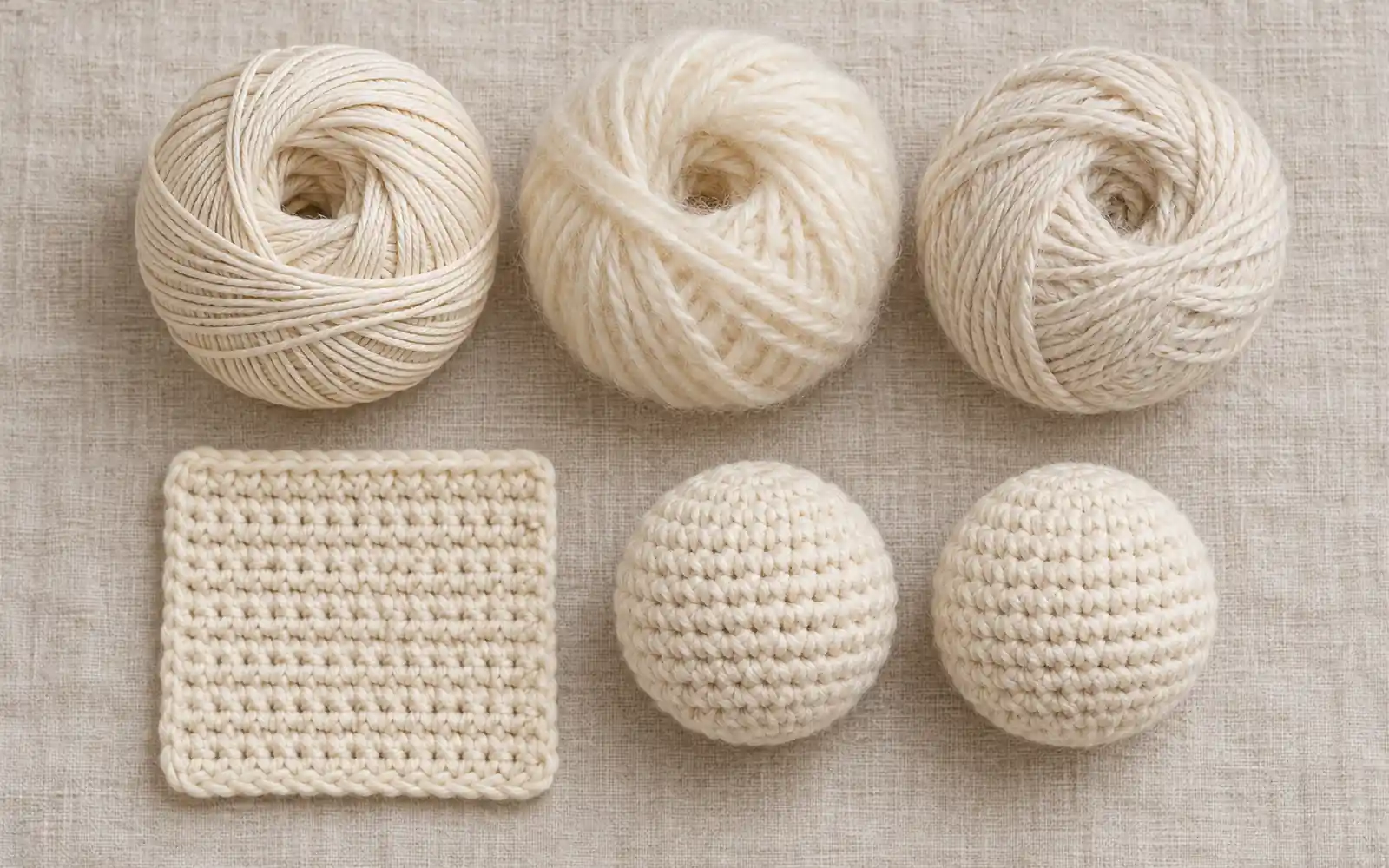
Three cream balls of yarn above a flat single crochet swatch and two stuffed crocheted balls, on a light linen surface
Table of Contents
  1. What Amigurumi Asks of Yarn
  2. Cotton, Acrylic or a Blend?
  3. Match the Yarn to the Toy
  4. Hook Size: Why Smaller Than the Label
  5. Light, Dark and Fuzzy Yarns
  6. Washing, Pilling and Wear
  7. Key Takeaways
  8. Frequently Asked Questions

Quick answer: The best yarn for amigurumi is smooth, tightly plied cotton, acrylic or a blend in DK or worsted weight, worked with a hook smaller than the label suggests. A smooth strand shows each stitch, and a tight fabric holds its shape and keeps the stuffing from showing through.

The toy looked right on the hook, and then the stuffing went in. Now there are gaps, or the yarn is so fuzzy you lost count of the rounds, or the head will not hold its shape. It is hard to tell whether the yarn, the hook or your tension is to blame.

This guide compares cotton, acrylic and blends for small toys, matches yarn weight to toy size and kind, explains why the hook should be smaller than the label, and covers light and dark colors, fuzzy and chenille yarns, washing and pilling.

I stuff a test piece and hold it up to the light. If I can see gaps or stuffing, I go down a hook size before I start the toy, because loose stitches are far easier to fix in a test piece.

What Amigurumi Asks of Yarn

Amigurumi needs a yarn that shows each stitch and holds its shape, because the toy is small and tight and its rounds are counted one by one. For the toy itself, see how to make amigurumi, and for the whole yarn map, the crochet yarn and materials guide.

Stitch Definition and Smooth Plies

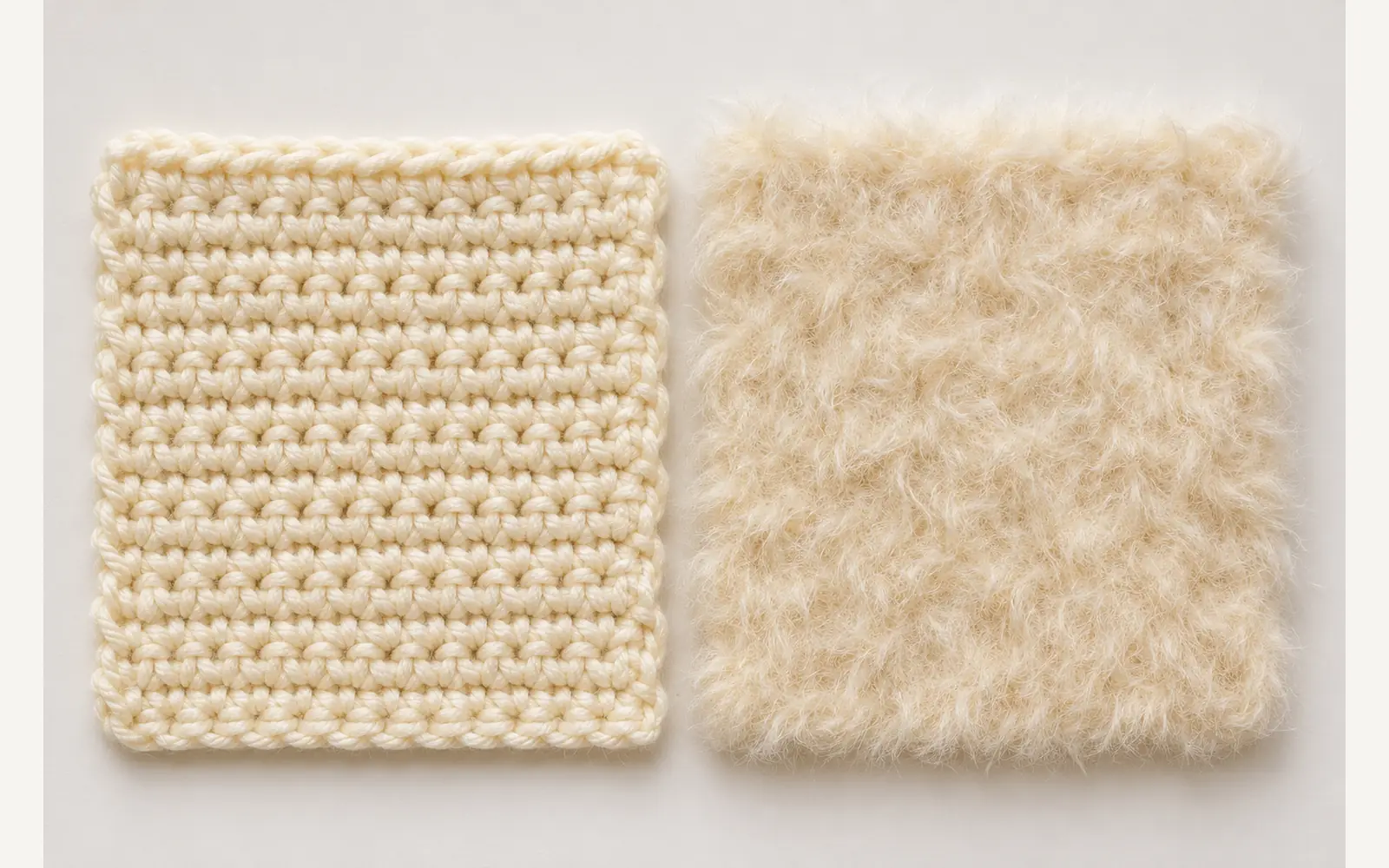
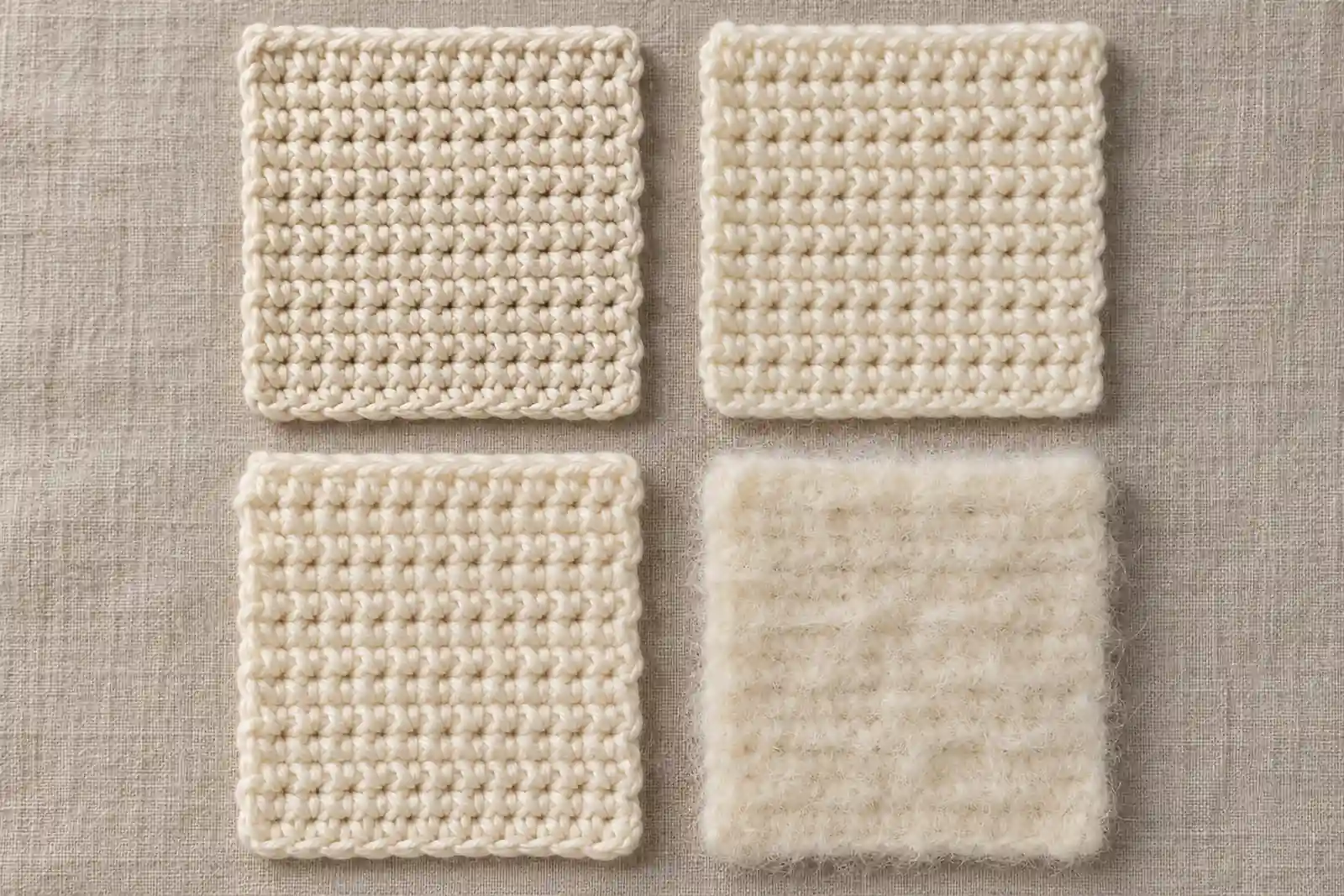
Smooth yarn with a firm, even twist gives amigurumi its best stitch definition. Each stitch stands out, so the rounds are easy to read and the shape is easy to build. Fluffy yarns hide stitches and make rounds hard to track, so they suit more experienced crocheters. Choose a yarn that is sturdy and not too stretchy so the toy keeps its shape. The photo below shows the same stitch in four yarns: smooth cotton, smooth acrylic, a blend and a fuzzy yarn.

Best yarn for amigurumi compared: four single crochet swatches in smooth cotton, smooth acrylic, a cotton-acrylic blend and a fuzzy yarn in a two by two grid Same stitch, four yarns: smooth cotton, smooth acrylic, a blend and a fuzzy yarn.
A Firm Fabric That Hides the Stuffing

Loose stitches leave gaps, and stuffing makes the gaps wider. A fabric that looks fine empty can still show stuffing once it is filled, and the toy ends up looking holey. A firm fabric comes from a smooth yarn and a smaller hook, covered in the hook section below. A yarn that stretches a lot also lets the shape pull out of line over time. The amigurumi invisible decrease helps too, because it reduces holes in the closing rounds.

Cotton, Acrylic or a Blend?

Cotton and acrylic are the two usual amigurumi fibers, and a blend of the two sits between them. The right one depends on the size of the toy and how it will be used. For the full comparison across every project, see cotton vs acrylic yarn.

Fibers for Amigurumi at a Glance

Fiber Strengths for toys Watch for Good for
Cotton (including mercerized) Smooth, crisp stitch definition, durable, pills much less than acrylic, machine washable Stiffer to work, can stretch out of shape if wet a lot, costs more Small figures and doll bodies
Acrylic Soft, affordable, many colors, machine washable, easy to find Cheaper acrylics pill and fuzz with heavy handling Larger cuddly toys and clothes
Cotton-acrylic blend Lighter and softer than pure cotton, good definition Check the label for care, since the mix decides it Small to medium toys
Plush, chenille and faux-fur polyester Very soft and cuddly, large stitches give fast big toys Hides stitches, so counting is hard, and some need hand washing Experienced makers and large soft toys
Wool and other animal fibers Warm and elastic Many need hand washing unless labeled superwash, and are less common for toys that get washed and handled Used when a pattern calls for it

Cotton and acrylic are compared across every project in cotton vs acrylic yarn.

Cotton or Acrylic for Your Toy

Cotton suits small figures that need crisp detail, and acrylic suits larger toys that should feel soft. Cotton keeps its shape and shows every stitch, which suits small details. Acrylic costs less and washes easily, so it is also the easier choice for a first toy. A cotton-acrylic blend is a reasonable middle, and its care label decides how to wash it. I use cotton for small figures and acrylic for larger cuddly toys. To try a toy in either fiber, browse the amigurumi patterns, or start with the Minimal Frog Amigurumi or the Capybara.

Match the Yarn to the Toy

DK and worsted are the most common weights for amigurumi, and the size of the toy decides the rest. Small features call for thinner yarn, and large cuddly toys call for thicker yarn. For every weight, see the crochet yarn weight guide, and for DK, DK weight yarn.

Toy Size and Kind at a Glance

Toy Usual weight and fiber Why
Tiny details and palm-size figures Sport or DK, cotton Thin yarn gives small, fine features, but it is harder for beginners
Small to medium toys and characters DK or worsted, cotton or acrylic The sturdy middle that holds its shape
Large cuddly toys Worsted or bulky, acrylic Fewer stitches for a bigger toy and a softer feel
Very large, snuggly toys Bulky or super bulky chenille or plush Fast and soft, but the stitches are hard to see
Doll bodies and clothes Cotton for the body, acrylic for the clothes The body holds its shape and the clothes stay soft

These are common matches, not rules, so follow the weight in your pattern. For the weight chart, see the crochet yarn weight guide, and for DK, DK weight yarn.

Thinner or Thicker: What Changes

Thinner yarn makes a smaller toy with finer detail, and thicker yarn makes a bigger toy with fewer stitches. Thin yarn is harder for a beginner, and thick yarn makes small features clumsy. The pattern’s weight sets the toy’s size, so follow it unless you plan to change the size. A toy can be made in a different weight for a different size, and the hook needs retesting, as in the hook section below. For what changes when the weight changes, see the crochet yarn weight guide, and for building the toy, how to make amigurumi.

Hook Size: Why Smaller Than the Label

A yarn band suggests a hook for soft fabrics, so amigurumi needs a smaller hook to make a fabric tight enough to hold stuffing. Blankets and scarves want drape, while a toy wants a firm fabric. The right size depends on your yarn and tension, so test it.

Size Down From the Label

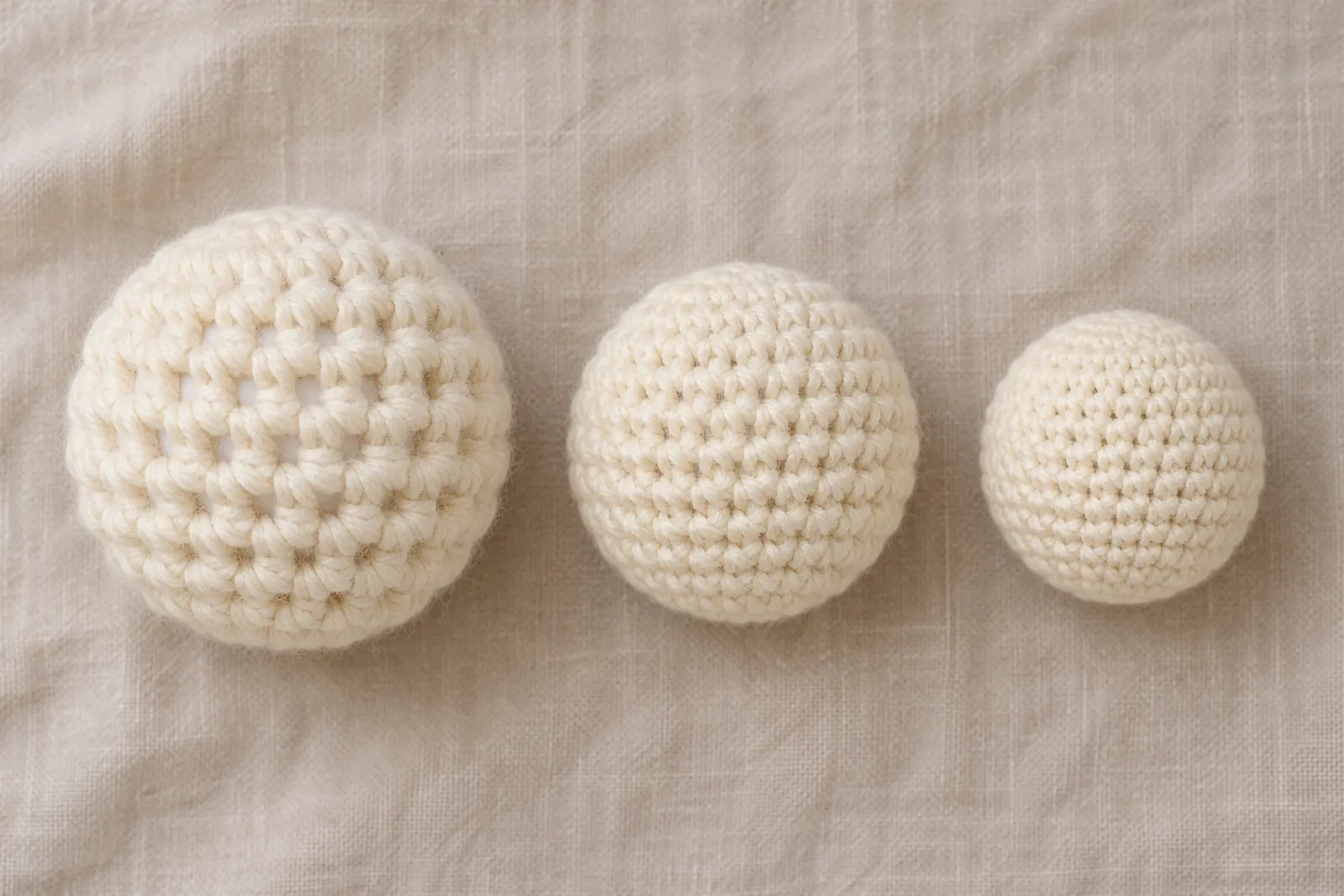
Use a hook one to two sizes smaller than the yarn band suggests, and keep your normal tension. Guides differ: one says 1 to 2 mm smaller than the smallest hook on the label, and starting points for worsted run from about 2.75 to 4.0 mm. A tension test found that a small hook at normal tension gives almost the same fabric as a larger hook worked tight, without straining the hand. The best size is the smallest hook that still catches every ply without splitting the yarn. Chenille and plush often need a smaller hook than their labels suggest, because the fluff covers a thin core. The photo below shows the same yarn with 5.0, 3.5 and 2.75 mm hooks, made on purpose.

Three stuffed crocheted balls in the same cream yarn made with 5.0, 3.5 and 2.75 mm hooks, the left ball showing gaps and stuffing and the right ball showing tight stitches Made on purpose: the same yarn with a 5.0 mm hook (left), a 3.5 mm hook (center) and a 2.75 mm hook (right).
Test for Gaps Before You Start

  1. Work a test piece, such as a flat circle or small ball, in the toy’s yarn with your starting hook.
  2. Stuff it firmly, so the stuffing presses on the stitches.
  3. Hold it up to a light and look for gaps or stuffing showing between the stitches.
  4. If you see gaps, go down a hook size and repeat; if the hook will not go in, go up a size or relax your tension.

Note the yarn and hook that worked for the next toy. Chains and slip stitches may need a slightly larger hook or a looser hand.

Light, Dark and Fuzzy Yarns

You can see stitches best in a smooth, light-colored yarn, and a dark or fuzzy yarn makes counting rounds harder. How easy stitches are to see depends on color and texture as much as fiber. For more on colors, see the amigurumi color guide.

Light and Dark Colors

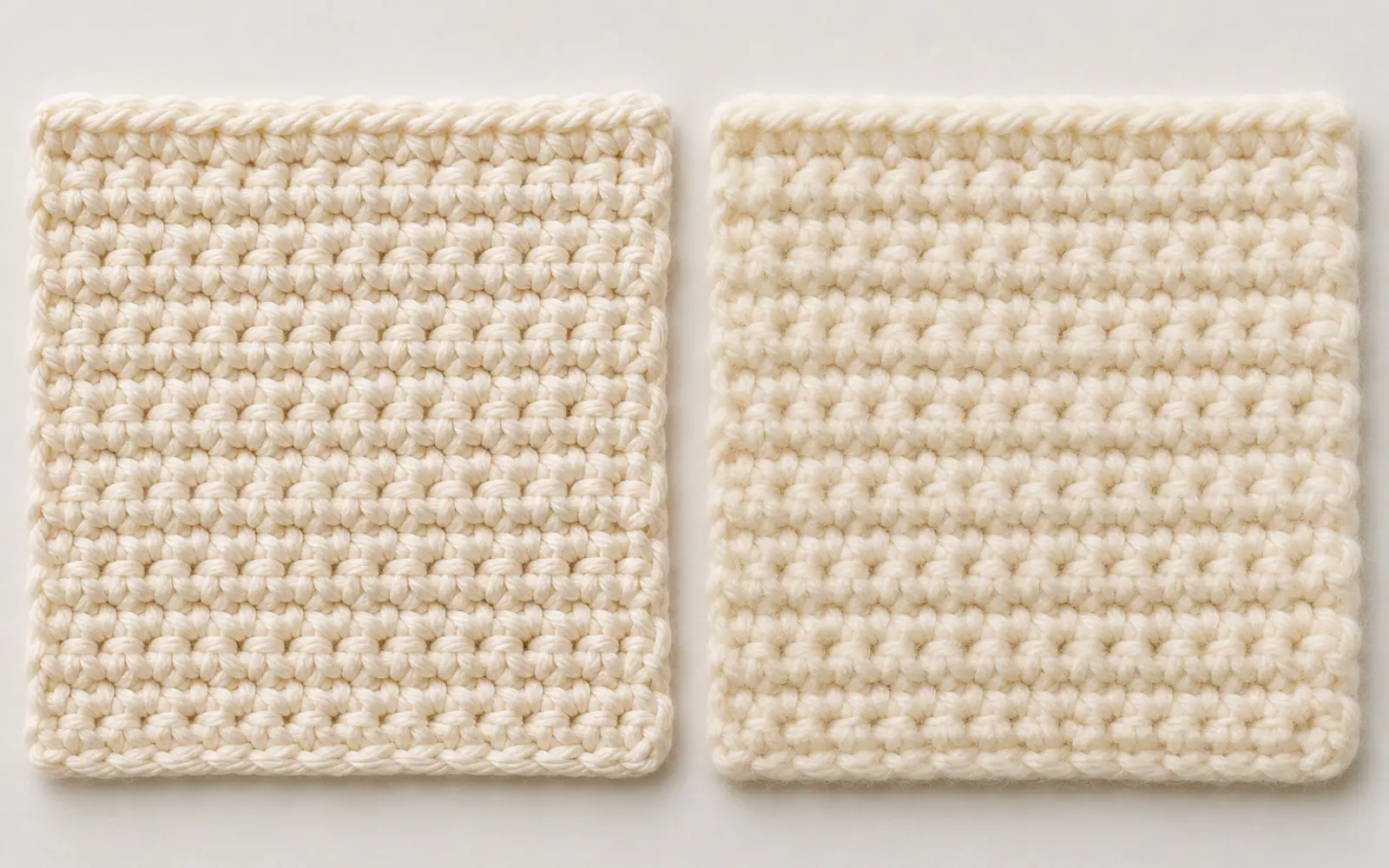
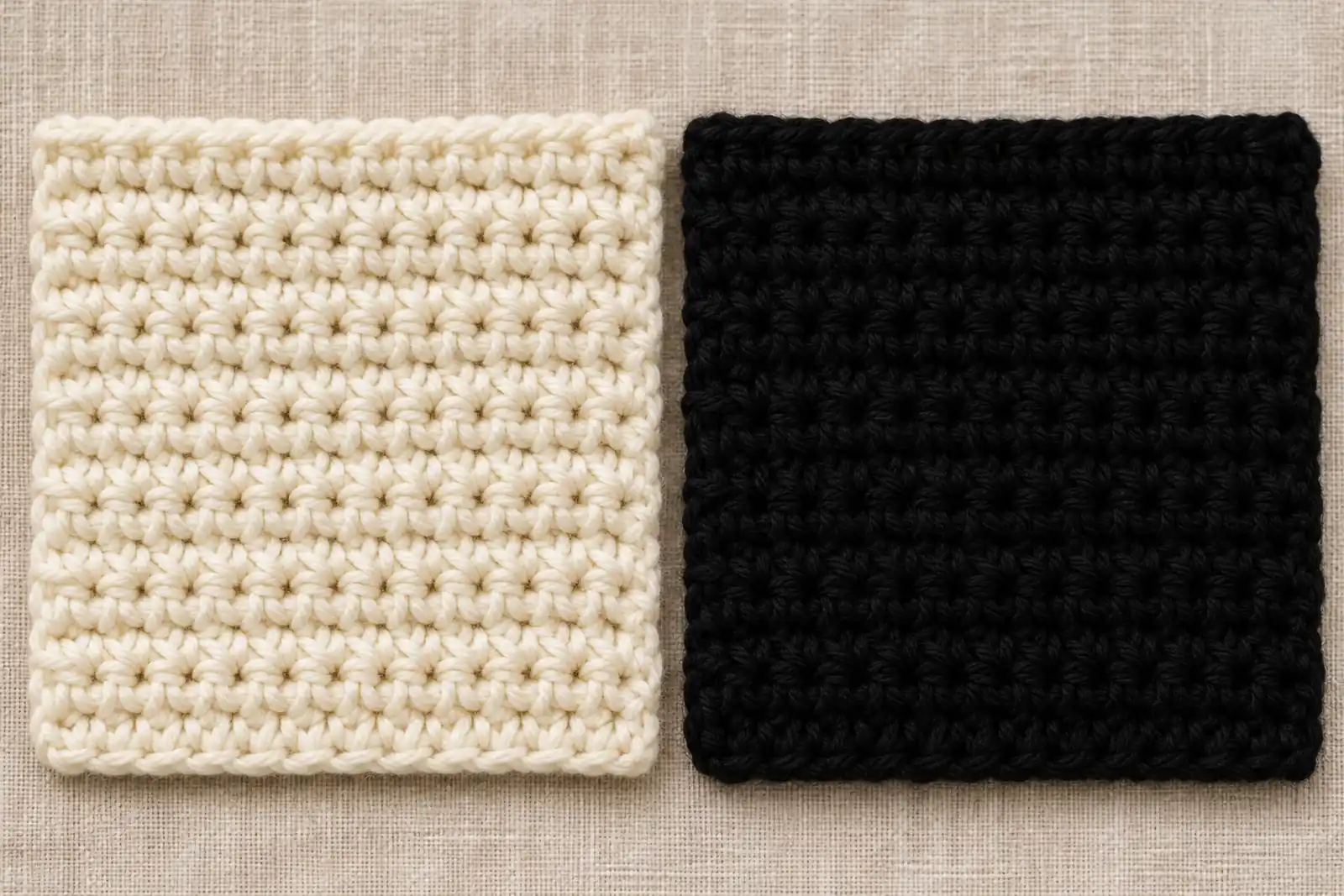
A light-colored yarn shows each stitch, and a dark yarn hides it. That is why guides suggest light colors for beginners. Black makes the work harder to see, and texture does not show well in it. White shows every stitch but shows dirt more quickly, so it needs washing more often. Save dark colors for small parts such as ears and feet once you know the shape. I work a new design in smooth, light-colored yarn so I can see every stitch, and I save fuzzy or dark yarn for later versions. See the amigurumi color guide.

Close-up of two single crochet swatches: cream smooth yarn on the left with clearly visible stitches and black yarn on the right where the stitches are hard to see Light yarn (left) shows every stitch; dark yarn (right) hides them.
Plush, Chenille and Fuzzy Yarns

Plush and chenille yarns make soft, fast toys, but the fluff hides the stitches. Counting rounds is harder, so they suit more experienced makers. Faux-fur yarns suit animals better than dolls, and some need hand washing. One way to make a very fluffy yarn easier to work is to hold it together with a lightweight yarn. Acrylic and wool can be brushed with a slicker brush for a furry look, but cotton does not brush up. Check the label before you choose, since care differs. For reading labels, see the crochet yarn and materials guide.

Washing, Pilling and Wear

A toy gets carried, dropped and hugged, so choose a yarn that can be washed and that resists pilling. Both start with the fiber and the care label. For baby items, see best yarn for baby crochet, and for eyes, amigurumi safety eyes.

Choose Yarn You Can Wash

Read the care label before you buy: toys get dirty, and some yarns need hand washing. Machine washable acrylic and many cotton yarns make washing easy, while some plush and faux-fur yarns need hand washing, as does some wool unless labeled superwash. Cotton can shrink or stretch out of shape if it is wet a lot, so follow the label. Hand washing in a bowl with mild soap is an option for any yarn. Keep the band with the project so the care instructions stay with the toy. For label symbols, see the crochet yarn and materials guide.

Pilling, Hugs and Small Parts

Acrylic can pill with heavy handling, and cotton pills much less. Cheaper acrylic pills more. A firm, smooth, tightly twisted yarn resists pilling better than a loose one, so a toy meant for hugging should use sturdy yarn that holds up to handling. For toys for babies and very young children, some guides advise embroidering the eyes or using safety eyes that meet current regulations, and not using buttons. See amigurumi safety eyes for eyes and best yarn for baby crochet for baby yarn.

Key Takeaways

  • Choose a smooth, tightly twisted yarn in a light color, because it shows every stitch and keeps rounds easy to count.
  • Cotton suits small figures with crisp detail, acrylic suits larger cuddly toys, and a blend sits between them.
  • DK and worsted are the usual weights; follow the pattern’s weight, and use bulky or plush yarn only for large soft toys.
  • Use a hook smaller than the label suggests, test a stuffed piece against the light, and go down a hook size if you see gaps.
  • Check the care label before you buy: machine washable acrylic and many cotton yarns are easy to wash, while some plush and faux-fur yarns need hand washing.

Frequently Asked Questions

What is the best yarn for amigurumi?

A smooth, tightly twisted cotton, acrylic or cotton-acrylic blend in DK or worsted weight (category 3 or 4). Smooth yarn shows each stitch and holds its shape, and a light color makes rounds easier to count. Pair it with a hook smaller than the label suggests. The first two sections above cover what amigurumi asks of yarn and how the fibers compare.

Is cotton or acrylic better for amigurumi?

Neither wins every time: cotton suits small figures and acrylic suits larger, softer toys. Cotton gives crisp stitches and pills much less. Acrylic is softer, cheaper and easy to wash, which also makes it a good first toy. A cotton-acrylic blend sits between them, and its label sets the care. The fibers section above compares them, and cotton vs acrylic yarn covers every project.

What weight yarn is best for amigurumi?

DK (category 3) and worsted (category 4) are the most popular. Thinner yarn makes smaller toys with finer detail, and thicker yarn makes larger toys with fewer stitches. Bulky yarn suits large cuddly toys, and chenille does too but hides the stitches. Follow the weight in your pattern. The toy size section above has the matches, and the crochet yarn weight guide has the chart.

Why does the stuffing show through my amigurumi?

The stitches are too loose, so there are gaps, and stuffing pushes the gaps wider. Go down a hook size and keep your normal tension; guides suggest a hook one to two sizes smaller than the label. Test by stuffing a small piece and holding it up to a light. Chain-heavy or slip-stitch parts may need a looser hand. The firm fabric and hook sections above explain more.

Can I use fuzzy or chenille yarn for amigurumi?

Yes, for large soft toys, but not for a first one. Fluffy and chenille yarns hide the stitches, so counting rounds is hard, and some need hand washing. Learn the pattern in smooth, light-colored yarn first, then use a fuzzy yarn for a later version, with a hook smaller than the label suggests. The light, dark and fuzzy yarns section above has more.

Portrait of Linda Davidsen

Written by

Linda Davidsen

Designer & founder

Linda has been crocheting for over 15 years and designs cozy, beginner-friendly patterns that anyone can finish in a weekend.

Keep reading

All posts