🧶 Yarn Calculator

Try

Visit our Etsy Shops

Pick a shop to browse. Each one opens on Etsy in a new tab.

Yarn & Materials

Best Yarn for Granny Squares: Stitch Definition & Color

Best yarn for granny squares: smooth DK or worsted in cotton, acrylic or a blend, how to keep colors bright through washing, and what to avoid.

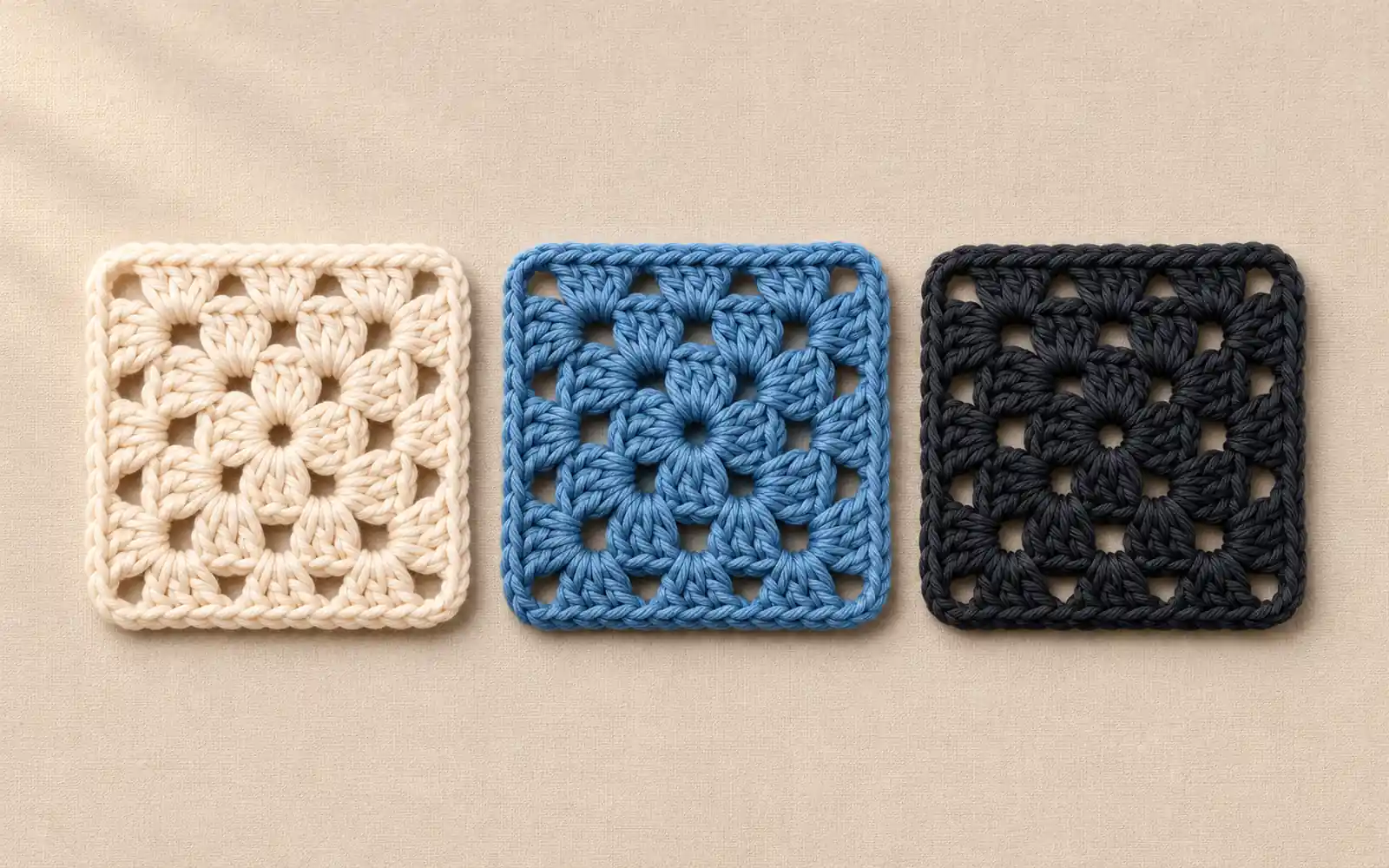
Three granny squares in the same stitch pattern, one cream, one blue and one near-black, side by side on a beige surface
Table of Contents
  1. What Makes a Good Granny Square Yarn
  2. Cotton, Acrylic or a Blend
  3. DK or Worsted?
  4. Colors That Stay Bright
  5. Yarns That Make Squares Harder, and Projects to Try
  6. Key Takeaways
  7. Frequently Asked Questions

Quick answer: The best yarn for granny squares is a smooth, tightly twisted yarn in DK or worsted weight, because it shows every cluster. Cotton gives the crispest stitches, acrylic comes in many colors and washes easily, and a blend sits between them. Use one weight and fiber for all squares.

A granny square is just clusters, chains and a few colors, yet the wrong yarn turns it into a blur. The clusters vanish in a fuzzy strand, the colors fade or bleed in the wash, and squares in two yarns end up different sizes.

This guide covers what makes a yarn good for granny squares: a smooth strand, a fiber that suits the project, DK or worsted weight, and colors that last. It also shows how to buy colors from one dye lot, test them before joining and avoid yarns that make squares harder.

I look for a smooth, tightly twisted yarn first, because it shows every cluster. If the strand is fuzzy or loosely spun, the squares blur together, and no color choice fixes that.

What Makes a Good Granny Square Yarn

A good granny square yarn shows each cluster clearly and survives washing. A granny square is made of small clusters separated by chain spaces, so the yarn has to show each one and the piece will be washed. See the crochet yarn and materials guide for the wider map.

Smooth and Tightly Twisted

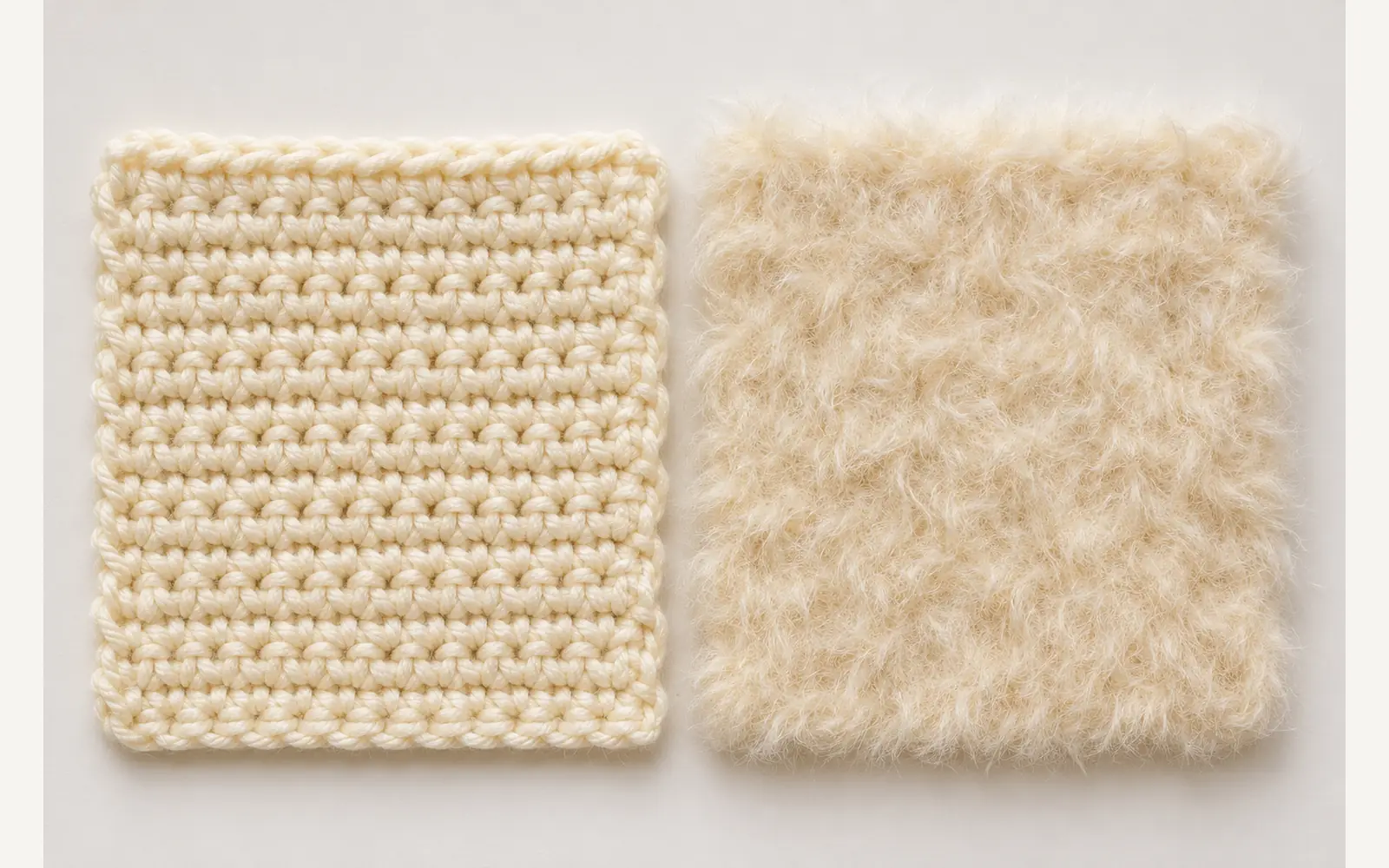
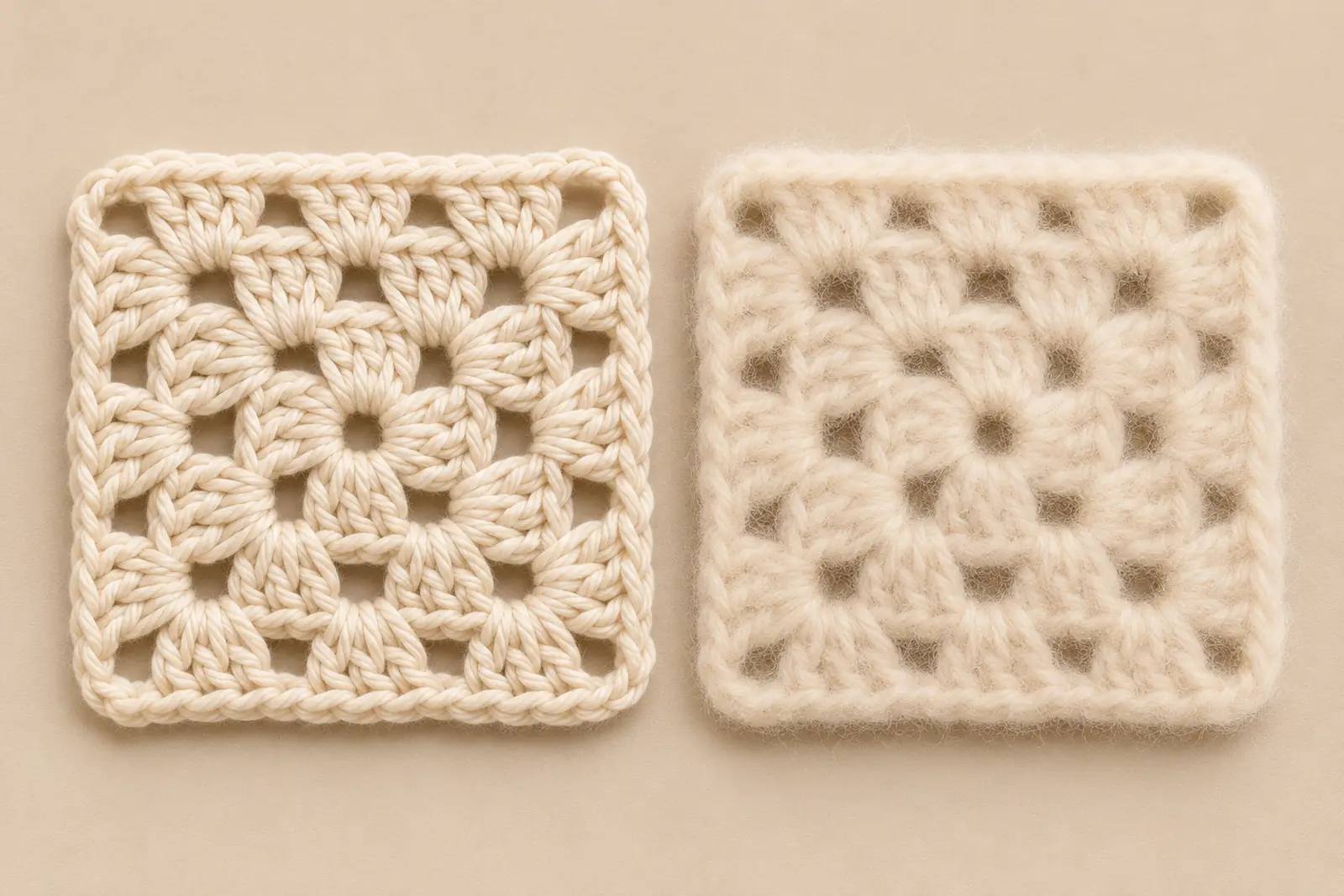
A smooth, tightly twisted yarn shows each cluster of a granny square, and a fuzzy yarn blurs it. Each cluster of three double crochet stands apart from the next, and the chain spaces between them stay open. In a fuzzy, hairy or loosely spun yarn, those lines disappear. Some guides tell beginners to start their first squares with less hairy yarns, and one guide worked every sample square in one lightweight cotton on one hook so the stitches would show. Textured yarns can add depth, so leave them for later. The photo below shows two granny squares made on purpose with the same hook, one in smooth yarn and one in fuzzy yarn.

Best yarn for granny squares comparison: a smooth cream granny square with clear clusters beside a fuzzy cream granny square made with the same hook where the clusters are hard to see Made on purpose: the same granny square and hook in a smooth yarn (left) and a fuzzy yarn (right).
Durable and Easy to Wash

Choose a machine washable yarn for granny squares, because squares end up in blankets and bags that are washed. Read the care line before you buy; how to read a yarn label explains the symbols. A strand that splits or feels slippery is harder to work, and a single-ply yarn can be tricky for beginners. If you combine yarns, give them similar washing instructions. Work a swatch square before you buy the whole project. A square can change in the wash, so wash the swatch and measure it again. The band lists the care, and the swatch shows the result.

Cotton, Acrylic or a Blend

Cotton, acrylic and blends all make good granny squares, and the choice depends on the look, the use and the washing. The table sets out four fibers, and the section after it helps you choose. For the full comparison, see cotton vs acrylic yarn.

The Fiber Table for Granny Squares

Fiber Squares look Good for Watch for
Cotton Crisp, clean lines, with little stretch Summer throws, bags, baby blankets Heavier than acrylic; dry it flat because it can stretch if hung wet; dye can bleed, so test the colors
Acrylic Soft, with many bright colors Everyday blankets, pillows, kids’ items Less crisp than cotton, so a smooth strand matters; an iron or too much heat can damage it
Cotton-acrylic blend Between cotton and acrylic Blankets and items for children, and often more durable and easier to care for Read the percentages and the care line
Wool or wool blend Warm Cooler-weather blankets, where warmth matters Choose superwash if you want machine washing

“Squares look” is a tendency, and the care line and the project decide. Read the table as a starting point for a test square, not a verdict: a smooth cotton can look cleaner than a rough acrylic, and the reverse is just as possible. For the full comparison, see cotton vs acrylic yarn.

Cotton or Acrylic for Granny Squares

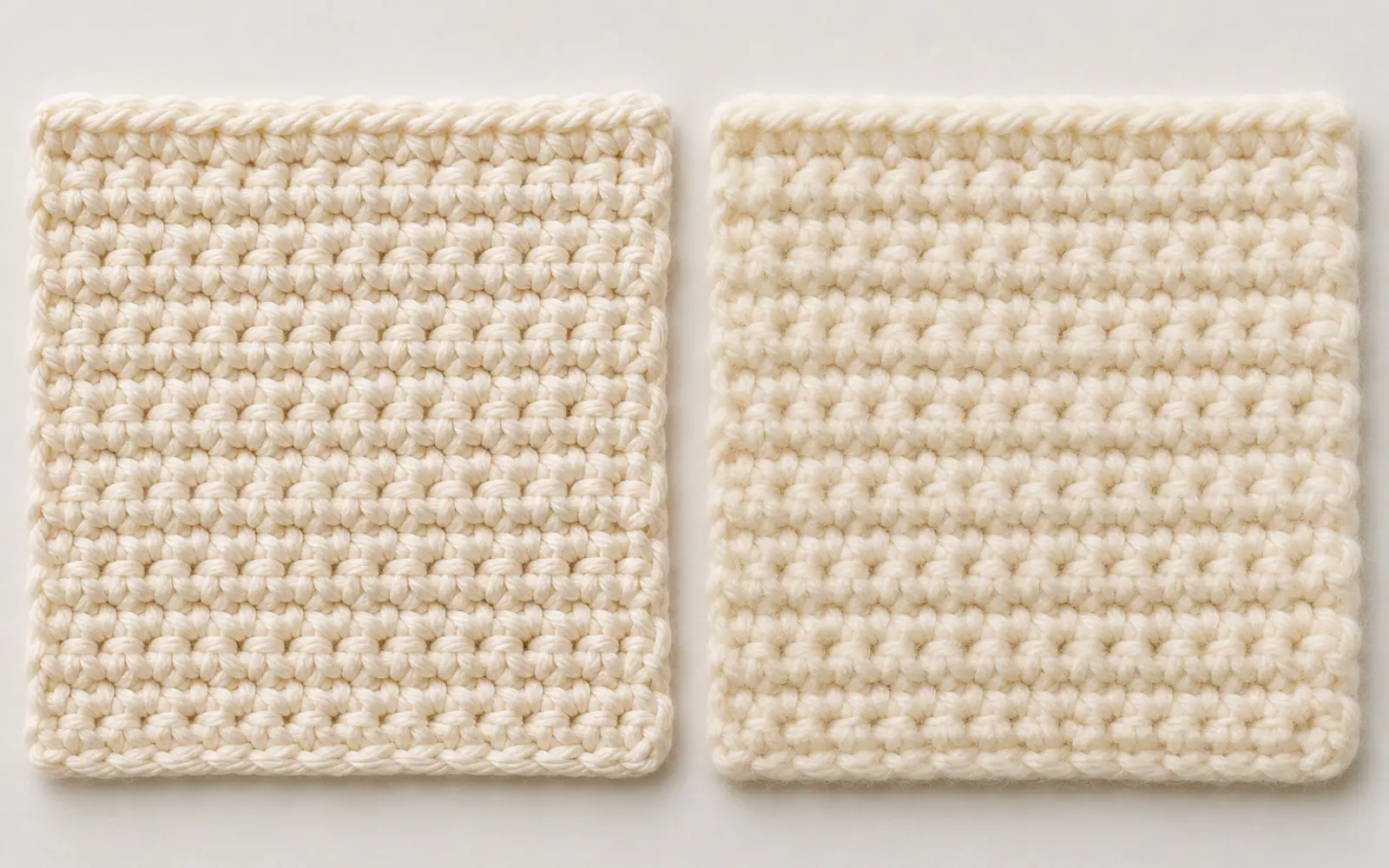
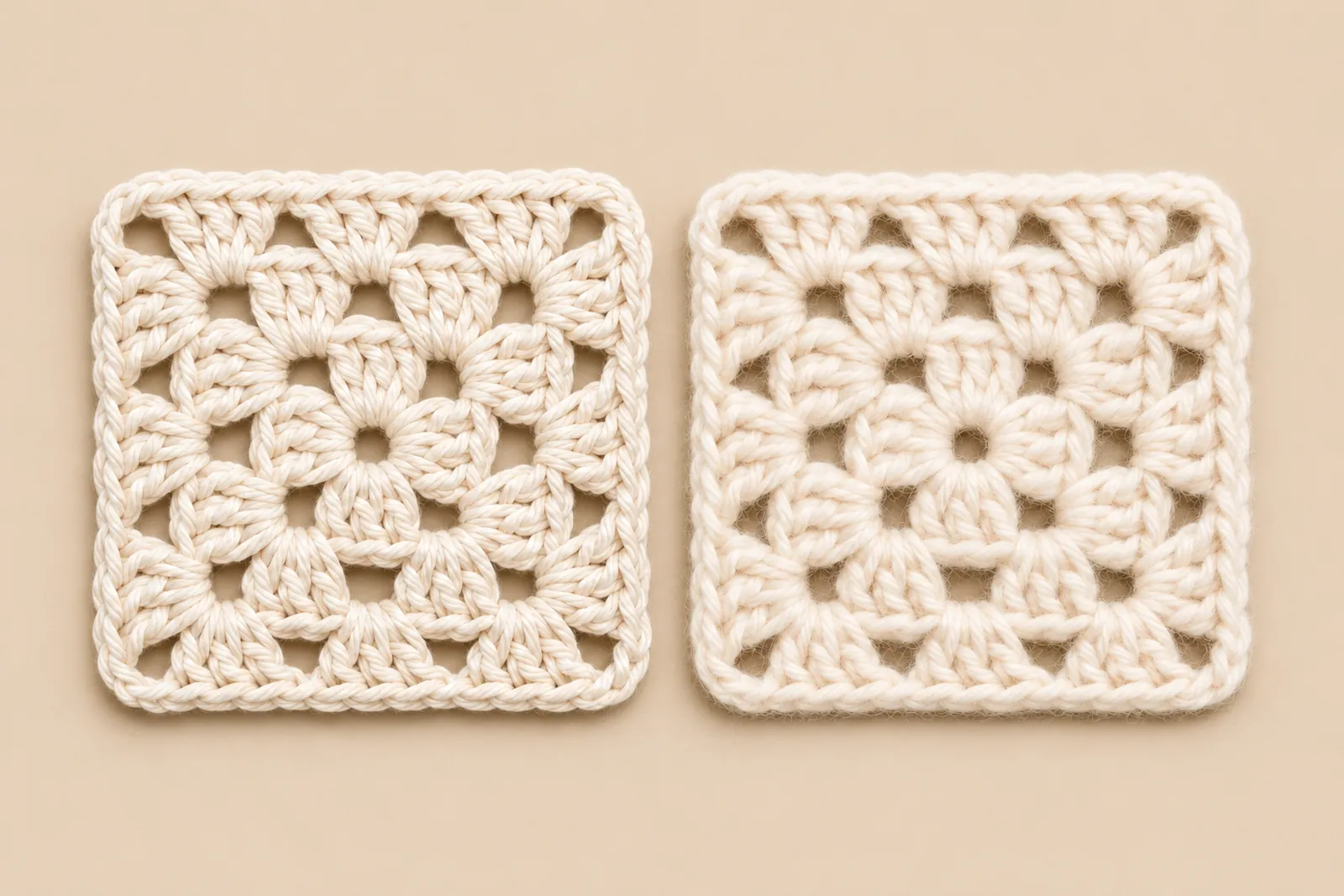
Choose cotton for crisp granny squares and acrylic for many colors and easy care. Cotton suits a summer throw or a bag, and acrylic suits a soft everyday blanket. A blend is the middle path. Cotton is heavier and has little stretch, so a cotton blanket is weightier than an acrylic one. Dry a cotton piece flat, because it can stretch if hung wet. Both are good, and a smooth strand matters more than the fiber name. The photo below shows a cream cotton granny square beside a cream acrylic one, made with the same hook. See cotton vs acrylic yarn for the full comparison.

A cream cotton granny square on the left and a cream acrylic granny square on the right, both three rounds made with the same hook The same granny square and hook in cotton (left) and acrylic (right).
DK or Worsted?

DK and worsted are the common weights for granny squares, and any weight can work if the hook suits it. The weight sets the size of each square, so choose it on purpose. For every weight side by side, see the crochet yarn weight guide.

Which Weight to Choose

Worsted weight gives larger granny squares and DK gives smaller ones, so the weight sets the size. Worsted (category 4) makes a blanket that grows fast. DK (category 3) gives a lighter fabric and more squares for the same size. Finer yarn makes smaller squares and thicker yarn larger ones, and any yarn can work with a hook to suit it. One guide’s granny blanket says any weight or fiber will do, with the hook changed to suit, and warns that the size or texture may come out different. Follow the pattern’s weight if you want its finished size. For the hook and stitch ranges, see the crochet yarn weight guide.

Keep One Weight and Fiber in a Project

Squares made in different yarns come out different sizes, so keep one weight and fiber in a project. One guide shows three samples of the same square in three yarns and hooks to make the point, and for a granny square the pattern’s gauge is its finished size. Squares of unequal size are harder to join and make an uneven blanket. I keep every square in the same weight and fiber. If you must change yarn, make a test square first and measure it, using how to substitute yarn for the method. Mixing yarns with different care lines can also change how they behave in the wash.

Colors That Stay Bright

A granny square project is colors first, so the yarn must show them clearly and keep them through washing. This section covers light, mid and dark colors, dye lots and a test for bleeding. For choosing the palette itself, see choosing crochet colors.

Light, Mid and Dark Colors

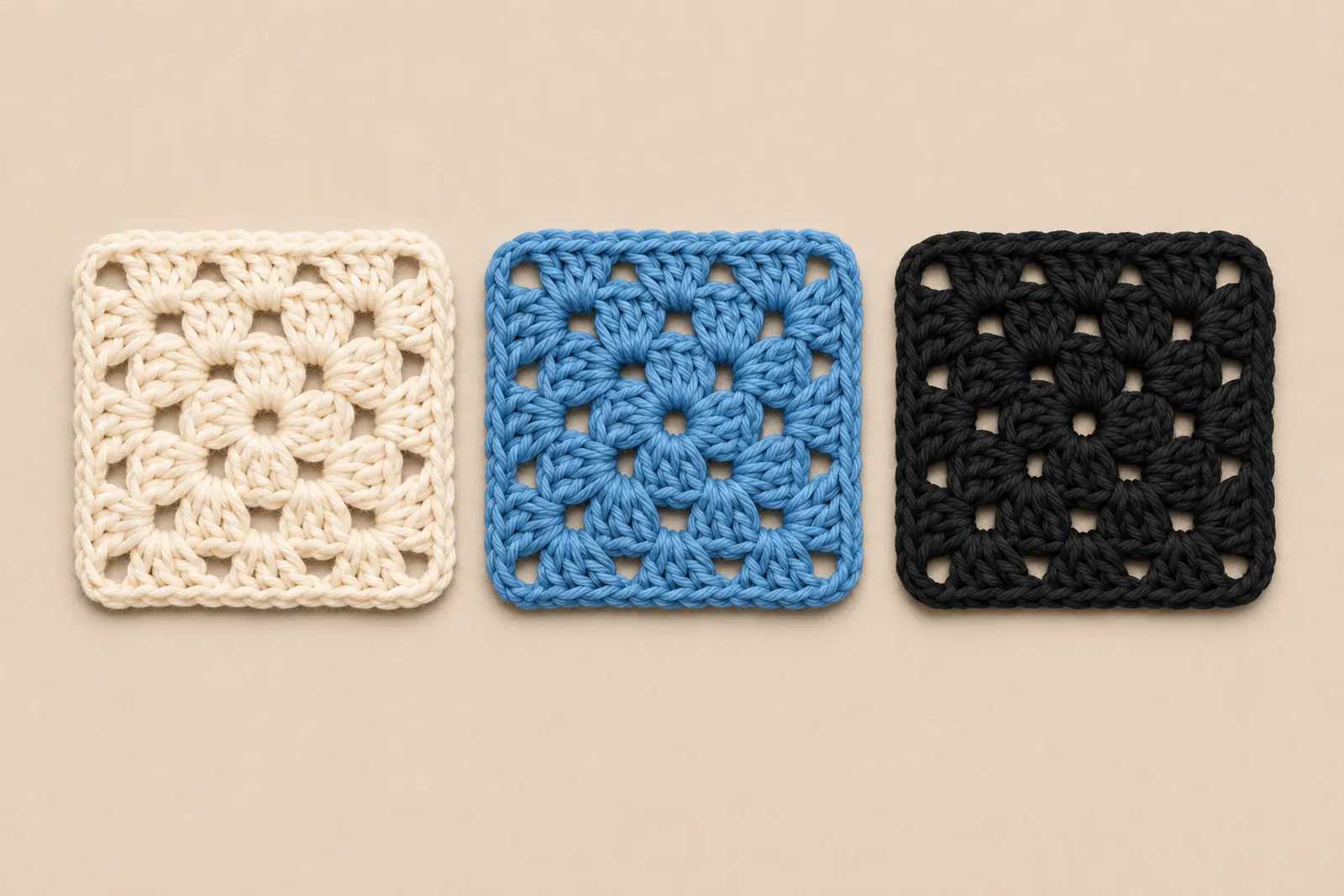
Light and mid-tone yarns show every stitch of a granny square, and very dark yarn hides it. Black or near-black makes the work harder to see and hides texture, and white shows dirt quickly. Pattern colors are only suggestions, so choose the ones you like. Try a strong contrast between rounds only after you test the colors together. A dark color is still a fine choice, but expect to work it in good light and count your clusters as you go. The photo below shows three squares in the same yarn and hook, one light, one mid-tone and one very dark.

Three granny squares in the same smooth yarn and hook, a light cream one, a mid-tone one and a near-black one from left to right The same yarn and hook in a light, a mid and a dark color (left to right).
Dye Lots Across Colors

Buy enough of each color at once, because different dye lots can vary subtly in shade, and the difference shows in the finished piece. For a granny square project, that means buying all the yarn for each color together and noting its dye lot. Squares are often made over many weeks, so mixing lots by accident is easy. Scrap yarn is a classic use for squares, so mixed lots are fine if you want a patchwork look. Keep the bands; how to read a yarn label explains the dye lot number.

Test Colors Before You Join

Some yarn can bleed in the wash, so test the colors together before you join the squares. The risk is higher with bold dark colors and hand-dyed yarn, and one guide rates cotton, viscose and linen higher risk than acrylic and polyester. To test, press a wet length of each yarn on white paper, or crochet a small swatch with all the colors together and soak it in lukewarm water, then check the water and the lighter stitches. I wash a small test swatch of all the colors together before I join anything. Wash a finished project in cold or lukewarm water, separately, and avoid long soaks.

Yarns That Make Squares Harder, and Projects to Try

A few yarns work against the stitch, and the best test is a small square in the yarn you plan to use. The sections below name those yarns and suggest projects. For the steps of the square itself, see how to crochet granny squares.

Yarns That Make Squares Harder

Fuzzy, hairy and heavily textured yarns hide the stitches of a granny square, and mohair-like strands make the first squares harder to learn. A strand that splits or feels slippery is harder to work, and a single-ply yarn can be tricky for beginners. A very thick or very thin cotton can also be wrong for a light blanket. None of these is forbidden; they just make a square harder to read. For a first project, a smooth solid in DK or worsted is the easy choice, and a small test square will tell you whether the yarn in your hand works.

Projects to Try

A granny square blanket, a bag and a top all start with the same square. Choose the yarn first, then the project. Try the Granny Square Blanket, Citrus Granny Square Tote or Granny Square Halter Top, or browse free blanket patterns and free bag patterns. None of the three needs a special yarn, only a smooth one that you have tested. For the square steps, see how to crochet granny squares, and for baby blanket sizes and yarn, the crochet baby blanket guide.

Key Takeaways

  • Choose a smooth, tightly twisted yarn, because it shows each cluster of a granny square and a fuzzy yarn blurs it.
  • DK and worsted are the common weights for granny squares: worsted gives larger squares and DK smaller ones.
  • Cotton gives crisp squares, acrylic gives many colors and easy care, and a blend sits between them.
  • Keep every square in the same weight and fiber, because different yarns and hooks give different sizes.
  • Buy enough of each color at once from one dye lot, and test the colors together in the wash before you join, because some yarn can bleed.

Frequently Asked Questions

What is the best yarn for granny squares?

A smooth, tightly twisted yarn in DK or worsted weight, because it shows each cluster. Cotton gives the crispest stitches, acrylic comes in many colors and washes easily, and a blend sits between them. Use one weight and fiber for all squares. The What Makes a Good Granny Square Yarn and Cotton, Acrylic or a Blend sections above have the details.

Is cotton or acrylic better for granny squares?

Both work. Cotton gives crisp stitches but is heavier and can stretch if hung wet, so dry it flat. Acrylic is soft, comes in many colors and is easy to wash. A blend sits between them. Choose by the project and the care line, and make a test square first. See cotton vs acrylic yarn for the full comparison.

Can I mix yarn weights in one granny square project?

Not without testing. Squares in different yarns come out different sizes, which makes joining harder and a blanket uneven. Keep one weight and fiber, or make a test square in each yarn, measure them and adjust the hook. Mixing yarns with different care lines can also change how they wash. The DK or Worsted? section above covers the weights. See how to substitute yarn for the method.

Will granny square colors bleed in the wash?

They can. The risk is higher with bold dark colors, hand-dyed yarn and, according to one guide, cotton than with acrylic. Test first: soak a small swatch of all the colors together in lukewarm water and check the water and the lighter stitches. Wash the finished piece in cold or lukewarm water, separately. The Test Colors Before You Join section above has the full test.

Does dye lot matter for granny squares?

Yes, for each color you need a lot of. Different dye lots can vary subtly in shade, and the difference shows in the finished piece, so buy enough of each color at once and keep the bands. For a scrap blanket, mixed lots are part of the look. See how to read a yarn label for the dye lot number.

Portrait of Linda Davidsen

Written by

Linda Davidsen

Designer & founder

Linda has been crocheting for over 15 years and designs cozy, beginner-friendly patterns that anyone can finish in a weekend.

Keep reading

All posts