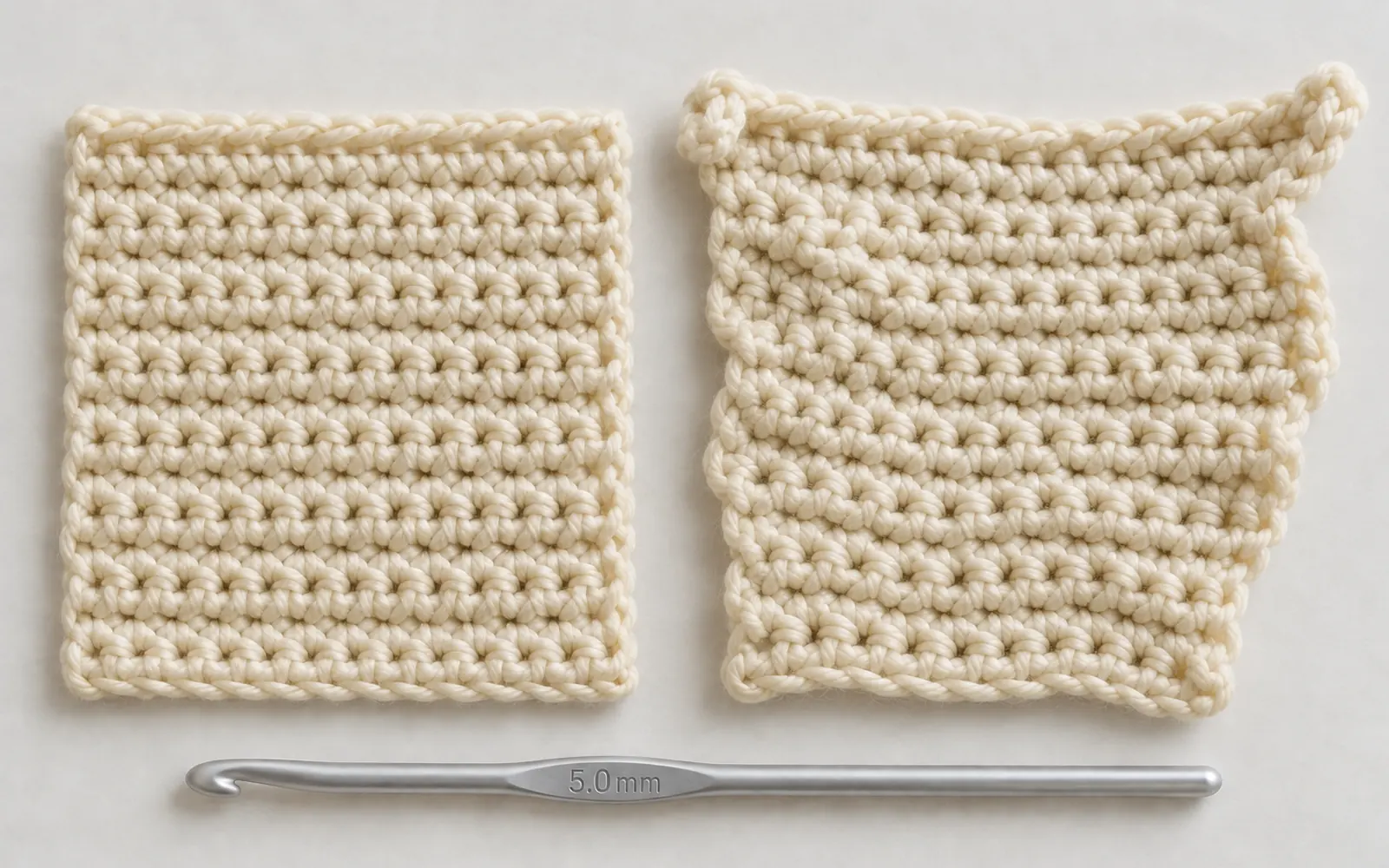
Common Crochet Mistakes and How to Fix Them
Twisted chains, wavy edges, wrong stitch counts: the common crochet mistakes beginners make, how to spot each one and how to fix it.
Read More: Common Crochet Mistakes and How to Fix Them 🧶 Yarn Calculator
Beginner Guides
Crochet tools for beginners, simplified: the six you need, the extras that can wait, and a starter kit that avoids wasted money.
 By Linda Davidsen · · 11 min read
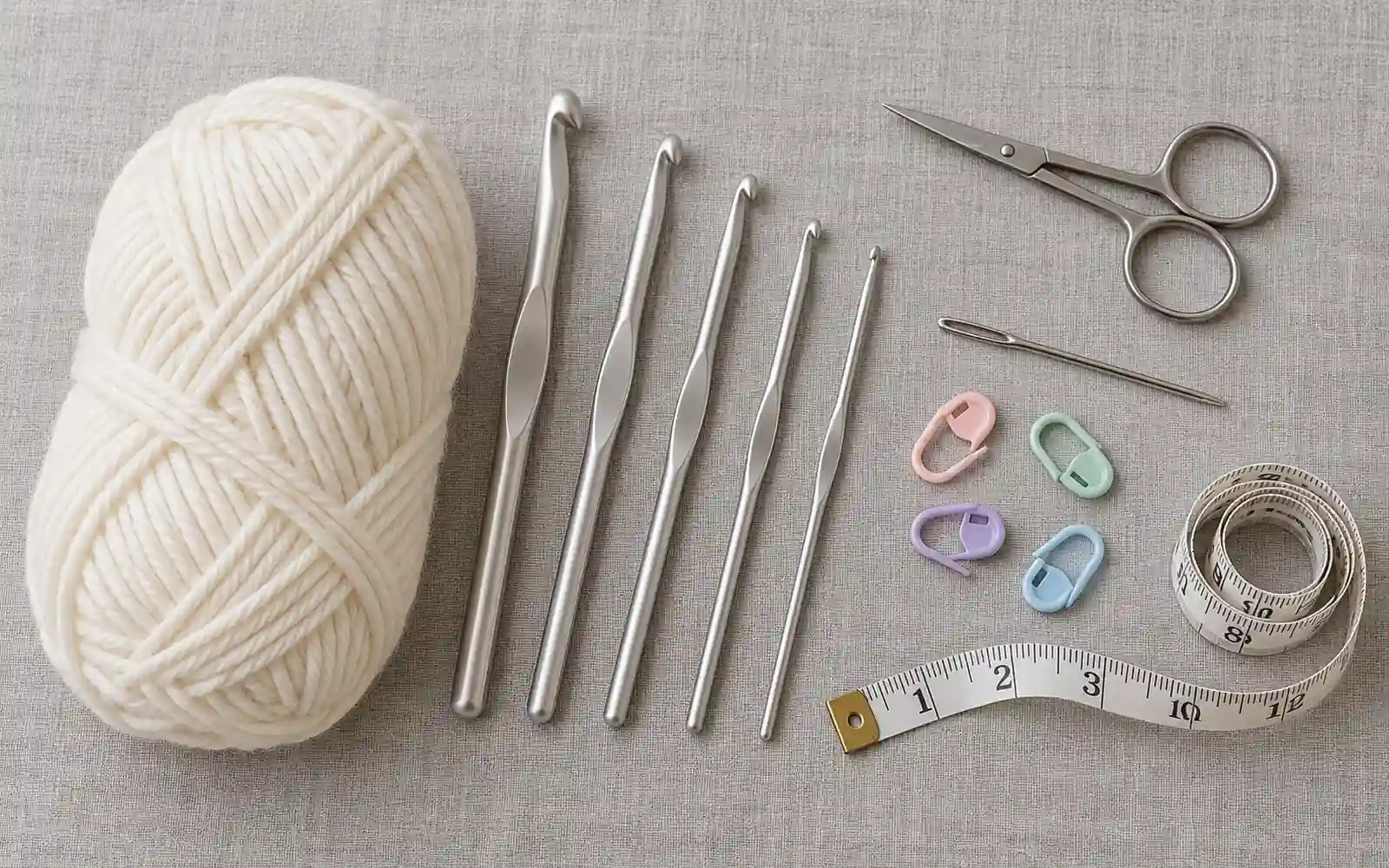
Quick answer: Crochet tools for beginners come down to six items: a hook, yarn, a yarn needle, scissors, stitch markers and a measuring tape. Start with one 5.0–5.5 mm (H/8 to I/9) hook and one skein of smooth worsted yarn. A row counter, blocking mat, yarn winder and hook case can wait until you know you will keep crocheting.
You search for crochet supplies and find a list of dozens of tools, a shelf of matching sets and a cart that costs more than your first sweater would. It is easy to feel that you need all of it. You do not. Six small things will get you through your first projects.
Below are the six tools to buy, a short list of extras that can wait, free substitutes for the cheap ones, and how to spend a small budget well. A last table shows what to add when you move on to coasters, keychains, toys or hats.
Spend your first money on one hook that feels good in your hand and one skein of yarn you enjoy touching. Everything else can be a paper clip and a pencil until you know you will keep going.
A beginner needs six tools: a hook, yarn, a yarn needle, scissors, stitch markers and a measuring tape. Everything else is optional, and the Beginner’s Complete Guide to Crochet covers the rest of getting started.
| Tool | What it does | What to buy | Free or cheap substitute |
|---|---|---|---|
| Hook | Makes every stitch | One 5.0–5.5 mm (H/8 to I/9) hook, aluminum | None |
| Yarn | What you crochet with | One skein of smooth worsted yarn in a light color; see best yarn for beginners and crochet yarn and materials | None |
| Yarn needle (tapestry needle) | Weaves in loose ends and sews pieces together | A metal needle with a blunt tip and a large eye | None (a tight crochet-hook weave can work for a few ends only) |
| Scissors | Cuts yarn cleanly | A small, sharp pair | Any sharp household scissors |
| Stitch markers | Mark a stitch or the start of a round | Open or locking markers | Safety pin, paper clip or a loop of scrap yarn |
| Measuring tape | Checks size and gauge | A flexible tape | A ruler |
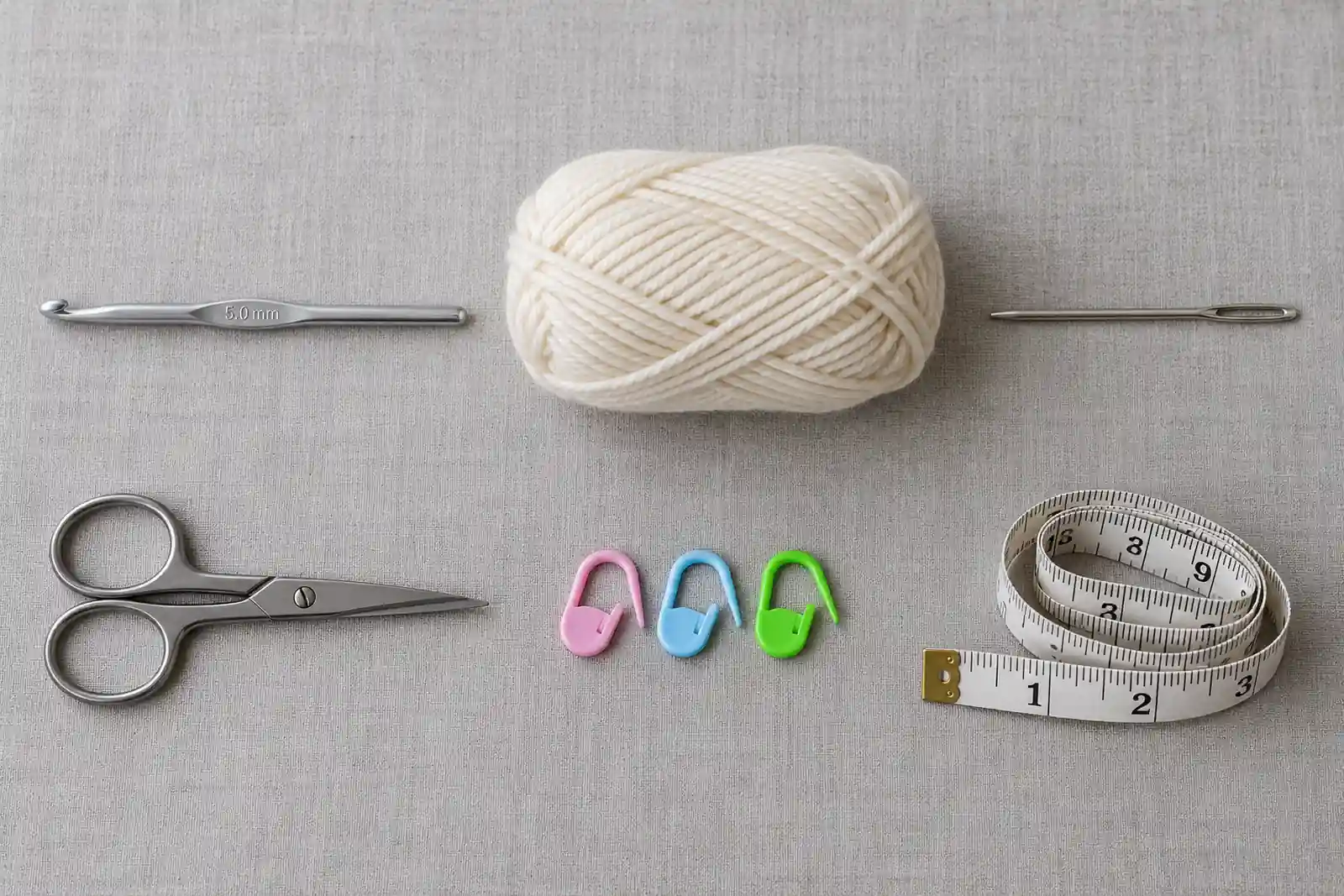
The six tools: hook, yarn, yarn needle, scissors, stitch markers and measuring tape.
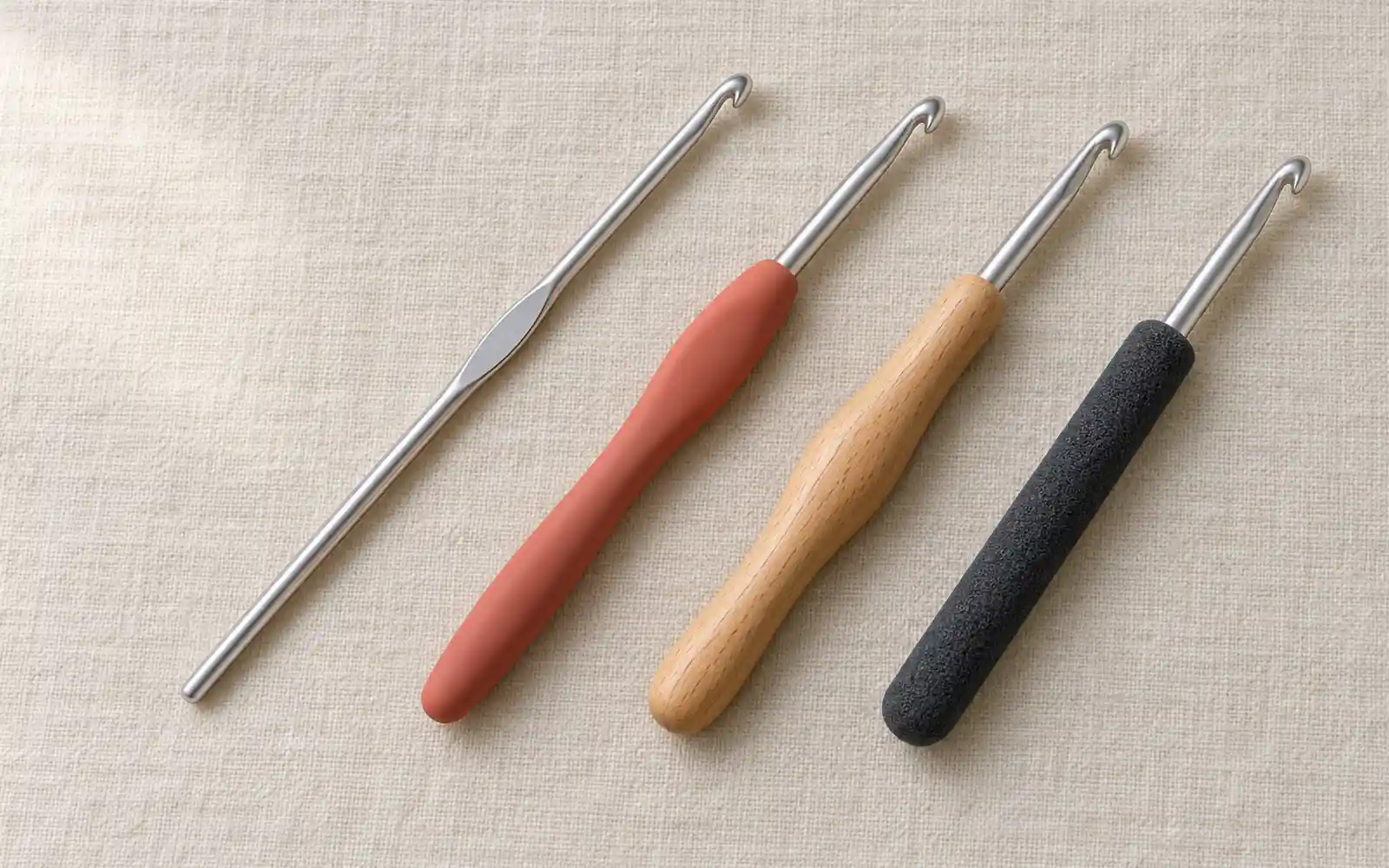
A single 5.0–5.5 mm aluminum hook and one skein of worsted yarn are enough for your first projects. You do not need a set. Buy a second size when a pattern calls for one, and use the crochet hook size chart to match it. Hooks also come in plastic, wood and bamboo, and very small steel hooks are made for thread. All of those can wait. If stitches feel stiff or a yarn will not glide, a different type of hook is a cheap fix, and our guide to ergonomic crochet hooks compares the handle styles. For the yarn, start with best yarn for beginners.
A yarn needle, also called a tapestry needle, is a large, blunt needle used to weave in loose yarn ends and sew pieces together. The blunt tip slides through finished stitches without splitting the yarn, and the large eye holds a thick strand. Metal is the common recommendation, because plastic needles can roughen or break, though that is a preference more than a rule. Straight and bent-tip styles both work, and a straight steel needle is a fine first choice. Skip any needle with a bump around the eye, which can catch in your stitches. Buy a small pack so a lost needle costs little.
Any small, sharp pair of scissors will do for crochet. Embroidery scissors are a common choice because they fit easily in a project bag, though sharp household scissors also work. Sharpness matters more than size. A dull blade can fray the end of the yarn, and a frayed end is harder to thread through a needle. When the scissors ride loose in a bag, keep them in a case or under a cover so the points stay put. That is the whole decision: pick a pair that cuts cleanly and move on.
A stitch marker is a small clip or ring that marks a stitch so you can find it again. In crochet it usually goes in the first stitch of a round, at the start of a repeat, or where you stopped for the night. Open (split-ring) and locking markers are the usual choices, and a closed ring made for knitting needles generally does not suit crochet. A safety pin, a paper clip or a loop of scrap yarn works until you buy a pack. A flexible measuring tape, or a plain ruler, checks the size of a piece and your gauge.
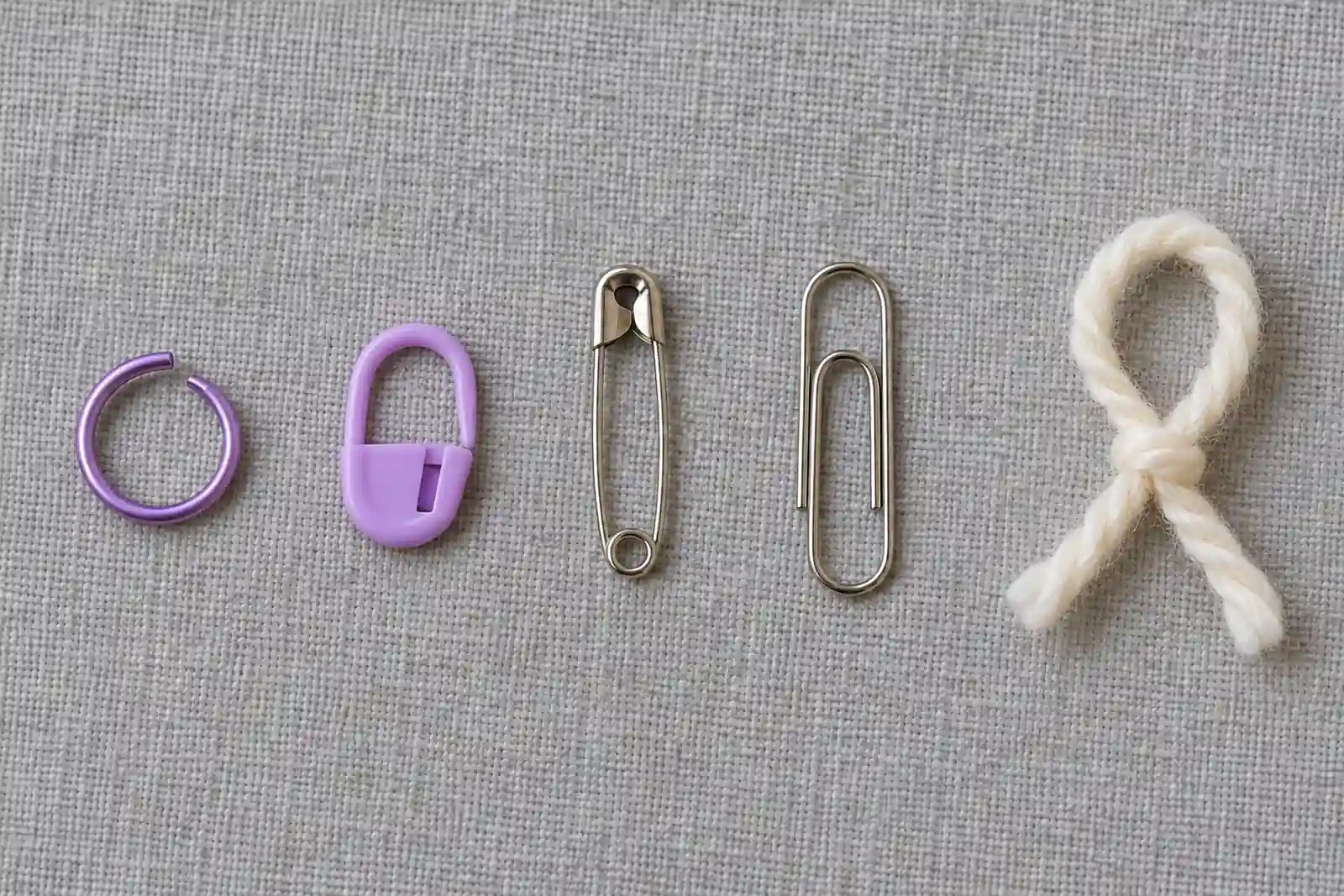
Stitch markers, bought and free.
The rule is simple: buy an extra tool only when you hit a problem it solves. Until then, the six above and a few free swaps will carry you through your first projects.
Each of these earns its place only after a few projects, and each has a clear trigger.
| Tool | What it helps with | Buy it when… |
|---|---|---|
| Row counter | Tracking rows | You keep losing count in longer patterns; until then, a pen-and-paper tally works |
| Hook case or project bag | Keeping tools together | Loose hooks start going missing; until then, any pouch from home works |
| Second and third hook sizes | Patterns that call for another size | A pattern asks for one; the crochet hook size chart lists the sizes and conversions |
| Ergonomic hook | A different handle shape | You want a thicker or softer handle; ergonomic crochet hooks holds the comparison |
| Blocking mat and pins | Shaping garments and lace | You make garments, lace or cotton pieces; blocking acrylic is usually not necessary, so acrylic projects can skip it |
Useful later, with a trigger for each.
Buy one hook, one skein and a small pack of notions first, and add the rest only when a project needs it. Prices below were checked in October 2026 and will drift.
| Item | What to buy | Price on Oct 27, 2026 | Where checked |
|---|---|---|---|
| Hook | One 5.5 mm (I/9) aluminum hook | About $5.53 | Walmart.com listing |
| Yarn | One skein of worsted | About $5.99 (Red Heart Super Saver, 7 oz, checked Oct 13) or about $4.99 (Lion Brand Vanna’s Choice, 3.5 oz) | Maker pages |
| Yarn needle | A small pack of steel needles | About $5.99 for 4 | Hobby Lobby website |
| Scissors | Small embroidery scissors | About $5.99 | Hobby Lobby website |
| Stitch markers | Locking markers | About $4.99 for 60 | Hobby Lobby website |
| Measuring tape | A 60-inch flexible tape | About $0.99 | Hobby Lobby website |
A starter list with prices checked on Oct 27, 2026.
These swaps are for the cheap tools only. The hook is the one item that has no stand-in.
| Instead of… | Use… |
|---|---|
| Stitch marker | A safety pin, paper clip or loop of scrap yarn |
| Row counter | A pen-and-paper tally |
| Project bag | Any bag or box |
| Measuring tape | A ruler |
Free swaps for the cheap tools.
Sticky notes can mark your place in a pattern, too. Whatever you use as a marker should be smooth, so it does not snag or stretch the yarn. A paper clip or pin is fine for a first marker; if it catches, switch to a loop of scrap yarn. These are stand-ins, not upgrades.
Spend a little more on the hook and scissors, and save on markers, counters and cases. The hook is in your hand for every stitch, and clean-cutting scissors make ends easier to thread. Buy one hook first and test it before you think about a set. On the prices above, a hook, a skein and a needle pack come to about $17; scissors, markers and a tape add about $12. Our guides to ergonomic crochet hooks and how to hold a crochet hook help you judge how a hook feels.
If I could only upgrade one thing, it would be the hook.
A kit can be a fine start if its contents match the six-item list. Check four things before you buy:
Scissors and a tape usually come from home. Many kits are padded with items from the skip list, so look inside first.
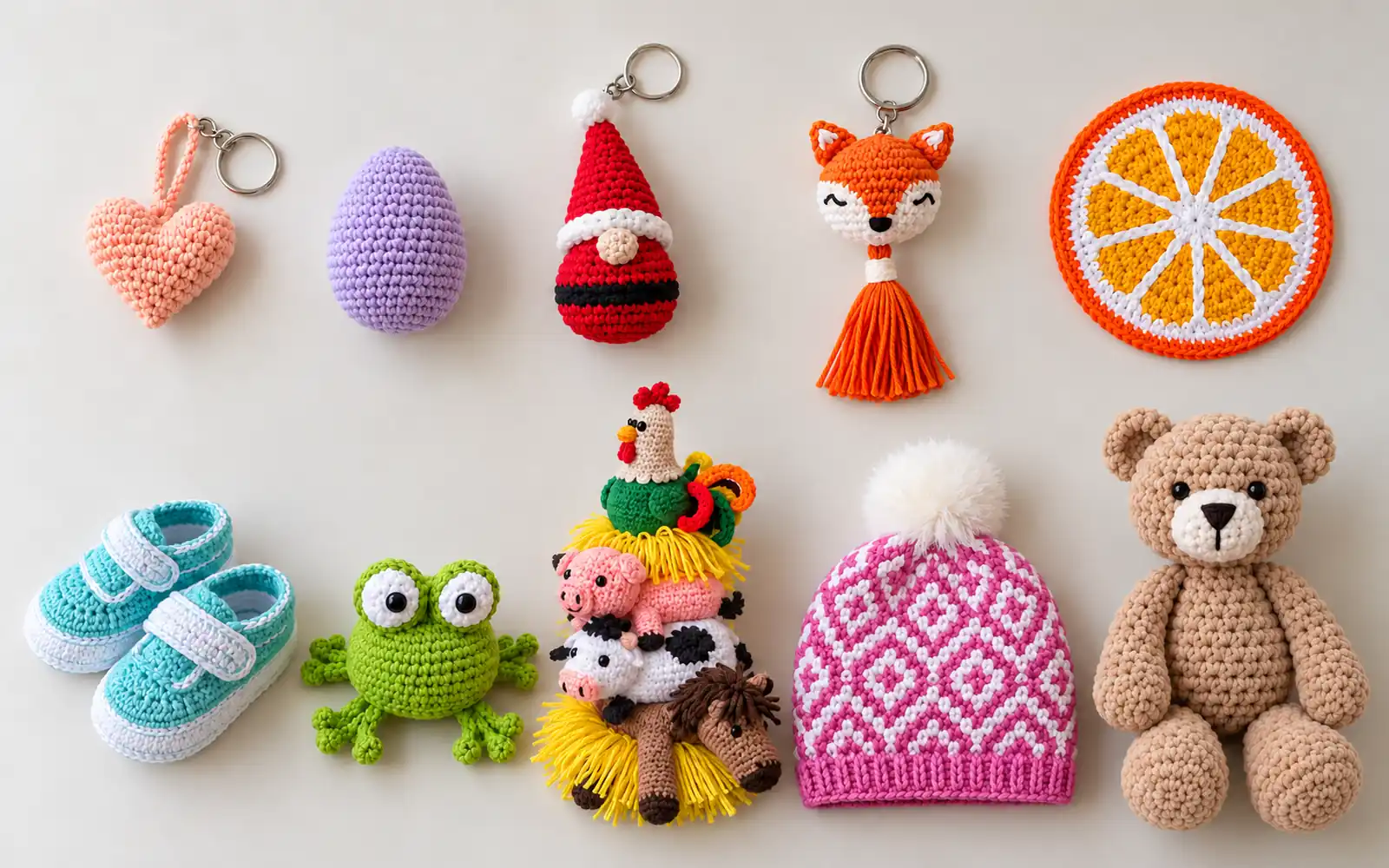
The six tools cover coasters and most flat projects. For anything else, the pattern’s own materials list is final, and this table shows what usually gets added. Browse more in our beginner crochet patterns.
| Project type | What to add or use | Try this pattern |
|---|---|---|
| Coasters and flat items | Nothing extra | Citrus Slice Coaster |
| Keychains | Key ring or clasp hardware; stuffing if the pattern calls for it | Heart Keychain |
| Amigurumi and toys | Stuffing; safety eyes where the pattern specifies; a stitch marker to mark the start of each round (see how to make amigurumi and amigurumi safety eyes) | Minimal Frog Amigurumi |
| Hats and wearables | Your flexible tape for fit; a blocking mat only if the yarn needs it | Modern Diamond Beanie |
Extras by project type.
A pattern can name a different hook, yarn or hardware, so read its materials list before you shop; the list on the pattern page wins over this table. Buy stuffing and eyes only once you have picked a toy. For babies and very young children, use safety eyes or embroidered features on toys, not buttons.
The Beginner’s Complete Guide to Crochet covers the full start.
Six: a hook, yarn, a yarn needle, scissors, stitch markers and a measuring tape. One 5.0–5.5 mm (H/8 to I/9) hook and one skein of worsted yarn are enough for the first project, and the other four tools cost little. The six-tools section above lists what to buy for each one and a free substitute for the cheap ones.
No. One 5.0–5.5 mm (H/8 to I/9) hook is enough to start, and you can buy a second size when a pattern asks for one. A set mostly adds sizes you may not use for a while. The crochet hook size chart shows which size each pattern needs, and the six-tools section above covers what to buy first.
Yes, if it is smooth and does not snag or stretch the yarn. A safety pin or a loop of scrap yarn also works, and either costs nothing. Slip it into the first stitch of the round, then move it up each round. The substitutes table in the budget section above lists other free swaps for the cheap tools.
It can be, if the contents match the six tools: a 5.0–5.5 mm hook, smooth worsted yarn, a yarn needle and markers. Many kits add items from the skip-for-now list, so check the contents first. The budget section above has a four-point checklist and the price of each tool, so you can compare a kit with buying the pieces yourself.
It is not wasted. Check the pattern’s materials list first, since the hook it names wins. A hook a little larger or smaller still works for practice, though the finished size will differ from the pattern. Keep it for a project that uses that size, and look it up in the crochet hook size chart. At about $5.50, a spare hook is a small loss.
No. A pen-and-paper tally does the job of a row counter, and blocking acrylic is usually not necessary. Neither is worth buying before your first projects are done. Buy either later if a project needs it; a blocking mat matters mostly for garments, lace and cotton pieces. The nice-to-have section above gives a trigger for each extra tool.
Ad-free, printable, and ready for your project bag. We'll also send you one new free pattern every week.
No spam. Unsubscribe anytime.
Written by
Designer & founder
Linda has been crocheting for over 15 years and designs cozy, beginner-friendly patterns that anyone can finish in a weekend.
Keep reading
Twisted chains, wavy edges, wrong stitch counts: the common crochet mistakes beginners make, how to spot each one and how to fix it.
Read More: Common Crochet Mistakes and How to Fix ThemAre ergonomic crochet hooks worth the price? An honest look at handle shapes, popular brands, who benefits and how to try one cheaply.
Read More: Ergonomic Crochet Hooks: Are They Worth It?10 free beginner crochet patterns with the time, skill level and skill each one teaches. Keychains, mini amigurumi and more to finish fast.
Read More: Free Crochet Patterns for Beginners: Finish in 2 Hours