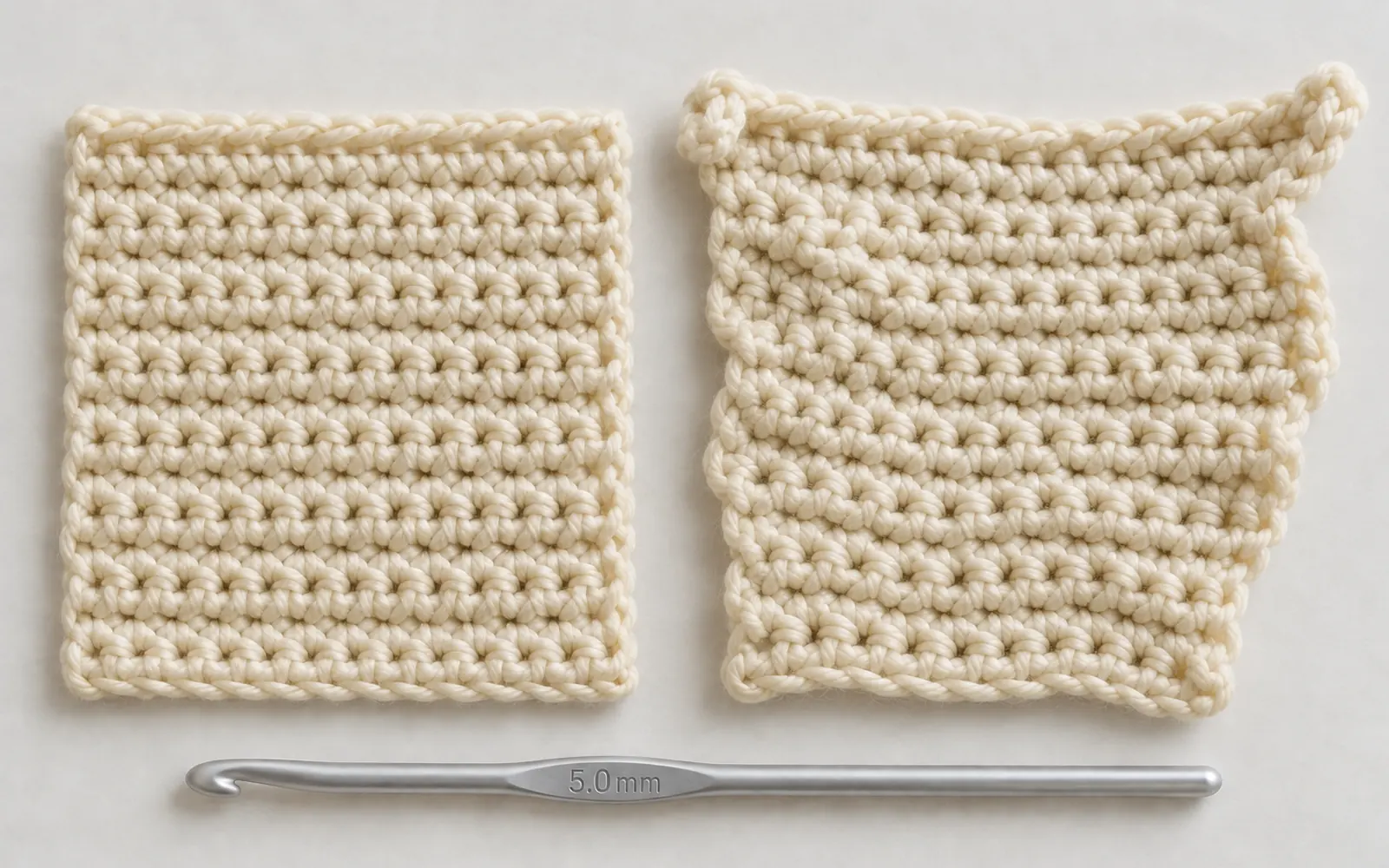
Common Crochet Mistakes and How to Fix Them
Twisted chains, wavy edges, wrong stitch counts: the common crochet mistakes beginners make, how to spot each one and how to fix it.
Read More: Common Crochet Mistakes and How to Fix Them 🧶 Yarn Calculator
Beginner Guides
Are ergonomic crochet hooks worth the price? An honest look at handle shapes, popular brands, who benefits and how to try one cheaply.
 By Linda Davidsen · · 12 min read
Quick answer: Ergonomic crochet hooks are worth buying if a standard hook feels too thin or your hand tires during long sessions, but they are a comfort choice, not a treatment. Try one before you buy a set, because handle shape, head shape and your hand size matter more than the price tag.
Your hand aches after an hour of crochet, and every search shows a basic hook for a few dollars beside an ergonomic one that costs several times more. Most reviews are affiliate lists, so it’s hard to tell if the upgrade is worth it.
This page explains what makes a hook ergonomic, who gets the most from one, how four common options compare, and how to try one without a big spend. It also covers what to check before you blame the hook, and when to see a professional.
Before I buy a set, I buy one hook in the size I use most and crochet one full project with it. A hook that feels great for ten minutes can feel very different at hour two.
An ergonomic crochet hook is a hook with a thicker, cushioned or shaped handle that is designed to feel more comfortable to hold for long sessions. Three features set it apart from a standard hook: the handle, the head and the weight.
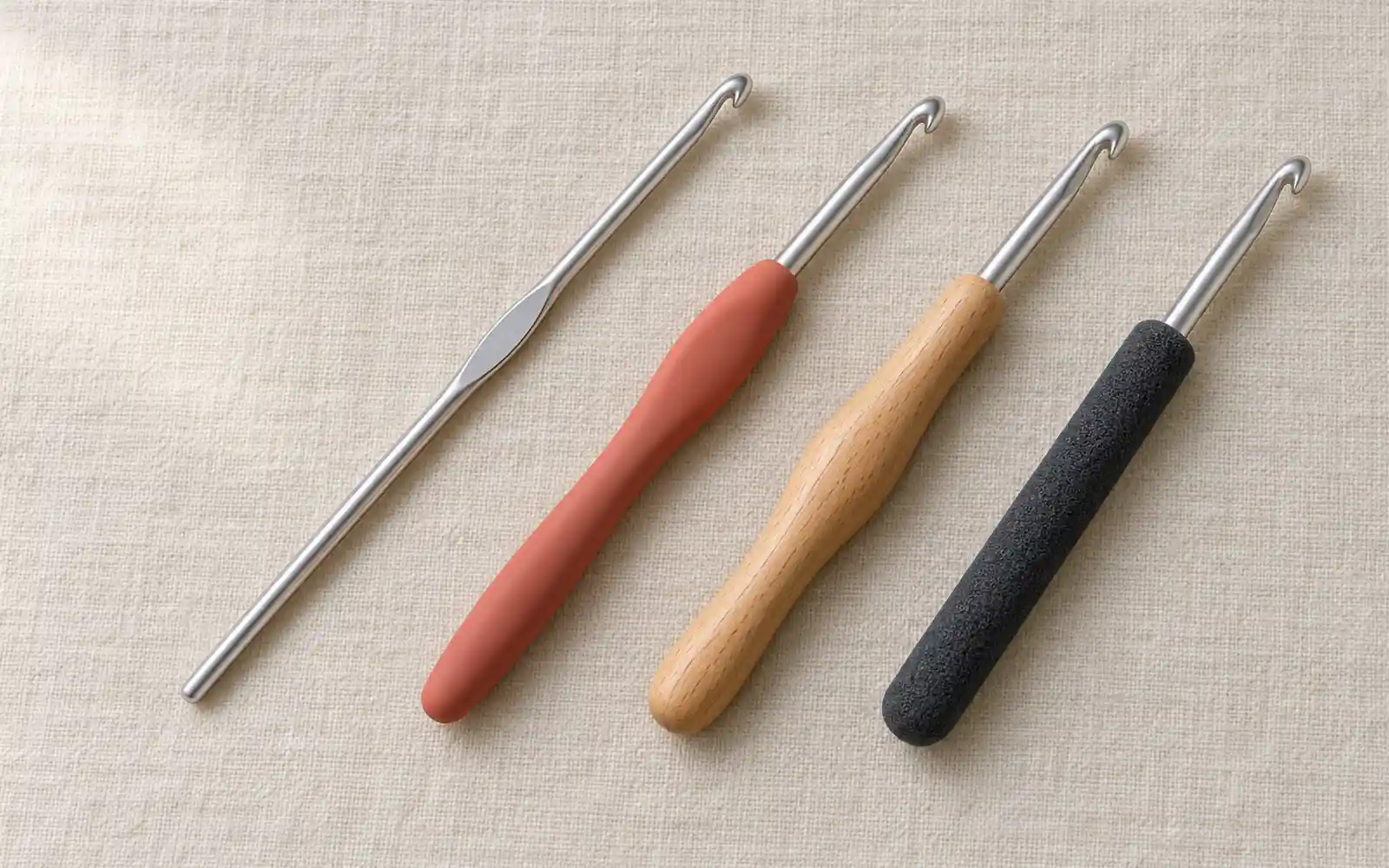
Standard hooks have a thin metal shank with a flat thumb rest. Ergonomic hooks add a wider handle in rubber-like or soft plastic (cushioned grips), wood or resin. Hooks come in aluminum, plastic, wood, bamboo and steel, and many cushioned-grip hooks pair an aluminum hook with a softer handle, as Tulip’s Etimo Rose line does. Furls makes its Streamline hooks in wood, resin and metal. A wider handle spreads the hold over more of the hand, which is the idea behind the design, and the effect varies by hand size. Makers pitch comfort, and this page does not rank handles.
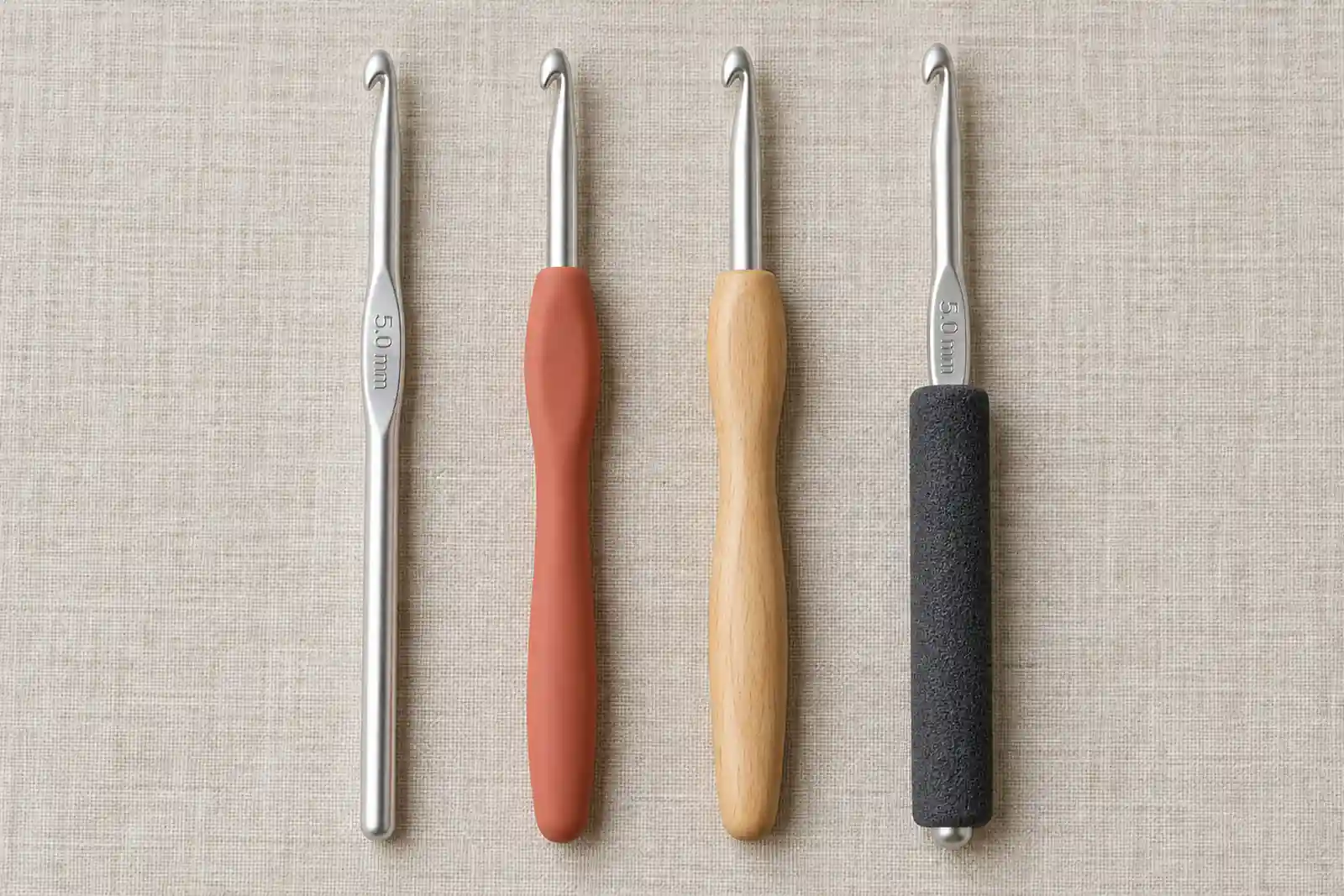
Four handle types, all 5.0 mm.
A tapered hook narrows toward the head. An inline hook keeps the same width from shank to head. The head is the part that grabs the yarn, so it matters as much as the handle. Tapered heads let stitches slide on and off easily and suit looser tension, while inline heads keep their width up to a deeper throat and grip yarn more securely. One retailer describes Boye’s ergonomic hooks as tapered, and one maker says its in-line head helps reduce wrist motion, which is the maker’s claim. Some crocheters report that a narrow head splits their yarn. The best choice depends on your tension and your yarn.
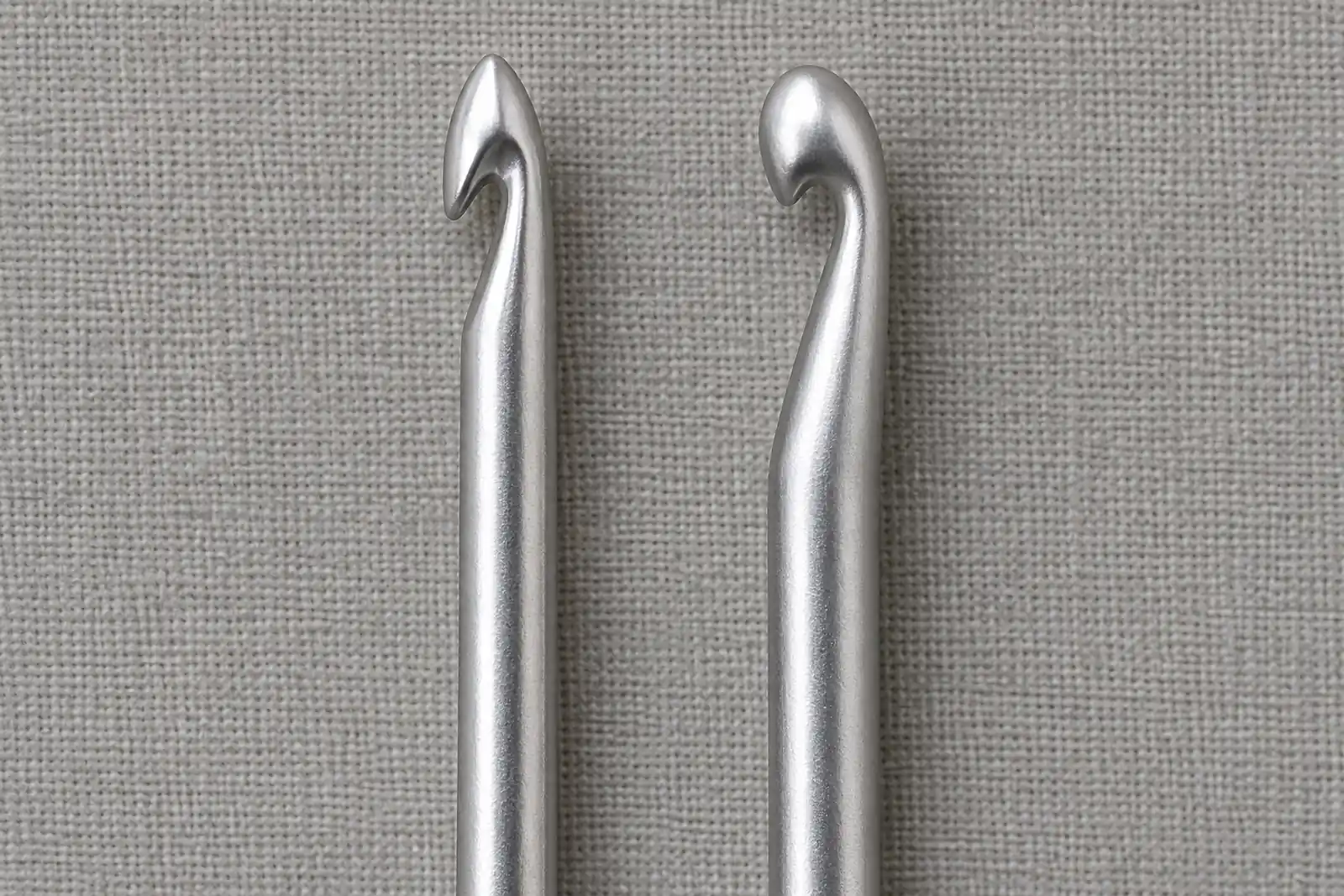
Inline head (left) and tapered head (right), both 5.0 mm.
A wider handle usually makes a hook heavier and moves its balance point toward your hand. Some people like the extra mass, and others find that it tips in the hand. Some makers sell weighted hooks, which is a design choice, not a health claim. Light metal hooks sit lighter in the hand. Only trying one tells you whether the balance suits you.
An ergonomic hook solves a comfort problem with the handle, so it helps most when the handle is the problem. This is about comfort and preference, not treatment, and the Beginner’s Complete Guide to Crochet covers the rest of the basics.
| If your problem is… | Try… | Why |
|---|---|---|
| A thin handle presses into your fingers | A wider or cushioned handle | It spreads the hold over more of the hand |
| Your hand tires during long sessions | A cushioned handle, or a break routine first | Handle comfort, plus rest (see “Before You Blame the Hook”) |
| Yarn splits or the hook feels grabby | A different head shape (inline or tapered) | Head shape changes how stitches slide |
| You crochet in short sessions | Keep your standard hook | The handle is unlikely to be the issue |
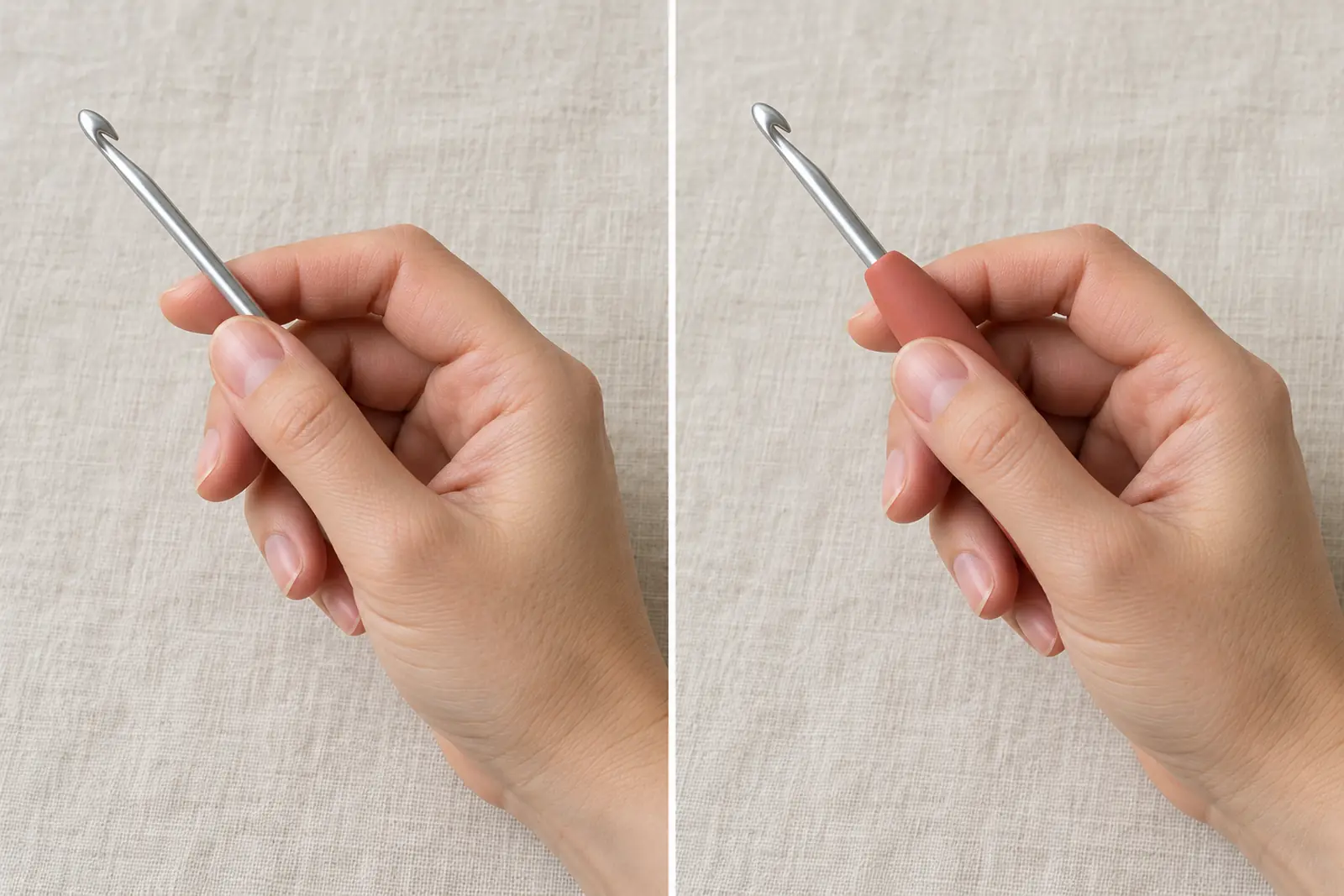
The same hand, two handle thicknesses.
An ergonomic hook is a reasonable thing to try when one of these sounds like you. Four reasons are common, and each is about comfort:
This page does not say that any hook treats or prevents a condition, and only trying one shows if it suits you.
A standard aluminum hook is enough to learn crochet. Keep yours if your hand feels fine, you crochet in short sessions, you are still learning the stitches and your hook choice is not what slows you, or you do not like added weight. Our guide to crochet tools for beginners lists a basic starter kit, and how to hold a crochet hook covers grip. A basic hook also costs little, which keeps a first project cheap.
The table lists what makers and retailers state. It is not a test, and it does not rank the hooks. Prices change, so check the maker’s page, and remember that the right choice depends on your hand size and head shape. “Not stated” means the page did not say.
| Hook | Head | Handle | Sizes | Price band | Suits |
|---|---|---|---|---|---|
| Clover Amour | Not stated | Elastomer rubber grip (maker) | 2.0–15 mm as single hooks | $$ ($10.75 per hook) | People who want a rubber grip and a wide size range |
| Tulip Etimo Rose | Not stated | Soft-grip handle on an aluminum hook | 2.00–6.50 mm | €11.00 per hook at one European retailer | People who want a soft grip in small to medium sizes |
| Boye ergonomic hooks | Tapered throat (retailer) | Rubberized grip on a 4-inch handle (retailer) | E to K in a 10-piece set | $ ($5.89 per hook at one retailer) | People who want to try a handle cheaply |
| Furls Streamline | Not stated | Wood; resin and metal lines also made | 3.25–15 mm (wood listings) | $$$ (from $19 per hook) | People who want a wooden handle |
Common ergonomic hooks and what their makers or retailers state. Prices checked on Oct 27, 2026.
Price key: $ is under $8 per hook, $$ is $8 to $15, $$$ is over $15.
Availability and prices change, so check the maker’s page before you buy.
A cheap hook is not a worse hook for learning. Price tells you about cost, not comfort, so a higher price alone is no reason to buy.
Test one hook through a full project before you buy a set. A basic starter kit is covered in crochet tools for beginners, and this plan adds only a low-risk way to try a thicker handle.
Buy a single hook in the size you use most, and use it for a full project. Many makers sell single hooks, which keeps the first purchase small, while a set is a bigger bet and may skip sizes. The crochet hook size chart helps you pick the size; for a beginner, 5.0–5.5 mm (H/8 to I/9) is the usual starting range.
I buy one hook in the size I use most and finish one project with it before I buy anything else.
A foam pencil grip slid onto a standard hook is the cheapest way to test a thicker handle, and it costs very little. Wrapping tape around the handle works too, and both are easy to undo. Treat it as an experiment, not a fix: the grip can slip, and it may not fit every hook size. Some makers also sell add-on handles that hold a standard hook, so check which sizes one fits.
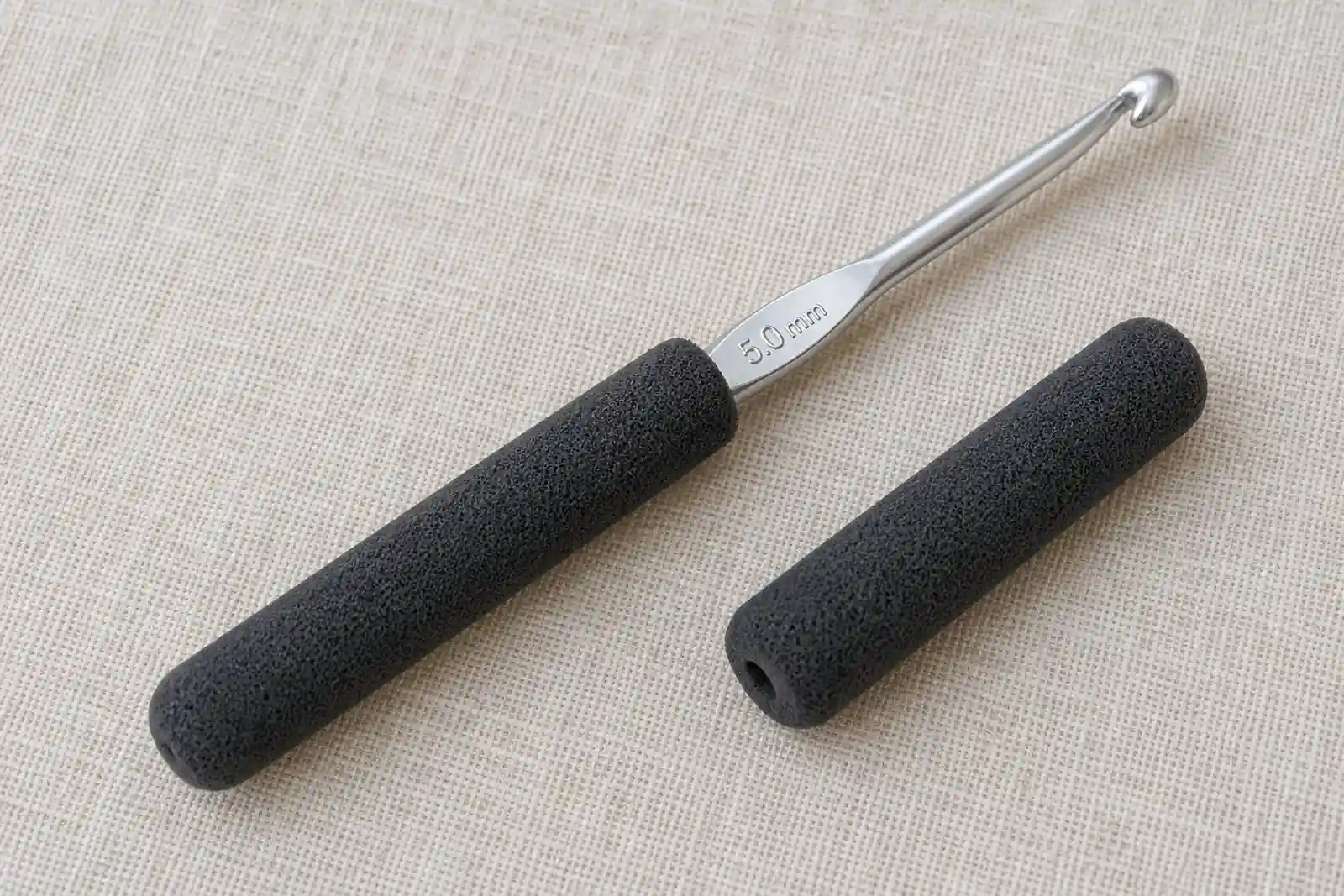
A foam grip on a standard hook is the cheapest test.
Use a short pattern as the test, such as the Heart Keychain or the Citrus Slice Coaster. Use the same yarn throughout so the comparison stays fair. Choose one that fits the hook you bought, since small hook sizes may not exist in a wide-handled set. Over the project, check four things:
A new hook may not change the cause of a tired hand, so check your grip, yarn hold and hook size as well. These are general craft habits, not a diagnosis, and they are worth a look before you spend.
A tighter yarn hold gives tighter stitches and takes more effort from your hand. A tight grip on the hook adds pressure in the hand too. Loosen both, and compare your grip with the knife and pencil grips in how to hold a crochet hook. Taking regular breaks is a sensible general habit. This page gives no break lengths, because none are verified.
Working too tightly makes every stitch harder to make. If a pattern’s gauge shows more stitches than stated, the usual fix is a larger hook rather than forcing your tension to change, and a larger hook can make stitches easier to work. The crochet hook size chart lists sizes, and common crochet mistakes covers tight-tension fixes. Left-handed crocheters use the same hook as everyone else, because standard hooks are not made for one hand. Molded finger-grip handles are usually shaped for one hand, so check the product page.
If a hand, wrist or arm hurts, tingles or goes numb, or if pain does not ease with rest, stop and see a doctor or a hand therapist. A hook is a tool, not a treatment, and this page cannot diagnose a problem or advise on any condition. Do not push through it to finish a row.
For the rest of getting started, the Beginner’s Complete Guide to Crochet covers the basics.
They can be, if a standard handle feels too thin or your hand tires. They are not necessary for learning, since a standard aluminum hook is enough. Try one hook, or a foam grip on a hook you own, before you spend more, and judge it over a full project. The trying section above explains how to run that test.
Some crocheters say a wider handle feels easier to hold, but this page cannot say that any hook helps a medical condition, and none of the sources checked cites a study. If your hand hurts, tingles or goes numb, talk to a doctor or a hand therapist. The section on when to stop and see a professional above covers what to watch for.
Yes. A foam pencil grip or wrapped tape is a low-cost way to test a thicker handle on a standard hook. It can slip, and it may not fit every hook size, so check the fit on the size you use most. If the thicker handle feels better over a full project, you have learned something before spending on an ergonomic hook.
Check the head shape first, then the handle width, then the weight, and then the hook size. A different head can change tension and yarn splitting, and a handle that is too wide or heavy for your hand can feel awkward. If it still feels worse after those checks, go back to your old hook. The comparison section above lists what to look at.
Not necessarily. Price reflects materials and brand, and fit decides comfort. A budget hook with the right head and handle can suit you better than a premium one. The comparison section above shows single-hook prices that vary widely, which tells you about cost and nothing about how a hook will feel in your hand, so try before you commit to a pricey one.
Yes. Standard hooks are not made for one hand, so left-handed crocheters use the same hook, held in the left hand. A molded finger grip may fit one hand better than the other, so read the product page before you buy. Of the hooks compared above, check each maker’s page for this detail before you order.
Ad-free, printable, and ready for your project bag. We'll also send you one new free pattern every week.
No spam. Unsubscribe anytime.

Written by
Designer & founder
Linda has been crocheting for over 15 years and designs cozy, beginner-friendly patterns that anyone can finish in a weekend.
Keep reading
Twisted chains, wavy edges, wrong stitch counts: the common crochet mistakes beginners make, how to spot each one and how to fix it.
Read More: Common Crochet Mistakes and How to Fix ThemCrochet tools for beginners, simplified: the six you need, the extras that can wait, and a starter kit that avoids wasted money.
Read More: Crochet Tools for Beginners: Need vs. Nice to Have10 free beginner crochet patterns with the time, skill level and skill each one teaches. Keychains, mini amigurumi and more to finish fast.
Read More: Free Crochet Patterns for Beginners: Finish in 2 Hours