🧶 Yarn Calculator

Try

Visit our Etsy Shops

Pick a shop to browse. Each one opens on Etsy in a new tab.

Yarn & Materials

Crochet Yarn Weight Guide: Which Weight for Which Project?

Crochet yarn weight guide: the 0 to 7 weight chart with hook sizes, stitch counts, US, UK and Australian names, and the best weight for each project.

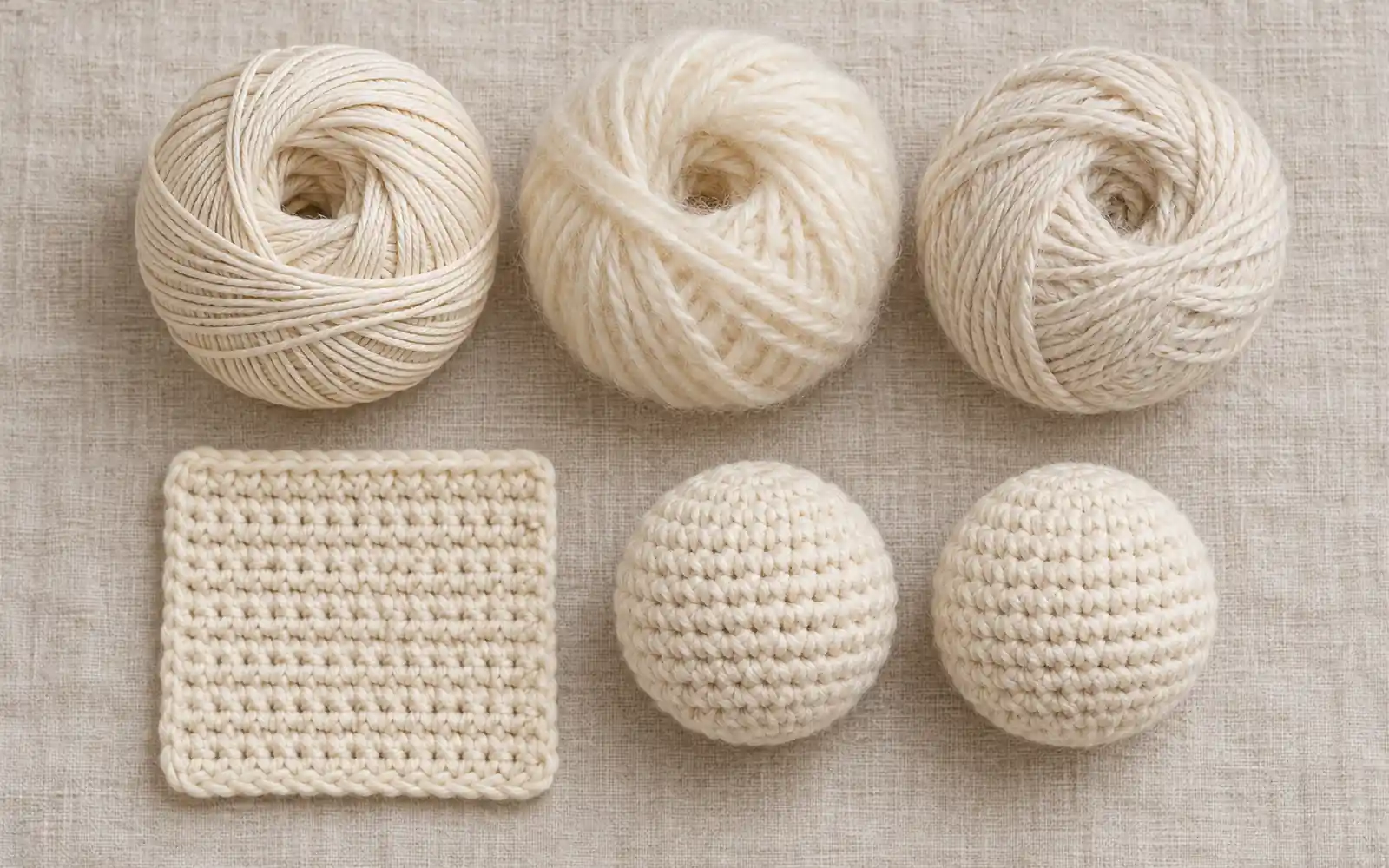
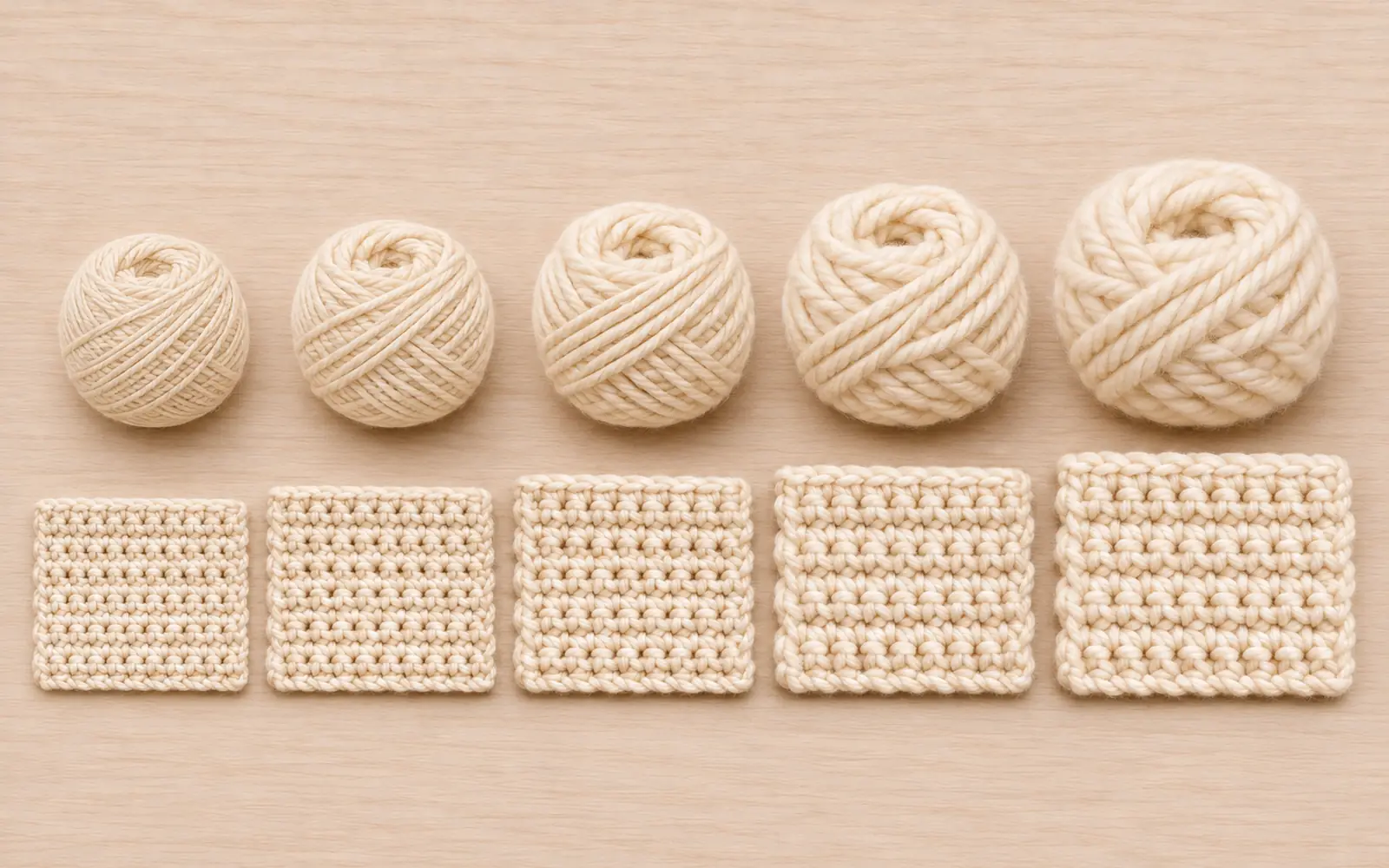
Five cream balls of yarn from thin to thick above five matching single crochet swatches that grow larger from left to right, on a pale wood surface
Table of Contents
  1. What Yarn Weight Means
  2. The Standard Yarn Weights, 0 to 7
  3. Weight Names in the US, UK and Australia
  4. Which Weight for Which Project
  5. How to Find the Weight of Your Yarn
  6. When the Pattern Asks for a Different Weight
  7. Key Takeaways
  8. Frequently Asked Questions

Quick answer: A crochet yarn weight guide sorts yarn by thickness on a scale from 0 (lace) to 7 (jumbo). A higher number means thicker yarn, a larger hook and fewer stitches in 4 inches. Worsted (4) suits most blankets, hats and bags, DK (3) suits lighter garments, and bulky (5) works up fast.

The pattern says DK, the band says 3, and the shelf label says 8-ply. Worsted, aran, chunky and number 4 all sound like answers, yet they do not line up neatly, and the wrong weight can leave a project too small, too stiff or too loose.

This guide lists every weight from 0 (lace) to 7 (jumbo) with its hook range and stitch count, translates the US, UK and Australian names, shows why ply is not thickness, and matches each weight to the projects it suits.

I look for the weight number on the band first, then I compare the yards per ball. Names like worsted and aran can mean slightly different thicknesses, and the number and the yardage tell me more than the name does.

What Yarn Weight Means

Yarn weight means how thick the strand is, and the Craft Yarn Council shows it as a number from 0 to 7. It describes thickness, not how much the ball weighs. For the whole map of yarn choices, see the crochet yarn and materials guide.

Weight Means Thickness, Not Heaviness

Yarn weight is the thickness of the strand, not the weight of the ball. Two balls can weigh the same and hold yarn of very different thickness. Thickness is also only one sign of a weight category. A yarn can look thicker than another because of loft, the air between the fibers. To see the loft, pull a strand between your hands and watch how much it thins. Even inside one standard weight there is slight variation, and textured novelty yarns are hard to sort by thickness alone.

Why Weight Sets Your Hook, Gauge and Fabric

A thicker yarn takes a larger hook and gives fewer stitches in the same width. That is why weight decides gauge, finished size and how the fabric feels. The hook on a label is a starting point: a larger hook makes a more open fabric, and a smaller hook makes a tighter one. Toys are often worked with a hook one to two sizes smaller than the yarn’s usual size, so the fabric is firm. For sizes and conversions, see the crochet hook size chart.

The Standard Yarn Weights, 0 to 7

The Craft Yarn Council sorts yarn into eight weights, numbered 0 to 7, from lace to jumbo. Each has a name, a usual hook range and a usual stitch count, and the chart below is this page’s reference. A shorter version sits in the crochet yarn and materials guide.

Yarn Weight Chart: Lace to Jumbo

Weight Also called Hook in mm (US size) Stitches in 4 in (10 cm)
0 Lace Fingering, 10-count crochet thread Steel 1.4–1.6 mm (steel 6 to 8) or regular 2.25 mm (B/1) 32–42 double crochet
1 Super fine Sock, fingering, baby 2.25–3.5 mm (B/1 to E/4) 21–32
2 Fine Sport, baby 3.5–4.5 mm (E/4 to 7) 16–20
3 Light DK, light worsted 4.5–5.5 mm (7 to I/9) 12–17
4 Medium Worsted, afghan, aran 5.5–6.5 mm (I/9 to K/10½) 11–14
5 Bulky Chunky, craft, rug 6.5–9 mm (K/10½ to M/13) 8–11
6 Super bulky Roving 9–15 mm (M/13 and larger) 7–9
7 Jumbo Roving 15 mm and larger (letters vary by maker) 6 or fewer

Stitch counts are single crochet in 4 in (10 cm), except lace, which is counted in double crochet. The ranges are the most common hooks and gauges, and they are guidelines. For the two most common weights, see worsted weight yarn and DK weight yarn.

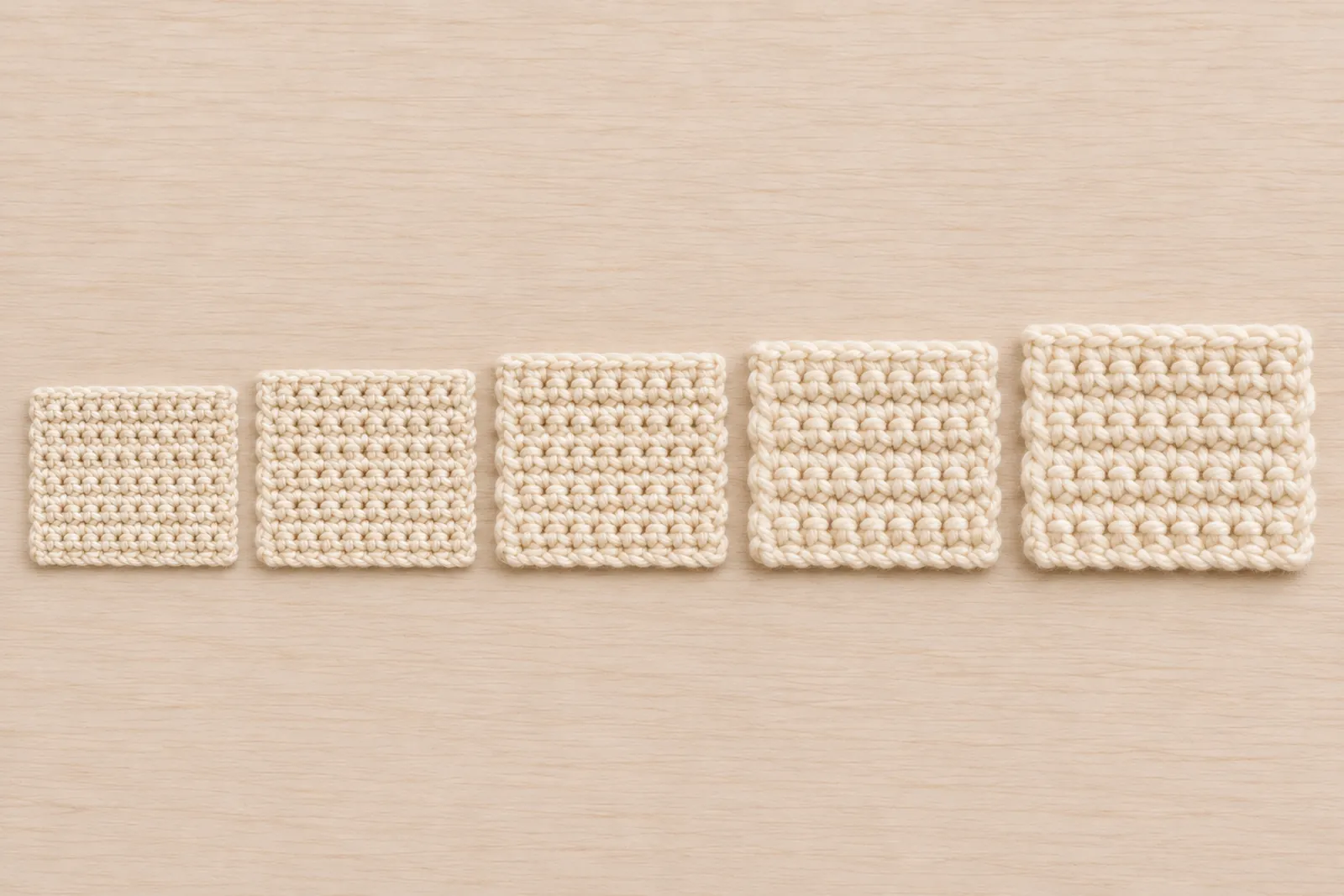
Crochet yarn weight guide swatches: five single crochet swatches with the same 10-stitch count made in fine, light, medium, bulky and super bulky yarn, growing larger from left to right Same stitch count, five weights: fine (2), light (3), medium (4), bulky (5) and super bulky (6).
Use the Chart as a Guide, Not a Rule

The yarn weight chart gives the most common hook sizes and stitch counts, but they are guidelines. They overlap at the edges: medium is 11 to 14 stitches and bulky is 8 to 11, so 11 sits in both. Yarns in one category can differ in thickness, and hand-dyed or handspun yarn labeled medium can run thinner than commercial worsted, so swatch first. Sources differ at a few edges, such as the super bulky count, so follow the pattern’s gauge. When a pattern names only a weight, I match the number on the band to the name, then I compare the yards per ball with the pattern’s yardage. See how to read a crochet pattern for the materials line.

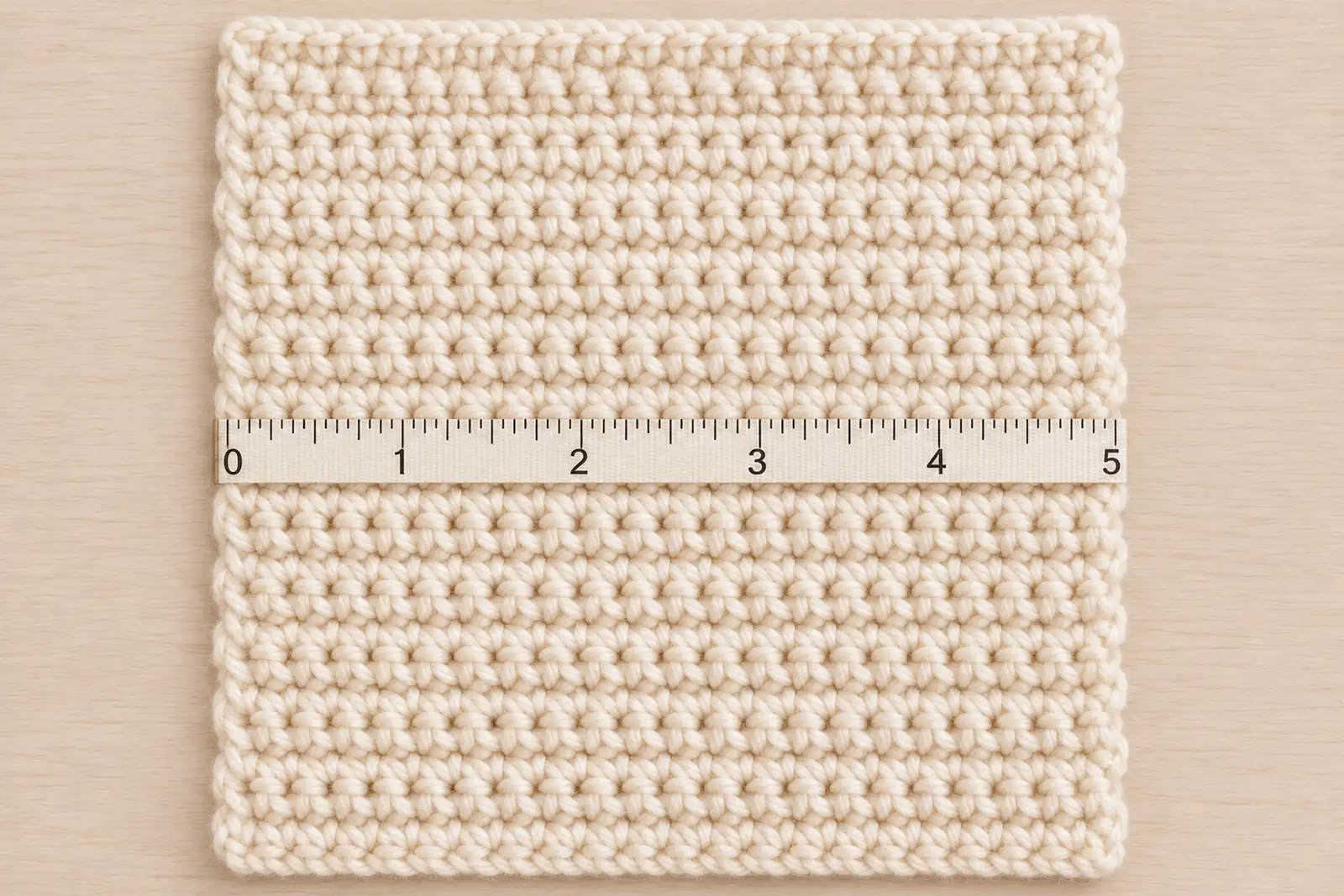
A cream worsted single crochet swatch with a tape measure laid across the middle, marking 4 inches so the stitches in that span can be counted Count the stitches across 4 inches (10 cm) of a swatch to check the weight.
Weight Names in the US, UK and Australia

The same yarn weight has different names in the US, UK and Australia, so use the number to translate. A pattern can say DK, 8-ply or 3 while the band says something else, and the weight number ties the names together.

Same Weight, Different Names

Weight US name UK name Australian ply
0 Lace Lace, thread Lace 2 ply
1 Super fine Fingering, sock 4 ply 4 ply
2 Fine Sport 5 ply in some charts, no direct match in others 5 ply
3 Light DK, light worsted DK 8 ply
4 Medium Worsted, afghan Aran 10 ply (10 or 12 in some charts)
5 Bulky Bulky, chunky Chunky 12 ply
6 Super bulky Super bulky Super chunky 14 ply (14 to 16 in some charts)
7 Jumbo Jumbo None listed None listed

Charts differ by a name or a ply, so use the weight number to translate and check the pattern’s gauge. The Craft Yarn Council groups worsted, afghan and aran in category 4, though some charts rank aran heavier. For more, see worsted weight yarn and DK weight yarn.

Why Ply Is Not Thickness

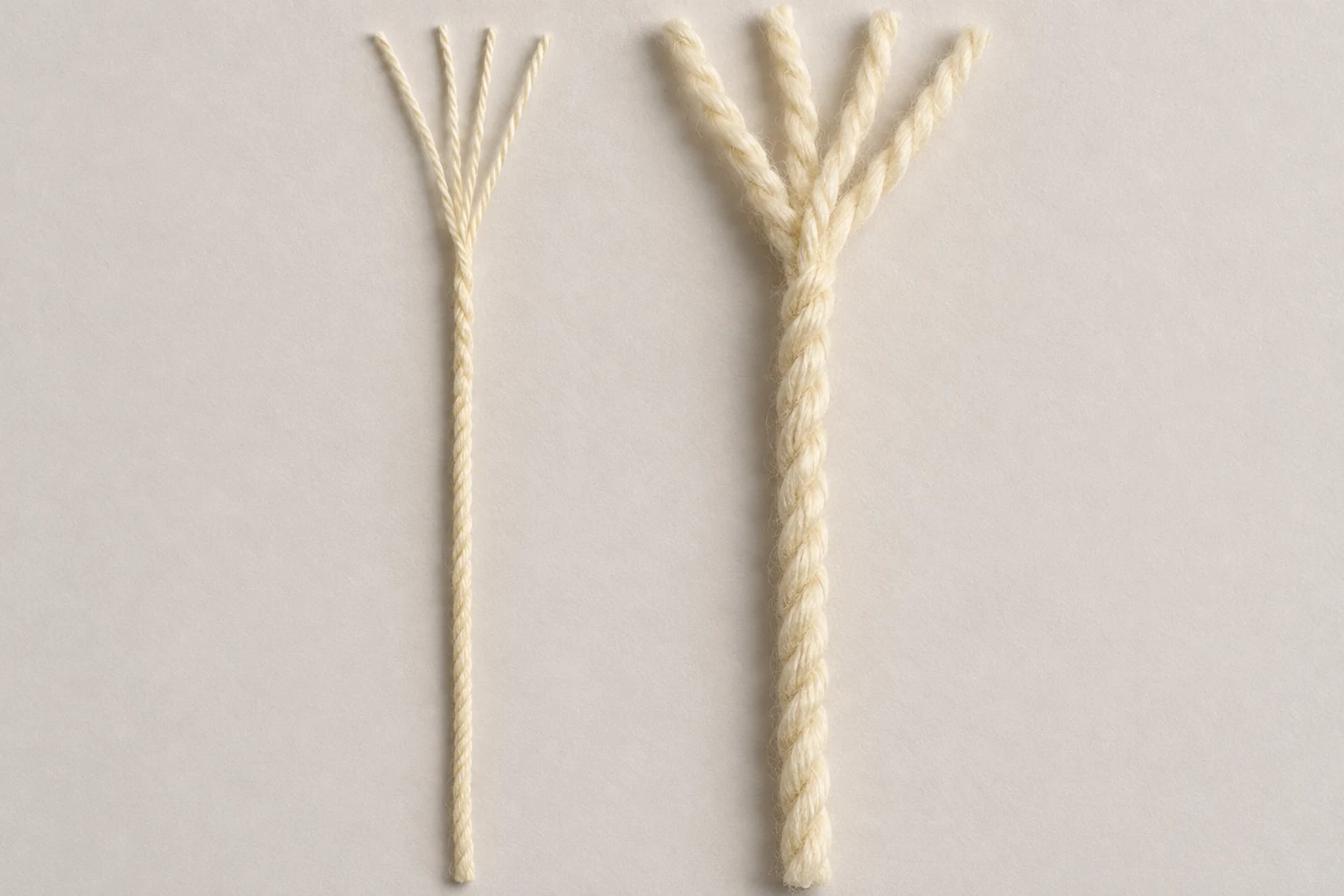
Ply is the number of strands twisted together, and it does not tell you how thick the yarn is. The most common plies in crochet yarn are 3 and 4, and a four-ply yarn can be very thick or very thin, depending on the thickness of each ply. Names such as 4-ply or 10-ply now work as weight names rather than strand counts, and charts disagree. One printed guide gives aran as 10-ply on one page and 12-ply on another. Use the weight number and the gauge, not the ply count.

Two cream four-ply yarns side by side, each with one end untwisted to show four separate plies, a thin fingering yarn on the left and a thick worsted yarn on the right Both yarns have four plies, but one is far thicker: ply is not thickness.
Which Weight for Which Project

Thin yarn makes a fine, drapey fabric slowly, and thick yarn makes a heavier fabric quickly. Almost any weight can make almost any item, but each weight has a usual job. Worsted weight yarn is the most common choice to start with.

Projects by Weight at a Glance

Weight Usual projects Why it fits
0 Lace Doilies, edgings, fine shawls, delicate baby pieces Very thin thread worked with steel hooks gives a delicate fabric
1 Super fine Socks, light baby garments, shawls Thin, flexible fabric
2 Fine Light hats, baby items, light garments, shawls Light fabric with room for texture
3 Light (DK) Baby garments and blankets, hats, shawls, sweaters, small toys Light but sturdy
4 Medium (worsted) Blankets and afghans, hats, scarves, mittens, bags, amigurumi, sweaters The most common weight in US patterns, and its stitches are easy to see
5 Bulky Winter hats, cowls, thick scarves, rugs, quick blankets Warm and fast
6 Super bulky Heavy blankets, rugs, thick scarves Very large stitches work up quickly and mistakes are easy to spot
7 Jumbo Very thick throws and home decor pieces Needs very large hooks, finishes quickly and uses a lot of yarn

These are usual matches, not rules, and a hat can be made in super fine yarn. For toy construction, see how to make amigurumi. For baby blankets, see the crochet baby blanket guide.

Beginners, Quick Projects and Fine Work

A beginner should start with smooth worsted or aran yarn and a hook of 5 mm or larger. Smooth, solid yarn keeps stitches easy to see; best yarn for beginners has more. Super bulky and jumbo give quick results but need very large hooks, while fine and lace weights give detail and drape but take much longer. My everyday default is worsted (4) for blankets, hats, bags and toys, and I move lighter or thicker only when the pattern asks. Once you choose a weight, try the Hogwarts-inspired blanket, or browse free blanket patterns and beginner crochet patterns.

How to Find the Weight of Your Yarn

Most store-bought yarn shows its weight on the band, and yarn without a band can be matched by gauge. Handspun, hand-dyed and older stash yarn often has no label. For a closer look at labels, see the crochet yarn and materials guide.

Find the Number on the Band

  1. Look for the weight symbol, a small skein picture with a number from 0 to 7 and the category name beside it.
  2. If there is no symbol, read the gauge square and the hook the band suggests, then match them to the weight chart.
  3. Compare yards per ball rather than grams. The same ball weight can hold different lengths, and fiber changes the yardage: DK yarns in some guides run from 91 to 142 yards per 50 g across cotton, bamboo and wool. Yardage tells two skeins apart, but it does not name the weight.

When There Is No Label

  1. Lay the strand next to a yarn whose weight you know and compare the thickness.
  2. Work a swatch with a hook near the middle of the range for the weight you suspect, count the stitches in 4 in and compare the count with the chart.
  3. Write the result on a tag and keep it with the yarn.

A swatch gives a rough answer, not a label, because loft, fiber and tension move the count. Handspun and hand-dyed yarn often differ from commercial yarn of the same number. For hook sizes, see the crochet hook size chart.

When the Pattern Asks for a Different Weight

A pattern is written for one yarn weight, so a different weight changes the size of the finished piece. It also changes how many stitches fit in each inch of fabric. For the full swap method, see how to substitute yarn.

What Changes When the Weight Changes

A thicker yarn gives fewer stitches in 4 inches, so the same stitch count makes a bigger piece, and a thinner yarn makes a smaller one. A change of hook can bring the size back, but it also changes the drape and firmness of the fabric. Gauge matters for garments and fitted pieces, and it matters little for toys, blankets and coasters. The neighboring weights that people swap most are DK and worsted; see DK weight yarn and worsted weight yarn for each.

Stay in the Same Weight When You Can

Choose a yarn in the same weight category as the pattern, and buy the same total yardage. Compare yardage, not ball weight, because the same ball weight can hold different lengths. Then swatch and compare the count with the pattern’s gauge. If the count is off, change the hook, not how tightly you crochet: more stitches than the pattern means go up a hook size. See how to read a crochet pattern for finding the yarn in the materials line, and how to substitute yarn for the full method.

Key Takeaways

  • Yarn weight is the thickness of the strand, shown on labels as a Craft Yarn Council number from 0 (lace) to 7 (jumbo).
  • A higher number means thicker yarn, a larger hook and fewer stitches in 4 inches; the hook and stitch ranges are guidelines.
  • Weight names change by country, so use the number to translate: worsted and aran sit in category 4, and DK is category 3.
  • Ply is not thickness, so a four-ply yarn can be thin or thick.
  • Worsted suits most everyday projects, thicker yarn suits quick ones and thinner yarn suits fine work; when a pattern names a weight, stay in it and buy by total yardage.

Frequently Asked Questions

What does yarn weight mean in crochet?

Yarn weight is the thickness of the strand, not the weight of the ball. The Craft Yarn Council shows it as a number from 0 (lace) to 7 (jumbo), and a higher number means thicker yarn, a larger hook and fewer stitches in 4 inches. The first two sections above cover the meaning and the full chart.

What are the yarn weight numbers from 0 to 7?

Weight 0 is lace, 1 is super fine, 2 is fine, 3 is light (DK), 4 is medium (worsted), 5 is bulky, 6 is super bulky and 7 is jumbo. Each number has a usual hook range and a usual stitch count in 4 inches. For example, medium (4) takes a 5.5 to 6.5 mm hook and gives 11 to 14 single crochet stitches in 4 inches. The chart section above has all eight.

Is worsted the same as aran?

Mostly. The Craft Yarn Council puts worsted, afghan and aran together in category 4 (medium), with a 5.5 to 6.5 mm hook. Some UK charts treat aran as a little heavier than US worsted, so check the gauge and the yards per ball before you swap. The names section above compares them, and worsted weight yarn covers worsted in full.

Is ply the same as yarn weight?

No. Ply is the number of strands twisted together, and a four-ply yarn can be very thin or very thick. Weight is the thickness of the finished strand. Names such as 4-ply or 8-ply are used as weight names in the UK and Australia, but charts disagree, so use the weight number and the gauge. The names section above explains more.

What is the thickest yarn weight?

Jumbo (7) is the thickest in the Craft Yarn Council’s current system, worked with a hook of 15 mm or larger at 6 stitches or fewer in 4 inches. Super bulky (6) was the thickest in older charts, and some guides still stop there. Both are usually used for very thick blankets, rugs and home decor. The chart and projects sections above give the details.

Portrait of Linda Davidsen

Written by

Linda Davidsen

Designer & founder

Linda has been crocheting for over 15 years and designs cozy, beginner-friendly patterns that anyone can finish in a weekend.

Keep reading

All posts