Common Crochet Mistakes and How to Fix Them
Twisted chains, wavy edges, wrong stitch counts: the common crochet mistakes beginners make, how to spot each one and how to fix it.
Read More: Common Crochet Mistakes and How to Fix Them 🧶 Yarn Calculator
Beginner Guides
10 free beginner crochet patterns with the time, skill level and skill each one teaches. Keychains, mini amigurumi and more to finish fast.
 By Linda Davidsen · · 14 min read
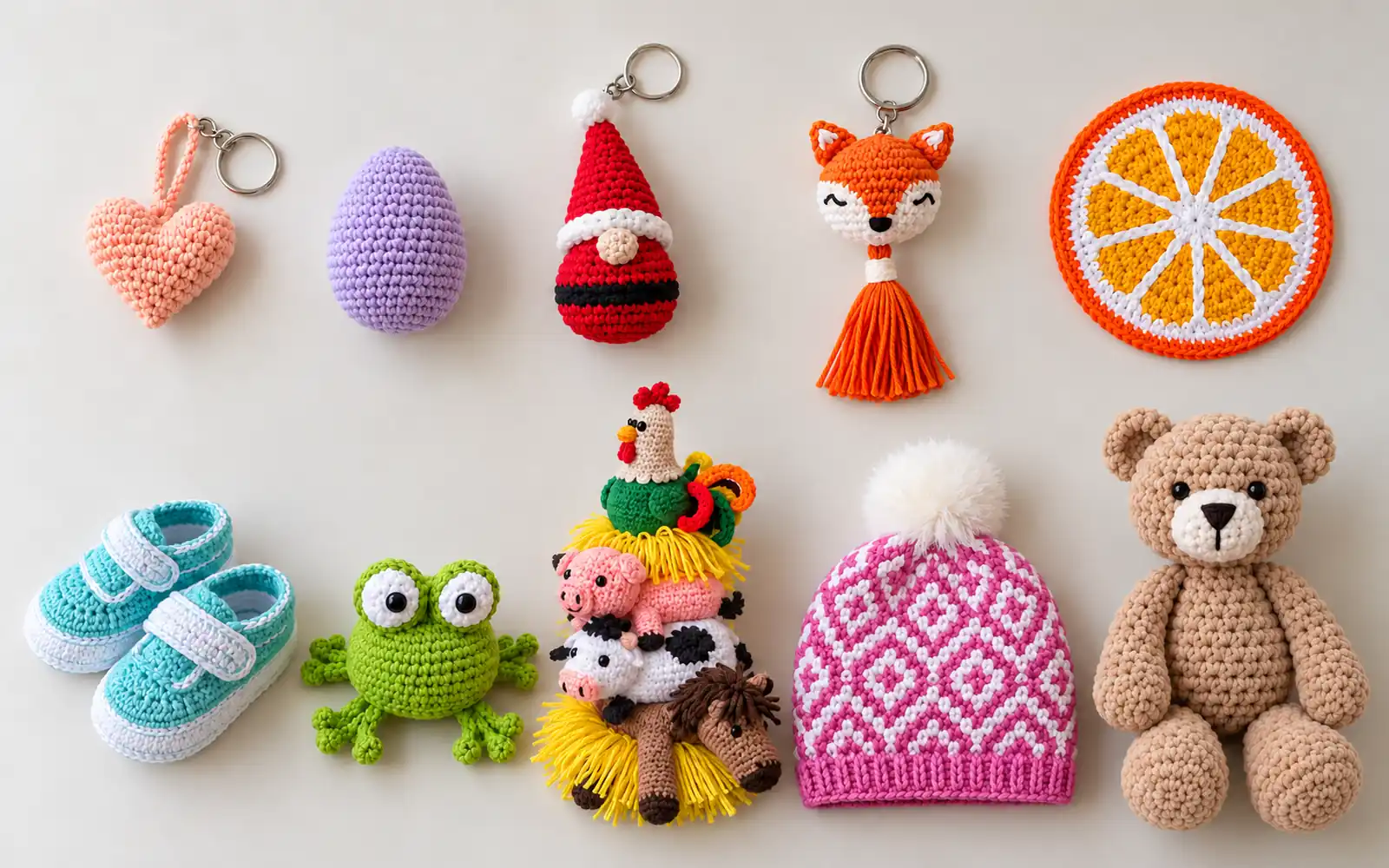
Quick answer: Free crochet patterns for beginners work best when they are small, use only a few basic stitches and take about two hours or less. Start with a coaster, a heart keychain or a mini frog, then move up to a hat or a teddy bear once you can count your stitches without losing your place.
You want a first project you will actually finish. Free patterns are everywhere, but most don’t say how long they take or what they teach. A six-hour project with sewing, stuffing and a dozen small parts is easy to abandon halfway, and then it sits in a drawer.
Below are 10 free beginner patterns from our library, from a 20-minute keychain to a first teddy bear. Each entry gives its skill level and the skill it practices, with a time where the pattern states one, so you can pick by what you want to learn. A short path near the end shows which to make first.
If your first attempt takes three tries, that’s normal. I make the first version in scrap yarn, expecting to learn from it rather than keep it. The second one is always better, and it’s the one I give away.
A good first project is small enough to finish in one sitting, uses a few basic stitches, and gives you a result you can use or give away. The Beginner’s Complete Guide to Crochet covers the bigger picture, and our beginner crochet patterns hub has the full library.
A good first project is one small enough to finish in a single sitting, so the lesson sticks. Finishing one small piece teaches more than abandoning a large one, and a mistake costs minutes instead of days. This page uses a benchmark of about two hours or less. The Heart Keychain, at about 20 minutes, is the shortest time listed here.
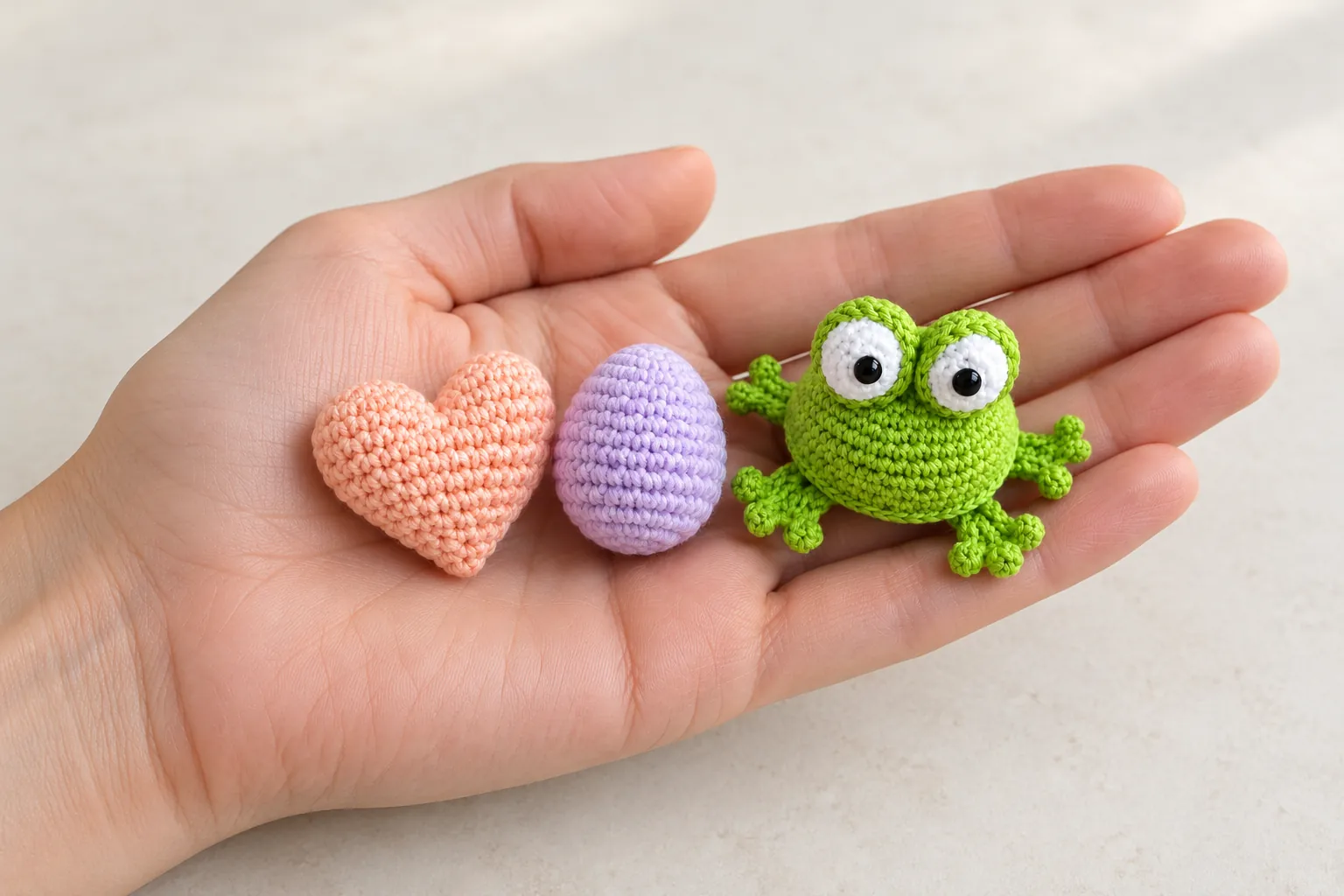 Small enough to finish in one sitting.
A beginner pattern is one that uses only the basic stitches and simple shaping. The best first patterns stick to chain, slip stitch and single crochet, which how to single crochet teaches, and avoid sewing many parts together. The skill label (Beginner, Easy, Intermediate or Experienced) is the designer’s call and is not enforced, so check the stitch list too, as how to read a crochet pattern explains.
A smooth, light-colored yarn makes stitches easy to see and count. This site’s starter setup is worsted weight (category 4) yarn with a 5.0–5.5 mm (H/8 to I/9) hook, and best yarn for beginners explains why. Small toys often use thinner yarn and a smaller hook so the stuffing does not show through. A pattern that lists DK weight yarn is worked with a smaller hook than a worsted weight pattern, so follow each pattern’s own materials list. Best yarn for amigurumi covers toy yarn.
Flat projects are rectangles worked in rows, and they are the easiest to count. Round projects, such as coasters and amigurumi, start from a magic ring or a chain ring and need a stitch marker. A magic ring is an adjustable loop that starts a circle without a hole in the middle; the magic ring tutorial shows how. The Minimal Frog starts with one, and each other pattern says how it begins. See crochet in the round for the method. This page lists no flat rectangle project.
Here are all ten patterns side by side, from about 20 minutes to one evening or longer, so you can scan and compare. Every figure is a designer’s label or estimate, not a promise.
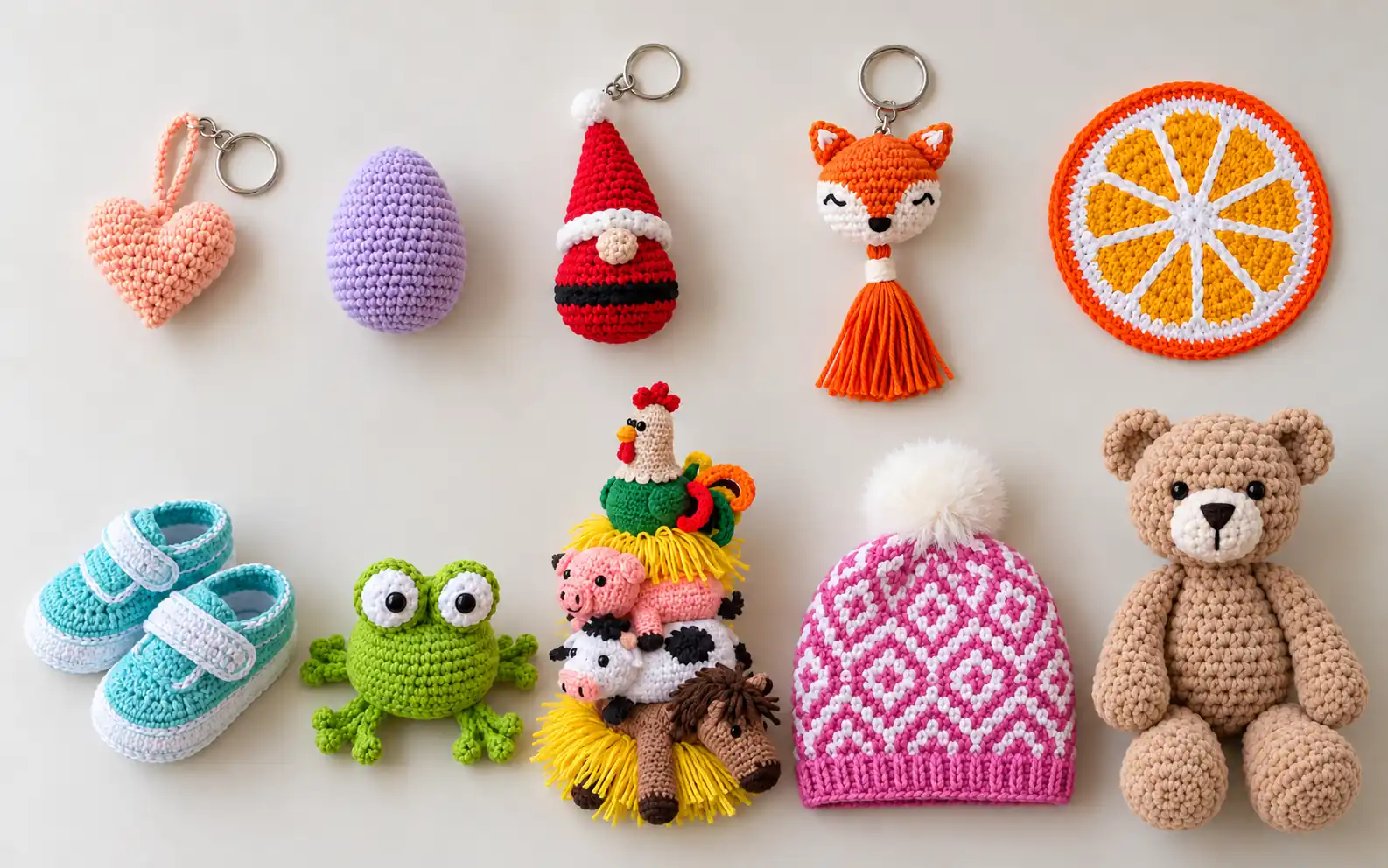 The ten patterns on this page, from quickest to longest.
| Pattern | Skill level | Time | Practices | Yarn |
|---|---|---|---|---|
| Heart Keychain | Beginner | About 20 min | A small stuffed shape in single crochet | Scrap yarn |
| Easter Eggs | Beginner | Under 30 min each | A stuffed oval with increases and decreases | Scrap yarn, pastels |
| Santa Claus Keychain | Beginner | Under 45 min | Small details and color changes | See pattern page |
| Easy Fox Keychain | Beginner | See pattern page | Joining small parts | See pattern page |
| Citrus Slice Coaster | Beginner | See pattern page; a set of four fits one evening | A flat circle in rounds, no stuffing | Cotton |
| Baby Booties | Beginner | A pair in under 1 hour | A first wearable shape | DK baby yarn |
| Minimal Frog Amigurumi | Beginner | Under 2 hours | Magic ring, first amigurumi, decreases | DK, scrap |
| Farm Stacking Toy | Beginner | See pattern page | Repeating the same circle | See pattern page |
| Modern Diamond Beanie | Beginner | One evening | A simple repeat, checking fit | Worsted |
| Teddy Bear | Beginner | Longer than 2 hours | Joining parts, stuffing, safe eyes | DK |
The ten patterns at a glance (times and skill labels are the designer’s estimates).
The skill label is the designer’s own, and the time is the designer’s estimate for someone who already knows the stitches. A time estimate assumes you already know the stitches, so allow extra time for a first attempt, especially for the first round. Treat the skill label as a starting point, not a guarantee.
The first attempt at any pattern is slower and teaches the most. Scrap yarn is leftover yarn from other projects, used for practice. I make the first version in scrap yarn and treat it as practice. Ripping out a round, called frogging, is normal, and common crochet mistakes shows the fixes.
These four small stuffed pieces are among the quickest on the list, with times taken from each pattern’s own page, so check there for the latest figure. For the full keychain how-to, see the crochet keychain tutorial, and browse more keychain crochet patterns.
The Heart Keychain is a Beginner-level pattern that takes about 20 minutes and practices a small stuffed shape in single crochet. Skill level: Beginner. Time: about 20 minutes. Yarn: scrap yarn. Practices: working a small shape and stuffing it. It suits a first project because it has the shortest time listed on this page, so a mistake costs very little. It also works well in red for Valentine’s Day. Make it in scrap yarn first, as the tip above suggests.
The Easter Eggs pattern is a Beginner-level project that takes under 30 minutes per egg and practices shaping a stuffed oval. Skill level: Beginner. Time: under 30 minutes per egg. Yarn: scrap yarn in pastels. Practices: shaping with increases and decreases. It suits a first project because you can make a whole basket, and each egg is a fresh chance to do the shaping better. The theme is seasonal, but the skill carries over to any other small stuffed piece. Take your time with the first oval.
The Santa Claus Keychain is a Beginner-level pattern that takes under 45 minutes. Skill level: Beginner. Time: under 45 minutes. Yarn: see the pattern page. Practices: working small details and color changes on a mini piece. It suits a first project because it is a quick make that leads into the festive season and shows how a small figure goes together. It is also a good gift, so plan a little extra time for the color changes on your first try.
The Easy Fox Keychain is a Beginner-level pattern that practices joining a few small parts into one animal. Skill level: Beginner. Time: see the pattern page. Yarn: see the pattern page. Practices: joining a few small parts into a finished animal. It suits a first project as the step up from a single-piece keychain, with the same low risk. Plan extra time for the joining on a first attempt, and find more small makes like it in the keychain crochet patterns.
Amigurumi is the art of crocheting small stuffed figures, usually worked in the round. These four take a little longer than a keychain, up to about two hours. For the full method, see how to make amigurumi, or browse more amigurumi crochet patterns.
The Citrus Slice Coaster is a Beginner-level pattern worked as a flat circle in rounds, with no stuffing. Skill level: Beginner. Time: see the pattern page; a set of four fits in one evening. Yarn: cotton. Practices: a flat circle worked in rounds, with even increases. It suits a first project because there is no stuffing and no sewing of many parts, and a coaster does not need an exact size. It is the best first project on this page. Cotton is less forgiving than acrylic, so go slowly.
The Baby Booties pattern is a Beginner-level wearable that takes under an hour for a pair. Skill level: Beginner. Time: a pair in under an hour. Yarn: DK baby yarn. Practices: a small wearable shape. It suits a first project because you finish a useful piece quickly, and the fit is forgiving at baby size. It is also a common baby shower gift. Choose a soft baby yarn and follow the pattern’s own materials list, and make a second pair straight away if the first comes out uneven.
The Minimal Frog is a Beginner-level amigurumi that takes under two hours and practices the magic ring and decreases. Skill level: Beginner. Time: under 2 hours. Yarn: DK weight, with small amounts of scrap. Practices: starting with a magic ring and decreasing to close the shape. It suits a first project because the design is minimal, with no fiddly details. Learn the magic ring first, and the amigurumi invisible decrease helps. This is the step where the page moves from flat shapes to full amigurumi.
The Farm Stacking Toy is a Beginner-level pattern built from simple circles, which makes it practice for even tension. Skill level: Beginner. Time: see the pattern page. Yarn: see the pattern page. Practices: repeating a simple circle so that every ring matches. It suits a first project because repetition builds even tension. Make the first ring slowly and use it as your guide for the rest. If you are making it for a baby or very young child, read the toy safety note in the “Before You Start” section first.
These two longer patterns are the next step after your first two or three projects, once counting stitches feels easy. The designer labels both Beginner, and both take more than two hours, so they sit outside this page’s two-hour benchmark.
The Modern Diamond Beanie is a Beginner-level hat that takes about one evening in worsted weight yarn. Skill level: Beginner. Time: one evening. Yarn: worsted. Practices: a simple repeat, and checking fit with gauge. It suits a second project because you get a useful result in a beginner-friendly yarn weight. Gauge matters for fitted items such as hats: swatch at least 4 in (10 cm), and if you get more stitches than the pattern states, use a larger hook. How to read a crochet pattern explains gauge.
The Teddy Bear is a Beginner-level amigurumi that takes longer than two hours because it is made in several parts. Skill level: Beginner. Time: longer than two hours. Yarn: DK. Practices: making several parts, stuffing them and joining them. It suits a later project because a step-by-step toy lets you see each shape before it is stuffed. For a baby or very young child, embroider the eyes or use safety eyes, as the safety note below explains. Read the whole pattern before you start.
If you are brand new, start with the Citrus Slice Coaster, then the Heart Keychain, then the Minimal Frog. If you want something different, use the table below to pick by what you want.
| If you want… | Start with… | Why |
|---|---|---|
| A flat piece with nothing to stuff | Citrus Slice Coaster | No stuffing, and size is not critical |
| The fastest finish | Heart Keychain | About 20 minutes |
| A first amigurumi | Minimal Frog | Under 2 hours, one clear shape |
| A quick gift | Santa Claus Keychain or Easter Eggs | Under 45 minutes, or under 30 minutes each |
| Something to wear | Baby Booties, then Modern Diamond Beanie | A pair in under an hour; the hat is the second step |
Pick by what you want from the project.
Each step adds one main new skill. Timelines vary, and how long does it take to learn crochet shows what to expect.
Allow extra time for your first attempt. For the whole path, see the Beginner’s Complete Guide to Crochet and browse all beginner crochet patterns.
Three checks apply to every pattern here. Read the whole pattern once before your first stitch, as how to read a crochet pattern suggests.
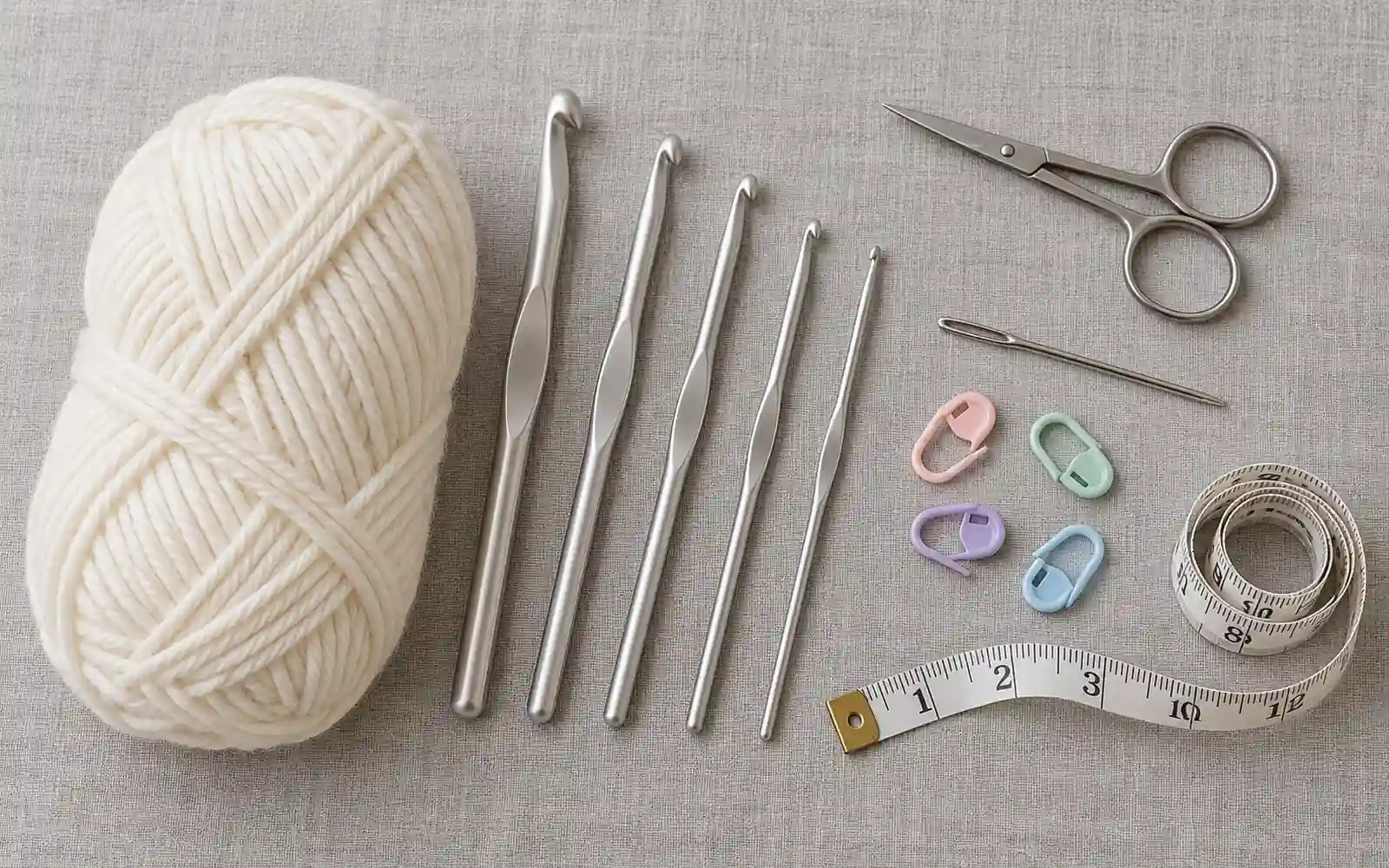
This page gives a typical setup, but the pattern’s own materials list decides yarn weight, hook size and extras such as stuffing, a yarn needle and a keyring. A small keychain needs only yarn scraps, a hook, polyester stuffing, a yarn needle, a stitch marker and a keyring. Best yarn for beginners covers the yarn.
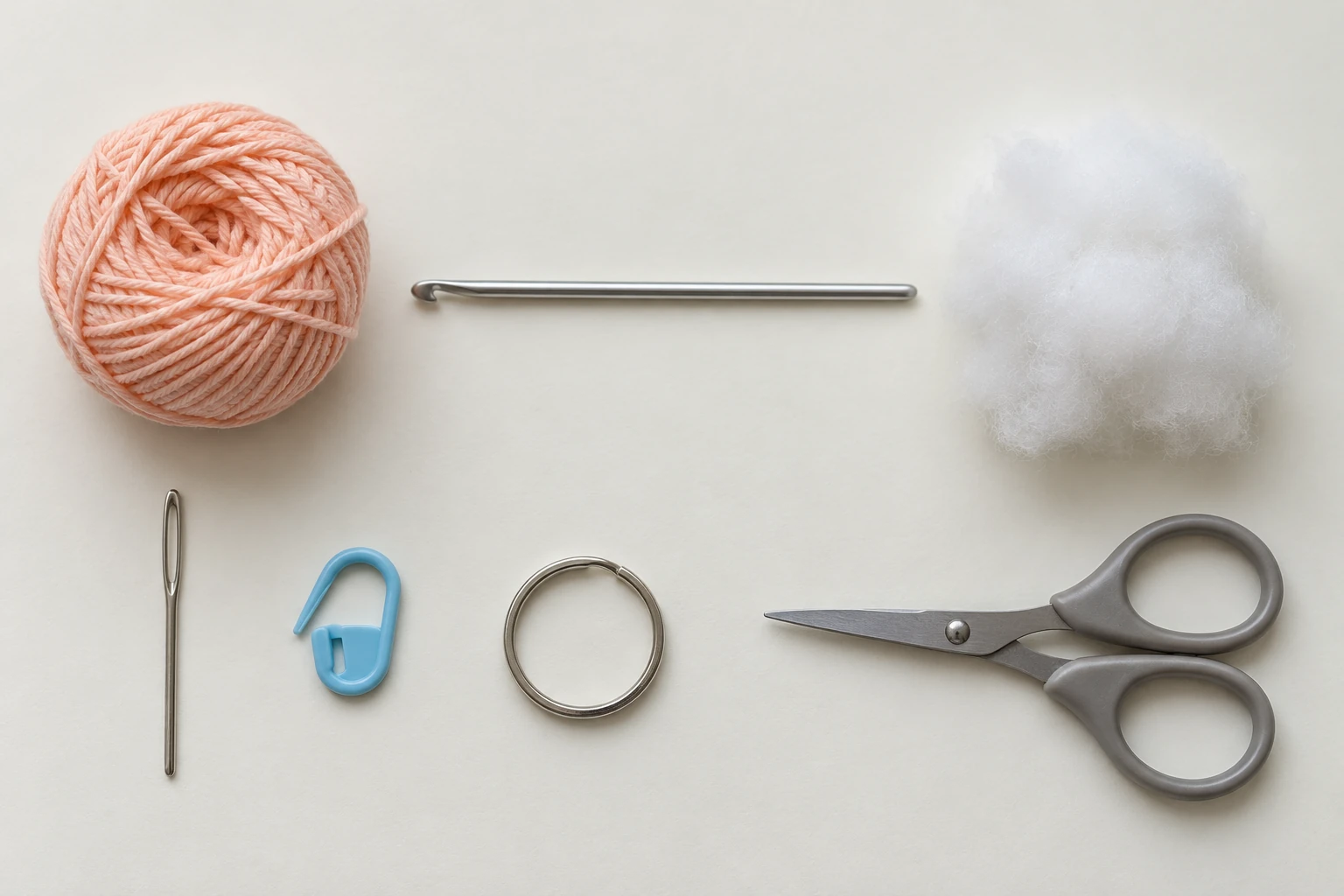 Everything one small keychain needs.
For a toy for a baby or very young child, embroider the eyes or use safety eyes that meet current safety regulations, and never use buttons, because they can detach and are a choking risk. Safety eyes for amigurumi explains how safety eyes work.
The written pattern text does not change for left-handers. You work in the mirror-image direction, so the rows run the opposite way while the stitch counts stay the same, and a mirrored video helps you see the motion.
A small, flat project with one basic stitch and nothing to stuff, such as a coaster or a dishcloth. On this page, the Citrus Slice Coaster fits best: it is a flat circle worked in rounds, with no stuffing and no need for an exact size. The “Which Pattern Should You Make First?” section above ranks the other picks.
Yes, if you learn the magic ring and single crochet first. The Minimal Frog is labeled Beginner and takes under 2 hours. Practice the magic ring a few times in scrap yarn, then read how to make amigurumi before you start the frog. Allow extra time for the first round, since a time estimate assumes you know the stitches.
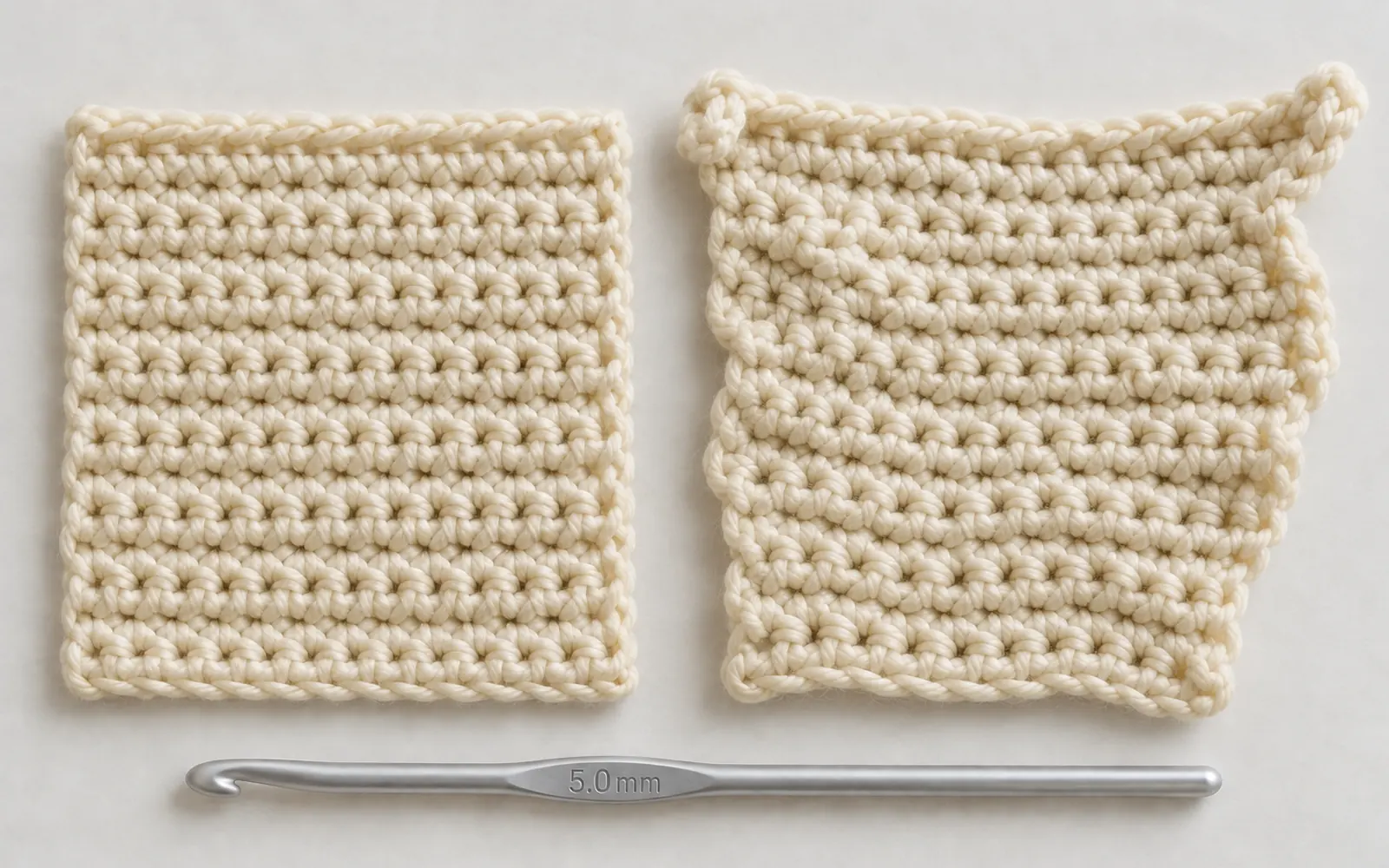
That is normal. Uneven stitches come from tension that varies while you learn. Check the stitch count of each round first, then your tension, and if the count is off, pull back to the last correct round, which is called frogging. Common crochet mistakes lists the usual fixes, and how to read a crochet pattern explains the counts.
Flat is easiest to count, since you work rows in one direction at a time. Round projects need a magic ring and a stitch marker but give small finished pieces fast. If you are new to counting, start with the coaster, which is round but has no stuffing, then try one stuffed piece. Crochet in the round explains how rounds work.
Yes. Each pattern can be read in full on its own page, with no sign-up needed to read it. A printable PDF is available through the site’s email sign-up. You can browse every beginner pattern in the library from the beginner crochet patterns hub. Each pattern’s page also lists its materials and notes, so you can check them before you buy any yarn.
Ad-free, printable, and ready for your project bag. We'll also send you one new free pattern every week.
No spam. Unsubscribe anytime.
Written by
Designer & founder
Linda has been crocheting for over 15 years and designs cozy, beginner-friendly patterns that anyone can finish in a weekend.
Keep reading
Twisted chains, wavy edges, wrong stitch counts: the common crochet mistakes beginners make, how to spot each one and how to fix it.
Read More: Common Crochet Mistakes and How to Fix ThemCrochet tools for beginners, simplified: the six you need, the extras that can wait, and a starter kit that avoids wasted money.
Read More: Crochet Tools for Beginners: Need vs. Nice to HaveAre ergonomic crochet hooks worth the price? An honest look at handle shapes, popular brands, who benefits and how to try one cheaply.
Read More: Ergonomic Crochet Hooks: Are They Worth It?