
🧶 Yarn Calculator

Try

Visit our Etsy Shops

Pick a shop to browse. Each one opens on Etsy in a new tab.

Crochet Projects

Crochet Home Decor: Easy Projects for Every Room

Crochet home decor guide: easy coasters, pillow covers, baskets, rugs and wall hangings, with the yarn and finishing each one needs.

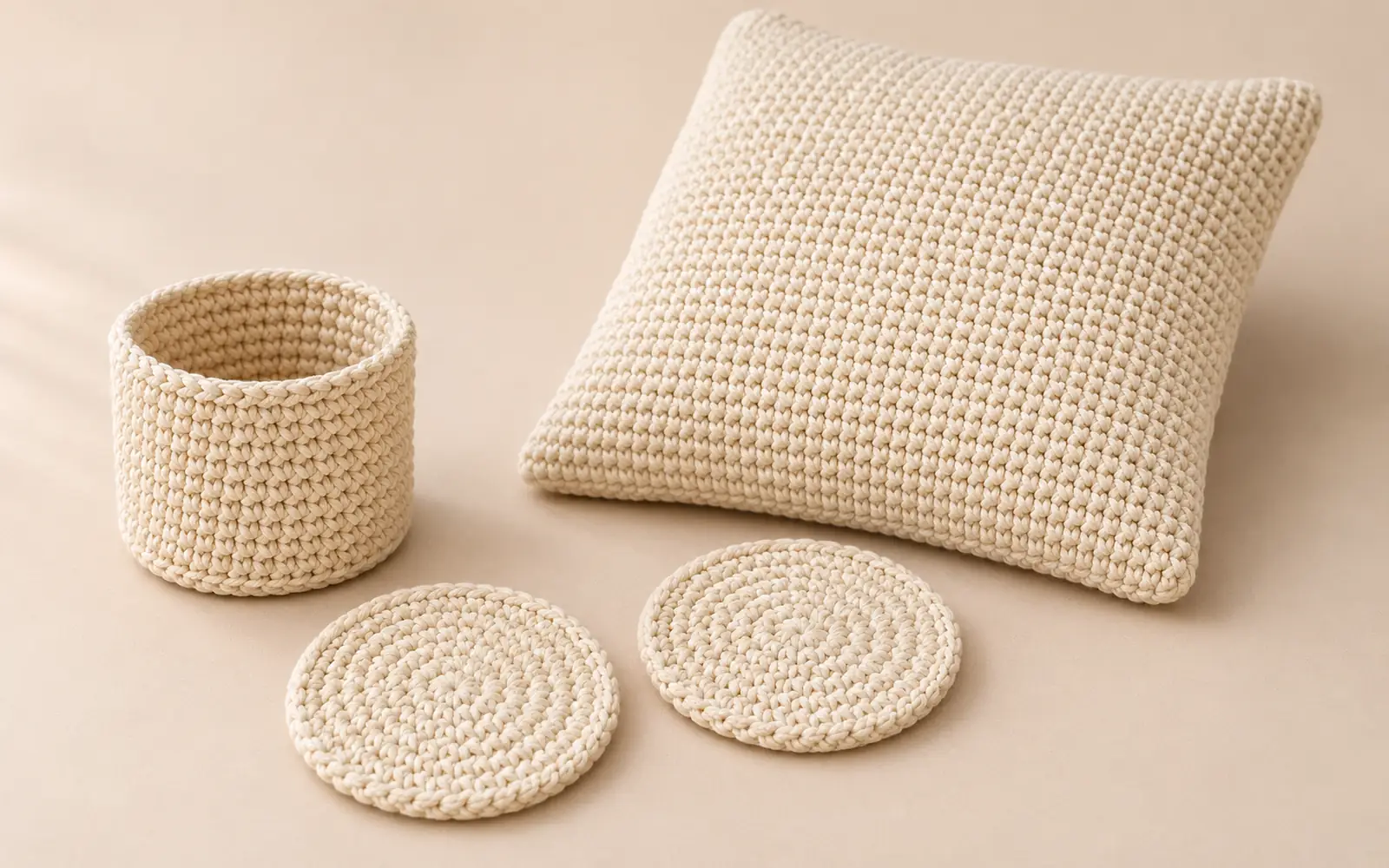
A cream crochet pillow cover, a small cream cord basket and two round coasters on a warm beige surface
Table of Contents
  1. What Suits a Beginner
  2. Choose the Yarn for the Job
  3. A Round Coaster
  4. Pillow Covers
  5. Baskets, Rugs and Wall Hangings
  6. Finish and Style
  7. Common Problems and Fixes
  8. Key Takeaways
  9. Frequently Asked Questions

Quick answer: This crochet home decor guide starts with coasters, small baskets and pillow covers, which suit beginners, then moves on to rugs and wall hangings. Choose the yarn for the job: cotton for coasters, cord or T-shirt yarn for baskets, sturdy bulky yarn for rugs. Measure the pillow form first.

You want something handmade in your home, and the choices are wide: a coaster, a basket, a pillow, a rug. Each one asks something different of the yarn, and the wrong fiber turns a good pattern into a floppy basket or a rug that slides.

This guide covers easy first projects, the yarn each one needs, a round coaster in five steps, pillow covers, baskets, rugs and wall hangings, then blocking, a calm palette and a problem table. Patterns to try sit beside each section.

I choose the yarn for the job before I choose the pattern, because a coaster, a basket and a rug each ask for something different from the fiber. The pattern comes after that, once the fiber is settled.

What Suits a Beginner

Most crochet home decor does not have to fit a person, so it forgives uneven gauge, and the one exception is a pillow cover, which has to fit its insert. Crochet for the home runs from coasters to rugs; see the crochet project guides and the home decor patterns.

Easy Pieces to Start With

The easiest crochet home decor projects are coasters, a small basket and a simple pillow cover, because each is small or flat and repeats one stitch. A learner book says a coaster does not need an exact gauge. A small basket is a flat circle with sides worked without increases, which is how to crochet in the round. Times vary, from a short session for a coaster to an evening for a basket and an evening to a weekend for a pillow cover. Try the Citrus Slice Coaster or Chicken Coaster.

Pieces That Ask More

Rugs, wall hangings and large baskets ask for more yarn, a firmer fabric and careful finishing, but they use the same basic stitches. A learner book labels its rug intermediate and its coasters, baskets and circular pillow easy. A throw is a blanket, so see the crochet baby blanket guide for sizes. None of these needs a new stitch, only more patience and a plan. Try the Round Hanging Basket Set, Mosaic Bathroom Rug or Solar System Wall Hanging.

Choose the Yarn for the Job

The fiber decides how a decor piece sits, holds its shape and washes, so choose the yarn for the job before the pattern. A coaster, a basket and a rug each need something different, and the sections below give what guides suggest.

What Guides Suggest by Project

Guides suggest cotton for coasters, a soft washable yarn for pillow covers, cord or T-shirt yarn for baskets and a sturdy bulky yarn for rugs.

Project What guides suggest Why
Coasters Cotton, often worsted or DK weight Lies flat, blocks well, handles water; acrylic for items that will not get hot (one post)
Pillow covers A soft yarn that washes, in aran or worsted weight Gets handled; a learner book suggests a wool-rich aran for its textured pillow
Baskets Cord, twine, T-shirt yarn or a bulky yarn, worked tightly Firm stitches make stiff walls
Rugs Cotton or T-shirt yarn (one guide); a super bulky yarn with a high synthetic content (a learner book) Hard-wearing and flat; sources differ
Wall hangings A worsted cotton (one pattern page) Holds a shape; a stiff stitch adds structure

The pattern’s yarn always wins; for washing, see how to read a yarn label. For cotton against acrylic, see cotton vs acrylic yarn, and for hooks the crochet hook size chart.

Cord, Strips and T-Shirt Yarn

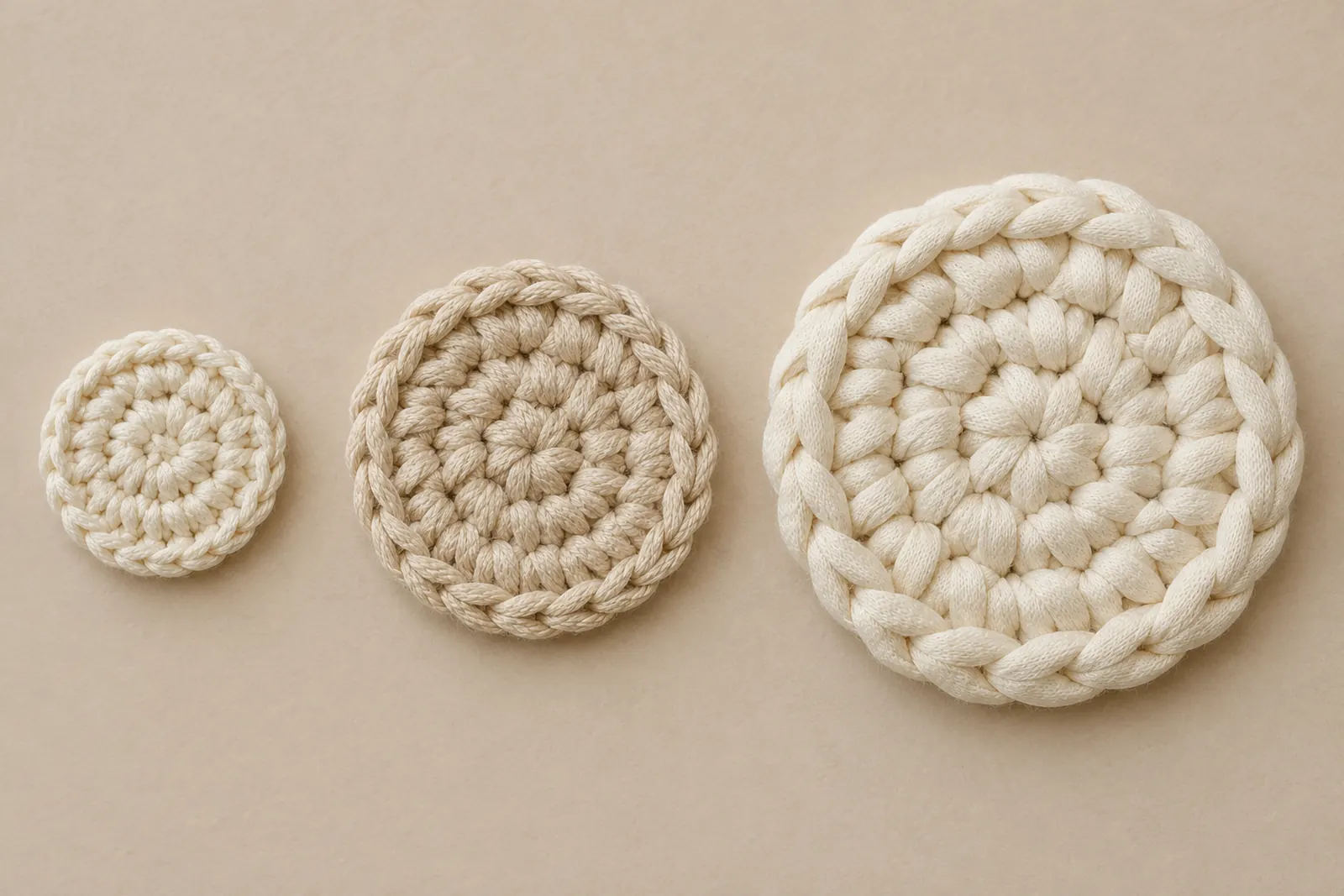
Cord, fabric strips and T-shirt yarn make firm baskets and rugs, and each needs a larger hook and tight single crochet. Garden twine, fabric strips about ¾ in (2 cm) wide on a 10 mm (N/15) hook, and plastic bag strips (plarn) all work. T-shirt yarn is super bulky and often held double. A learner book says to get deft at single crochet before using unusual yarns. Hooks differ by material, so test a swatch with the hook size chart; for bags, see the bag guide. Left-handed makers work the same stitches mirrored. The photo below shows three materials.

Crochet home decor guide materials: three flat crochet circles of the same number of rounds in cream cotton, natural cord and cream T-shirt yarn, in a row Three materials, three rounds each: the same stitches give very different circles.
A Round Coaster

A round crochet coaster is the quickest way to test a yarn and a stitch before committing to a larger piece. The size, fiber and shape come first, then the five steps, and the magic ring and rounds have their own guides.

Size, Fiber and Shape

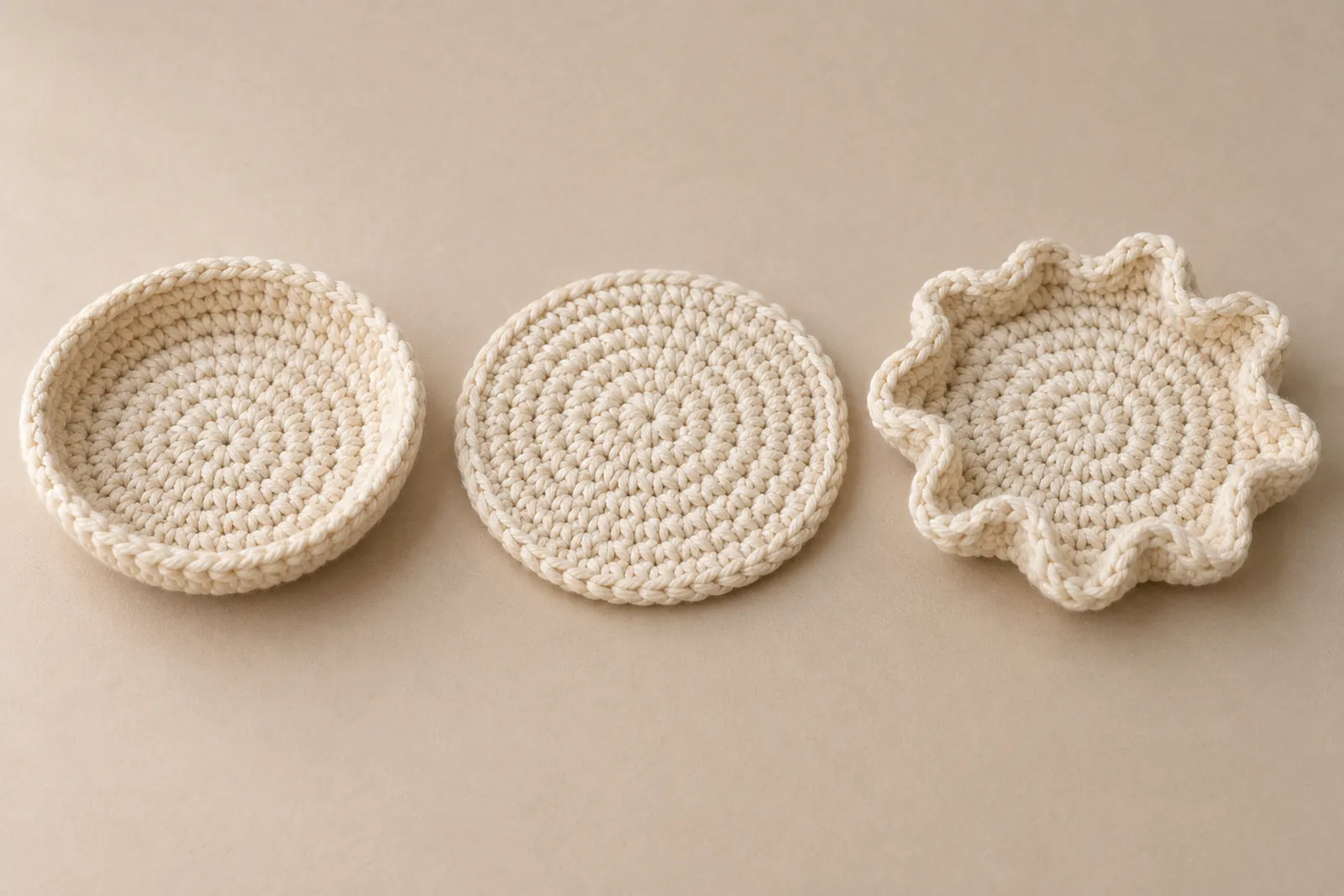
A crochet coaster is usually about 4 inches across, with a guide range of 3 to 5 inches, and cotton is the usual fiber. One post says cotton blocks well, lies flat and stands up to heat, and that acrylic suits items that will not get hot; it advises against wool, which can felt. This page calls no coaster heat-proof. The photo below shows three coasters made on purpose: cupped, flat and ruffled. See the cotton and acrylic guide.

Three round cream crochet coasters in a row, the left one cupped, the middle one flat and the right one with a ruffled edge Made on purpose: a cupped, a flat and a ruffled coaster.
A Round Coaster in Five Steps

To crochet a round coaster, make a magic ring, work 6 single crochet into it, then add 6 stitches each round until the circle is about 4 inches across.

  1. Make a magic ring and work 6 single crochet into it, then pull it closed.
  2. Round 2: work 2 single crochet in every stitch (12 stitches).
  3. Round 3 and later: add 6 stitches each round, spaced evenly (round 3 is 1 in the next stitch and 2 in the next).
  4. Stop when the circle is about 4 inches across, slip stitch, fasten off and weave in the ends.
  5. Block it: pin it flat, mist it with water and let it dry.

Lay the circle flat: if it cups, it has too few increases, and if it ruffles, too many, so take out a round and adjust. The stitch count at 4 inches depends on yarn, hook and tension, so measure it. See working in the round.

Pillow Covers

A crochet pillow cover is the one decor piece that has to fit, so the size of the insert matters more than the stitch. Fitting the insert comes first, then closing and washing; this is not a full pillow pattern.

Fit the Insert

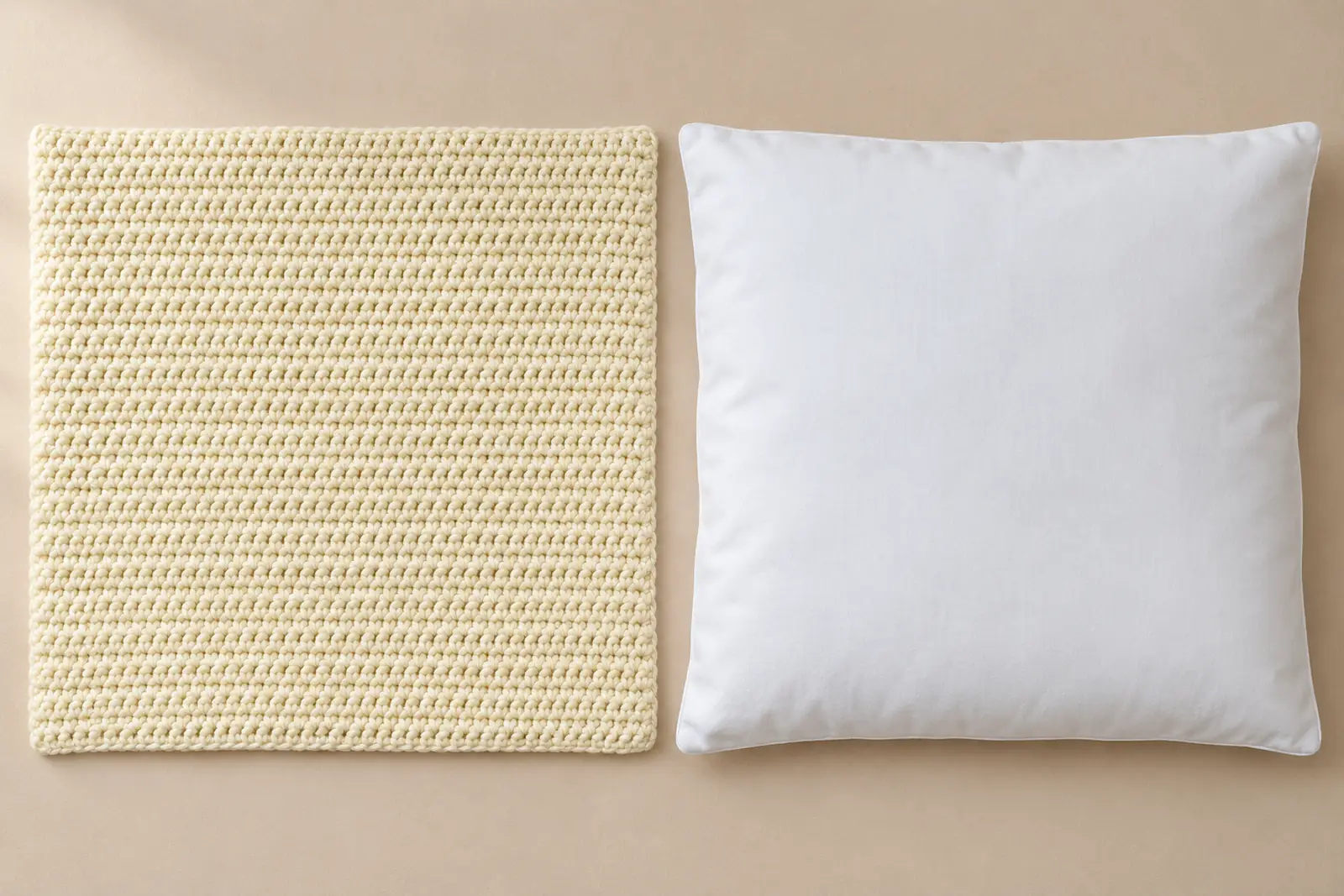
To fit a crochet pillow cover, measure the pillow form first, because guides disagree on whether the cover should match the form or be about a quarter inch smaller. One tutorial says match it, another says about ¼ in smaller so it stretches without sagging, and a pattern page says only that it will stretch if needed. Block first, because blocking changes size. A swatch helps; see the hook size chart. I measure the pillow form first and crochet the cover to that measurement, then check it against the form before I seam it. The photo below shows a panel beside a form. Try the pillow patterns: Cactus Pillow, Cat Pillow or Donut Pillow.

A cream crocheted square panel laid beside a plain white square pillow form of the same size with their edges lined up Measure the form first: a panel made to the same size as the form.
Closing and Washing

A crochet pillow cover can close with a sewn seam or with buttons and loops, and buttons suit a cover that will be washed. A seam sewn after the form is in makes washing harder, and a learner book instead sews a crocheted panel onto a ready-made cover. Choose a washable yarn and a color that hides everyday dirt; see the yarn label guide and the cotton and acrylic guide.

Baskets, Rugs and Wall Hangings

Baskets, rugs and wall hangings all need a firmer fabric than a blanket, and each gets there in a different way. The sections below cover how each is made firm, with the yarn, the hook and the finishing that each one needs.

Baskets: Stiffness and Shape

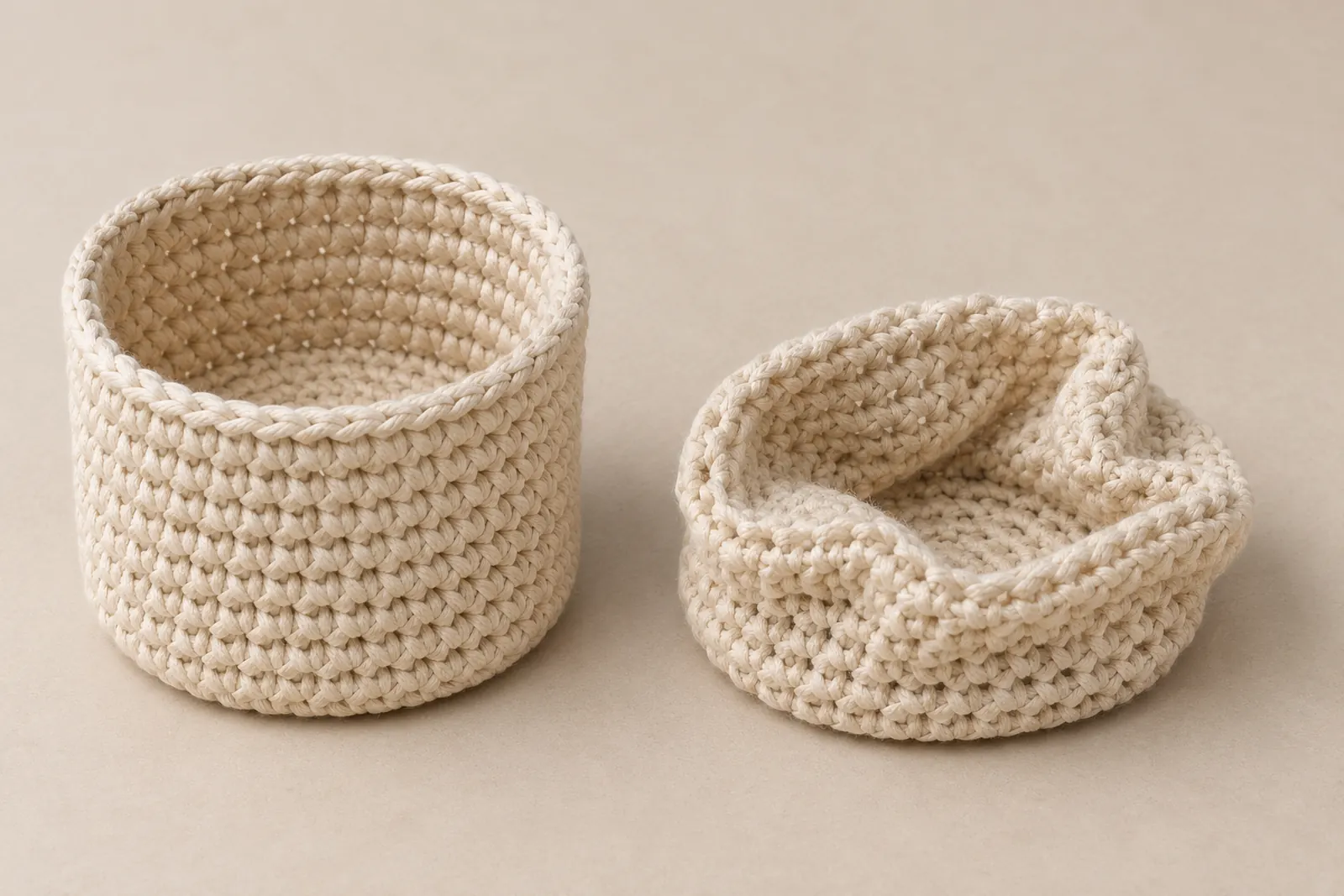
To make a crochet basket stand up, crochet tightly with a hook one size smaller than the yarn label suggests and work the sides without increases. Work the base flat and the sides in a spiral; one back-loop-only round after the base helps the walls stand, and T-shirt yarn can be held double. For a basket I work a small test circle first and stand it on its edge, and if it folds I go down a hook size. For the spiral, see working in the round. The photo below shows two baskets, made on purpose. Try the Teardrop Hanging Basket.

Two small cream cord crochet baskets side by side, the left one standing upright with straight walls and the right one with its walls folded in Made on purpose: a firm basket (left) and a loose one (right).
Rugs: Yarn, Backing and Washing

A crochet rug needs a firm fabric, a yarn that suits wear and washing, and a non-slip backing so it does not slide on the floor. One rug guide calls cotton or T-shirt yarn best for most rugs and acrylic sturdy but prone to fade in strong sun, while a learner book uses a super bulky, mostly synthetic yarn, so no fiber is named best. Test a swatch with the hook size chart, since a larger hook gives a softer fabric. Guides name a rug pad, an anti-slip spray, a latex or silicone backing or a backing sewn on; follow each product’s directions, and a slipping rug can cause a fall, so do not skip it. For washing, see the label guide.

Wall Hangings

A crochet wall hanging is usually a flat panel of lace or textured stitches worked in cotton, hung from a dowel with fringe along the bottom. In a boho style, a stiffer stitch holds the shape better, and cotton blocks well; one pattern page says blocking is optional but probably needed. To hang it, work through the top stitches onto the dowel with a long strand, then tie yarn on at each end. This section rests on one pattern page.

Finish and Style

A few minutes of finishing makes crochet home decor look made on purpose, and the same short list suits every piece here. Blocking comes first, then a calm palette that ties the pieces together, and neither step asks for a new skill or special tools.

Block It

To block a crochet coaster or rug, pin it flat, mist it with water and let it dry pinned, and check the yarn label before using heat. Weave in the ends first. A learner book presses its coasters according to the ball band, and acrylic can melt under a hot iron, so use water only on it. A pillow panel is blocked before it is seamed. See the yarn label guide.

A Calm Palette

A calm palette for crochet home decor is mostly neutral, with one accent color picked from the room. Neutrals such as cream, oat, gray and sage suit most rooms, and a piece in a neutral shows its stitch texture. A learner book’s coasters use two shades in any combination with a trim in a third. For more, see neutral crochet colors.

Common Problems and Fixes

Most crochet home decor problems come from the fiber, the fit or the finish, and each has a quick fix. The table gives the likely cause and the fix for six common ones, and each follows advice from the sections above.

Problem, Cause and Fix

A ruffling coaster, a slumping basket, a sagging pillow cover and a sliding rug are the most common crochet home decor problems.

Problem Likely cause Fix
A coaster ruffles or cups Too many or too few increases Take out a round and adjust the increases
A basket slumps Loose stitches or a soft yarn Go down a hook size, work tighter or hold the yarn double
A pillow cover sags or will not fit Cover too big or too small for the form Measure the form first, block, then check before you seam
A rug curls at the edge Uneven increases or no blocking Increase evenly, pin and mist it flat
A rug slides A smooth back on a smooth floor Add a non-slip backing and follow its directions
A wall hanging curls or sags A soft stitch and no blocking Use a stiffer stitch and block it

Key Takeaways

  • Start with a coaster, a small basket or a simple pillow cover, and choose the yarn for the job before the pattern.
  • Cotton is the usual coaster fiber, and cord, fabric strips and T-shirt yarn make firm baskets and rugs when worked tightly.
  • Measure the pillow form first, because guides disagree on whether the cover should match it or be about a quarter inch smaller.
  • Stand a test circle on its edge to check a basket, and add a non-slip backing to a rug, following the product’s directions.
  • Block flat pieces with water, check the yarn label before using heat or washing, and keep colors calm.

Frequently Asked Questions

What is the easiest crochet home decor project for a beginner?

The easiest crochet home decor project is a round coaster, about 4 inches across, worked in single crochet. Cotton is the usual yarn, and the coaster is small, flat and repeats one increase pattern. A small basket and a simple pillow cover are the next steps. The coaster section above has the five steps, and the What Suits a Beginner section has more starting points.

What yarn is best for crochet home decor?

Choose the yarn for the job: cotton for coasters, a soft washable yarn for pillow covers, cord or T-shirt yarn for baskets and a sturdy bulky yarn for rugs. The pattern’s yarn and the label come first. The Choose the Yarn for the Job section above has the table, and the cotton vs acrylic and yarn label guides cover fiber and care.

How big should a crochet pillow cover be?

Measure the pillow form and crochet the cover to that measurement, because guides say either the same size or about a quarter inch smaller. One tutorial says match the form, and another says about ¼ in smaller so it can stretch without sagging. Block first, then check the cover against the form before you seam it. The Pillow Covers section above has more, and the hook size chart helps with the swatch.

How do I make a crochet basket stiff?

Crochet tightly with a hook one size smaller than the yarn label suggests, and work the sides without increases. If you like, work one round in the back loops only to help the walls stand up, and hold T-shirt yarn double. Test with a small circle stood on its edge. The Baskets section above has more.

How do I stop a crochet rug from slipping?

Add a non-slip backing, such as a rug pad, an anti-slip spray, a latex or silicone backing or a backing sewn to the reverse, and follow the product’s own directions. Check whether it needs reapplying after washing. A slipping rug can cause a fall, so do not skip it. The Rugs section above has more.

Portrait of Linda Davidsen

Written by

Linda Davidsen

Designer & founder

Linda has been crocheting for over 15 years and designs cozy, beginner-friendly patterns that anyone can finish in a weekend.

Keep reading

All posts