đź§¶ Yarn Calculator

Try

Visit our Etsy Shops

Pick a shop to browse. Each one opens on Etsy in a new tab.

Seasonal Crochet

Seasonal Crochet: Holiday Patterns for Every Time of Year

Seasonal crochet patterns for the whole year: plan by date, then Valentine's Day, Easter, summer, Halloween, Christmas, gifts and small stuffers.

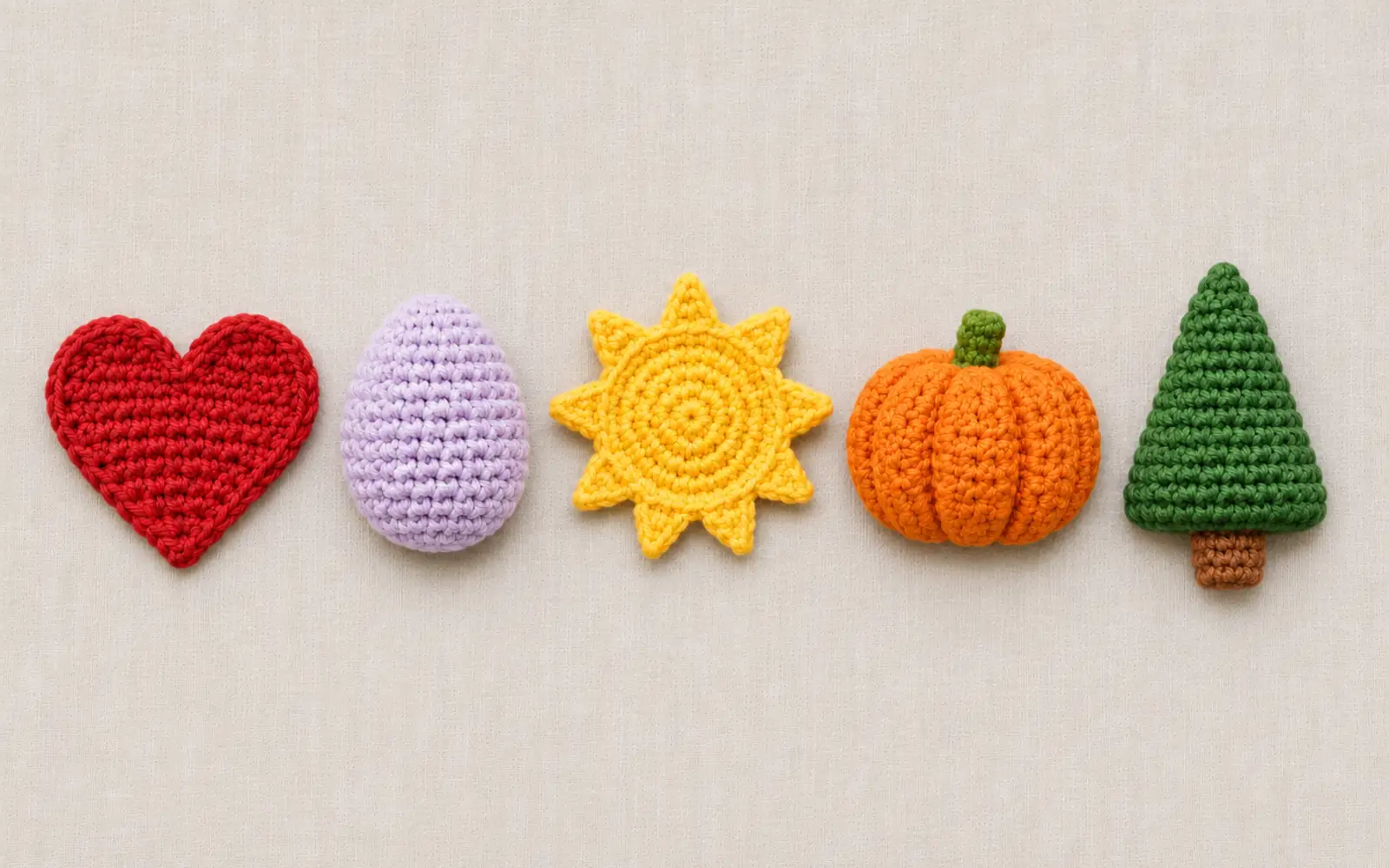
A row of five small crochet shapes for the seasons: a red heart, a purple egg, a yellow sun, an orange pumpkin and a green tree
Table of Contents
  1. Plan Backward From the Date
  2. Valentine’s Day: Hearts and Small Gifts
  3. Easter and Spring: Eggs and Bunnies
  4. Summer: Bags, Hats and Light Tops
  5. Halloween: Ghosts, Pumpkins and Spiders
  6. Christmas: Ornaments, Garlands and Santas
  7. Gifts to Make for Christmas
  8. Small Gifts That Finish Fast
  9. Yarn and Color for Seasonal Makes
  10. Seasonal Toys and Ornaments for Children
  11. Frequently Asked Questions
  12. What to Read Next

Quick answer: Seasonal crochet patterns work best when you count back from the date. Start the biggest piece first, fit small pieces into the gaps and choose yarn that suits the season. This guide sorts Valentine’s Day, Easter, summer, Halloween and Christmas projects and links to a full guide for each.

The holiday is on the calendar, the yarn is in the basket, and your list of things to make is longer than the weeks left. Some projects take an evening and some take a month, and the date does not move. Starting in the wrong order is how a gift ends up half finished.

This guide sorts seasonal crochet by the calendar. It starts with planning backward from the date, then covers Valentine’s Day, Easter, summer, Halloween and Christmas, with gifts, small makes, yarn, color and children’s toys. Each section links to a full guide.

I pick the date first, count back from it and start the biggest project before anything else. Small pieces go into the gaps, because they finish fast and the big one cannot be rushed.

Plan Backward From the Date

A seasonal crochet project is a deadline first and a pattern second, so the order you make things in matters as much as what you choose. The crochet holiday planning guide has the full calendar and checklist; this page gives the short version.

Count Back From the Date

To plan seasonal crochet, pick the finish date, count back from it and start the biggest project first. Small pieces fill the gaps, because they finish fast. Sources disagree on how early to start: one planning page suggests starting a mid-December blanket in September or October, depending on your pace, while another says the holiday shrinks to only a few weeks once the store displays change. This page gives no date. Leave a buffer for blocking and wrapping, since one page says to finish about a week early. As a rough guide, a keychain takes under an hour, a coaster or small toy an evening, a hat a weekend and a blanket several weeks, and the crochet project guides give the ranges. The holiday planning guide has the schedule, and a crochet digital planner tracks it.

Buffer for finishing and wrapping Date Earlier Several weeks: start first A weekend An evening: fits any gap
Count back from the date: start the biggest piece first and fit the small ones into the gaps.

A Year at a Glance

Seasonal crochet falls into seven groups through the year, from Valentine’s Day hearts to Christmas gifts, and they differ most in how long they take. Times are rough; they change with the pattern, yarn and maker, and sources disagree.

Season Common makes Rough time (varies) Guide
Valentine’s Day Hearts, keychains, small amigurumi An evening to a weekend Valentine’s Day guide
Easter Eggs, bunnies, baby blankets An evening to a weekend Easter guide
Summer Beach bags, sun hats, light tops A weekend to several weeks Summer guide
Halloween Ghosts, pumpkins, spiders An evening to a weekend Halloween guide
Christmas Ornaments, garlands, Santas, hats An evening to several weeks Christmas guide
Christmas gifts Chosen by person Plan weeks ahead Gifts guide
Small gifts and stuffers Keychains and minis Under an hour to an evening Stuffers guide

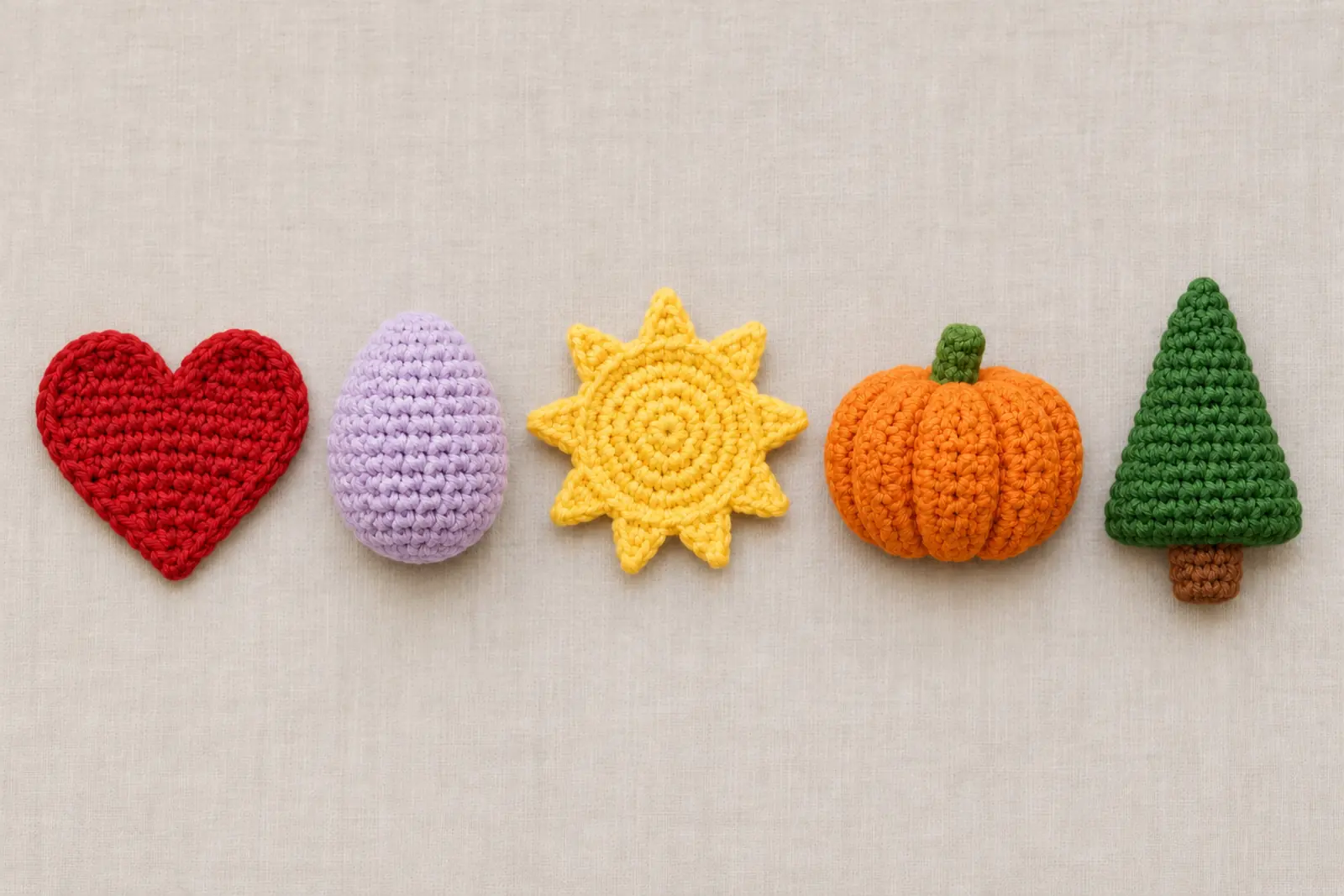
Five small cream crochet shapes in a row for seasonal crochet patterns: a heart, an egg, a sun, a pumpkin and a tree Five small seasonal shapes in calendar order: heart, egg, sun, pumpkin and tree.
Try the Heart Keychain, or browse the holiday patterns hub.

Valentine’s Day: Hearts and Small Gifts

Valentine’s Day crochet is small and fast, so it suits the first weeks of the year. Most pieces use little yarn, and scraps often work. The Valentine’s Day crochet patterns guide has the full list of hearts, amigurumi and small gifts.

Hearts and Quick Gifts

Hearts are the core Valentine’s Day crochet shape, and small ones such as a keychain or an appliqué finish in a few sittings. A small heart can start from a magic ring, or become a garland, a keychain or a puff-stitch heart, and small amounts of scrap yarn are enough for most. The date tends to arrive sooner than you expect, so choose clean stitches and small projects, and leave time to weave in the ends, shape and stuff each piece. Because a heart is small, a mistake costs only a few minutes, and you can undo it and start again. A heart keychain makes a quick gift; the crochet keychain tutorial shows the steps, and the keychain patterns hub has more. The Valentine’s Day guide has the full set.

Amigurumi, Color and Finishing

Valentine’s Day amigurumi does not have to be red and pink: soft neutrals, muted pastels and bold solids all work, and a simple color change adds interest. A different shade for the wings or the cheeks keeps a simple shape from looking plain. Small hearts, bears and angels suit the date, and one page suggests matching the colors to the recipient’s taste, with a little texture for extra interest. If the toy is for a child, decide the eyes and small parts first; see the children’s toys section below. Check that a dark red will not bleed before you use it in a gift; the yarn and color section below covers the test. Try the Cupid Angel Amigurumi, or browse the amigurumi patterns hub. The Valentine’s Day guide has more.

Easter and Spring: Eggs and Bunnies

Easter crochet is a spring job that mixes small stuffed shapes with a little decor. The Easter crochet patterns guide has the full list of eggs, bunnies and baskets, and the sections below sort them by shape and by season.

Eggs, Bunnies and Baskets

Easter crochet is built from a few small shapes: eggs, bunnies, chicks and baskets. Eggs are the smallest, bunnies are the most popular stuffed shape, and an egg cozy or a basket completes the set. Bunnies and chicks use the same rounds with ears or a beak added, so one skill covers the whole group. Make the eggs first, since they are the smallest, and use a bunny as the main project. Tiny amigurumi also work as non-candy stuffers for Easter eggs, according to one page. Eggs and chicks are good practice for working in rounds, and the how to make amigurumi guide covers the method. If the toy is for a child, check the eyes and small parts first; see the children’s toys section below. The Easter Egg pattern is a small place to start. The Easter guide has the full set.

Pastels and Spring Decor

Pastel yarn and cotton suit spring crochet, from small Easter baskets to a baby blanket in bunny colors. Cotton is a common choice for baskets and decor because it holds a shape, and the cotton vs acrylic yarn guide compares the fibers. A wreath or garland is a flat decor option. Check each pastel next to the others in daylight before you start a set, because shades can look different under shop lights. A baby blanket is a spring gift that takes weeks, so start it first and fit the eggs and baskets into the gaps, as in the planning section above. The crochet baby blanket guide covers sizes and yarn amounts. Try the Bunny Baby Blanket, or browse the blanket patterns hub. The Easter guide has more.

Summer: Bags, Hats and Light Tops

Summer crochet moves from cozy to breathable, with open stitches, light fibers and projects you carry outdoors. The summer crochet patterns guide has the full list of bags, hats and tops, and the sections below cover the common makes and the yarn.

Beach Bags, Sun Hats and Tops

The most common summer crochet makes are a beach bag, a sun hat and a light top, and the hat and top both start with a swatch. A bag is flat pieces joined, and how to crochet a bag shows the base and handles. Firm fibers such as cotton hold a bag’s shape, and the fibers section below covers the options. A hat has to fit a head, and how to crochet a hat covers sizing. A top has to fit a body, and how to make a crochet cardigan shows how fit and gauge work for garments. Measure the swatch before you buy the full amount of yarn. Try the Windmill Beach Bag or the Aestas Summer Top, and browse the bag patterns and hat and wearable patterns hubs. The summer guide has more.

Fibers and Stitches for Warm Weather

For summer crochet, web guides favor cotton, bamboo blends and linen, worked in open stitches such as mesh or lace. Cotton and cotton blends are soft, breathable and absorbent, and mercerized cotton is smoother with more drape. Bamboo blends are light and silky, and linen is crisp at first and softens with wear. One page says open stitches such as mesh or lace help in wearable pieces made in worsted weight. Weight advice differs between pages, so check the label and swatch before you buy a full amount. Swatch in the stitch you plan to use, because the stitch changes the drape as much as the fiber does. Check the care label too, since fibers differ in how they wash. Fiber changes drape, care and weight, and the cotton and acrylic guide compares two common choices. The summer guide has more.

Halloween: Ghosts, Pumpkins and Spiders

Halloween crochet is mostly small stuffed shapes and a little decor, so it is good practice for stuffing and shaping. Most of the shapes are small and rounded. The Halloween crochet patterns guide has the full list of ghosts, pumpkins, spiders and decor.

Ghosts, Pumpkins and Spiders

The easiest Halloween crochet shapes are a ghost, a pumpkin and a spider, all small and rounded. Ghosts and pumpkins are plain rounded shapes, which makes them practice for the ball in the amigurumi guide. A spider is the same kind of shape with legs added. Colors are the point: black, orange and white. Each shape repeats the same small moves, so a second one goes faster than the first. Stuff each shape firmly enough to hold its form, and sew the parts on tightly. Weave in every end, so nothing works loose later. If either is for a child, decide the eyes and small parts first; see the children’s toys section below. Try the Ghost Plush or the Pumpkin Doll Amigurumi. The Halloween guide has the spiders and more.

Halloween Decor and Blankets

Halloween crochet decor uses the same small moves as the stuffed shapes, while a Halloween blanket takes weeks and needs an early start. A garland or a wall piece is a smaller decor project, and a throw is a longer one, so start the blanket before the small pieces, as in the planning section above. Smaller decor, such as a garland or a wall piece, takes an evening or a weekend and fits between blanket sessions. Working the blanket in short sessions keeps it moving without taking over every evening. Leave a few days at the end for weaving in ends and finishing. Check dark yarn for bleeding before you join the colors; see the yarn and color section below. Try the Halloween Blanket, and browse the holiday patterns hub for more. The Halloween guide covers decor and blankets.

Christmas: Ornaments, Garlands and Santas

Christmas crochet is the largest seasonal group, so it helps to sort it by size, from ornaments to blankets. The Christmas crochet patterns guide has the full list, and the sections below start with the smallest makes and move up to the mid-size ones.

Ornaments, Garlands and Trees

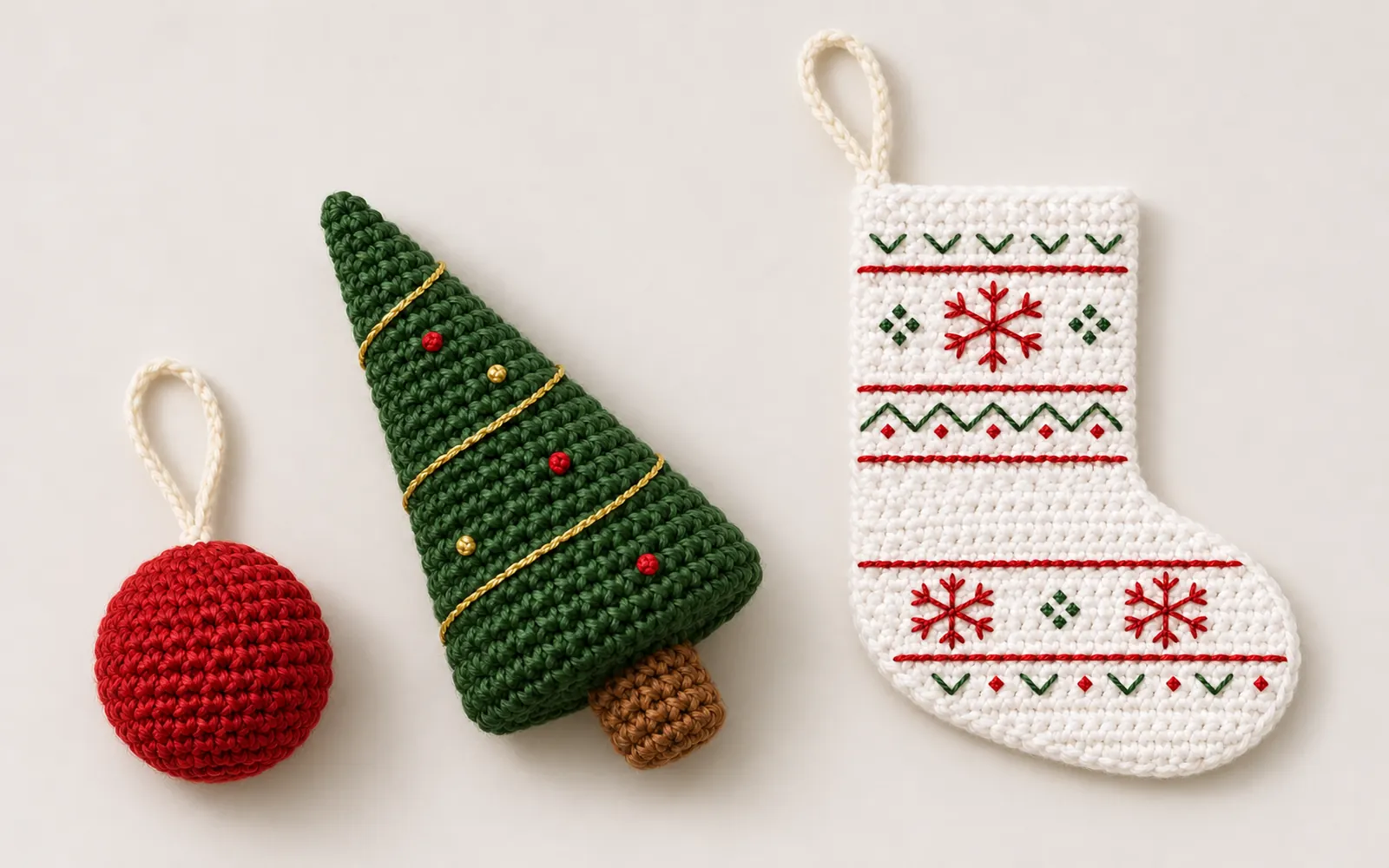
The smallest Christmas crochet makes are ornaments, small trees and garlands, and they finish fast enough to fill the gaps in your plan. They use little yarn, so they suit the evenings between bigger projects. Make a few in one color so they look like a set on the tree, and use scraps for the small pieces. Weave in every end and sew on any extras tightly, since an ornament hangs for weeks. Ornaments also double as gift toppers. A garland of lights or stars is a small decor make in the same group. Ornaments for a tree with young children follow the points in the children’s toys and ornaments section below. Try the Miniature Christmas Ornaments or the Christmas Lights Garland, and browse the holiday patterns hub. The Christmas guide has more.

Santas, Mrs. Claus and Christmas Wearables

Mid-size Christmas crochet makes include Santa and Mrs. Claus amigurumi and wearables such as a Christmas hat, which needs a swatch to fit. A hat has to fit a head, so swatch first, and the hat guide covers sizing. A holiday blanket is the long project, so it starts before these. Santa and Mrs. Claus use the same few colors, so you can often work both from one set of yarn. Christmas wearables take a weekend or more, so start them before the ornaments. Measure the swatch before you commit to the rest of the yarn. If a Santa or Mrs. Claus is for a child, decide the eyes and small parts first; see the children’s toys section below. Try the Mrs Claus Amigurumi or the Christmas Tree Hat. The Christmas guide has more.

Gifts to Make for Christmas

A handmade gift list works best when you start from the people, not the patterns. The crochet Christmas gifts guide has gift ideas by recipient, and the sections below cover the list itself and the care that goes with each gift.

Start From the People

To plan crochet gifts, list the people first, trim the list to the time you have and sort the projects into quick and long ones. Not everyone needs a handmade gift every year, and not everyone tolerates natural fibers, so check for allergies. Brainstorm the whole list, then cross names off until it fits your evenings, since a short list you finish beats a long list you do not. Give each long project a start date first, then fill the gaps with quick ones. One page counts washcloths, potholders, ornaments, small toys and hair accessories as quick, and afghans, scarf and hat sets and sweaters as long. Pace differs by maker and examples vary, so the holiday planning guide has the schedule. Try the Fingerless Gloves or the Textured Afghan Blanket. The gifts guide has ideas by recipient.

Care Cards and Finishing

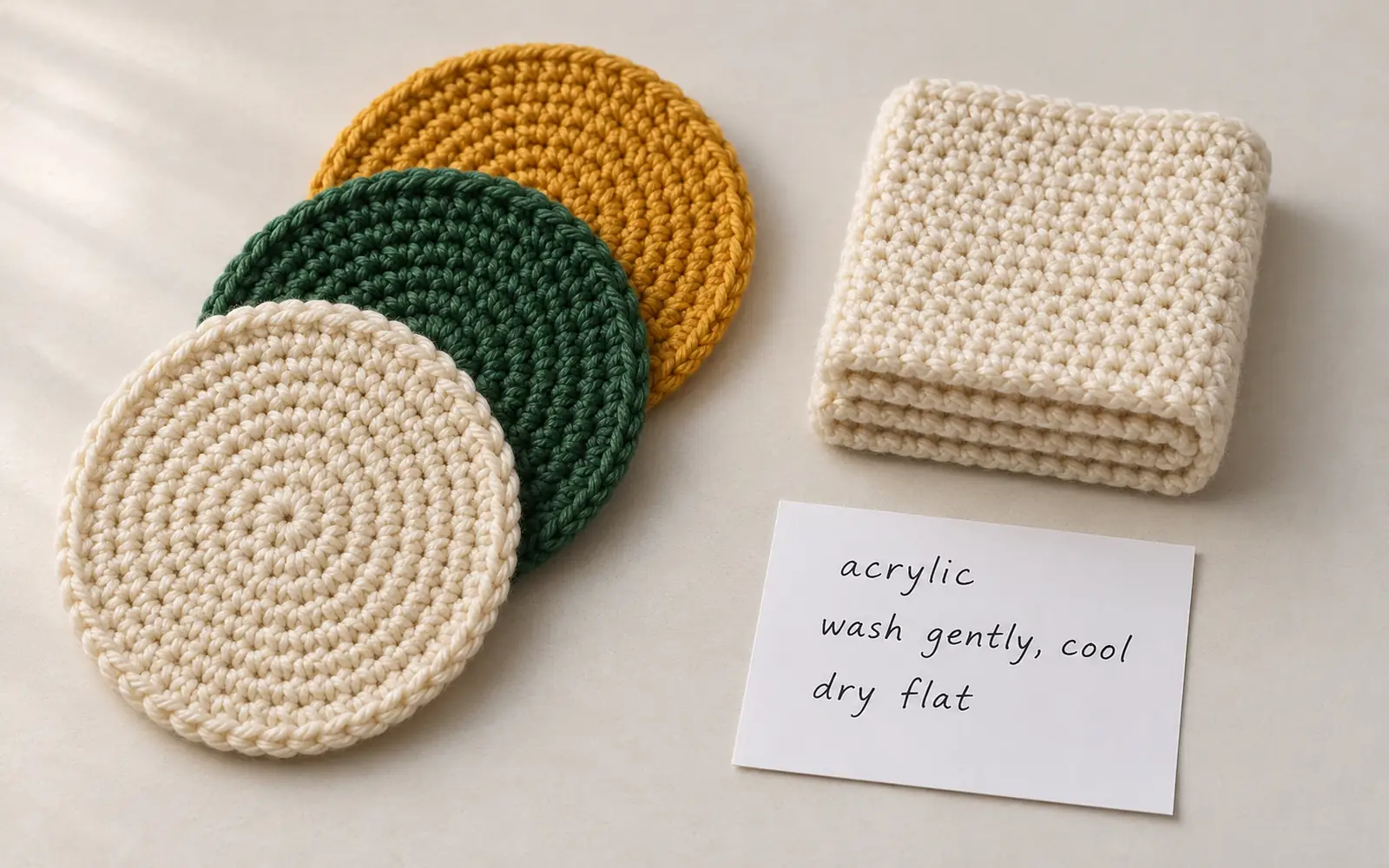
When you give a crochet project as a gift, attach the care information so the recipient can look after it properly. A learner book also says to keep a yarn label for each yarn you use, so you can read the care steps later. A care card can be a small tag with the fiber and the washing steps copied from the label, and a learner book says to dry washed crochet flat on a towel, which is worth writing on it. Read the label before you wash, and the how to read a yarn label guide explains what it says. Leave a buffer for finishing, since one page says to finish about a week early for blocking and wrapping, and weave in every end before you wrap. The gifts guide covers what to give each person.

Small Gifts That Finish Fast

Small crochet gifts use little yarn and finish fast, so they are the safety net of a holiday plan. The crochet stocking stuffers guide has the full list of small makes, and the sections below show what to keep on hand.

Small Makes That Finish Fast

Quick crochet gifts include keychains, ornaments, bookmarks and a gift card holder that needs about 25 yd (23 m) of yarn, according to one page. The same page lists potholders, washcloths, small toys and hair accessories. Keychains and ornaments are good projects for scrap yarn, since each uses only a few yards. Keep a few made ahead for the gaps in your plan. Another page claims no-sew minis take 10 to 20 minutes, but it uses super bulky plush yarn, and times vary with the pattern, the stitch and the yarn. Keychains are the clearest small gift, and the keychain tutorial shows the steps. If a mini is for a child, decide the eyes and small parts first; see the children’s toys section below. Try the Santa Keychain, and browse the keychain patterns hub. The stuffers guide has more.

A Box of Finished Minis

A box of finished crochet minis is the easiest answer to a surprise gift. I keep a small box of finished minis, like keychains and ornaments, so a surprise gift is never a scramble. Small pieces store flat, travel in a bag and can be made in short sessions, so they work while you wait. One page suggests keeping projects handy for short sessions, and another says that alternating complex patterns with simple ones reduces stress. A backup plan helps too: an IOU, a smaller gift or a gift for next year. Include a mix of keychains, ornaments and small toys, so there is something for most people, and add a tag with the care steps if the yarn needs them. A digital planner can track what is in the box. The stuffers guide has more small makes.

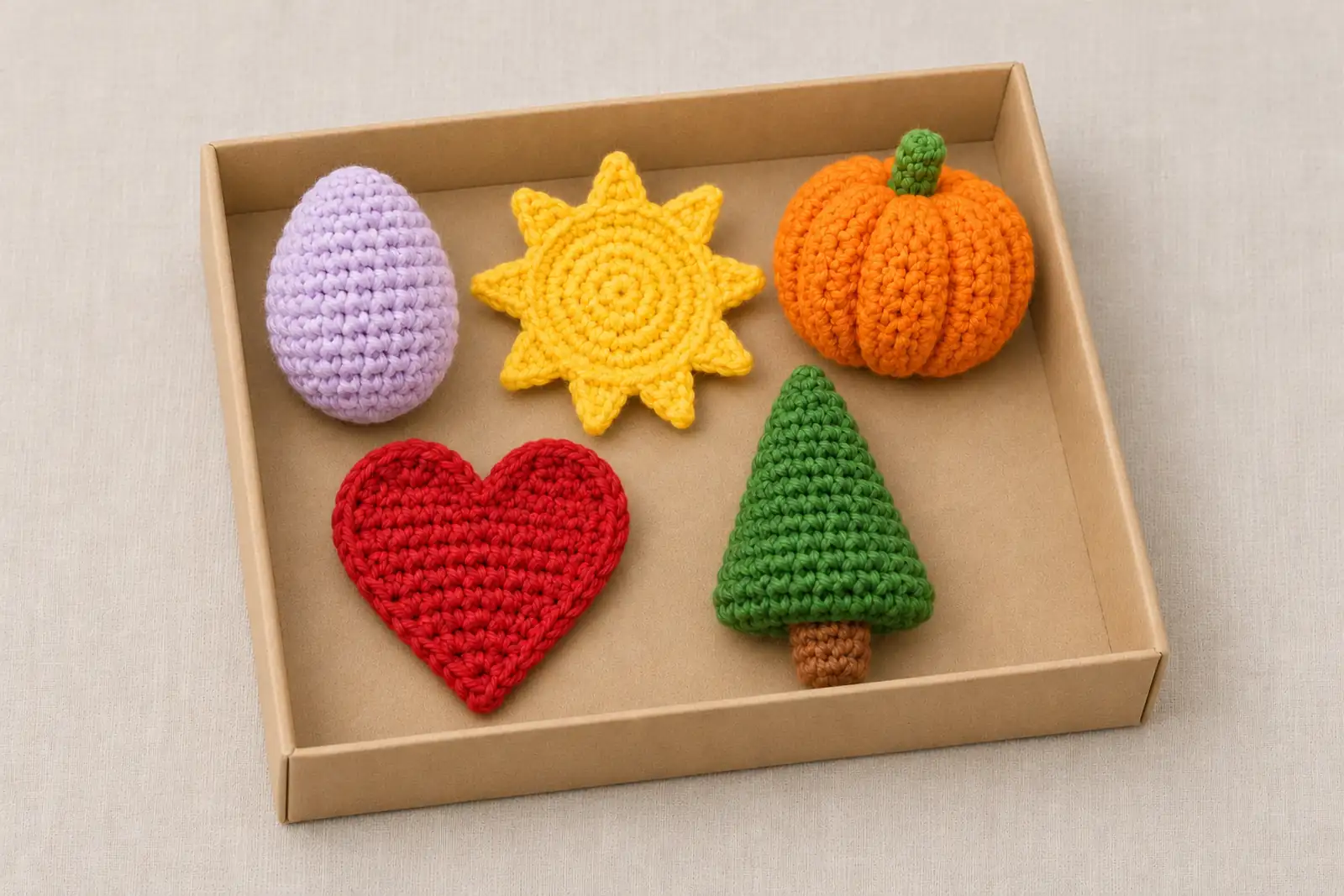
A plain shallow cardboard box holding five small finished cream crochet shapes A small box of finished minis, ready for a surprise gift.
Yarn and Color for Seasonal Makes

Seasonal colors are strong colors, so the yarn deserves a check before it goes into a gift. The cotton and acrylic guide compares the fibers. Two quick checks come first: the care label and a bleed test, before any yarn goes into a gift.

Fibers and Care Labels

Match the fiber to the season and the gift, read the care label before you wash, and keep a label for each yarn you use. Cotton and linen suit warm weather and bags, while acrylic and wool suit cold-weather pieces, and the cotton and acrylic guide compares two common fibers. A gift needs the care information attached, as the gifts section above says, and the yarn label guide explains the symbols. Many yarn labels recommend hand-washing, so the label decides how a gift is washed, and the label also names the weight and a suggested hook. Keep the labels together with the pattern. Swatch before you start: if you count more stitches in 4 in (10 cm) than the pattern’s gauge, the fabric is tight, so go up a hook size.

Red and Dark Yarn: Test Before You Gift

Bold dark colors such as red, blue and black carry the highest risk of bleeding, according to one guide. Bleeding can happen when a yarn has excess or poorly fixed dye, and hand-dyed and gradient yarns are more prone to it. The same guide rates cotton, viscose and linen higher risk than acrylic and polyester, and the cotton and acrylic guide covers cotton. I wash a swatch of red or dark yarn and look at the water before I use it in a gift. To test, soak a swatch of all the colors together in lukewarm water for at least 20 minutes, then check the water and a light scrap. If a yarn bleeds, rinse the skein until the water runs clear. The best yarn for granny squares guide has the test in more detail.

Seasonal Toys and Ornaments for Children

Holiday crochet often ends up in a child’s hands, so decide the eyes and small parts before you start. This is maker guidance, not a safety standard. The crochet toys and games guide covers materials and age notes, and amigurumi safety eyes covers the eyes.

Eyes and Small Parts on Holiday Toys

For babies and very young children, guides say to embroider the eyes with yarn and never to use buttons, and rules differ by country. Under one year, guides prefer yarn eyes, and guides differ on plastic safety eyes for toddlers. For children under three, guides say to avoid small parts that could come off, use fiberfill only, work tight stitches and weave in every end. Many guides use about 1¼ in (3 cm) as the size of a small part and keep ribbons under 12 in (30 cm), though sources vary. This applies to a Santa, a snowman, a bunny or a ghost the same way. Check your own country’s rules; this page calls no eye or toy safe. See the safety eyes guide and the toys and games guide.

Ornaments Within Reach

One health site advises placing ornaments at the top of the tree, out of children’s reach, and not using decorations that are falling apart. The same site says to attach ornaments firmly to the branches. A crochet ornament with plastic eyes, beads or buttons carries the same small-part points as a toy, so see the points above. Check a handmade ornament for loose threads and loose parts before it goes on the tree each year. This is one site’s advice, not a safety standard, and this page calls no ornament safe. The same site says to avoid glass ornaments, and it adds that small objects are a common choking hazard, so it says to check the age label on anything with small parts. The toys and games guide has more on materials.

Frequently Asked Questions

When should I start crocheting for Christmas?

Count back from your finish date and start the biggest piece first; one planning page suggests September or October for a mid-December blanket. Small pieces fill the gaps, and the same page says to finish about a week early for blocking and wrapping. Sources differ, so this page gives no date. The holiday planning guide has the schedule, and the planning section above has the short version.

What seasonal crochet projects can I finish in an evening?

Small pieces such as a heart, an egg, a mini ghost, a keychain or an ornament can be finished in an evening. Times vary with the pattern, the stitch and the yarn, and one page claims 10 to 20 minutes for no-sew minis in super bulky plush yarn, which is that page’s claim. See the table in the planning section above and the small gifts section.

Which yarn is best for summer crochet?

Web guides favor cotton, bamboo blends and linen for summer crochet because they are breathable, worked in open stitches such as mesh for wearables. Cotton blends and mercerized cotton are also common, and weight advice differs between pages, so check the label and swatch before you buy. See the summer guide and the cotton and acrylic guide.

Can red yarn bleed when I wash a crochet gift?

Yes, red yarn can bleed: one guide rates bold dark colors such as red, blue and black as the highest risk. It also rates cotton, viscose and linen higher risk than acrylic, and says any color can bleed occasionally. Soak a swatch of all the colors in lukewarm water for at least 20 minutes and check the water. See the granny square yarn guide and the yarn and color section above.

Are handmade crochet toys and ornaments suitable for small children?

Not by default: guides say to embroider the eyes for babies under one year and avoid small parts that could come off for children under three. They also say to use fiberfill only and work tight stitches, and one health site says to place ornaments at the top of the tree, out of reach. Rules differ by country, so check yours; this page calls no toy or ornament safe. See the toys and games guide and the safety eyes guide.

How many crochet gifts can I make before the holidays?

Count your own pace first: one blog suggests 2 small items a week and 1 large gift every 3 weeks, which gives about 32 small and 5 large over 16 weeks, and another suggests 1 to 2 main projects a month plus 1 to 3 quick gifts. These are examples, not rules. See the holiday planning guide and the gifts section above.

The eight guides behind this page, in calendar order, each with the question it answers:

For project types, see the project guides, and to track your work, the digital planner, which helps when several projects run at once. Browse all the holiday patterns too, and start with the guide for the date that comes first.

Portrait of Linda Davidsen

Written by

Linda Davidsen

Designer & founder

Linda has been crocheting for over 15 years and designs cozy, beginner-friendly patterns that anyone can finish in a weekend.

Keep reading

All posts