
🧶 Yarn Calculator

Try

Visit our Etsy Shops

Pick a shop to browse. Each one opens on Etsy in a new tab.

Color & Design

Amigurumi Color Guide: How to Choose Colors for Characters

Amigurumi color guide: give each color a job, choose animal, pastel and fantasy palettes, make eyes and muzzles stand out, and swatch in the round first.

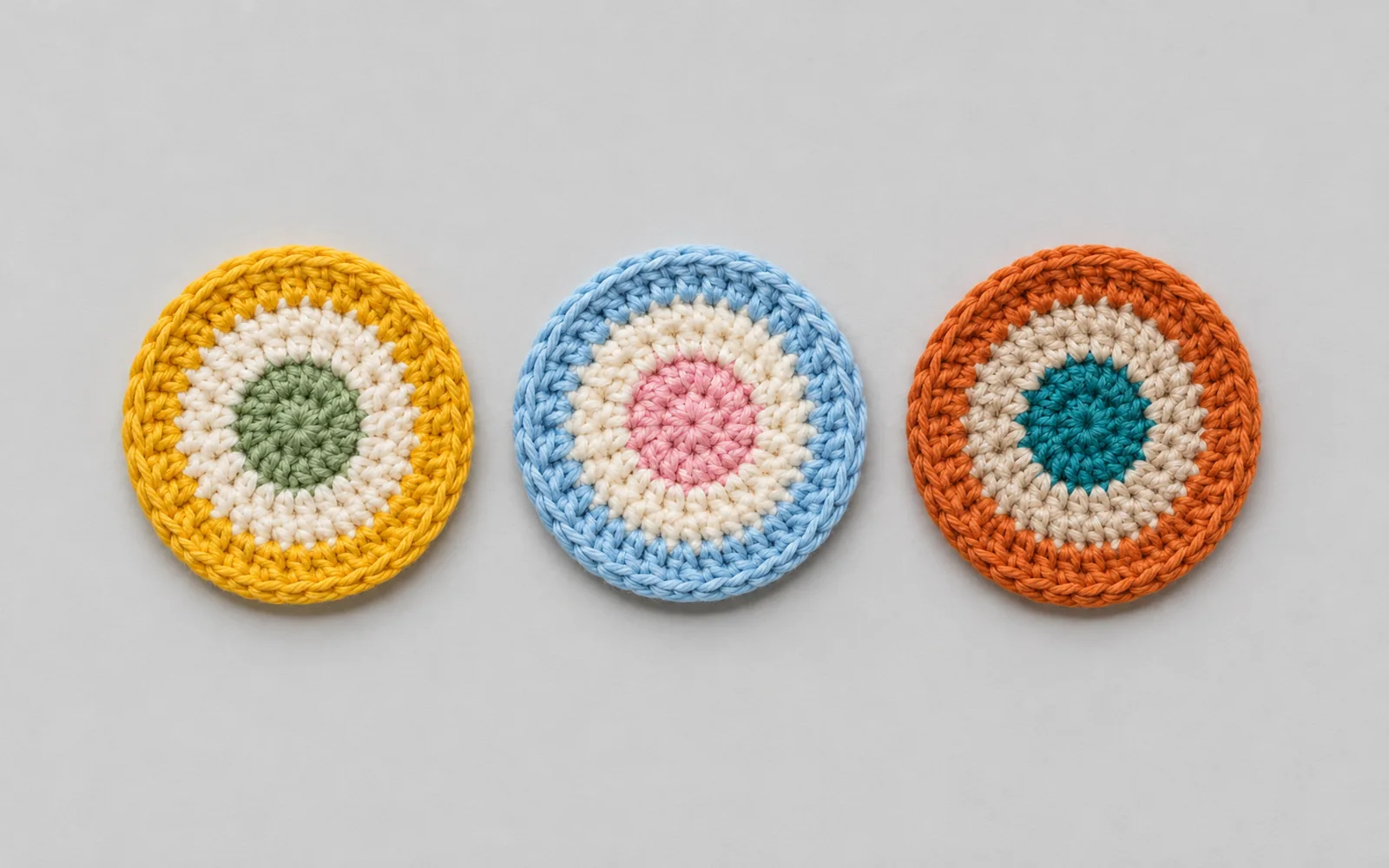
Three round crochet circles, each in a different three-color amigurumi palette
Table of Contents
  1. Give Each Color a Job
  2. Animal Colors and Skin Tones
  3. Pastel, Bright and Fantasy Palettes
  4. Eyes, Muzzle and Mouth Contrast
  5. Dark and Light Yarn on Toys
  6. Test Your Colors Before You Commit
  7. Key Takeaways
  8. Frequently Asked Questions

Quick answer: An amigurumi color guide starts with one main color for the body. Give every other color a job, such as belly, muzzle or accent, and keep the palette to two or three colors. Make the eyes stand out from the face, and crochet a small swatch in the round before you start.

You have a pattern and a pile of yarn, and the colors do not look right together once the toy is finished. The belly blends into the body, the eyes vanish into a dark face, or the whole character looks busy instead of cute. Small toys show color mistakes fast.

This amigurumi color guide covers how to give each color a job, how to choose animal, pastel and fantasy palettes, and how to make eyes and muzzles stand out. It also covers dark and light yarn and how to test your colors before you start.

I crochet one small swatch in the round to see how the colors sit together before I start the toy. It costs a little yarn and shows me a bad pairing early.

Give Each Color a Job

A toy looks planned when every color has a job, and choosing the main color first makes the rest easier. The crochet color theory guide covers the basics. Both parts come before the first stitch. Two parts follow: body, belly and accent, then keeping the palette short.

Body, Belly and Accent

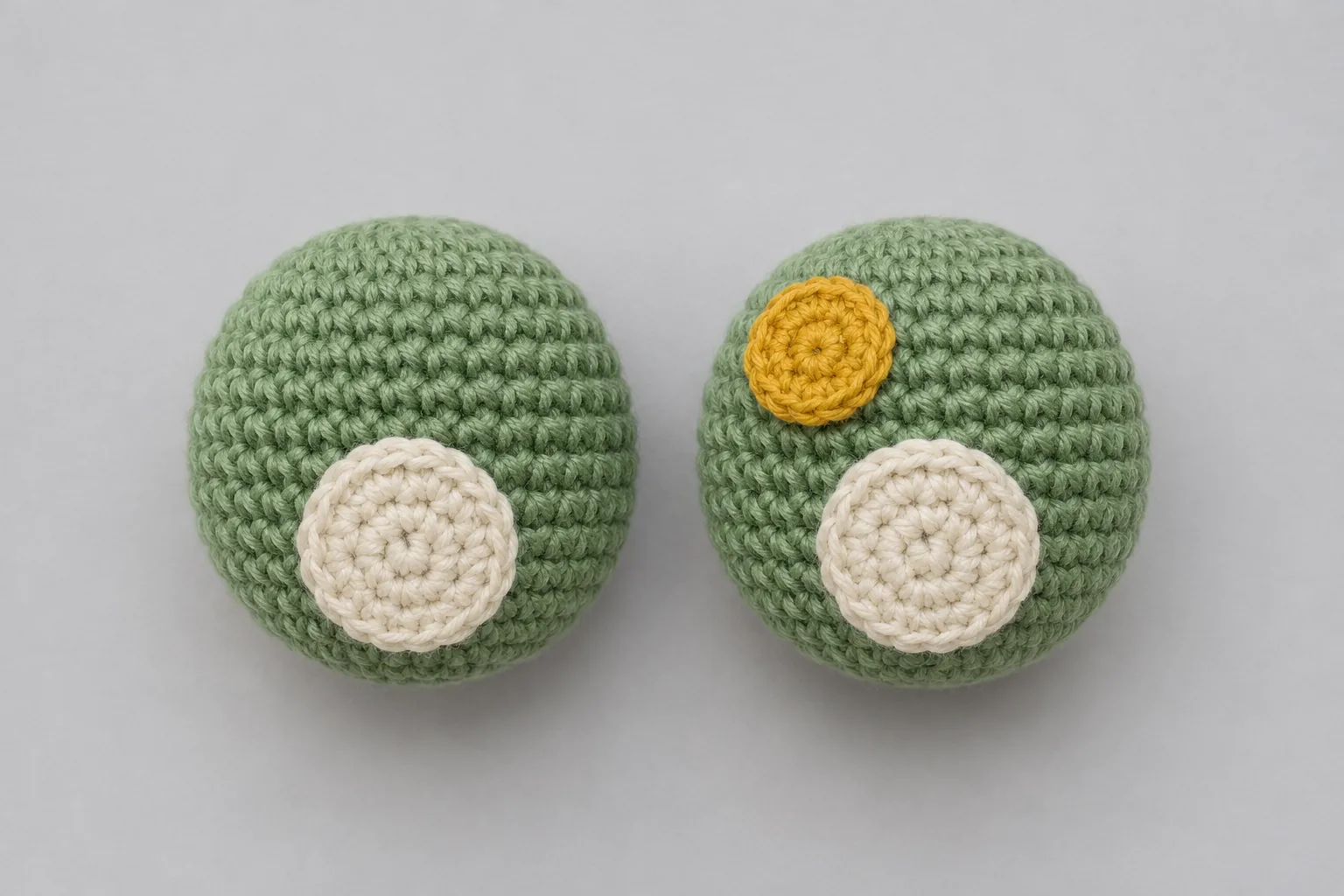
Pick the main color for the body first, then give each other color one clear job. One page suggests a main color for the body, an accent for the belly and a third color for spikes or wings. If the result looks wrong, swap the roles until it works, and use the brighter of the colors as the accent. Dragons often have a belly color that differs from the main color. A calm body color helps the others show, and the neutral crochet colors guide covers quiet choices. The photo shows two colors, then the same two with a small accent.

Two small stuffed sage crochet balls for an amigurumi color guide, one with a cream belly patch and one with a belly patch and a small mustard accent Two colors, and the same two with a small third color as an accent.
Keep the Palette Short

Two or three well-chosen colors are enough for most characters, and every extra color adds a join, an end to weave in and another shade to match. A pattern-adapting page says to keep it simple and not to aim for a perfect match, and to use embroidery instead of many color changes. A learner book makes its teddy bear from one yarn for the body and a second for the muzzle, with the nose and mouth embroidered. See how to change yarn color in crochet for neat joins.

Try the Teddy Bear Amigurumi.

Animal Colors and Skin Tones

A character can follow real colors closely or only suggest them, and either way the choice is easier when the palette starts from a few key colors. Neither needs a perfect match. Two parts follow: animal colors, then skin tones for dolls and characters.

Animal Colors

Natural colors such as beige, brown and moss green suit wild animals and a rustic look, according to one page. To copy a real animal, a pattern-adapting page says to start with the yarn colors that most closely match your subject. It says to make one sample in the original colors, note which ones look wrong and expect several attempts. A cat in an invented color is also a fine choice, because the character only needs each color to have a clear job. Pick the body color first and match the belly and muzzle to it.

Try the Cat Amigurumi.

Skin Tones for Dolls and Characters

Skin-toned yarn is easiest to judge side by side. Lay several tones from one yarn line together in daylight before you choose, because a tone that looks right alone can look pink, gray or yellow beside the others. Choose the skin tone before the hair and clothing colors, since those are easier to match to it than the other way around. A doll’s face is a small area, so a small difference in tone is easy to see and hard to change after the face is stitched. Check the tones again under a lamp, since they can shift.

Pastel, Bright and Fantasy Palettes

The mood of a character comes from its palette: soft tones feel gentle, and bright tones feel lively. Each kind of palette still follows the same rule of one main color and a few jobs. Two parts follow: pastel palettes, then bright and fantasy palettes.

Pastel Palettes

Pastels such as baby pink, light blue and soft lilac give an amigurumi character a gentle, tender look, and one page says they suit bunnies, bears and delicate pieces. Pastels can wash out against cream, so give the belly or muzzle a slightly deeper shade or a different hue from the body. That is general practice and not a rule. Keep the palette to two or three colors, with one pastel as the main color and the others in supporting jobs. Stitched features in a darker color keep a soft face from disappearing.

Bright and Fantasy Palettes

Bright palettes of red, yellow, orange and green suit lively characters, according to one page, and a fantasy character can use any colors if each one has a clear job. Another page says two colors from opposite sides of the wheel are bold and good for standout details, and three colors spaced evenly around the wheel suit cartoony characters and kids’ toys. Fantasy characters have no real color to match, so use the same roles: a main color, an accent and a detail color. See how to choose yarn colors for how the pairs work.

Try the Axolotl.

Eyes, Muzzle and Mouth Contrast

The face is where a viewer looks first, so its colors need more contrast than the body does. The contrasting colors in crochet guide covers bold pairs. Both areas are small, so a little color goes a long way. Two parts follow: eye contrast, then muzzle, mouth and accents.

Eye Contrast

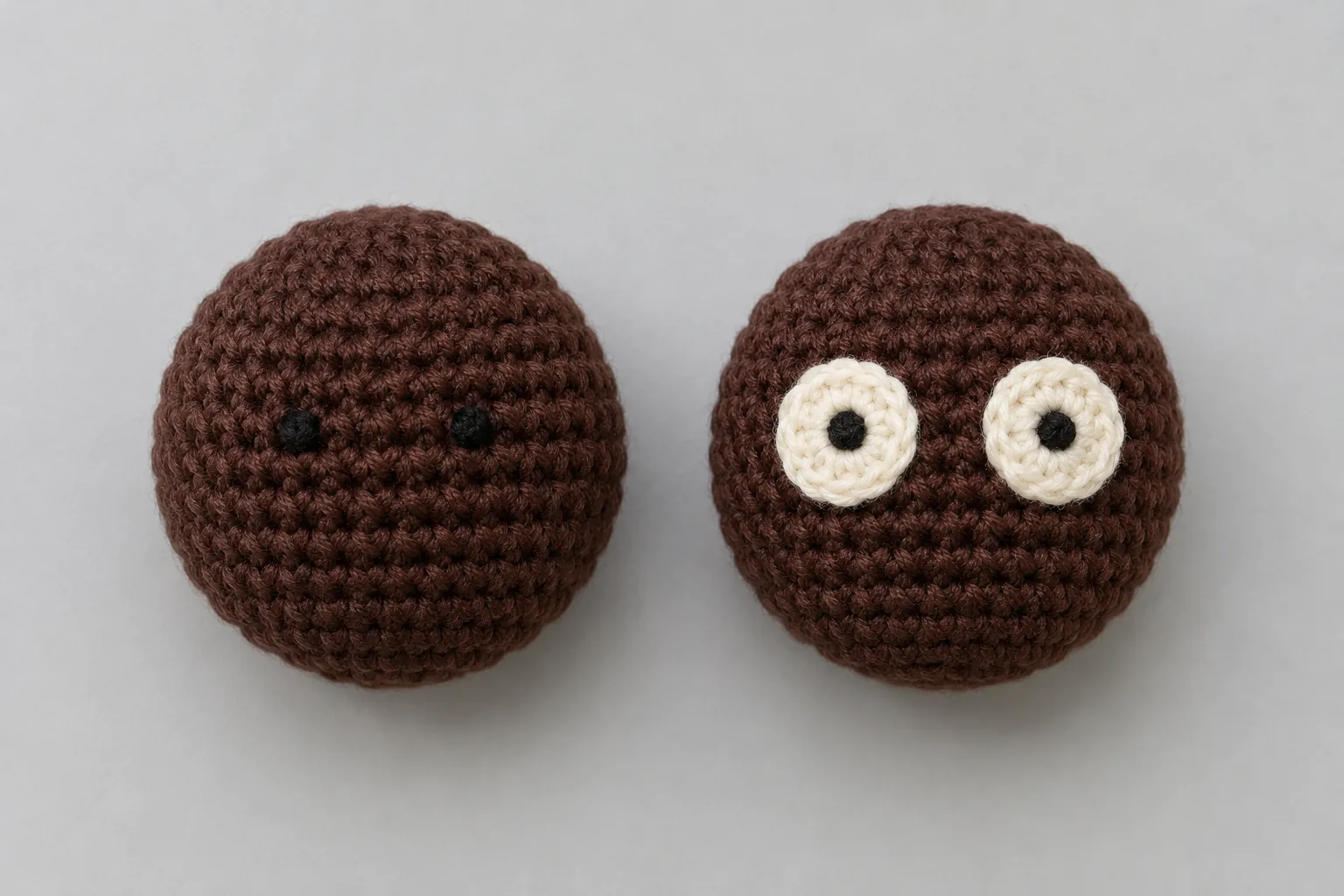
Make an eye stand out by placing a darker pupil on a lighter surround, and on a dark character add a lighter backing that is not pure white. One page backs solid black eyes with a larger felt circle, lighter than the main color but not too light, since white can look scared. For a baby or very young child, embroider the eyes or use special toy eyes that meet current regulations, never buttons. Guides prefer yarn eyes under one year, and they differ on plastic eyes for toddlers. This page calls no toy, eye or part safe. See amigurumi safety eyes for types and the crochet toys and games guide for age rules.

Two small dark brown stuffed crochet balls side by side with black embroidered eyes, the left on the brown and the right on small cream patches Black embroidered eyes on dark brown, plain and on small cream patches.
Muzzle, Mouth and Accents

One page says warm colors stand out and cool colors recede, so a warm pink mouth or ear lining draws the eye to that part of an amigurumi character. It says warm pink or red lips draw the eye to the mouth, lining the ears with pink makes them stand out, and strong contrast draws the eye to one element. A learner book sews the muzzle onto the face with a whipstitch in the muzzle’s color, then embroiders the nose and mouth, which gives the character its personality. I use my brightest color for the smallest part of the character.

Dark and Light Yarn on Toys

Dark yarn is harder to see while you work, and white stuffing can show through gaps in yarn that is not white, so each needs a different habit. Lighter solid colors make stitches easier to see. Two parts follow: working with dark yarn, then stopping stuffing from showing.

Working With Dark Yarn

Dark yarn is harder to see, so work in bright, diffused light against a white background and use stitch markers to keep your place. A learner book says black makes the work harder to see and does not show texture at its best. A black-yarn page adds a round counter and says to mix in other colors, because contrasting colors break up the black stitches and help you find your place. One page says lighter solid colors make individual stitches easier to see. If a pattern needs black, plan one lighter color nearby so you can count rounds easily.

Stop Stuffing From Showing

Stuffing shows through gaps in the stitches, so use a smaller hook, work in the back loop only or fill the toy with stuffing that matches the yarn. One page says stuffing is usually white and yarn usually is not, so the white shows through gaps. It lists back loop only for fewer gaps, a smaller hook for tighter stitches, less stuffing in decorative toys and colored fill. A learner book says to use a hook one or two sizes smaller than the label suggests for toys. See how to make amigurumi for building toys and best yarn for amigurumi for yarn.

Test Your Colors Before You Commit

A palette is easiest to judge before you have crocheted the toy, because changing it afterward means starting over. A few cheap tests catch most problems early. Two parts follow: previews with scraps and paper, then a swatch in the round.

Preview With Scraps and Paper

Preview an amigurumi palette with leftover yarn and shapes cut from felt or paper, and check it in natural light. One page says to test combinations on paper before you start and to use leftover yarn to try new palettes. Cut shapes the size of the belly, muzzle and eye patches and lay them on the main color, changing one color at a time so you can see what each change does. It says to photograph the colors in natural light, because phone cameras can exaggerate a bad combination. It also draws inspiration from cartoons, fashion and nature.

Swatch in the Round

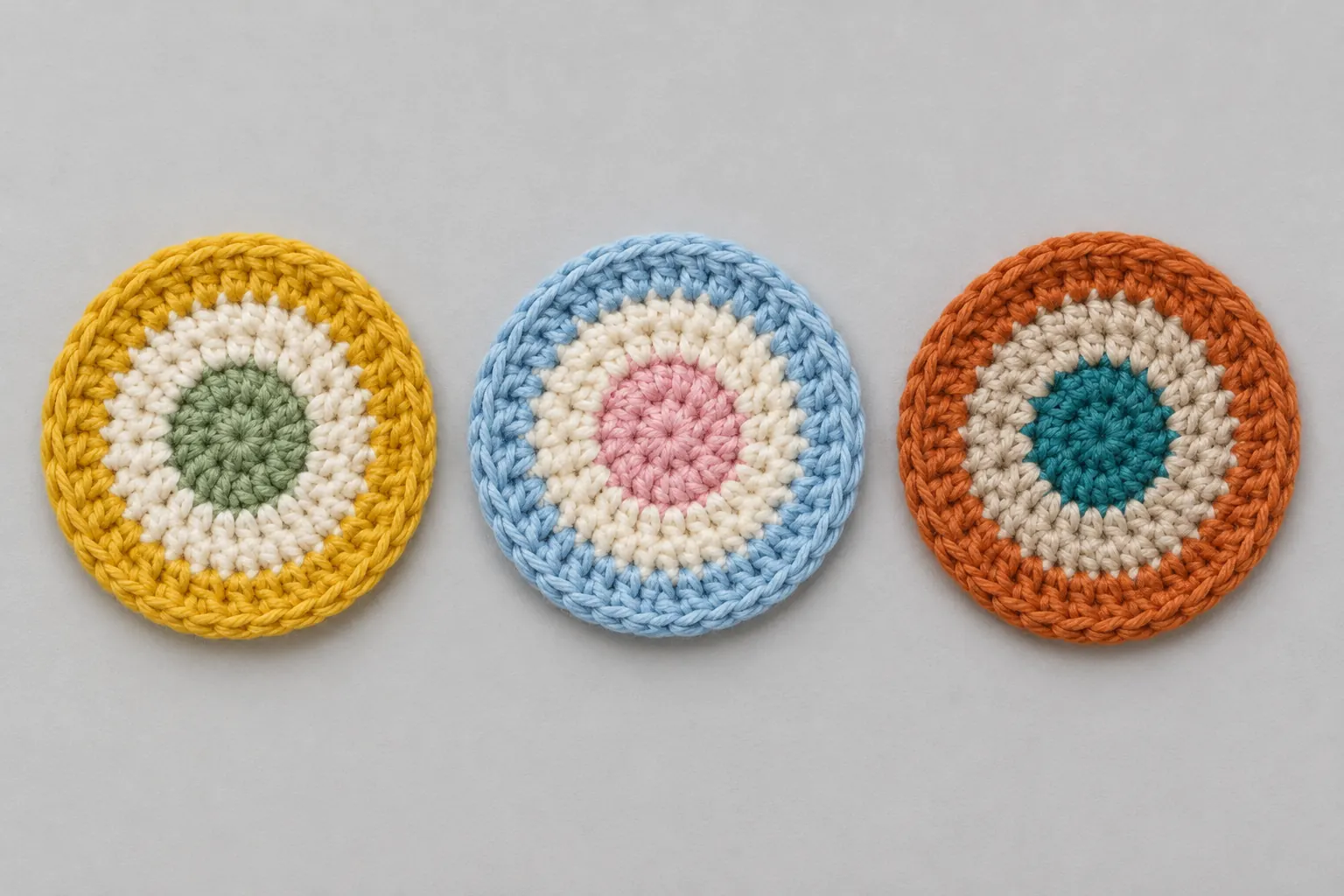
A small circle worked in the round shows how the colors interact before the real toy exists, so write down which ones to change. One page says to crochet a small swatch in the round, and a pattern-adapting page says to make a sample in the original colors, note which stitches have the wrong color and expect several attempts. A swatch also shows whether the fabric is tight enough for the stuffing. Working it in the same yarn and hook you plan to use gives the truest preview. The photo shows three palette tests. Browse amigurumi patterns for more.

Three small flat crochet circles in a row, each worked in the round in three bands of color from the center out, in three different palettes Three palette tests, each worked in the round in three colors.

Key Takeaways

  • An amigurumi color guide starts with one main color for the body, then gives every other color a job such as belly, muzzle or accent.
  • Two or three well-chosen colors are enough for most characters, and extra colors add joins and ends to weave in.
  • A darker pupil on a lighter surround makes an eye stand out, and on a dark character a lighter backing behind solid black eyes helps, as long as it is not pure white.
  • Dark yarn is harder to see while you work, and white stuffing can show through gaps in yarn that is not white.
  • Test a palette on scraps and paper, then on a small circle worked in the round, and note which colors to change before you begin the toy.

Frequently Asked Questions

How many colors should an amigurumi character have?

Two or three well-chosen colors are enough for most amigurumi characters, according to one page: a main color for the body, an accent such as a belly or muzzle, and sometimes a third for spikes, wings or small details. Extra colors add joins and ends to weave in, and small details can be embroidered instead. A pattern-adapting page says to keep it simple. The Give Each Color a Job section above has more.

How do I choose colors for an amigurumi character?

Choose the main color for the body first, then give each other color one job, such as belly, muzzle or accent. Swap the roles until it works, and use the brighter color as the accent. Pastel, bright and natural palettes suit different characters, and a fantasy character can use any colors. See the choosing colors guide for how pairs work. The Pastel, Bright and Fantasy Palettes section above has more.

Do amigurumi animals need realistic colors?

No. A pattern-adapting page says to start with the yarn colors that most closely match your subject and not to aim for a perfect match, and fantasy characters are not tied to real colors at all. Natural colors such as beige, brown and moss green suit wild animals, and an invented color can still look planned when each color has a job. The Animal Colors and Skin Tones section above has more.

What eye color works on a dark amigurumi character?

One page backs solid black eyes with a slightly larger circle of lighter felt, lighter than the main color but not too light, since white can look scared, or it uses eyes that already have color. For a baby or very young child, embroider the eyes or use special toy eyes that meet current regulations, never buttons. See the safety eyes guide. The Eyes, Muzzle and Mouth Contrast section above has more.

Should I swatch before I start an amigurumi project?

Yes. A small swatch in the round shows how the colors interact, and it also shows whether the fabric is tight enough for the stuffing. A pattern-adapting page says to make a sample in the original colors first, note which stitches have the wrong color and expect several attempts. Check the colors in natural light as well. The Test Your Colors Before You Commit section above has more.

Portrait of Linda Davidsen

Written by

Linda Davidsen

Designer & founder

Linda has been crocheting for over 15 years and designs cozy, beginner-friendly patterns that anyone can finish in a weekend.

Keep reading

All posts