🧶 Yarn Calculator

Try

Visit our Etsy Shops

Pick a shop to browse. Each one opens on Etsy in a new tab.

Crochet Projects

How to Crochet a Hat: Sizing for Adults and Kids

How to crochet a hat that fits: measure the head, choose ease, build the crown, set the depth and add a brim, with a size chart from babies to adults.

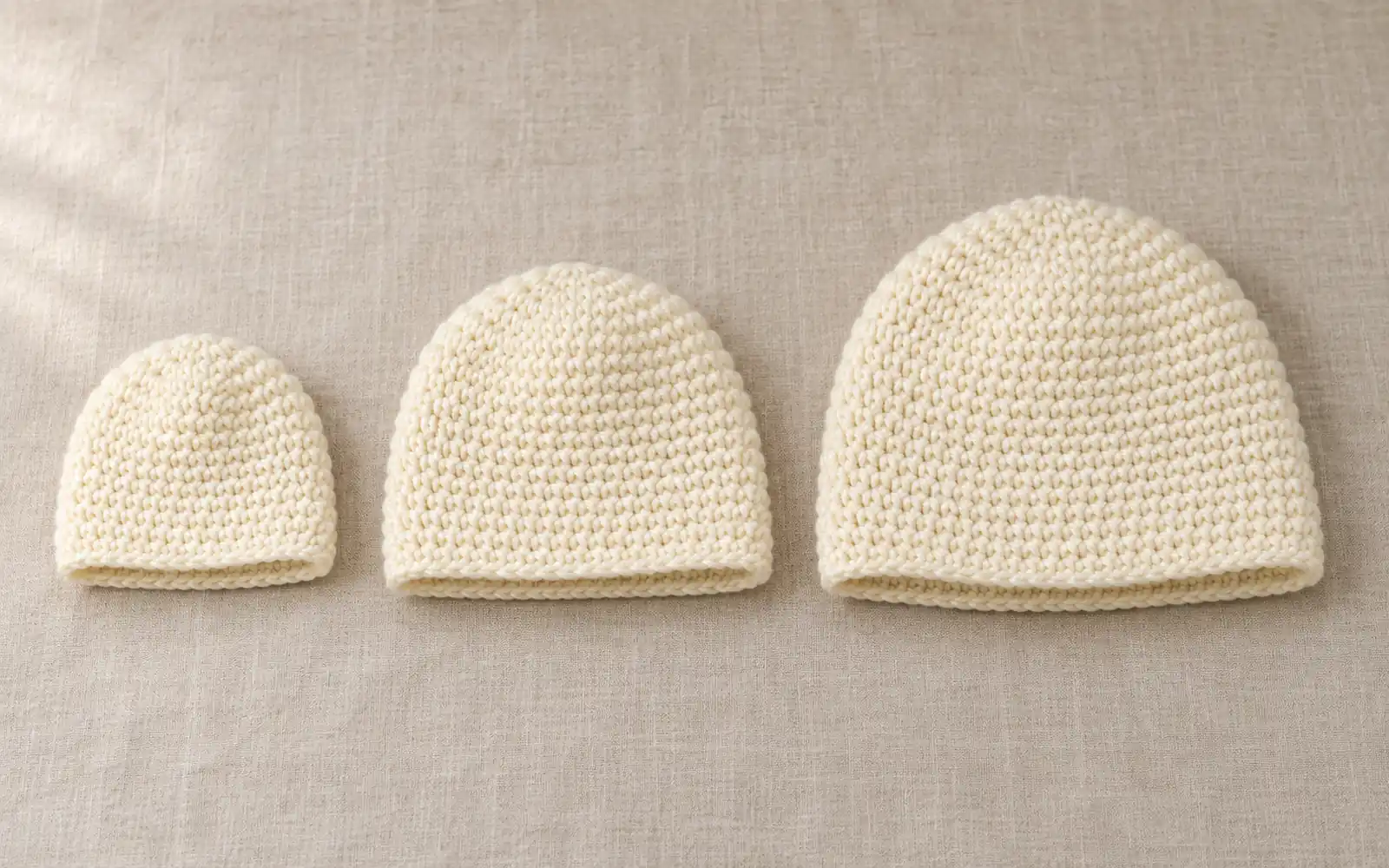
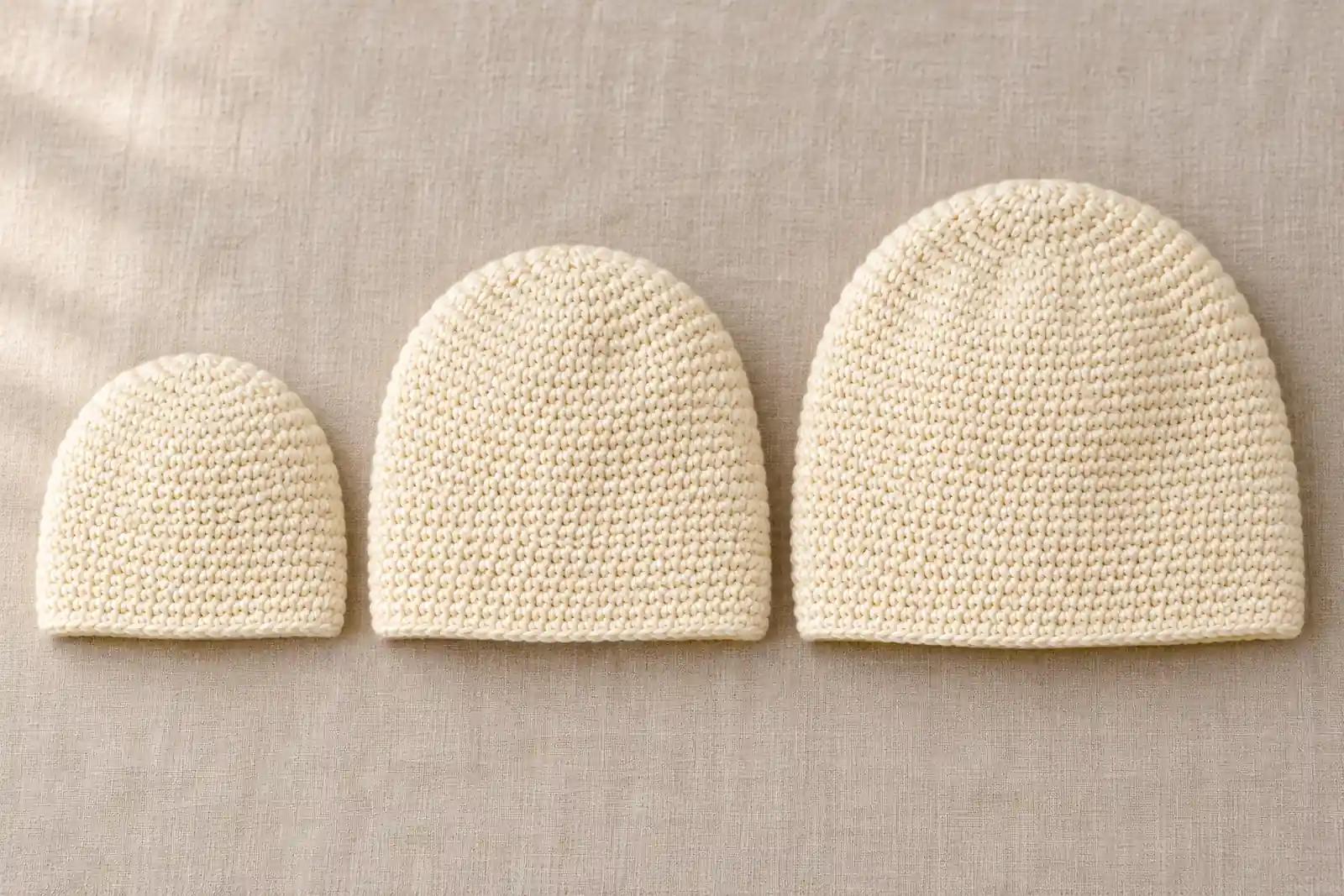
Three cream crochet hats in baby, child and adult sizes laid in a row on a linen-textured surface
Table of Contents
  1. Measure the Head
  2. Ease and a Size Chart
  3. Build a Top-Down Hat
  4. Three Ways to Build a Hat
  5. Depth, Slouch and the Brim
  6. Yarn, Gauge and Hats for Babies
  7. Common Problems and Fixes
  8. Key Takeaways
  9. Frequently Asked Questions

Quick answer: To learn how to crochet a hat that fits, measure the head, make the hat about 1 to 2 inches smaller, and divide that hat circumference by 3.14 for the crown diameter. Crochet a flat circle to that width, then work even rounds to the depth you need and add a brim.

You have a head to fit, and a hat pattern that says only ‘adult’ or ‘toddler’. Charts online disagree, a crown that looks right can come out too big, and a hat that is a little too large slides off the first time it is worn.

This guide covers how to measure, how much smaller to make the hat, a size chart from babies to adults, the crown, three ways to build a hat, depth, the brim, yarn and a problem table. Patterns to try sit beside the sections.

I measure the head, or a hat the person already wears, before I pick a size, because the age on a pattern is only a guess. Everything else follows from that one number, so I take it first.

Measure the Head

Every crochet hat starts from one number, the head circumference, and a hat is often the first project that has to fit. That is why gauge starts to pay off here; see the crochet project guides and the wearables patterns.

How to Measure

To measure for a crochet hat, wrap a soft tape or string around the widest part of the head, just above the eyebrows and the ears, snug but not tight. With string, mark where the ends meet and measure the string against a ruler. For depth, measure from the crown of the head to the base of the ear for a winter hat, or to the top of the ear for a summer hat. Write both numbers down in inches and centimeters. Left-handed makers work the same hat mirrored. A swatch settles the gauge; see the crochet hook size chart.

When You Cannot Measure

If you cannot measure the head, measure a hat the person already wears, or use the age chart as a guess. Lay the hat flat and double its width, and note whether it is stretchy, since a stretchy hat measures as it sits. Age charts are averages and heads vary, so a gift hat should be a little forgiving, with a stretchy stitch or a folded brim. Try the Baby Beanie.

Ease and a Size Chart

A crochet hat is made smaller than the head so the fabric stretches and stays on. This is the main difference from garment ease, and the next two sections give the range of ease and a size chart by age.

Negative Ease

A crochet hat is usually made about 1 to 2 inches smaller than the head, with sources ranging from 1 to 3 inches depending on the yarn and the stitch. Cotton needs less, about 1 inch, and a ribbed hat may need 2 to 3 inches; a fleece-lined hat is made larger. Check with a swatch and the hook size chart; for ease on a garment, see how to make a crochet cardigan.

A Size Chart by Age

A crochet hat size chart gives head circumference by age, from 9 to 12 inches for a preemie to 22 to 24 inches for an adult man, and the crown width follows from it.

Age Head circumference Flat crown diameter (at 2 in of ease) Depth (web charts)
Preemie 9 to 12 in 2¼ to 3¼ in 3½ to 4½ in
Baby 14 to 16 in 3¾ to 4½ in 4½ to 7½ in
Toddler 16 to 18 in 4½ to 5 in 6¼ to 8 in
Child 18 to 20 in 5 to 5¾ in 6½ to 8½ in
Tween 20 to 22 in 5¾ to 6¼ in 7¼ to 10 in
Adult woman 21 to 23 in 6 to 6¾ in 7½ to 11 in
Adult man 22 to 24 in 6¼ to 7 in 7¾ to 11½ in

Three plain cream crochet hats in a row in baby, child and adult sizes, set upright on their open edges in order of size Three hat sizes: baby, child and adult.
The photo above shows three hat sizes. The Craft Yarn Council lists head circumference only. Head sizes are averages and charts vary, so check the head and a swatch; crown and depth figures are rounded.

Build a Top-Down Hat

A top-down crochet hat is a flat circle that grows until it is as wide as the hat, then a tube worked in even rounds. This section gives the crown formula, a worked example and the hat in six steps.

The Crown Formula and a Worked Example

The crown of a top-down crochet hat is a flat circle as wide as the hat circumference divided by 3.14, so a 20 inch hat has a crown about 6.4 inches across. Start with a magic ring and increase evenly until the circle reaches that width, then stop increasing and work even rounds. How many stitches to add each round depends on the stitch and the pattern, and a flat circle in single crochet usually adds 6. Example only: a 22 inch head with 2 inches of ease gives a 20 inch hat. Try the Modern Diamond Beanie.

A Top-Down Hat in Six Steps

To crochet a top-down hat, measure the head, subtract 1 to 2 inches, divide by 3.14 for the crown width, crochet a flat circle to that width, then work even rounds to the depth.

  1. Measure the head where the hat will sit.
  2. Subtract the ease, about 1 to 2 in, for the hat circumference.
  3. Divide that by 3.14 for the crown diameter.
  4. Crochet a flat circle, adding stitches evenly, until it is that wide.
  5. Stop increasing and work even rounds to the depth you measured.
  6. Add the brim, then weave in the ends.

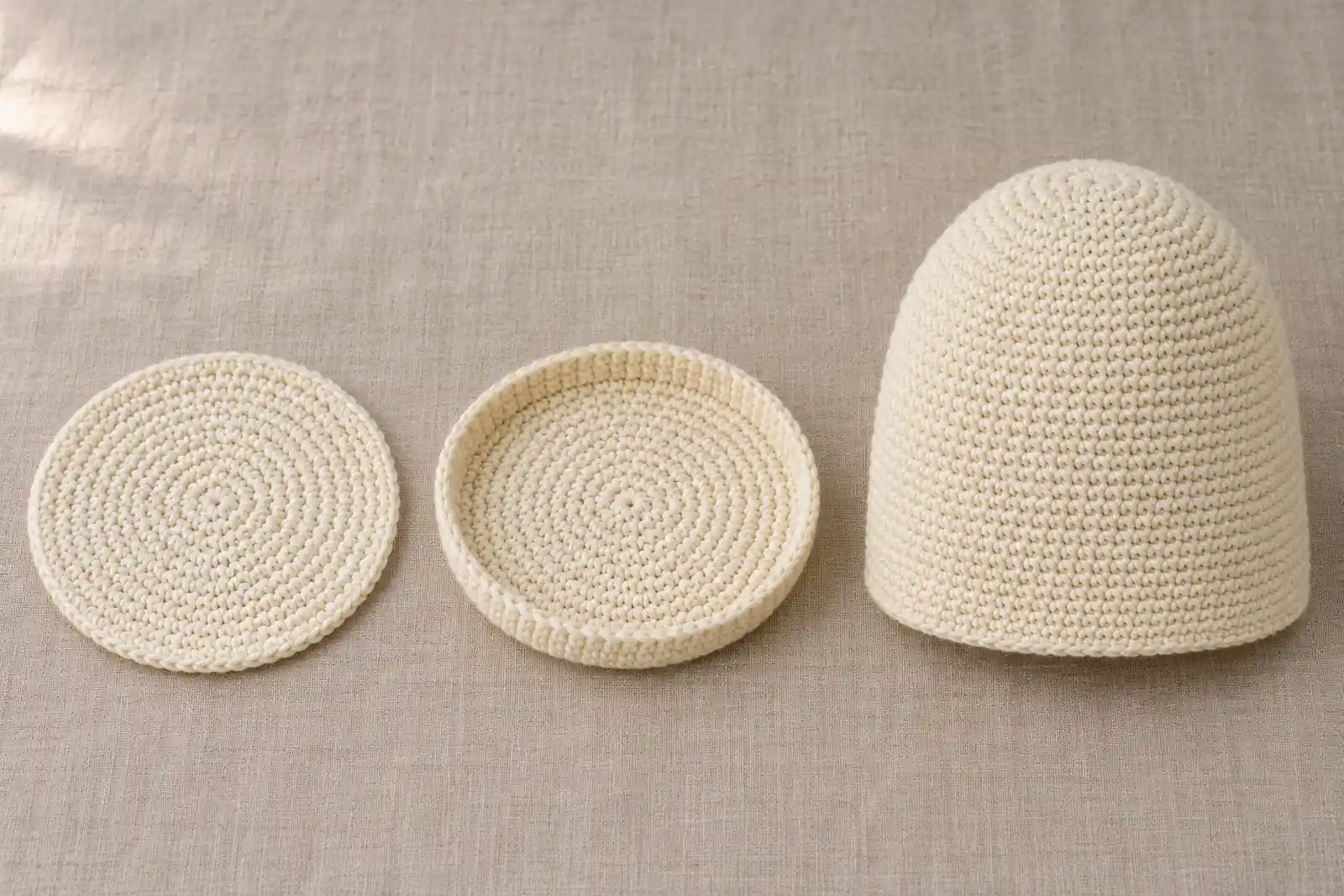
I stop increasing when the flat circle is as wide as my target, and I check by laying it flat on a table. A circle that curls into a bowl has too few increases, and one that ruffles has too many. Rounds can be joined or spiraled; see how to crochet in the round. The photo below shows the crown in three stages.

How to crochet a hat shown in three stages: a flat cream crochet circle, the same circle with a few even rounds forming a shallow bowl, and the finished hat The crown in three stages: a flat circle, a shallow bowl and the finished hat.
Three Ways to Build a Hat

There are three common ways to crochet a hat: flat and seamed, top-down in the round, and bottom-up in the round, and the sizing numbers are the same for all three. They trade ease of making for a neater finish, and any beanie pattern uses one.

Flat and Seamed

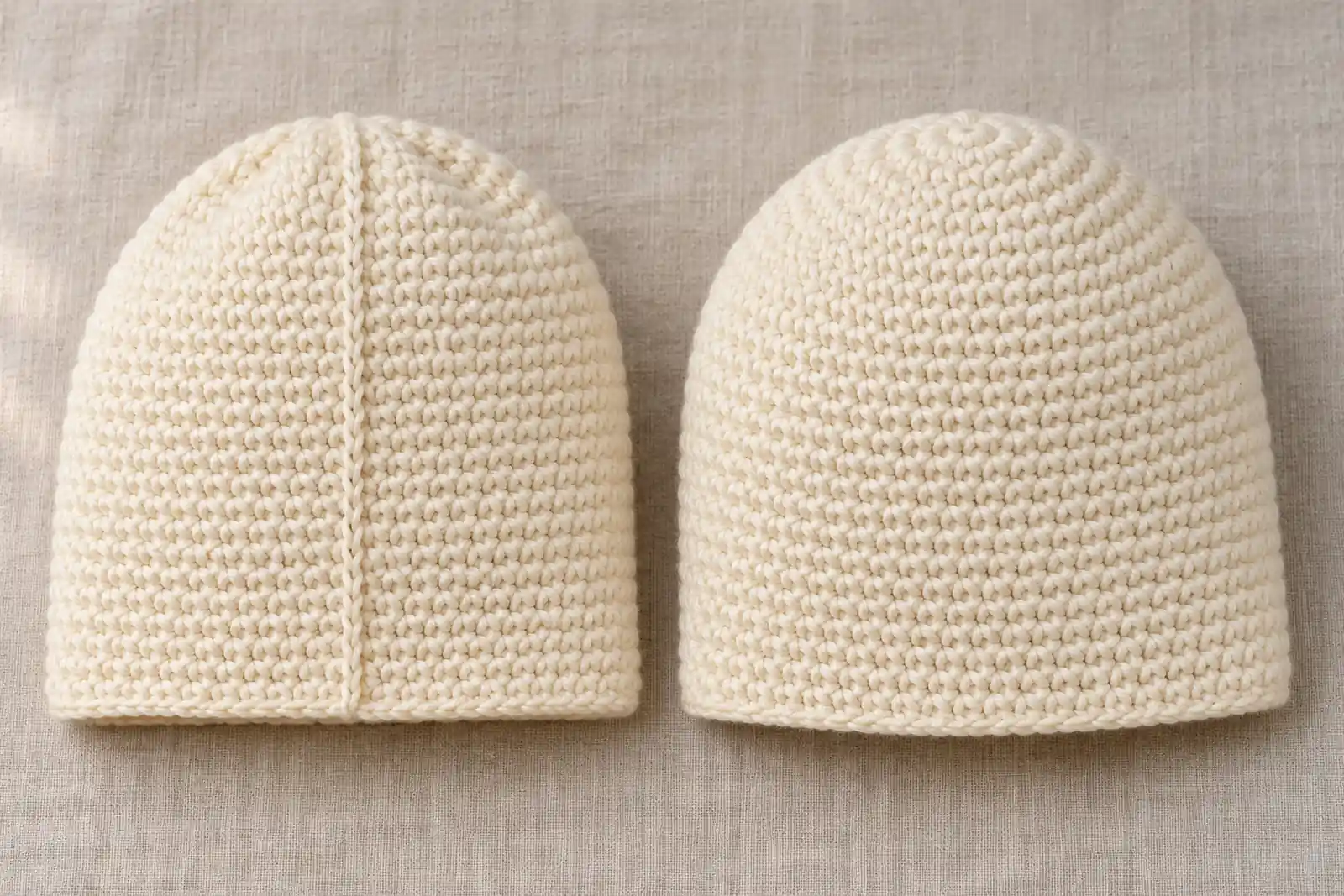
A flat, seamed crochet hat is chained to the hat circumference, worked in rows to the depth, folded, seamed at the side and gathered at the top. It has no crown shaping and no decreases, so the seam and the gathered top show, and some patterns work the rows around the head instead. Two learner books give the same hat with the same gauge, one stating 17¾ in around and the other 20 in, so multiply the rows by the gauge and check against the head; see how to read a crochet pattern. The photo below shows a seamed hat beside a round one.

A cream flat seamed crochet hat with its side seam visible beside a cream round crochet hat with no seam A flat seamed hat (left) and a hat worked in the round (right).
In the Round: Top-Down and Bottom-Up

A top-down crochet hat starts with a flat circle and then works even rounds, and a bottom-up hat starts with a chain ring and closes at the top. A bottom-up hat chains to the hat circumference, joins into a ring and works even rounds with no increases, then gathers the top like a drawstring, adding about an inch to the length. One tutorial says it can be worked to the full measured length, because the stretch allowance and the gathered top roughly cancel out. Only top-down has increases, and neither has a seam. Both start from a chain ring or the magic ring and can be joined or spiraled; see working in the round.

Depth, Slouch and the Brim

Depth and the brim decide whether a crochet hat covers the ears and stays on. A winter hat needs more depth than a summer one; the sections below cover depth, slouch and a ribbed brim, and how to check each as you go.

Depth and Slouch

The depth of a crochet hat is measured from the crown of the head to the base of the ear for a winter hat, with extra length for a folded brim or a slouch. A folded brim adds about 1 inch, and web charts give slouch heights from about 5 inches for a newborn to 12 for a large adult. Charts differ by 3 to 4 inches for an adult because they measure to different places,. Try the hat on when the even rounds reach the ear; the hook size chart covers gauge.

Brim and Ribbing

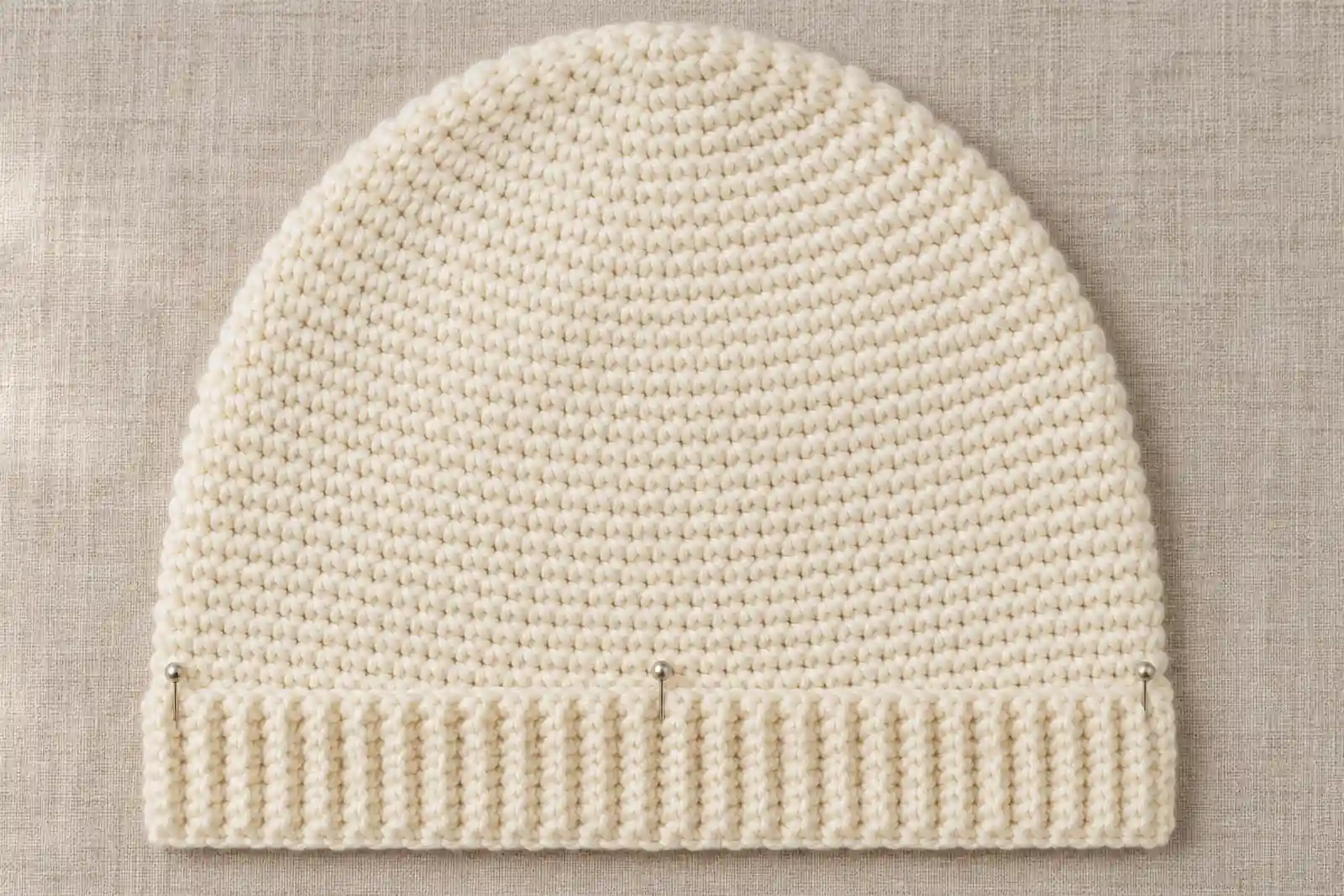
Crochet hat ribbing is worked flat in single crochet through the back loop only, then folded and joined, or in the round as front and back post stitches. A flat band 7 to 12 stitches wide is common; folding it double makes a folded brim, which stretches less. Ribbing stretches with wear, so work fewer stitches around the edge than there are ribbing rows, and a ribbed hat may need 2 to 3 inches less ease. I pin the ribbing slightly stretched against the hat edge before I join it, so I can see if it is snug. See working in the round for working into the edge. The photo below shows the pinned band.

A cream crochet ribbing band pinned slightly stretched along the bottom edge of a cream crochet hat lying flat on a light surface Pin the ribbing slightly stretched against the hat edge before you join it.

Yarn, Gauge and Hats for Babies

The yarn and the gauge decide how much a crochet hat stretches and how warm it is, and a baby’s hat has a few extra checks. The first section covers yarn and gauge, and the second the extra checks for a baby’s hat.

Yarn and Gauge for Hats

Swatch before you start a crochet hat, because the gauge sets the fit, and go up a hook size if you have more stitches than the gauge calls for. Some guides suggest wool for hats, and a learner book uses aran for an adult’s beanie and DK for children’s hats. Cotton stretches less than wool or acrylic, so it needs less ease, and fiber changes warmth and care, so check the label. See the hook size chart, the crochet yarn weight guide and cotton vs acrylic yarn. The pattern’s yarn wins.

Hats for Babies

Guides say to avoid long ties, chin straps and loosely attached pom-poms or buttons on a baby’s crochet hat, and rules differ by country. One retailer page calls these choking or strangulation hazards, and one page citing US safe-sleep guidance says a baby should not sleep in a hat. Measure the head and use the age chart as a guess. Check your own country’s rules and ask the child’s doctor; this page calls no hat safe. See best yarn for baby crochet, the crochet toys and games guide for small parts and ribbons, and the crochet baby blanket guide for a matching set.

Common Problems and Fixes

Most crochet hat problems come from the ease, the crown or the brim, and each has a quick fix. The table gives the likely cause and the fix for six common ones, and each follows advice from the sections above.

Problem, Cause and Fix

A hat that is too tight, too loose, coned at the crown or flared at the brim are the most common crochet hat problems.

Problem Likely cause Fix
The hat is too tight Too much negative ease, or a dense yarn Use less ease, a larger hook or a stretchier stitch
The hat is too loose Too little ease, or a stretchy yarn Subtract more, a smaller hook or fewer brim stitches
The crown forms a cone Too few increases Add increases and lay the circle flat to check
The crown ruffles Too many increases Take out a round and add fewer
The brim flares or stretches Ribbing too long or too loose Pin it slightly stretched and work fewer edge stitches
The hat is too short or too long Depth measured to a different spot Re-measure to the base of the ear and adjust the even rounds

Key Takeaways

  • Measure the head where the hat will sit, or a hat the person already wears, because the age on a pattern is only a guess.
  • Make the hat about 1 to 2 inches smaller than the head, with less for low-stretch yarn and more for ribbing, and check with a swatch.
  • The crown of a top-down hat is a flat circle as wide as the hat circumference divided by 3.14, then even rounds to the depth.
  • Depth is measured to the base of the ear for a winter hat, with extra for a folded brim or a slouch.
  • For a baby, avoid long ties and loose pom-poms or buttons, and check the rules where you live.

Frequently Asked Questions

What size should a crochet hat be for an adult?

Measure the head and make the hat about 1 to 2 inches smaller, so a 22 inch head gets a hat of about 20 to 21 inches. The Craft Yarn Council lists 21 to 23 inches for a woman and 22 to 24 for a man. At 2 inches of ease, a 20 inch hat has a flat crown about 6.4 inches across. The Measure the Head, Ease and Build a Top-Down Hat sections above have more.

How much smaller than the head should a crochet hat be?

About 1 to 2 inches, and sources range from 1 to 3 inches. Use about 1 inch for a low-stretch yarn such as cotton, about 2 inches for a snug acrylic or wool beanie, and 2 to 3 inches for ribbing. Check with a swatch, and see the hook size chart for gauge. The Ease and a Size Chart section above has more.

What is the easiest way to crochet a hat for a beginner?

The easiest way to crochet a hat is flat and seamed: chain to the hat circumference, work single crochet rows to the depth plus about an inch, fold it, slip stitch the side and gather the top. It needs no crown shaping. A top-down hat is the next step. The Three Ways to Build a Hat section above compares the builds.

How do I make a crochet hat slouchy?

To make a crochet hat slouchy, work extra even rounds after the crown, because web charts give a slouch height of about 5 to 12 inches depending on size. A folded brim uses part of that length, so keep the ease the same and try the hat on as you go. The Depth, Slouch and the Brim section above has more.

Is it safe to put a crochet hat on a baby?

Not by default: guides say to avoid long ties, chin straps and loosely attached pom-poms or buttons on a baby’s crochet hat, and one page citing US safe-sleep guidance says a baby should not sleep in a hat. Rules differ by country, so check yours and ask the child’s doctor; this page calls no hat safe. See the baby yarn guide and the Hats for Babies section above.

Portrait of Linda Davidsen

Written by

Linda Davidsen

Designer & founder

Linda has been crocheting for over 15 years and designs cozy, beginner-friendly patterns that anyone can finish in a weekend.

Keep reading

All posts