🧶 Yarn Calculator

Try

Visit our Etsy Shops

Pick a shop to browse. Each one opens on Etsy in a new tab.

Stitches & Techniques

Shell Stitch Crochet: Complete Tutorial

Learn the shell stitch step by step: five double crochets, skip two, single crochet between. Chain a multiple of 6 plus 2 and keep edges straight.

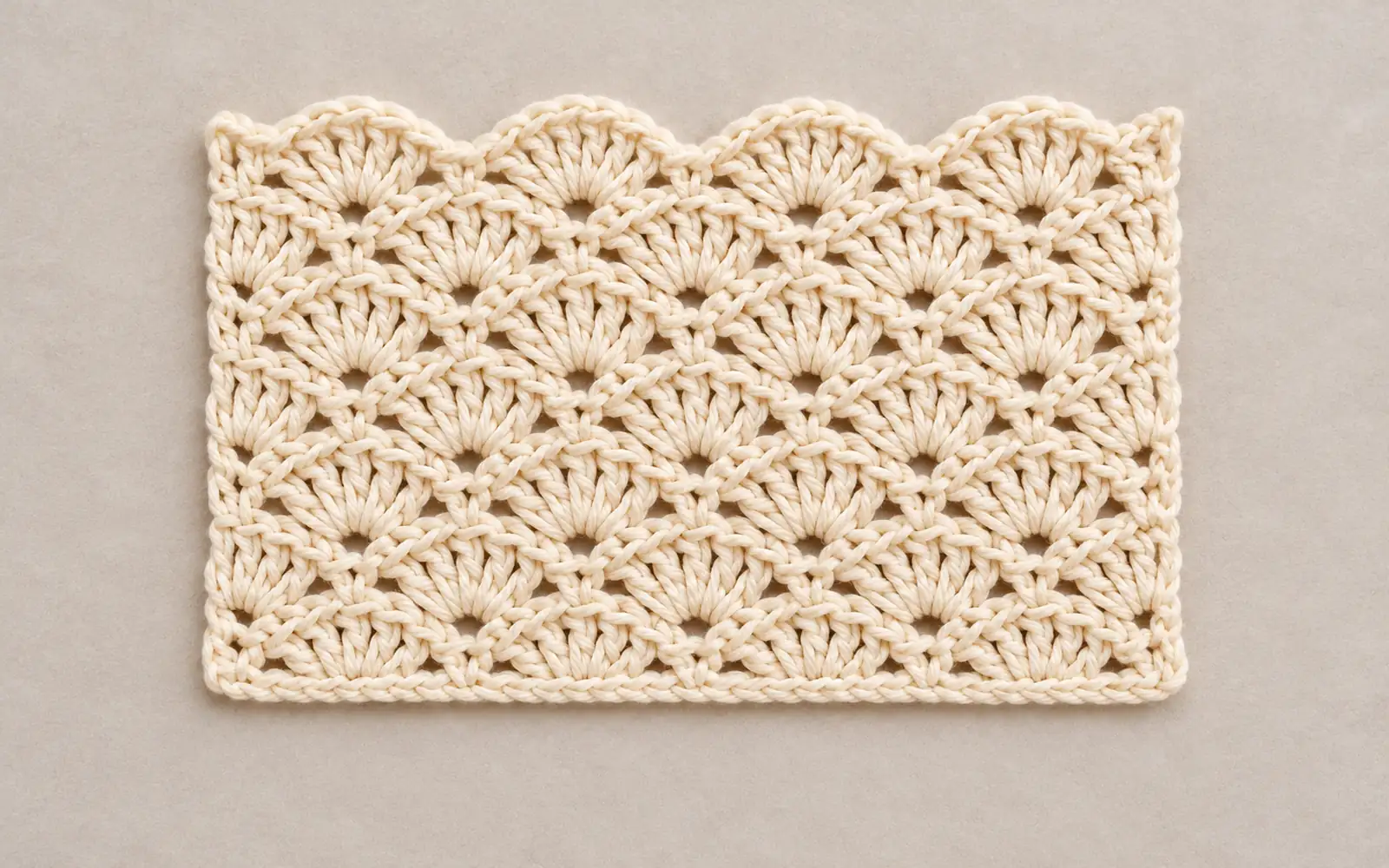
Shell stitch crochet practice swatch: a finished 25-stitch, 7-row swatch with four shells across lying flat with straight edges
Table of Contents
  1. Before You Start: What a Shell Is
  2. How a Shell Is Built
  3. Row 1: The Foundation Chain and the First Shells
  4. Rows 2 and 3: The Repeat
  5. Keep Edges Straight and Count Every Row
  6. Your First Shell Swatch
  7. Fix Flaring, Pulling In and Lost Count
  8. Variations, Rounds and Projects
  9. Key Takeaways
  10. Frequently Asked Questions

Quick answer: Shell stitch crochet is a fan of five double crochets worked into one stitch, with two stitches skipped on each side and a single crochet between shells. Chain a multiple of 6 plus 2, and start and end every other row with a half shell of three double crochets so the edges stay straight.

Your shells look fine for two rows, then the edges begin to flare or pull in, and you are no longer sure how many shells you should have. Nothing looks wrong in a single shell, so the mistake is hard to find.

This page builds the shell with a stitch count for every row, explains why the skipped stitches keep the width steady, and shows the half shells that straighten the edges. It ends with a 25-stitch swatch and a table of fixes for flaring and pulling in.

I count the shells and the single crochets at the end of every row, and I clip a marker in the turning chain. Shell rows look alike, so I do not trust my eyes to spot a missing stitch.

Before You Start: What a Shell Is

A shell is a group of double crochets worked into one stitch that fans out like the ridges of a seashell, with single crochets between shells. It needs how to double crochet and how to single crochet first. See crochet stitches and techniques for more.

Hook, Yarn and Practice Setup

Use smooth, light-colored worsted yarn and a 5.0 mm (H/8) hook to practice, so the shells are easy to count. A heavier yarn tends to give a quick, cozy fabric; a thinner one drapes more. See worsted weight yarn and the crochet hook size chart, and keep a stitch marker nearby. Photos are right-handed; left-handed crocheters mirror each step, starting the first row from the left.

Shell, Fan, V Stitch and Seashell: The Names

A shell is a solid run of double crochets worked into one stitch. A fan has a chain space between stitches, and a V stitch is two stitches with one chain between. Some patterns use shell and fan alike, so follow the pattern’s note. In UK patterns the legs are trebles; see crochet stitches to know and crochet abbreviations.

How a Shell Is Built

A shell is five double crochets in one stitch, balanced by two skipped stitches on each side. It has two parts: a group of double crochets in one stitch and a pair of skips on each side of it. Both parts matter for an even row.

Five Double Crochets in One Stitch

Work five double crochets into the same stitch, going back into the same place each time. Pull each stitch up to the same height so the shell fans out evenly. Shells with 2 to 6 stitches are in use, and the classic has 5. Half double or taller stitches also work. See how to double crochet for the moves.

Why Skipped Stitches Keep the Row Even

Five double crochets in one stitch add four stitches, and skipping two on each side removes four, so the width stays the same. That is why one repeat is six stitches wide: a single crochet, two skipped, the stitch holding the shell, and two skipped. Skipping too few stitches can crowd the shell so it will not lie flat, and skipping too many can stretch it wide. Keep to two.

Row 1: The Foundation Chain and the First Shells

Row 1 of a shell pattern sets the spacing, so count the foundation chain carefully. The chain count and the skips here matter most for the whole piece. Two steps make it simple: chain the right multiple, then work the first shells.

Chain a Multiple of 6 Plus 2

Chain a multiple of 6 plus 2 for a shell stitch foundation row. The 2 extra chains are one chain for the first single crochet to skip and one for that stitch itself. For the practice swatch, chain 26: four repeats of 6, plus 2. Chain counts vary, so use the number a pattern states (see how to read a crochet pattern).

Work Row 1

  1. Work a single crochet (sc) in the second chain from the hook (1 stitch).
  2. *Skip 2 chains, work 5 double crochet (dc) in the next chain, skip 2 chains, work a sc in the next chain; repeat from * 3 more times (25 stitches).
  3. The row has 4 shells and 5 single crochets, each shell standing on one chain with 2 skipped chains on each side. Turn.

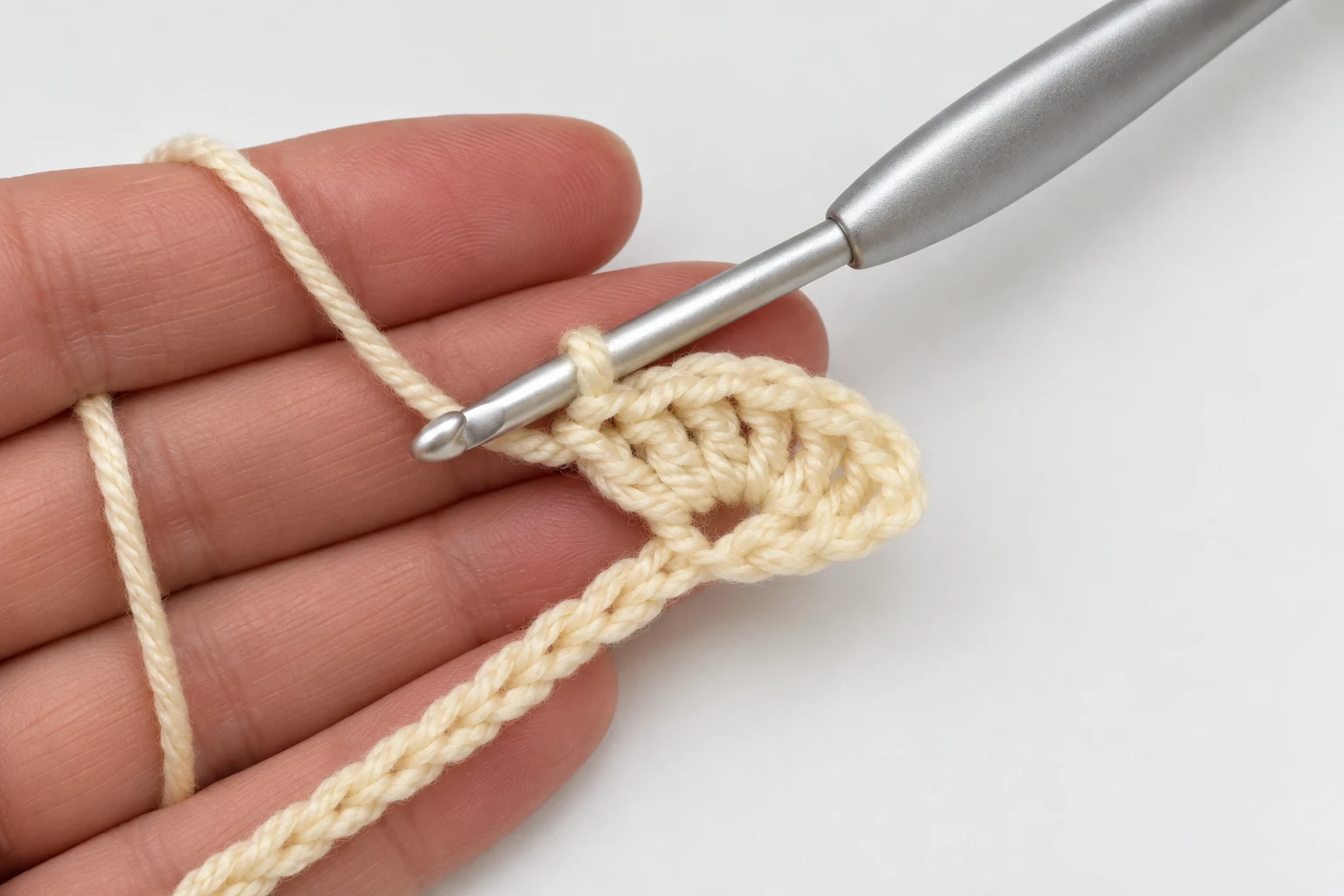
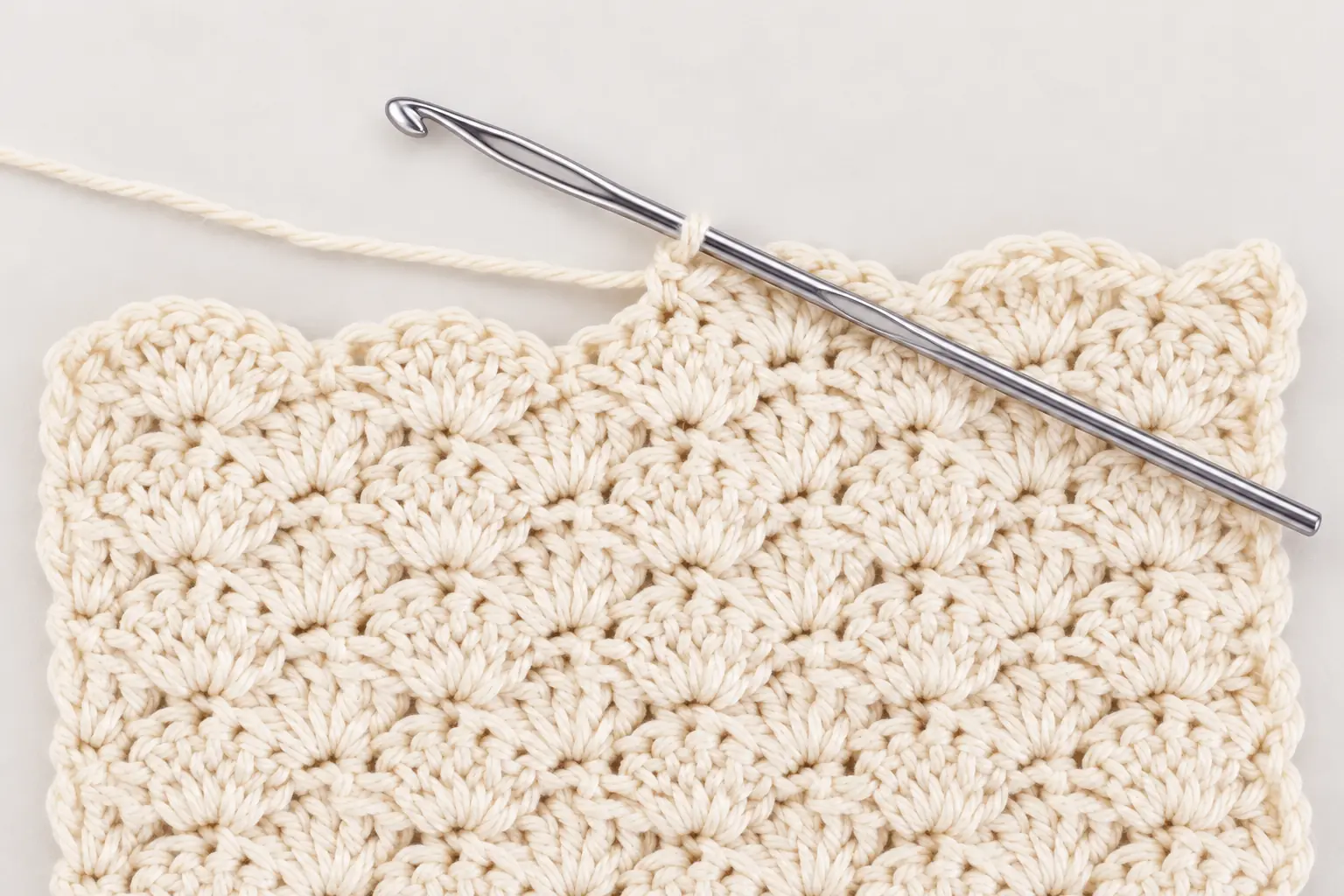
A crochet hook working the fifth double crochet of the first shell on a foundation chain, with two skipped chains beside it Skip two chains, then five double crochets in the next chain.
Rows 2 and 3: The Repeat

Shell stitch repeats two rows: a half-shell row and a single crochet row. The half-shell row turns with a chain 3; the single crochet row (see how to single crochet) turns with a chain 1. Each shell sits on a single crochet below; each single crochet sits in a shell.

Row 2: Start With a Half Shell

  1. Chain 3 (counts as the first dc), 2 dc in the first stitch, a half shell (3 stitches).
  2. *Skip 2, sc in the center dc of the shell below, skip 2, 5 dc in the next sc; repeat from * 2 more times (21 stitches).
  3. Skip 2, sc in the center dc of the last shell, skip 2, 3 dc in the last sc (25 stitches).
  4. 3 shells, 2 half shells, 4 sc. Turn.

A crochet hook entering the center double crochet of a shell to work a single crochet in the row above The single crochet goes into the center double crochet of the shell below.
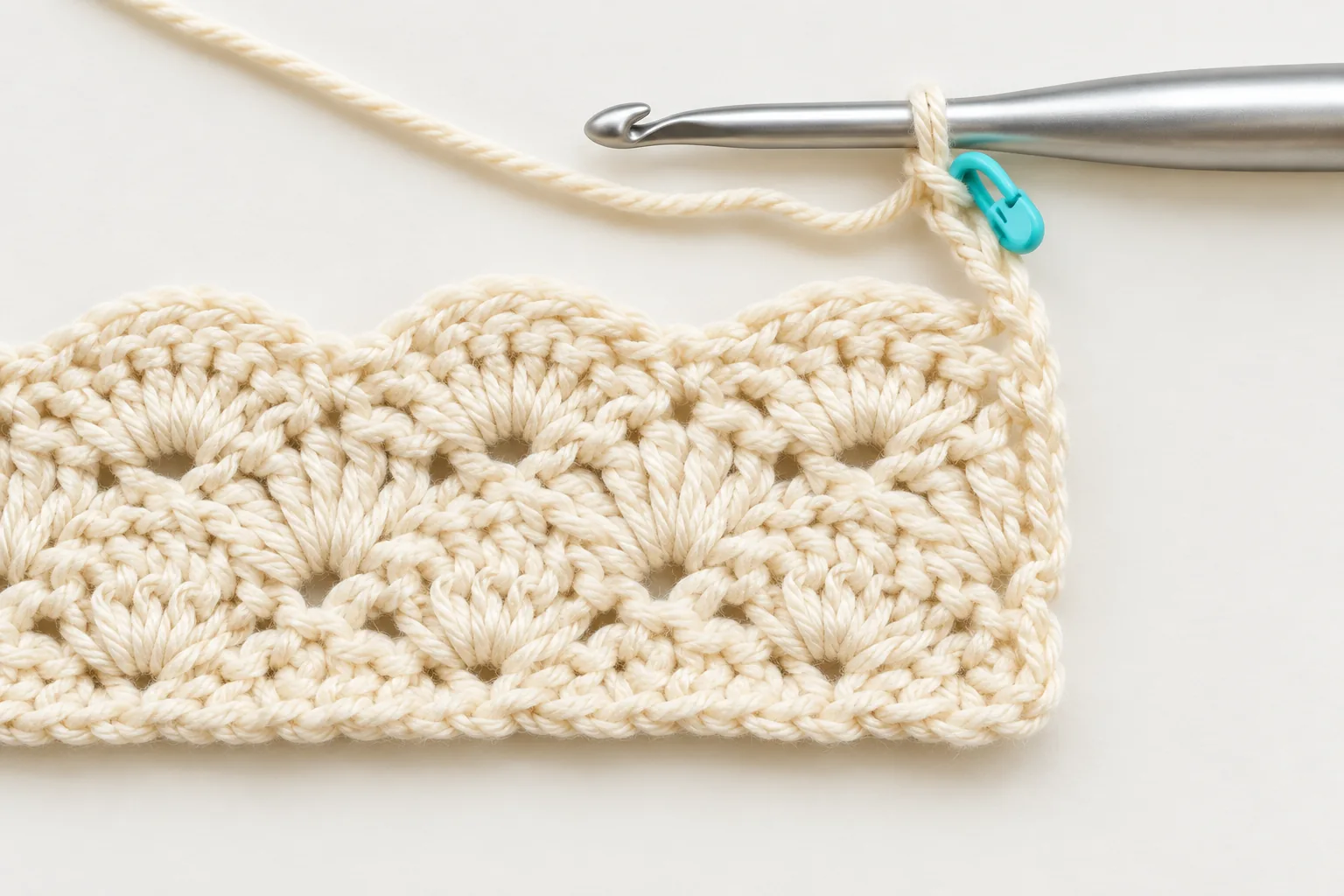
Row 3: The Single Crochet Row

  1. Chain 1 (does not count), sc in the first dc (1 stitch).
  2. *Skip 2, 5 dc in the next sc, skip 2, sc in the center dc of the shell below; repeat from * 2 more times (19 stitches).
  3. Skip 2, 5 dc in the next sc, skip 2, sc in the top of the turning chain (25 stitches).
  4. 4 shells, 5 sc. Turn, and repeat rows 2 and 3, starting each half-shell row with a new chain 3.

Keep Edges Straight and Count Every Row

Edges stay straight when every row has 25 stitches on the practice swatch. Shell rows look so alike that a missing stitch is hard to see, so check with a count and a marker. For other counting mistakes, see common crochet mistakes.

Why Half Shells Keep Edges Straight

A half shell keeps the edge straight because it has three stitches, not five, so the edge stays the same width as the single crochet row. A full shell at the edge would add stitches each time and act as an increase, so the edge flares outward. Avoid a full shell at a row end unless a pattern says so.

Count Each Row

The practice swatch has 25 stitches in every row.

Row What it contains Shells and half shells Stitches
1 5 single crochets, 4 shells (20 double crochet) 4 shells 25
2 (half-shell row) 4 single crochets, 3 shells, 2 half shells 3 shells, 2 half shells 25
3 (single crochet row) 5 single crochets, 4 shells 4 shells 25

Count the shells and the single crochets at the end of every row, or count the tops of the stitches (the small Vs), counting the chain 3 on half-shell rows. Here 25 counts every double crochet separately.

Mark the Turning Chain

Clip a marker in the turning chain at the start of each row. The single crochet row that follows ends in the top of that chain. I clip a marker in the turning chain at the start of each row, or in the first stitch when the chain does not count, so the last stitch has a mark to find.

A crochet hook about to work the last stitch of a shell stitch row into a turning chain marked with a stitch marker The last stitch goes into the top of the turning chain, marked.
Your First Shell Swatch

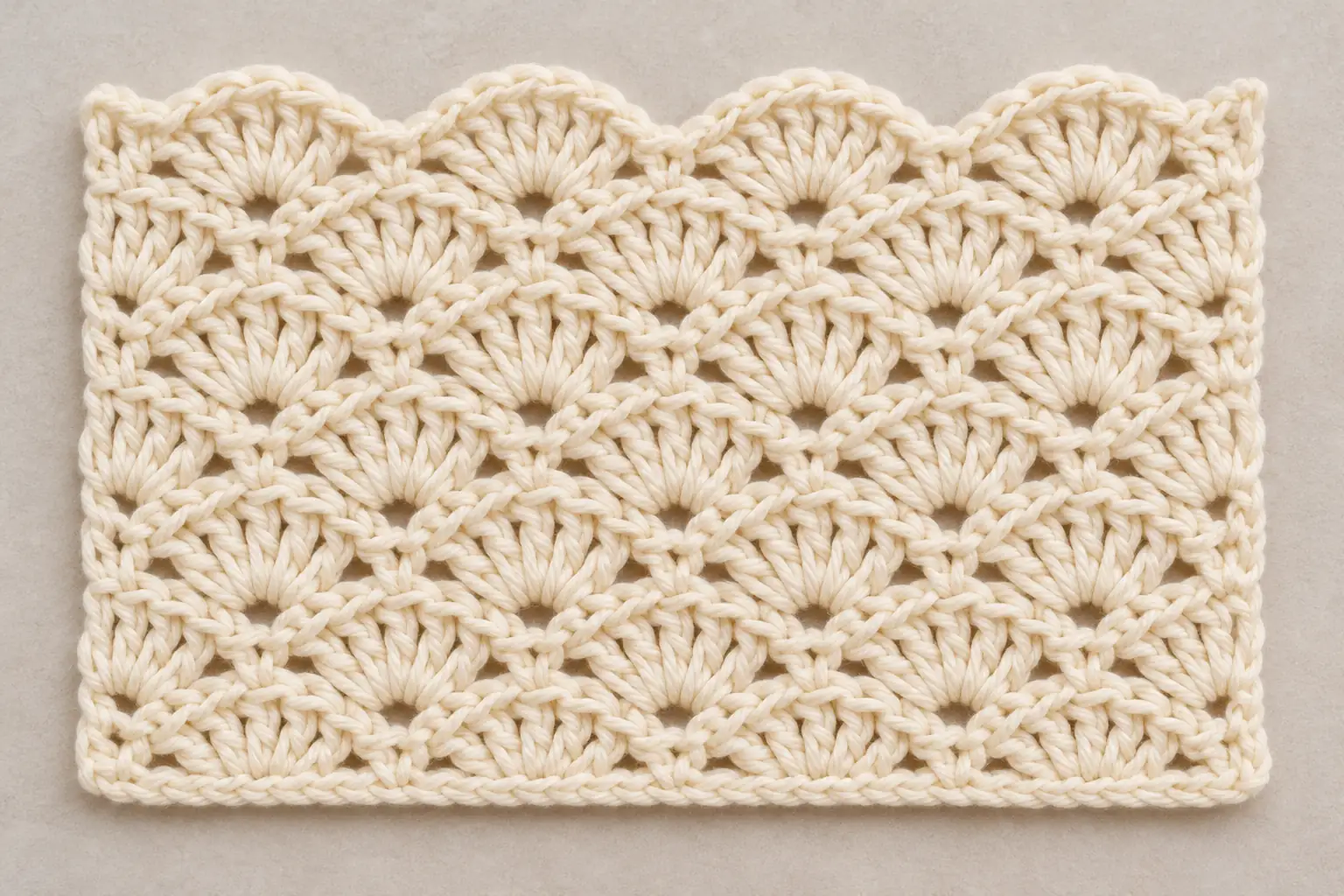
A 25-stitch, 7-row swatch with 4 shells across is small enough to finish in one sitting and wide enough to see the shell pattern. Abbreviations such as ch, sc, dc and st are in crochet abbreviations. Every row has 25 stitches, which keeps the edges straight.

Shell stitch crochet practice swatch: a finished 25-stitch, 7-row swatch with four shells across lying flat with straight edges A finished swatch: 25 stitches wide, 7 rows tall, 4 shells across.
The Swatch Row by Row

  1. Ch 26.
  2. Row 1: sc in 2nd ch from hook, (skip 2, 5 dc in next ch, skip 2, sc in next ch) 4 times (25 sts). Turn.
  3. Row 2: ch 3, 2 dc in first st, (skip 2, sc in center dc, skip 2, 5 dc in next sc) 3 times, skip 2, sc in center dc, skip 2, 3 dc in last sc (25 sts). Turn.
  4. Row 3: ch 1, sc in first dc, (skip 2, 5 dc in next sc, skip 2, sc in center dc) 4 times, ending with the last sc in the turning ch top (25 sts). Turn.
  5. Rows 4 to 7: repeat rows 2 and 3.

Fix Flaring, Pulling In and Lost Count

Most shell stitch problems come from the row ends, the skips or the count. Check those three first. A swatch shows them early, before you commit to a large piece. For mistakes that apply to any project, see common crochet mistakes.

Edges That Flare or Pull In

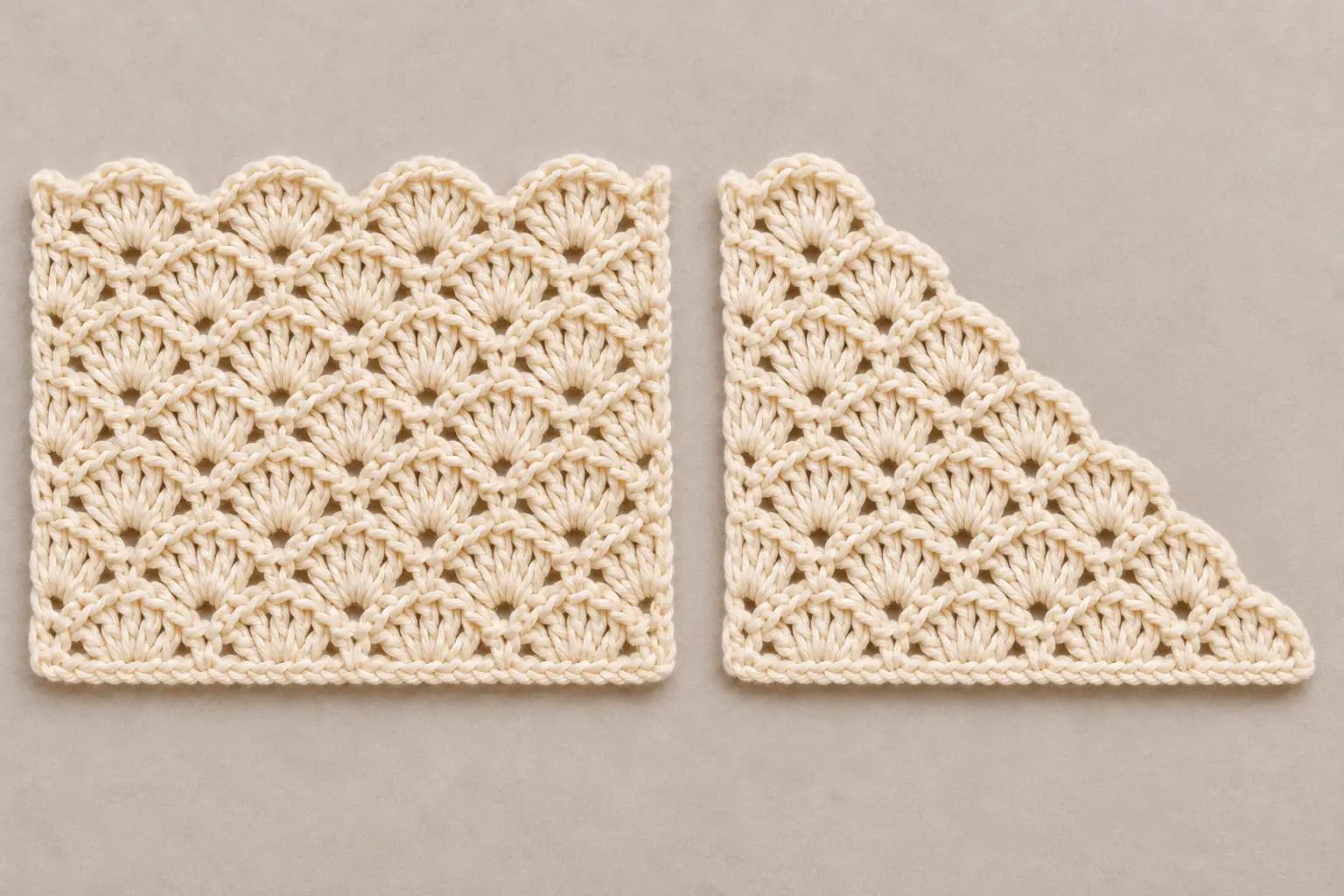
A shell edge flares when a full shell is worked at the row end and pulls in when the last stitch is skipped. Flaring can also come from a stitch worked twice. Pulling in can come from the top of the turning chain being skipped, or from a half shell left short. Count back to the row where the number changed, undo to there and redo it. Blocking helps stitch definition but does not replace a missing stitch.

Two shell stitch swatches side by side: the left one with straight edges and the right one with an edge that pulls in Made on purpose: even edges (left) and an edge that pulls in when the last stitch is skipped (right).
Other Shell Stitch Problems

Problem Likely cause Fix
The shells will not lie flat Skips too small or stitches crowded on the foundation chain Skip exactly 2 and rework row 1
The shells look pulled too wide Too much space between the single crochet and the shell Skip exactly 2 and keep the chain snug
The shells are uneven in size Tension changes Pull each double crochet to the same height
You lost count Shell rows look alike Count the shells and single crochets and compare with 25
Rows start in the wrong place Chain 3 and chain 1 were swapped Use chain 3 on the half-shell row and chain 1 on the single crochet row

Variations, Rounds and Projects

The classic shell changes with the number of stitches, the stitch height and the gap between them. Once the classic shell is even, small changes give new looks, and the pattern’s stitch note decides the details. See crochet stitches and techniques and how to read a crochet pattern.

Shell Variations at a Glance

Variation What you work into one stitch or space Notes
Full shell 5 double crochet The classic shell
Half shell 3 double crochet Used at row ends
Open shell (V-stitch shell) 2 double crochet, chain 1, 2 double crochet Lighter and lacier
Other heights Half double or treble crochet Some edgings use 6 dc

A plain V stitch is dc, chain 1, dc. Some patterns put a dc between shells; see crochet stitches to know.

Shells in the Round and as an Edging

In the round, start each round with chain 3 and 2 double crochet, a half shell, and close each round with a slip stitch. As an edging, work a row of single crochets, then repeat skip 2, shell, skip 2, single crochet along the edge. Many patterns add a shell at each corner. See how to crochet in the round for the basics.

Projects That Suit Shells

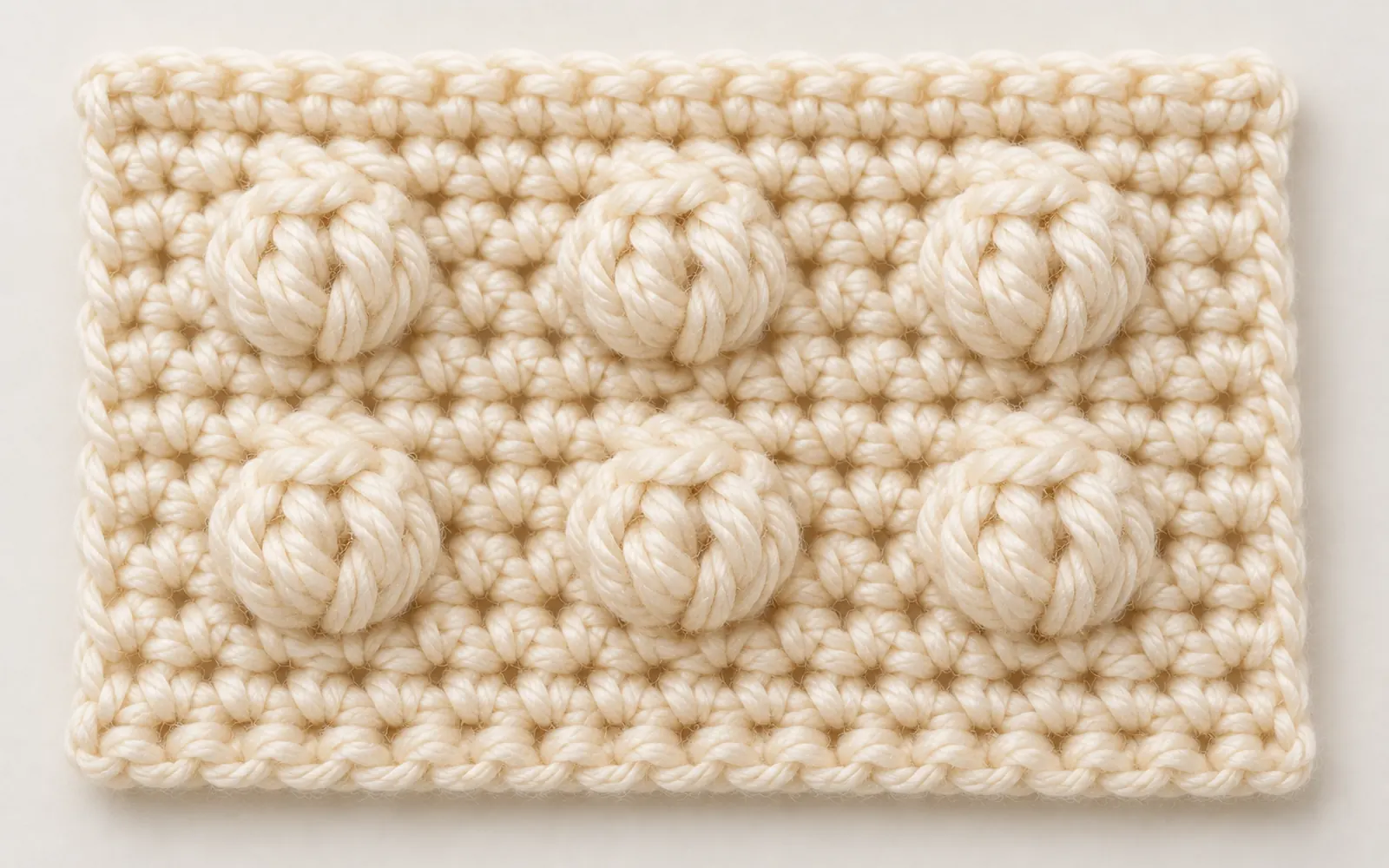
Shell stitch suits blankets, baby sets, scarves and edgings, and it also works for wraps and hats. A scalloped edge also suits blankets and pillows. See the crochet baby blanket guide and free blanket patterns. The Island Time Blanket is a larger project to try. For other textures, see bobble stitch crochet and spike stitch crochet.

Key Takeaways

  • A shell is five double crochets worked into one stitch, with two stitches skipped on each side and a single crochet between shells.
  • Skipping two on each side removes the four stitches that the shell adds, so the row width stays the same.
  • Chain a multiple of 6 plus 2, and start and end the half-shell rows with a half shell of three double crochets.
  • Count the shells and the single crochets at the end of every row, and clip a marker in the turning chain.
  • Flaring edges usually mean a full shell at the row end; pulling-in edges usually mean a skipped last stitch.

Frequently Asked Questions

How many chains do you need for the shell stitch?

Chain a multiple of 6 plus 2. For four shells across, chain 26. The 2 extra chains are one skipped chain and one for the first single crochet. Some patterns use a different count, so always use the number a pattern states. Work the first single crochet in the second chain from the hook. The row 1 section above shows each step.

How many double crochets are in a shell?

Five in the classic shell, with a half shell of three at the row ends. Shells with 2, 3, 4, 5 or 6 stitches are all in use, so check the stitch note in your pattern. Two stitches are skipped on each side of a five-stitch shell. The section above on how a shell is built explains why.

Why is my shell stitch pulling in at the edges?

Usually the last stitch of a row was skipped, which is the single crochet in the top of the turning chain. A half shell left short at the row end can do the same. Count the stitches at the end of every row, use a marker in the turning chain, and undo to the row where the count changed. Flaring has the opposite cause: a full shell at the edge. The fixes section above covers both.

Is the shell stitch hard for beginners?

No, if you can double crochet and single crochet. The shell uses only those two stitches, and the pattern is two rows that repeat. The usual trouble is counting, so check for 25 stitches on the practice swatch at the end of every row. Practice the swatch first, then try a project. If either stitch is new, see how to double crochet and how to single crochet.

What is the difference between a shell and a fan stitch?

A shell is solid; a fan has a chain space between stitches. That space makes a fan look lighter and lacier. Some patterns use the two names for the same thing, so follow the pattern’s own stitch note. A V stitch is the smallest version: two stitches separated by one chain. See crochet stitches to know for the full comparison.

Portrait of Linda Davidsen

Written by

Linda Davidsen

Designer & founder

Linda has been crocheting for over 15 years and designs cozy, beginner-friendly patterns that anyone can finish in a weekend.

Keep reading

All posts