
🧶 Yarn Calculator

Try

Visit our Etsy Shops

Pick a shop to browse. Each one opens on Etsy in a new tab.

Seasonal Crochet

Crochet Holiday Planning: A Schedule by Project Size

Crochet holiday planning: count back from your gift date, sort projects by size, track work in progress and leave a buffer. Includes a four-week example.

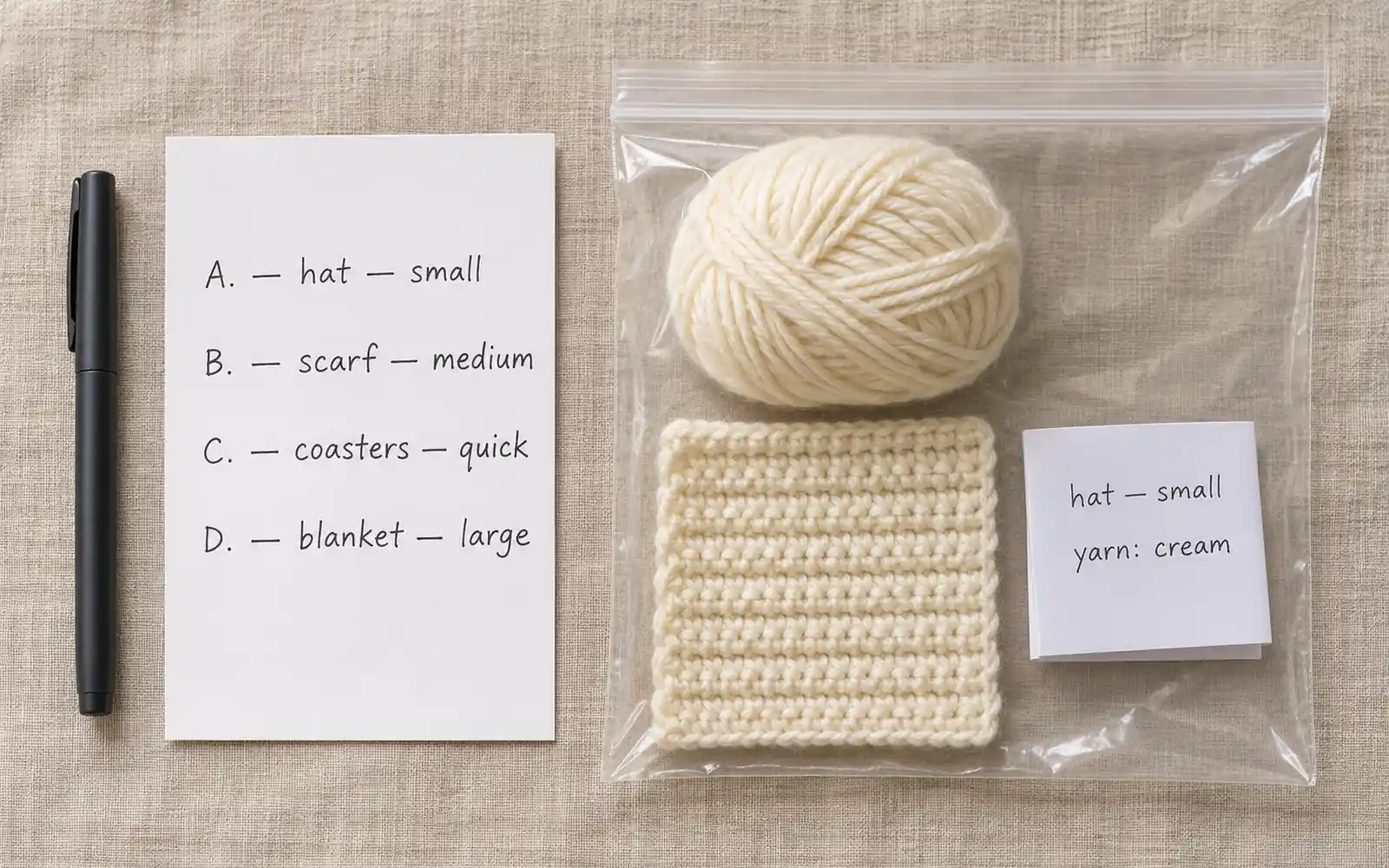
A handwritten gift plan card beside a zip bag holding cream yarn, a swatch and a project note
Table of Contents
  1. Crochet Holiday Planning Starts With a Date
  2. Plan by Project Size
  3. Build Your Recipient and Yarn Lists
  4. Track Work in Progress
  5. Buffer, Backup Plans and a Checklist
  6. Key Takeaways
  7. Frequently Asked Questions

Quick answer: Crochet holiday planning starts with your gift date: count back from it, list every recipient and project, start the longest piece first and fill the gaps with small ones. Leave a buffer at the end for finishing and wrapping, and cut the list early if it does not fit.

A blanket is half done, nine names are on the list and the calendar already looks full. Printable planner pages give you blank boxes, but few say how much of the list actually fits into the weeks you have, or what to cut when it does not.

This guide shows how to plan crochet for the holidays. It covers counting back from your date, sorting projects by size, building a recipient and yarn list, tracking work in progress, and leaving a buffer and a backup. It also gives a four-week example and a checklist.

I write the date at the top of the page, count back from it and put the longest project first on the list. Everything else goes into the weeks that are left.

Crochet Holiday Planning Starts With a Date

A holiday crochet plan is a deadline first and a list second, and the date that counts is the day you give the gifts, not a date copied from a start-date calendar. A crochet gift timeline runs back from it. See the seasonal crochet patterns guide for the year.

Pick a Date and Count Back

To plan holiday crochet, pick the day you give the gifts, take away a buffer, add up the project times and start the longest project first. With several gift days, use the earliest. If the total runs longer than the weeks you have, cut the list or choose faster patterns before you start, since some guides say to cut the lowest-priority recipients first. One page says to total the weeks, add a buffer and start that far ahead. Count only the evenings you really have, such as an hour before bed, since a long block planned ahead may not happen. Time your first quick project to learn your own pace.

Pace Examples From the Web

Sources disagree on pace: one suggests 2 small items a week plus 1 large gift every 3 weeks, and another suggests 1 to 2 main projects a month. The first counts 16 weeks, which comes to about 32 small items and 5 large gifts. The second adds 1 to 3 quick gifts. One page suggests starting a mid-December blanket in September or October, depending on pace, and finishing about a week early, and says to begin holiday gifts in fall. One page says a few rows a day add up over a month or two, and another says Christmas comes down to a few weeks once the displays change. These are different makers’ paces, not rules, so your own list, evenings and speed decide. This page gives no date.

Plan by Project Size

Sorting holiday crochet by project size turns a list of names into a schedule, because a keychain and a blanket do not fit into the same gap. The four size groups come first, and a four-week example then shows how a crochet Christmas schedule fits together.

Four Project Sizes

Holiday crochet falls into four size groups: quick projects take under an hour to an evening, small ones an evening to a weekend, medium ones a weekend or two and large ones several weeks.

Size Examples Rough time Where it goes
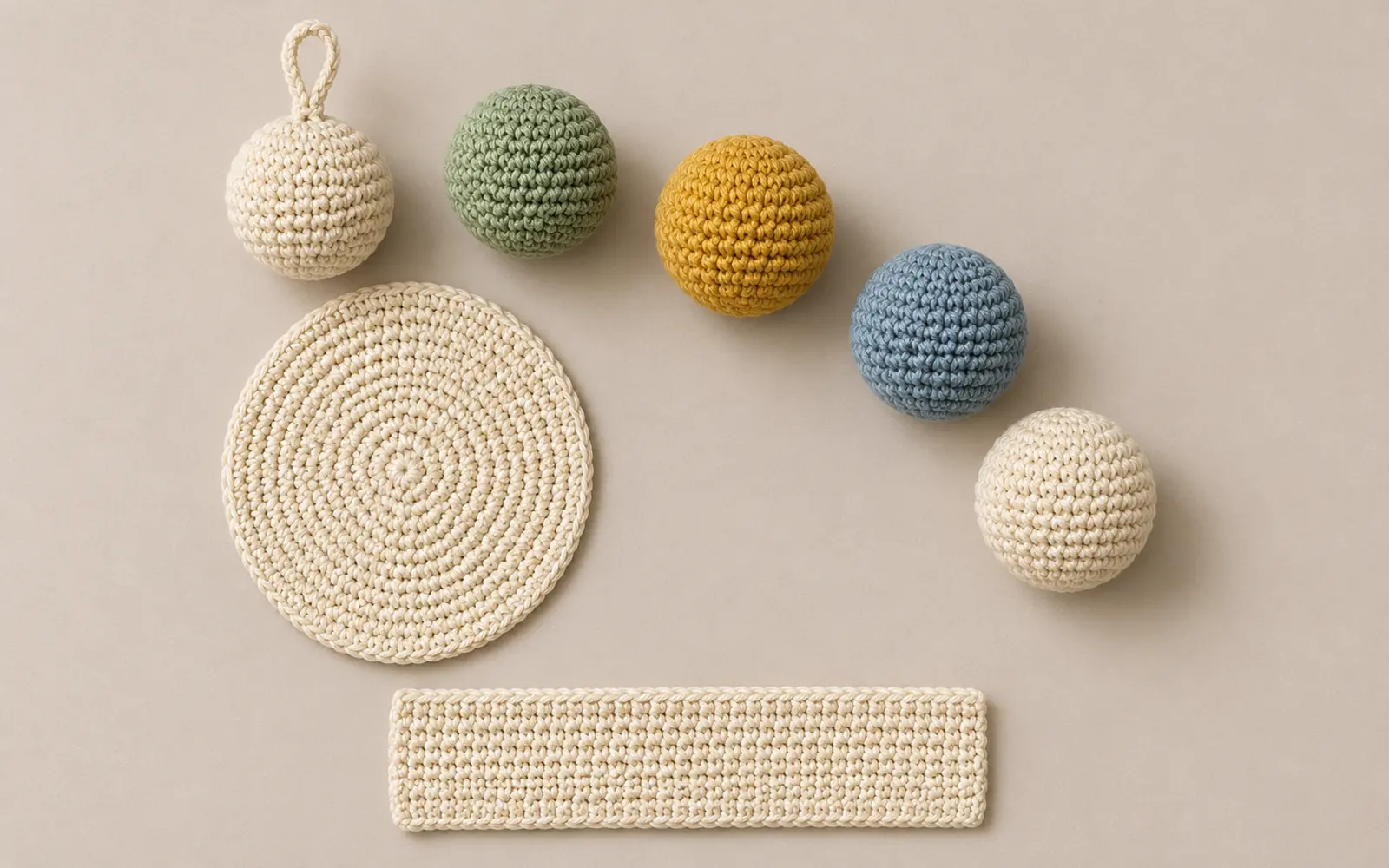
Quick Ornaments, coasters, keychains, washcloths Under an hour to an evening Fits any gap
Small Hats, gloves, mug cozies An evening to a weekend Between longer projects
Medium Scarves, shawls, bags A weekend or two After the long project starts
Large Blankets, cardigans, sweaters Several weeks Start first

The groups follow what some guides say about planning, and a hat is quicker than a scarf as it is smaller. Times are rough ranges, so a pattern’s own level and finished size beat this table; see crochet project guides for ranges by project type and Christmas crochet patterns for pattern groups, or browse holiday and seasonal patterns.

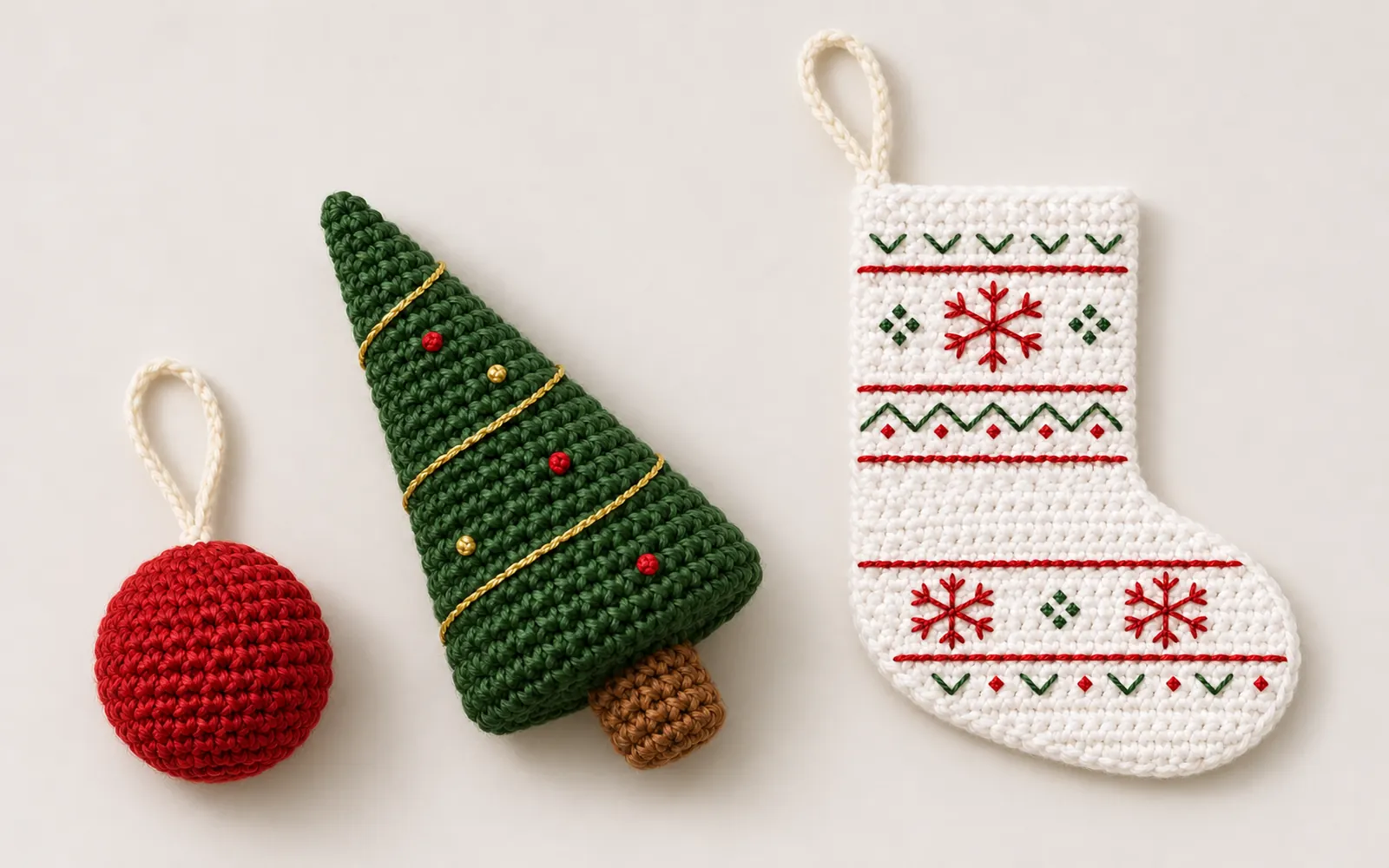
Try the Miniature Christmas Ornaments, the Christmas Tree Hat or the Santa Blanket.

A Four-Week Example

A four-week crochet holiday plan can hold one medium, one small and three quick projects, with the last week kept for finishing and a backup.

Week What you work on Size group
Week 1 One medium project, such as a scarf Medium
Week 2 One small project, such as a hat, and one quick project Small, quick
Week 3 Two quick projects, such as ornaments Quick
Week 4 Buffer: weave in ends, shape, wrap, and keep one backup quick gift Buffer

Example only, made for this guide: a large project starts first in a longer plan, and more gifts need an earlier start.

Build Your Recipient and Yarn Lists

A holiday crochet plan needs two lists, one of people and projects and one of the yarn they need, and both are written before the first stitch. See crochet Christmas gifts for what to make for each person. The recipient list comes first, then the yarn list.

The Recipient List

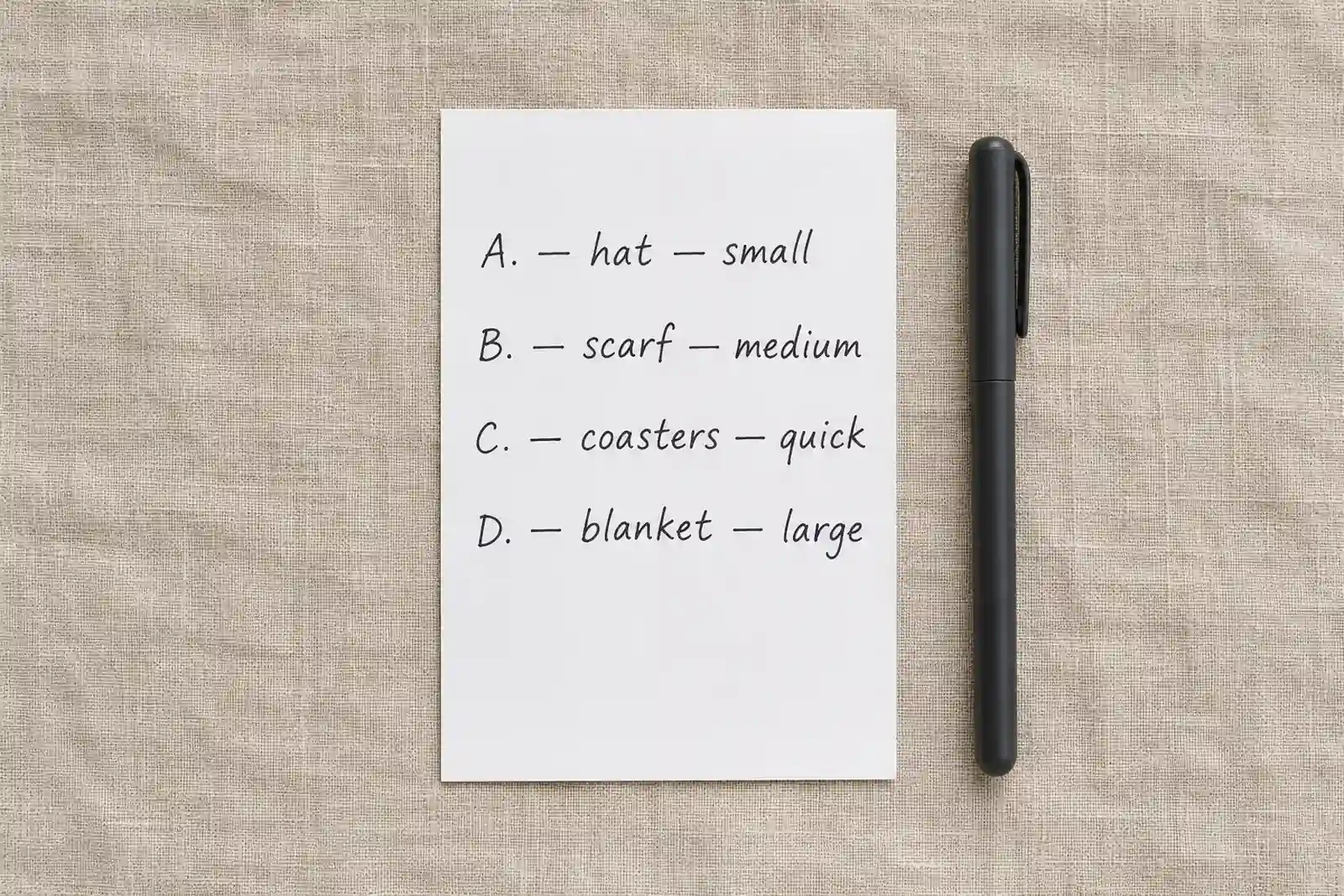
To build a holiday crochet list, write every name, cross off what you feel obliged to make, and note the project, its size group and the date next to each person. Split the rest into “must” and “would be nice.” Choose a project each person would use, and pick a pattern that fits your time and skill; if you know only basic stitches, start with a simpler one. The gifts guide covers who gets a handmade gift and what to make for each person. The list can live on a card, in a notebook or in a planner, whichever you will check.

A handwritten card listing four gifts by initials, project and size, a simple start for crochet holiday planning A plan card: one line for each person, with the project and its size.
The Yarn List

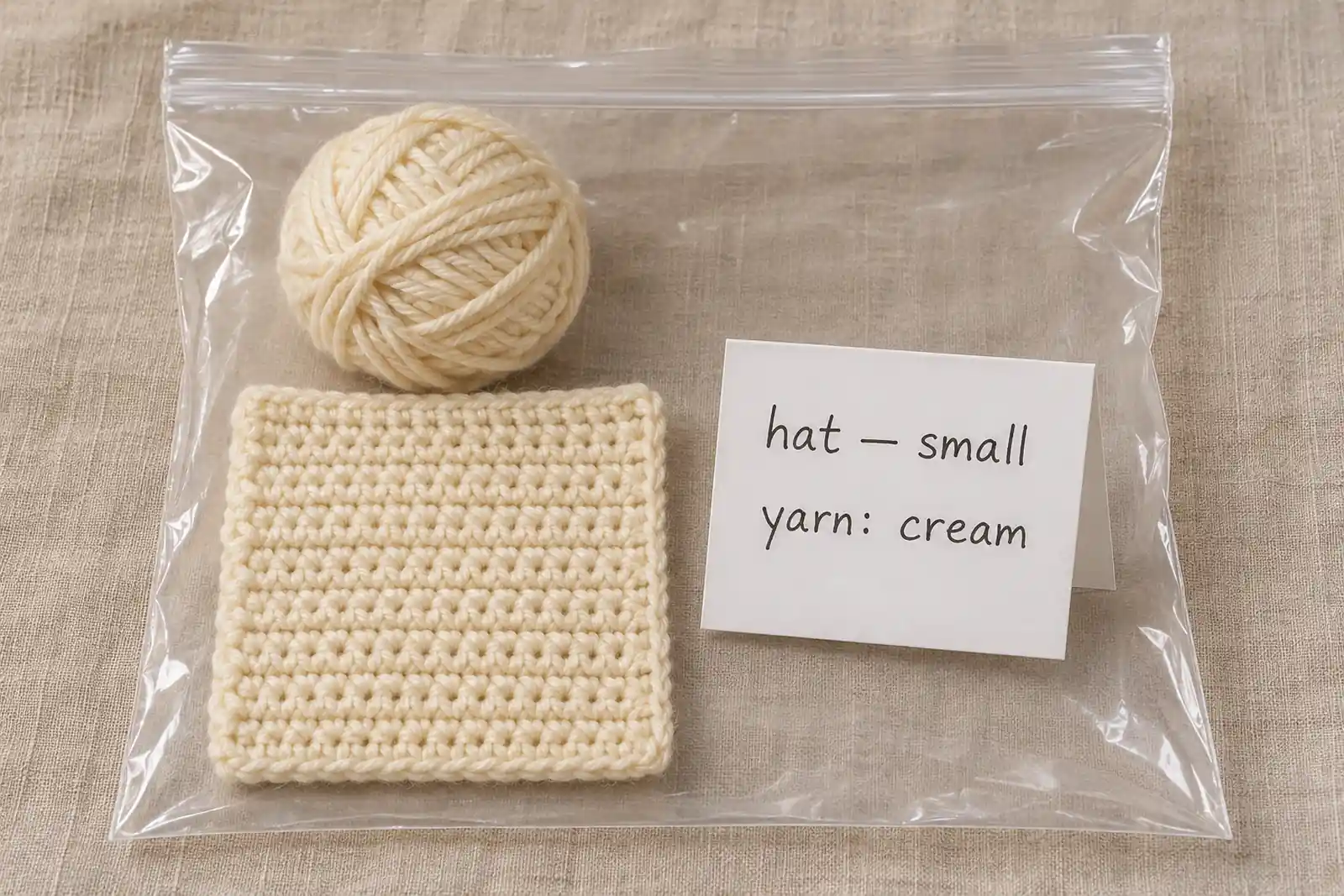
To build a yarn list, add up the yarn each pattern asks for, check your stash first and gather the supplies for each project into one labeled kit. Use leftovers for small projects, and plan one supply run for all of them. One page advises buying a little extra. If you change the yarn, swatch and check the gauge; see how to substitute yarn. A learner book says to keep a yarn label for each yarn, and how to read a yarn label explains what a label says. A kit holds the yarn, the pattern and your notes in one clear bag or container, labeled with the project.

A closed clear bag holding a ball of cream yarn, a small cream swatch and a folded handwritten note A project kit: yarn, a swatch and a note in one bag.
Track Work in Progress

A holiday crochet plan only works if you can see where each project stands, and makers call a project in progress a WIP and a finished one an FO. This section covers a page for each project, then a weekly check.

One Page for Every Project

Give each holiday crochet project one page with the recipient, pattern, yarn, hook size, progress notes and start and end dates, so you can see where every project stands. A learner book also says to keep the gauge swatch and a yarn label for every project. Note the round or row where you stopped, so you can pick up the next day. Keep everything in one place, and put each finished piece in a box or bag labeled for that person. A board with four columns, To start, Working, Finished and Wrapped, shows the whole list at a glance. A planner can hold the same fields; see the crochet digital planner.

To start Coasters · quick Working Blanket · large Scarf · medium Finished Hat · small Wrapped
A status board: move each project from left to right and note the round you stopped at.

A Weekly Check

Check your holiday crochet list at least once a week and compare it with the evenings you really have, so a late project is changed early. One page also says to check at the start and end of each project, and another to review the plan at the start of each day or week. If a project is behind, change the plan now, using the options in the last section. A few rows a day add up over a month or two, and a project kept handy suits short sessions, such as while cooking or traveling. Finishing a quick project between milestones on a large one helps avoid burnout, one page says.

Buffer, Backup Plans and a Checklist

The end of the plan is where holiday crochet goes wrong, so it needs time for finishing and a plan for when a project runs late. This section covers a buffer at the end, backup plans for a late project and a checklist that sums up the page.

Leave a Buffer at the End

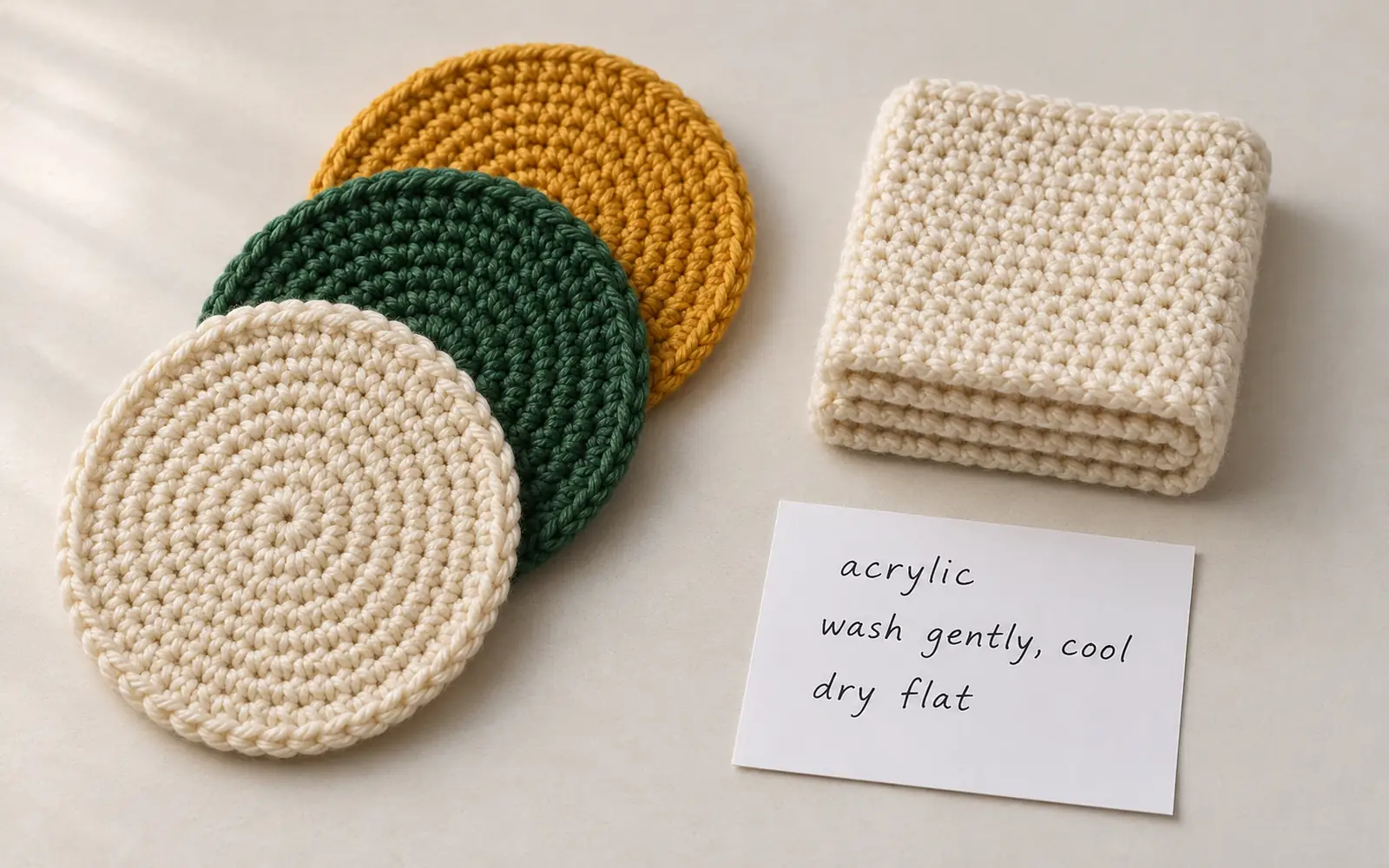
Leave a buffer of about a week at the end of the plan for weaving in ends, shaping, blocking and wrapping. One page says to finish about a week early for blocking and wrapping, another adds about a week of slack, and a third adds extra time per project for swatching, fixing mistakes and finishing. I set my own finish date a week before the gift date, so weaving in ends and wrapping do not land on the last night. The buffer is the last week of the four-week example, and the gifts guide covers the care card.

Backup Plans When You Fall Behind

If you fall behind on holiday crochet, keep a short list of quick backup projects, swap a long project for a faster pattern or cut the lowest-priority recipient first. Some guides also suggest an IOU that promises a handmade piece later, or saving a project for next year. One page names a mug cozy, a simple hat or potholders as quick backups, and another says to make a few copies of a favorite quick gift while the pattern is fresh. See crochet stocking stuffers for small gifts and browse the keychain patterns hub.

Try the Santa Keychain.

A Holiday Crochet Checklist

A holiday crochet checklist has eight items: the date, the list, the size groups, the yarn, a kit for each project, the longest project first, a finish-by date and a weekly check.

  • Pick the day you give the gifts
  • List the people and the projects
  • Sort each project into a size group
  • Add up the yarn and check your stash
  • Make a kit for each project
  • Start the longest project first and fit the others into the gaps
  • Set a finish-by date about a week early
  • Check the list once a week and keep a quick backup

The checklist sums up the sections above and adds no new rule.

Key Takeaways

  • Crochet holiday planning starts with the day you give the gifts: count back from it, add up the project times and start the longest project first.
  • Sort projects into four size groups, from quick ones that take under an hour to an evening to large ones that take several weeks.
  • Sources disagree on pace, so treat any examples as examples and count your own evenings and speed.
  • Give each project one page with the recipient, pattern, yarn, hook size, progress notes and dates, and check the list once a week.
  • Set a finish date about a week before the gift date, and keep a quick backup project in case a long one runs late.

Frequently Asked Questions

How early should I start holiday crochet?

Start holiday crochet by counting back from the day you give the gifts, adding up the project times and a buffer, since sources suggest anything from fall to a few weeks ahead. One page suggests September or October for a mid-December blanket, another says to begin holiday gifts in fall, and a third says Christmas comes down to a few weeks. This page gives no date. The Crochet Holiday Planning Starts With a Date section above has more.

How many crochet gifts can I realistically make?

Time one quick project first, since pace varies: one example is 2 small items a week plus 1 large gift every 3 weeks, and another is 1 to 2 main projects a month. The first adds up to about 32 small items and 5 large gifts over 16 weeks, and the second adds 1 to 3 quick gifts. These are examples, not rules. The Pace Examples From the Web and Plan by Project Size sections above have more.

How do I estimate how long a crochet project will take?

To estimate a crochet project, sort it into a size group, check the pattern’s level and finished size, and add time for swatching, fixing mistakes and finishing. Time your first quick project to learn your own speed. A hat is quicker than a scarf because it is smaller. See the project guides for time ranges by project type. The Plan by Project Size section above has more.

What should I do if I fall behind on holiday crochet?

If you fall behind on holiday crochet, change the plan early: cut the lowest-priority recipient, swap a long project for a faster pattern or give a quick backup gift. You can also offer an IOU that promises a handmade piece later, or save the project for next year. See the stuffers guide for small gifts. The Backup Plans When You Fall Behind section above has more.

Do I need extra time before the gift date?

Yes: leave about a week before the gift date for weaving in ends, blocking and wrapping, since a late project leaves no room for finishing. One page says to finish about a week early for blocking and wrapping, another adds about a week of slack, and a third adds extra time per project for swatching, fixing mistakes and finishing. Set your own finish date. The Leave a Buffer at the End section above has more.

Is a planner worth using for holiday crochet?

Yes, a planner is worth using for holiday crochet if it records the recipient, pattern, yarn, hook size, progress notes and start and end dates. A card, a notebook or a digital planner all work, so use whichever you will check each week. See the digital planner for one way to keep the page. The One Page for Every Project section above has more.

Portrait of Linda Davidsen

Written by

Linda Davidsen

Designer & founder

Linda has been crocheting for over 15 years and designs cozy, beginner-friendly patterns that anyone can finish in a weekend.

Keep reading

All posts