🧶 Yarn Calculator

Try

Visit our Etsy Shops

Pick a shop to browse. Each one opens on Etsy in a new tab.

Seasonal Crochet

Halloween Crochet Patterns: Ghosts, Pumpkins & Spiders

Halloween crochet patterns for every skill level: ghosts, pumpkins, spiders, a blanket and decor ideas, plus tips for black yarn, legs and small parts.

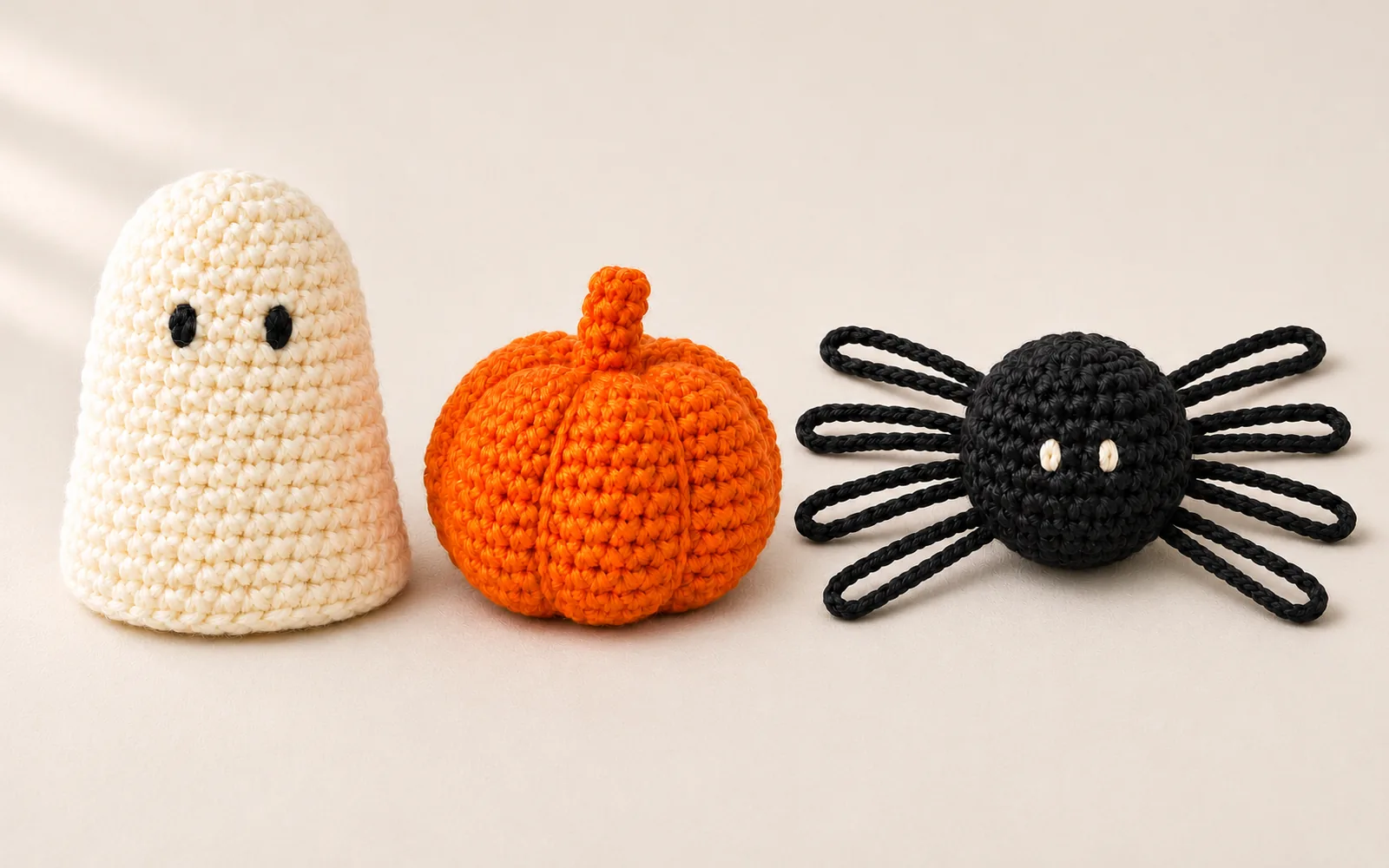
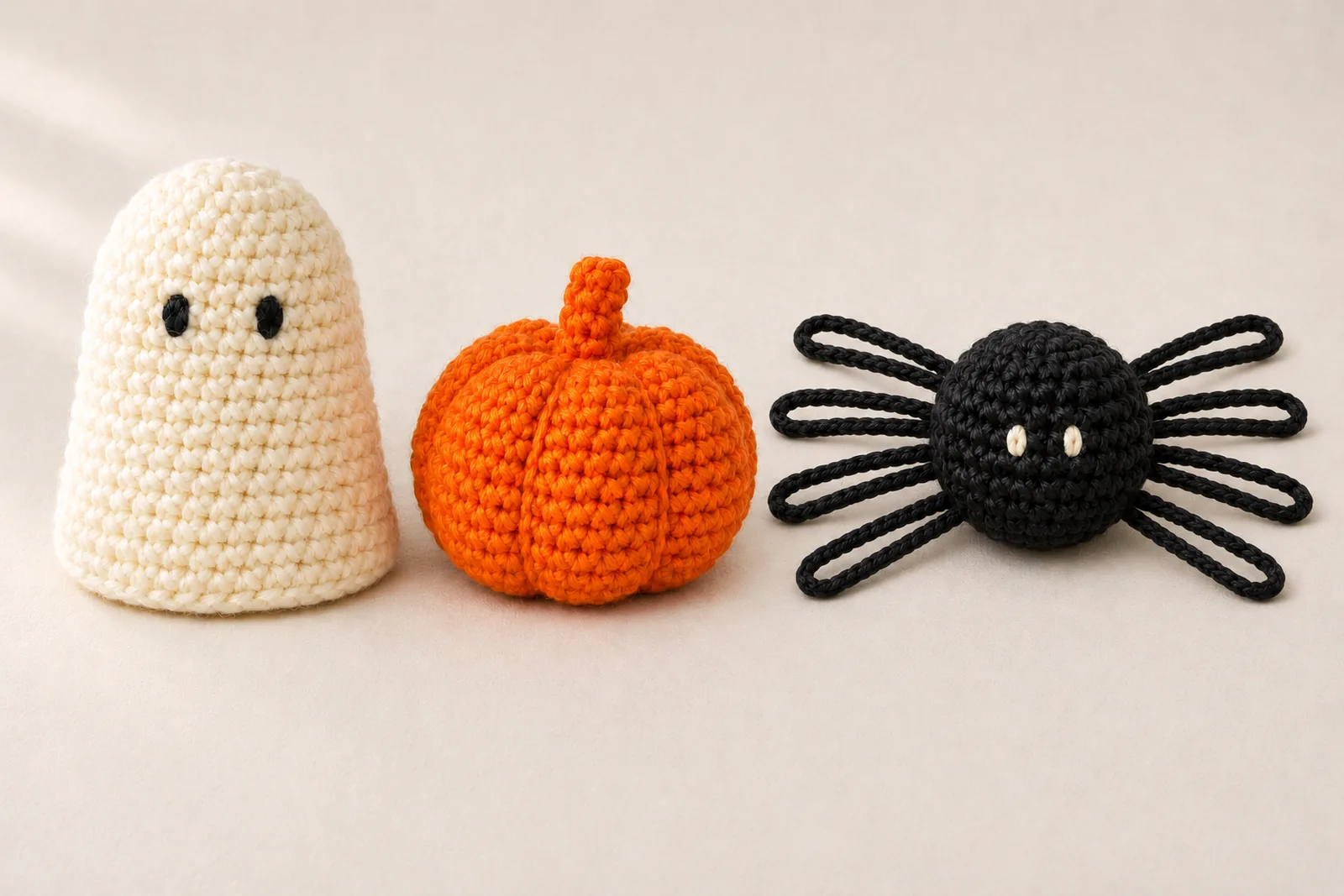
A cream crochet ghost, an orange crochet pumpkin and a black crochet spider in a row
Table of Contents
  1. Which Halloween Crochet Suits a Beginner
  2. Ghosts and Pumpkins
  3. Spiders and Other Small Shapes
  4. Black, Orange and White
  5. Decor, Baskets and a Blanket
  6. Make a Small Halloween Set
  7. Key Takeaways
  8. Frequently Asked Questions

Quick answer: Halloween crochet patterns are mostly small stuffed shapes. A ghost, a pumpkin and a spider are the easiest to start with, a blanket takes weeks, and decor ideas fill the gaps. Start with a rounded shape in tight stitches, choose colors that show, and check eyes and small parts before giving a toy to a child.

Every Halloween crochet roundup shows seventy cute ghosts, spiders and pumpkins, and they all look easy until the legs or the black yarn start. Which ones really suit a beginner, and which ones belong on a shelf, in a basket or on the couch?

This guide sorts Halloween crochet by what a beginner can finish: ghosts and pumpkins first, then spiders, decor and a blanket. It also covers black, orange and white, working in black yarn, and what to check on eyes and small parts. Patterns to try sit beside each group.

I start with a ghost or a pumpkin, because a plain rounded shape shows me how my stuffing and stitches look before I try legs or a face. I move on to the shapes with parts after that.

Which Halloween Crochet Suits a Beginner

Most Halloween crochet is small and stuffed, so the real question is which shape to start with, not whether it is within reach. Browse beginner crochet patterns by level, or see the seasonal crochet patterns guide for the whole year.

Five Projects, Easiest First

Halloween crochet patterns run from a ghost that takes under an hour to an evening up to a blanket that takes several weeks, so start with the rounded shapes.

Project What makes it easier or harder Rough time
Ghost A rounded shape in mostly single crochet; an embroidered face keeps it simple Under an hour to an evening
Pumpkin A squat rounded shape; ridges and a stem add a step An evening
Spider Easy when the legs are crocheted as you go; slower when each leg is made and sewn on An evening
Garland or wall piece Flat motifs joined in a row; good for scraps An evening to a weekend
Blanket The longest project; the swatch and gauge matter Several weeks

Rows follow what web pages call easy or harder. Times are rough ranges, web estimates conflict, and a pattern’s own level and finished size beat this table.

What Makes a Project Easy

An easy Halloween crochet project has a rounded shape, mostly single crochet, no sewn-on parts and stitches tight enough that the stuffing does not show. A ghost or a pumpkin is practice for the plain ball in the how to make amigurumi guide. One page describes its ghost as mostly single crochet, and another’s spider has legs crocheted as you go, so nothing is sewn on. Make a small test piece: if the stuffing shows, go down a hook size. Many small parts, color changes, tiny faces and long projects are harder. Left-handed makers work the same shapes; only how the piece is held differs.

Ghosts and Pumpkins

A ghost and a pumpkin are both rounded shapes that need only careful stuffing, which is why they are the usual first Halloween makes. The amigurumi guide covers how to shape and stuff a plain ball. That makes them the right place for Halloween amigurumi to start.

Ghosts

A crochet ghost is a dome that tapers to a flat base, worked in tight single crochet and stuffed until the shape holds. One page calls its ghost beginner-friendly and finished in about an evening, and says to keep the gauge firm so there are no gaps and to pinch and mold the finished ghost into shape. Use fiberfill and avoid lumps. Embroider small ovals or French knots for the face; one page says to embroider the eyes for a child under three. A white or cream ghost shows dirt and can pick up dye from dark yarn; see the black yarn section below. Try the Ghost Plush.

Pumpkins

A crochet pumpkin is a squat stuffed ball with a short stem, and yarn pulled around the ball makes the ridges. Many makers pull lengths of yarn around the stuffed ball and fasten them, which turns a plain ball into a pumpkin with one extra step. Orange is the usual color, and a deeper orange or a mix of oranges reads richer. Add a stem in the same yarn or a darker one, and stuff firmly so the ridges stay in place. Try the Pumpkin Doll Amigurumi.

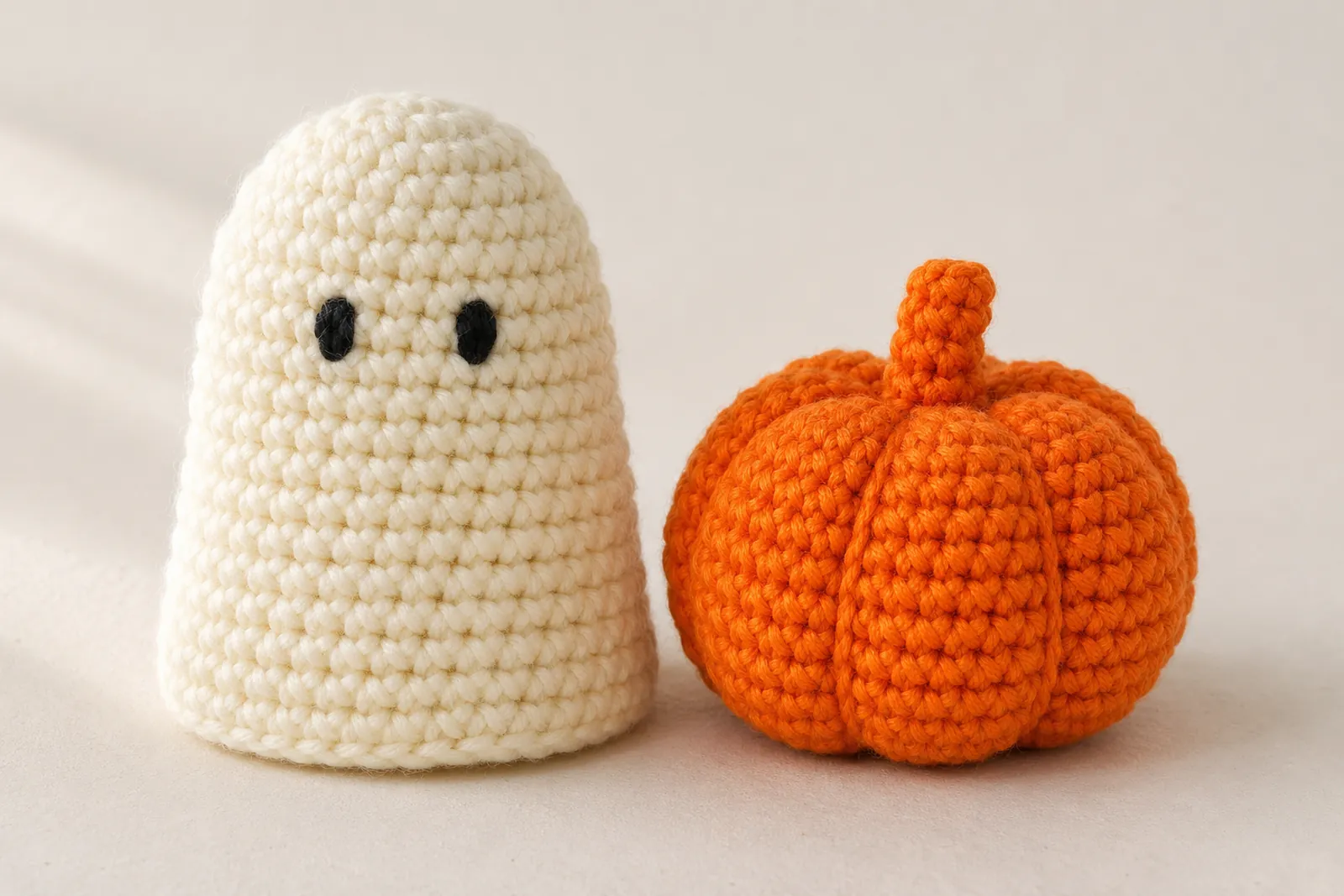
A small cream crochet ghost with an embroidered face beside a small orange crochet pumpkin A ghost and a pumpkin: two rounded shapes that need only careful stuffing.
Spiders and Other Small Shapes

A spider is the Halloween shape with the most parts, so it is where a beginner meets legs and where the small-part rules matter most. Roundups also list bats, candy corn and eyeballs as small shapes. The same legs, eyes and parts questions apply to all of them.

Spider Legs

A crochet spider has eight legs, which you can crochet as you go as chain loops slip-stitched into the body or make separately and sew on. Legs crocheted as you go need no sewing, which makes them the easier route. One page adds a pipe cleaner so the legs bend; some guides say to keep wire out of a toy for a young child, so see the crochet toys and games guide for materials. Before I close a spider, I give every leg a gentle tug, because a leg that is going to come off is easier to fix while the body is open. Try the Spider Amigurumi.

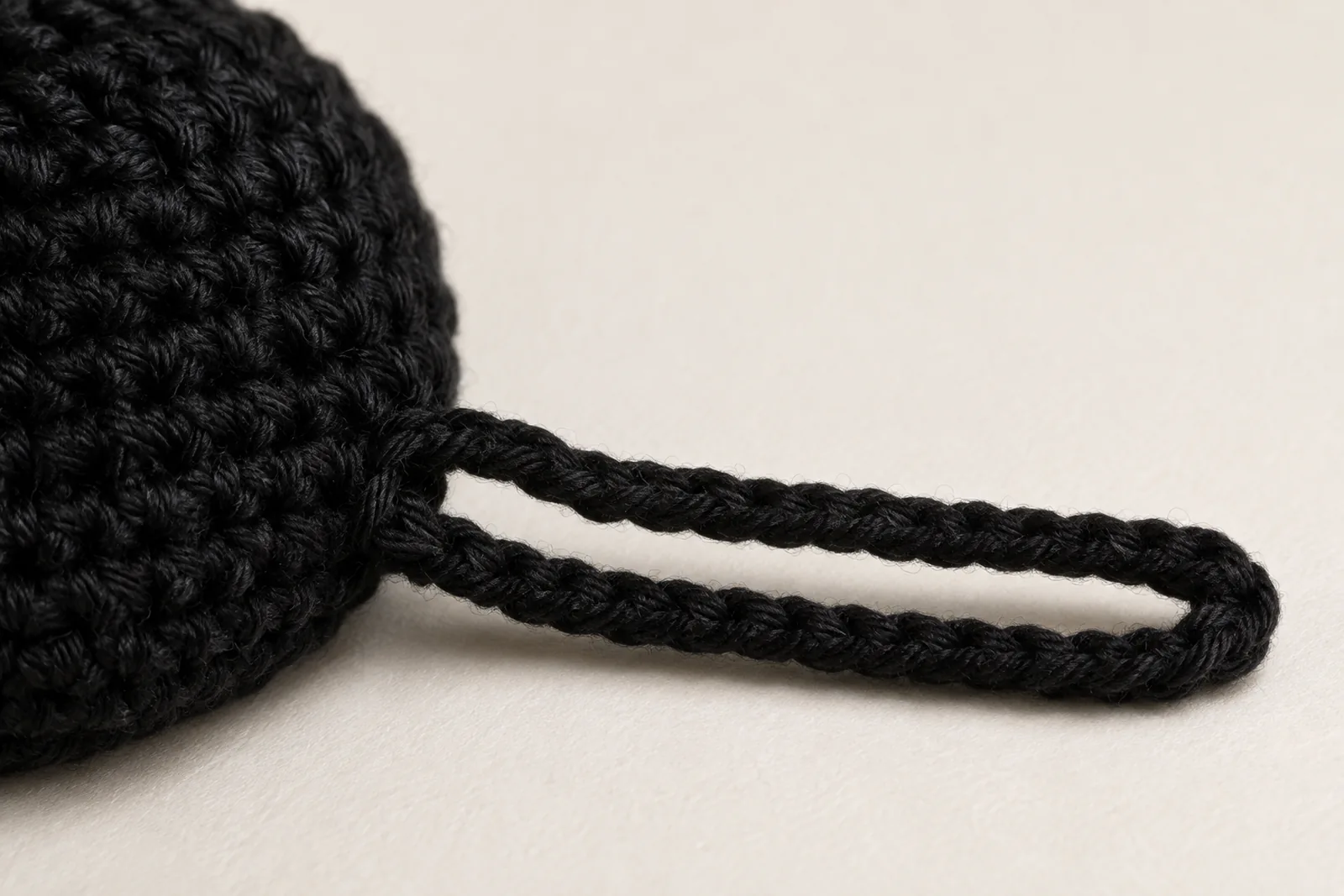
Close-up of one crochet spider leg joined to a small black stuffed body One leg joined to the body: tug each leg before the body is closed.
Eyes and Small Parts on Halloween Toys

For a baby or very young child, guides say to embroider the eyes or use eyes that meet your country’s rules, and never to use buttons. Under one year, guides prefer yarn eyes, and guides differ on plastic eyes for toddlers. A spider can have two or four eyes, and each plastic eye is another small part. For children under 3, guides say to avoid small parts that could come off; some use about 1¼ in (3 cm) as the size, though sources vary. Decor out of a child’s reach is not the same as a toy. Rules differ by country; this page calls no toy, eye or part safe. See amigurumi safety eyes and the toys guide.

Black, Orange and White

Black, orange and white do most of the work in Halloween crochet, and black is the one that is hard to see while you crochet. This section chooses the colors first and then covers working in black yarn. The colors are simple; the black takes the care.

Choosing Orange, Black and White

Halloween crochet runs on three colors, black, orange and white or cream, and a dark yarn should be tested before it sits next to a pale one. A ghost is white or cream, a pumpkin is orange and a spider is black or dark gray; a little green or purple adds variety without crowding the three. One guide ranks bold dark colors such as black as the highest bleed risk, so soak a swatch in lukewarm water for at least 20 minutes first; the best yarn for granny squares guide has the full test. Attach care information if the piece is a gift.

Working With Black Yarn

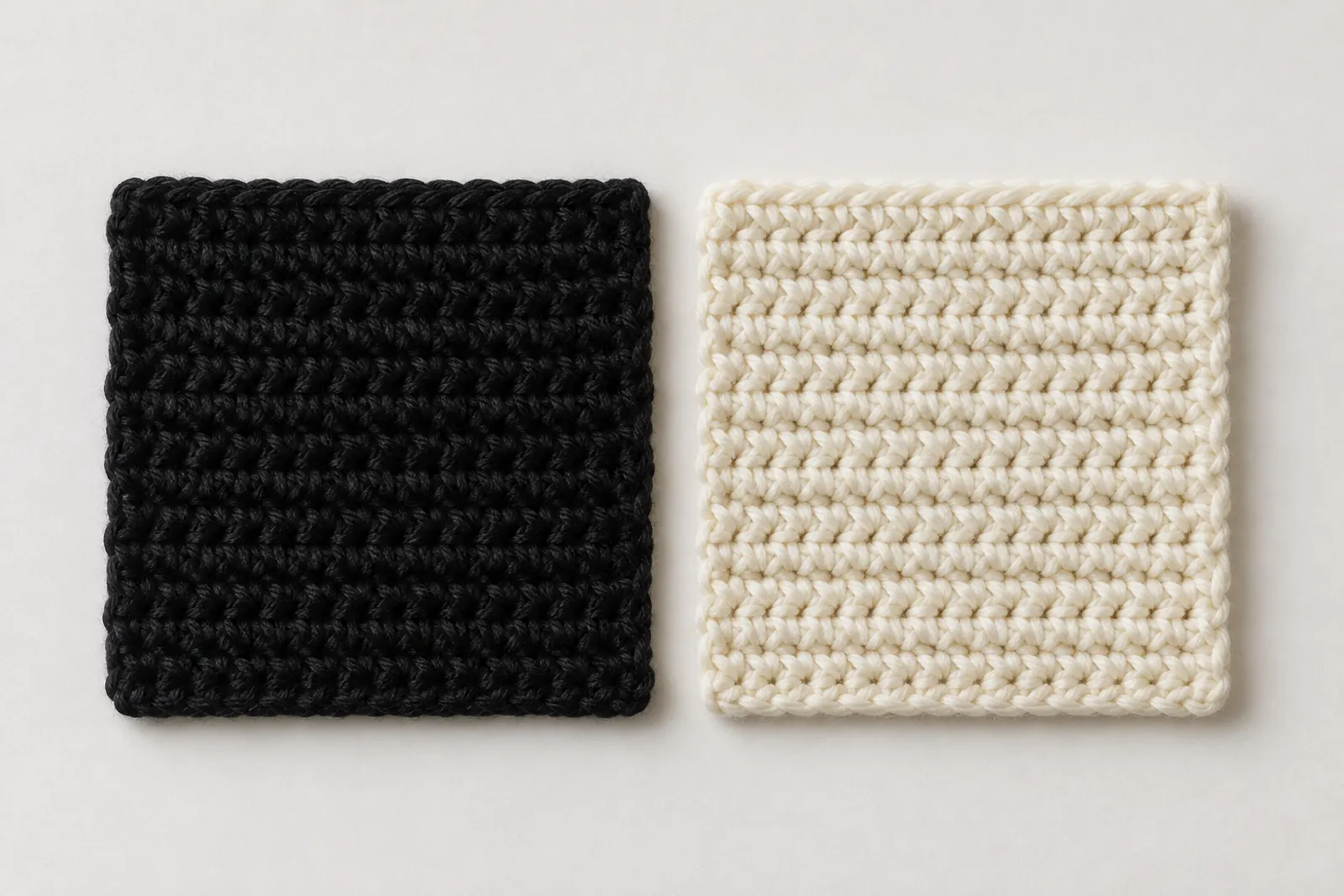
To crochet with black yarn, work in daylight or under a bright lamp, and rest the work on a pale surface so the stitches stand out. A learner book says to avoid black or very dark yarn for a first sweater because the stitches are very hard to tell apart, even for an experienced crocheter. Counting often, putting a marker every so many stitches and choosing simple stitches also help, since detailed texture is hard to see on dark yarn. A reader comment says a slightly sheeny black shows stitches better than a matte one. When I work in black, I sit by a window or under a bright lamp and put a stitch marker at the start of every round.

A small black crochet swatch beside a small cream crochet swatch in the same stitch Black and cream swatches in the same stitch: the dark stitches are harder to see.
Decor, Baskets and a Blanket

The site has no Halloween decor pattern, so you can decorate with orange and black in patterns that are not Halloween patterns, and make the one Halloween blanket. Browse the home decor patterns for ideas. The ideas below are about color and use.

Decorating With Baskets and a House

A basket in orange or black by the door, or a small house among the Halloween shapes, decorates for the season without being a Halloween pattern. Fill a basket with treats for trick-or-treaters, or set the house on a shelf with the ghost, pumpkin and spider. None of these is a Halloween pattern, so choose the colors yourself. A basket that holds treats is a household object, not a toy, so wash it as the yarn label says. Try the Round Hanging Basket Set, the Teardrop Hanging Basket or the Mushroom House.

Garlands, Wall Pieces and a Blanket

A Halloween blanket is the longest Halloween crochet project, so swatch first and give it several weeks, while garlands and wall pieces are flat motifs that suit scraps. Bats, pumpkins, ghosts and webs are common motifs, joined in a row or along a chain; a learner book makes garland parts separately and joins them along a chain of the length you want. The site has no Halloween garland pattern, so browse the holiday and seasonal patterns hub for the current list. Match the gauge on the blanket so the finished size is right, and see crochet holiday planning for when to start. Attach care information if it is a gift. Try the Halloween Blanket.

Make a Small Halloween Set

A ghost, a pumpkin and a spider look best as a set, with the same yarn weight and the same style of face. For a bigger season, the Christmas crochet patterns guide sorts patterns by size and time. Matching the set takes only a few choices.

A Ghost, a Pumpkin and a Spider Together

To make a Halloween crochet set, use the same yarn weight and hook for the ghost, the pumpkin and the spider and give all three the same style of face. Embroidered faces on all three keep the eyes matching. Vary the size slightly for a more natural shelf look, with the pumpkin the smallest or largest. Keep the set to one weight of yarn so the three sit at a similar scale. The same shapes work in spring, and the Easter crochet patterns guide has the spring versions.

A cream ghost, an orange pumpkin and a black spider side by side, a small set of Halloween crochet patterns A ghost, a pumpkin and a spider: a small Halloween set in cream, orange and black.
Display and Keep

Keep Halloween crochet pieces clean and dry between seasons, display pieces with small parts out of a young child’s reach and attach care information to any gift. Store them in a bag or box where they are not squashed. Wash as the yarn label says, since the label names the fiber and the care. Display any piece you are unsure about out of reach too, and this page calls no toy safe. Fix any loose thread or leg before the piece goes back out each year.

Key Takeaways

  • Halloween crochet patterns are mostly small stuffed shapes, and a ghost, a pumpkin and a spider are the easiest to start with.
  • An easy project has a rounded shape, mostly single crochet, no sewn-on parts and stitches tight enough that the stuffing does not show.
  • Spider legs can be crocheted as you go as chain loops slip-stitched into the body, which needs no sewing; tug every leg before the body is closed.
  • To crochet with black yarn, work in daylight or under a bright lamp, use a pale surface and put a stitch marker at the start of every round.
  • For a baby or very young child, guides say to embroider the eyes or use eyes that meet your country’s rules, and never to use buttons; this page calls no eye safe.

Frequently Asked Questions

What are the easiest Halloween crochet patterns for beginners?

The easiest Halloween crochet patterns are a ghost, a pumpkin and a spider, which are rounded shapes in mostly single crochet with few sewn parts. Choose tight stitches so the stuffing does not show, and make a small test piece first. Browse the beginner patterns hub by level. The Which Halloween Crochet Suits a Beginner section above has the table.

How do you make crochet spider legs?

Make crochet spider legs by crocheting each one as you go, as a chain loop slip-stitched into the body, or by making eight separate legs and sewing them on. Legs crocheted as you go need no sewing, so they suit a beginner. Tug every leg before you close the body. Pages differ, so check your pattern. The Spider Legs section above has more.

Is black yarn harder to crochet with?

Yes: a learner book says stitches in black or very dark yarn are very hard to tell apart, and it advises against it for a first sweater. Work in daylight or under a bright lamp, rest the work on a pale surface, put a stitch marker at the start of every round and count often. The Working With Black Yarn section above has more.

What eyes should I use on a Halloween toy for a child?

For a Halloween toy for a baby or very young child, guides say to embroider the eyes or use eyes that meet your country’s rules, and never to use buttons. They also say to avoid small parts that can come off for children under 3, and guides differ on plastic eyes for toddlers. Rules differ by country, so check yours; this page calls no eye safe. The Eyes and Small Parts on Halloween Toys section above has more.

Which Halloween crochet patterns does the site have?

The site has four Halloween crochet patterns: Ghost Plush and Pumpkin Doll Amigurumi in the holiday hub, Spider Amigurumi, and the Halloween Blanket. Home decor patterns such as baskets and a house are not Halloween patterns, but they work as decorating ideas in orange and black. Check the holiday patterns hub for the current list. The Decor, Baskets and a Blanket section above has more.

Portrait of Linda Davidsen

Written by

Linda Davidsen

Designer & founder

Linda has been crocheting for over 15 years and designs cozy, beginner-friendly patterns that anyone can finish in a weekend.

Keep reading

All posts