Common Crochet Mistakes and How to Fix Them
Twisted chains, wavy edges, wrong stitch counts: the common crochet mistakes beginners make, how to spot each one and how to fix it.
Read More: Common Crochet Mistakes and How to Fix Them 🧶 Yarn Calculator
Beginner Guides
How long does it take to learn crochet? A realistic timeline, what you can make in a weekend vs three months, and what slows beginners down.
 By Linda Davidsen · · 12 min read
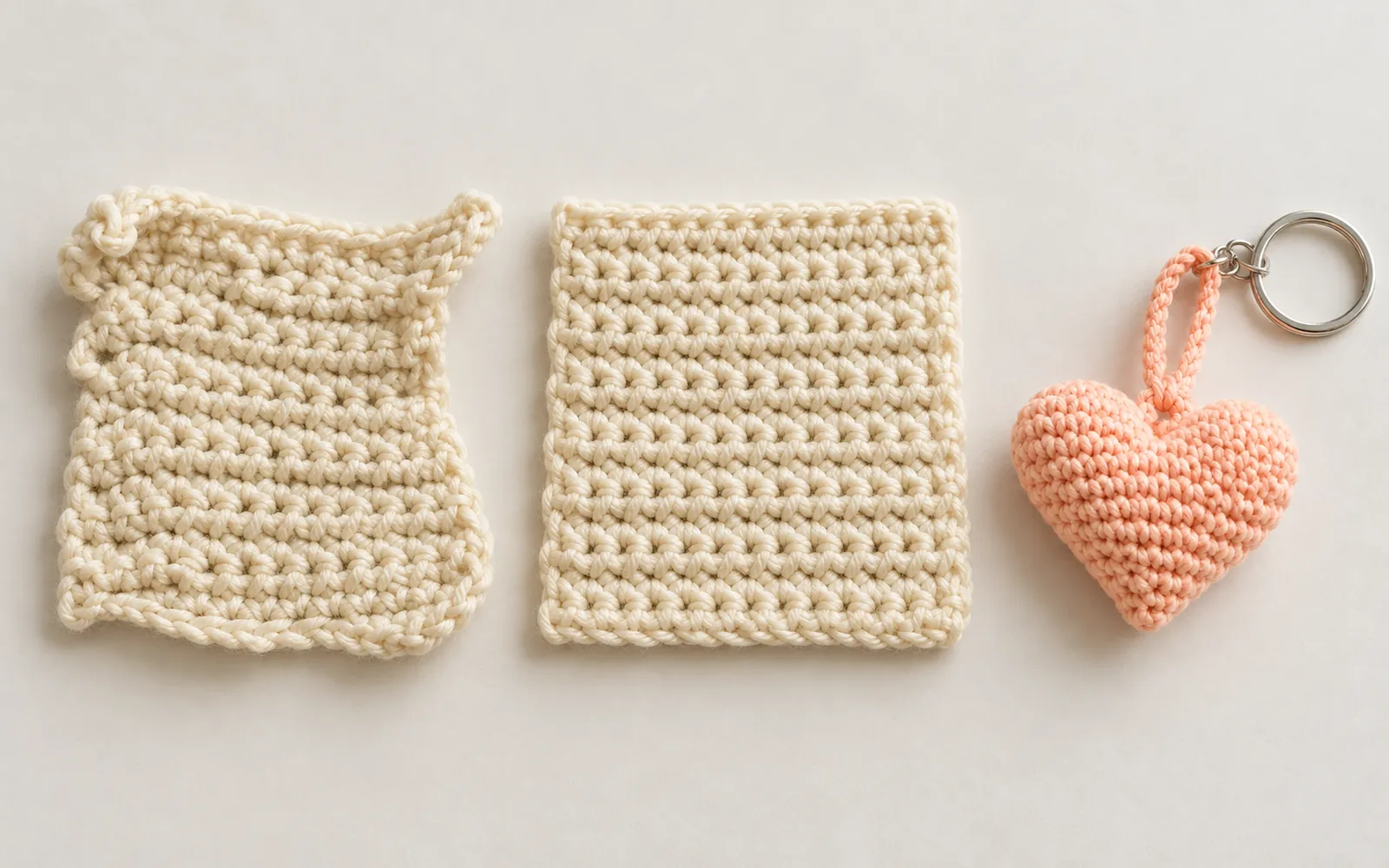
Quick answer: How long does it take to learn crochet? Most beginners can make a slip knot and a chain in their first session, finish a small project such as a keychain within about a week of short sessions, and follow a simple pattern after about a month. Pace depends more on practice hours than on days passed.
You made a wobbly chain last night, and now you are wondering if you are slow or if everyone starts this way. Almost everyone starts this way. The better question is not how many days it takes, but how many hours of practice you give it.
This page gives a realistic timeline in four stages, from your first session to about three months. It also shows what you can make in a weekend, five signs you have the basics, what slows most beginners down, and a simple practice plan.
My advice is to count sessions, not days. Ten short sessions teach your hands more than one long, tired afternoon, and a finished small project beats a half-made big one every single time.
Practice hours decide how fast you learn crochet. Someone who practices 20 minutes four times a week and someone who practices once a week will end up in very different places, even after the same number of days. That is an editorial estimate, not a study.
Crochet is a hand skill, not just a set of facts. Your hands have to learn the motion, hold an even tension and recognize a stitch by sight, and all three build through repeated short sessions. Muscle memory is when your hands repeat a motion without you thinking through each step. A week with one session is not the same as a week with four. No study of how long crochet takes to learn was found, so every timing on this page is an estimate.
The grip section of the Beginner’s Complete Guide to Crochet covers the hook, and best yarn for beginners covers the yarn.
Published crochet timelines are estimates, not measurements, so treat them as a rough guide. Most come from a writer’s or a course’s own experience, not from data. One beginner blog says “one to two weeks” for a total beginner, and at least one other article repeats it. A free four-week course lists about 15 to 20 hours of lessons in total. That does not make them useless, but a range like this cannot know how often you practice, what yarn you use or how you learn. Use both as reference points, not rules.
Every timing below is an estimate for someone who practices a few times a week. Each stage has a check for when you are ready to move on.
| Stage | Roughly how long | What you can usually do | A project to try |
|---|---|---|---|
| First session | 1 session of about 30–60 minutes | Hold the hook and yarn, make a slip knot, chain about 10 | None; make a chain swatch |
| First week | A few short sessions | Single crochet in straight rows, count stitches at the end of a row, finish a keychain | Heart Keychain |
| First month | 3–4 sessions a week | Half double and double crochet, work in the round, read a simple pattern with abbreviations | Citrus Slice Coaster or Minimal Frog Amigurumi |
| Three months | Regular practice | Follow a beginner pattern with a few shaping steps, fix a mistake without starting over | Modern Diamond Beanie |
A realistic timeline for a beginner who practices a few times a week (an estimate).
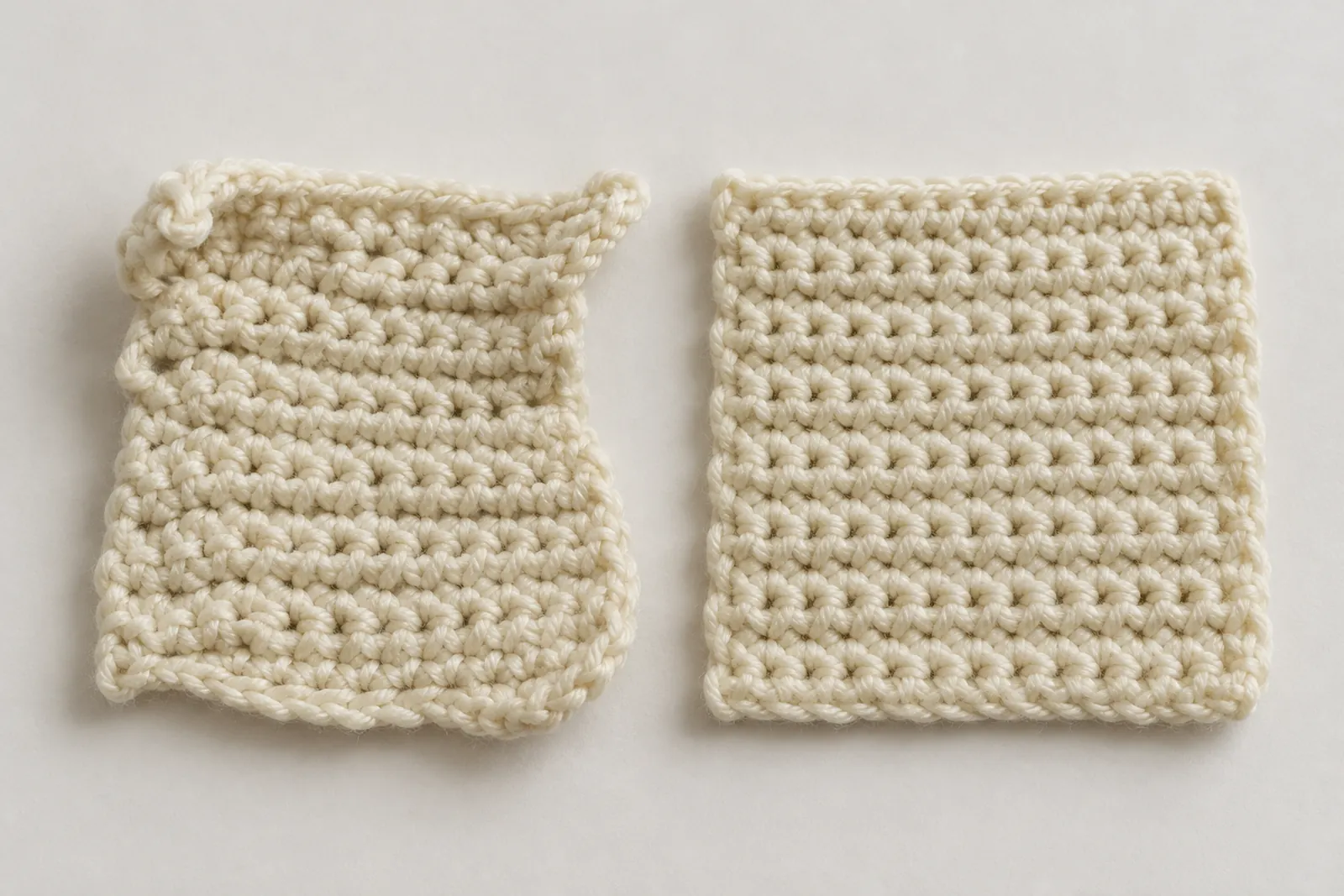 A first-week swatch (left) and the same person’s swatch a month later (right).
In your first session, aim for a slip knot and a chain of about 10 stitches. A wobbly chain is normal, and uneven stitches this early are expected, not a sign that you are slow. The check for moving on is simple: you can make a chain of 10 without looking up the steps. If the grip feels awkward, how to hold a crochet hook walks through it, and how to single crochet is the next step once the chain feels easy.
The goal this week is single crochet in rows, with straight edges, counting your stitches at the end of each row. Then finish one tiny project to see the full cycle of starting, working and finishing. The library lists the Heart Keychain at about 20 minutes once the stitches are familiar; the pattern’s own page has the time to trust. You are ready for the next stage when your row ends have the same number of stitches as the row before. If rows keep growing or shrinking, revisit how to single crochet. Free crochet patterns for beginners has the next small project.
Month one adds three skills: half double and double crochet, working in the round, and reading a simple pattern with abbreviations. Try a coaster or the mini frog, which the library lists at under two hours. Start with how to read a crochet pattern, then how to crochet in the round and the magic ring crochet tutorial. The check: you can read a one-line pattern instruction and know what each abbreviation means.
At about three months, many beginners can follow a simple pattern and fix small mistakes without starting over. The goal is a beginner pattern with a few shaping steps, and spotting a mistake a few rows back instead of ripping out the whole piece. A beanie, which the library lists at one evening, or a first teddy bear are realistic targets. Many people say this is where crochet shifts from following steps to understanding the fabric, though not everyone feels it at the same time. For fixes, see common crochet mistakes.
These are the library’s listed times for people who already know the stitches, not a promise for a first attempt, which will likely take longer. Browse more in our beginner crochet patterns.
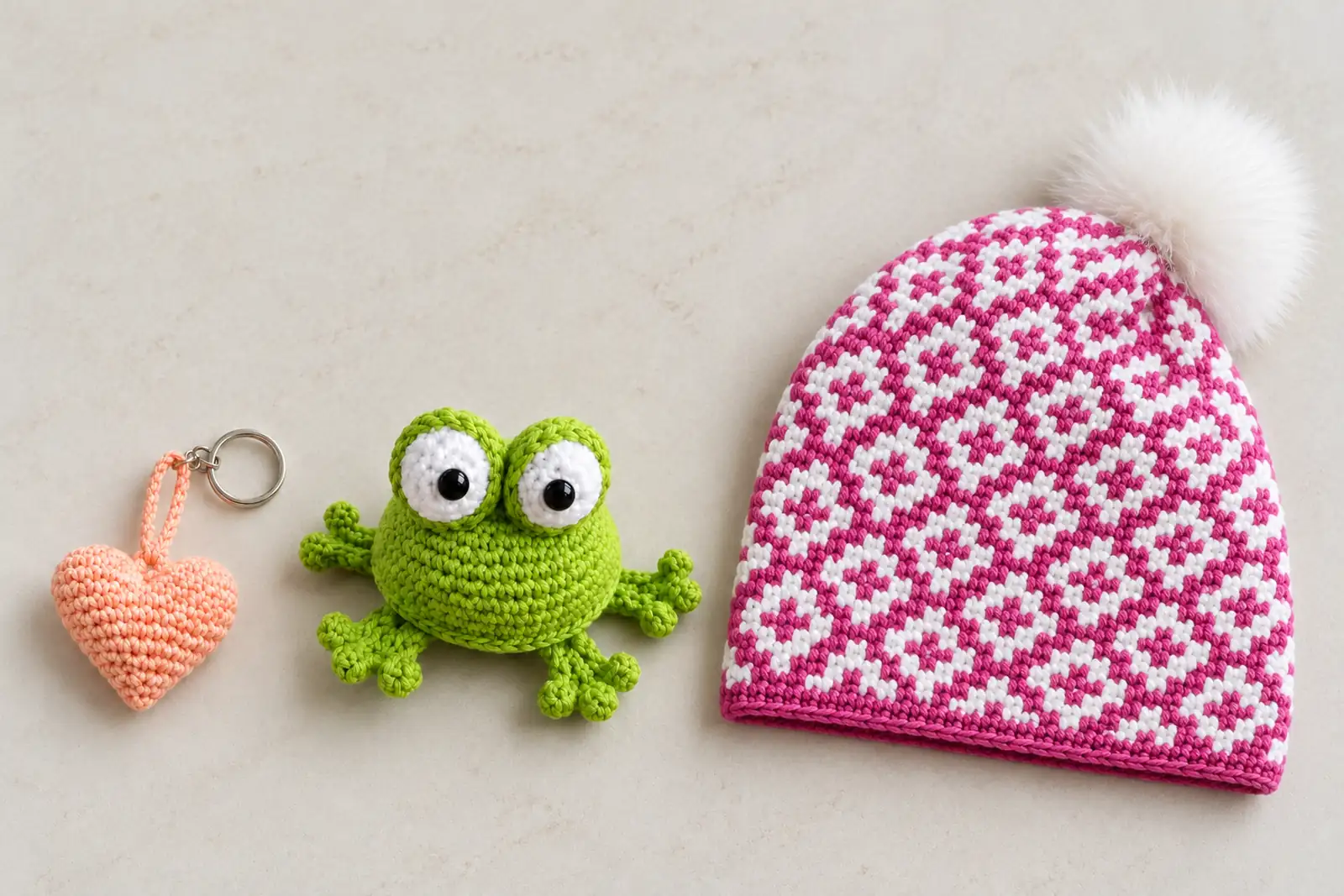 A weekend project and a three-month project.
A weekend of a few short sessions is enough for these once the stitches feel familiar.
Each pattern’s own page shows its time. The full list is in free crochet patterns for beginners.
By about three months, a beanie or a small stuffed toy is a realistic goal. The Modern Diamond Beanie is listed at one evening, and the Teddy Bear at longer than two hours. The beanie adds a few shaping steps, and the bear adds shaping and stuffing, but both build on the stitches from your first month. Longer projects mostly need steadier tension and careful counting, not a pile of new skills. Pick whichever you would actually wear or give. None of this is a promise: your own pace and practice hours set the result.
Treat these checks as a guide, not a test. You can run through them in about 10 minutes with a hook, some yarn and a finished piece nearby.
Most slow progress comes from four causes that are easy to change. Each one has a quick fix below, and the linked pages hold the detail. None of them has anything to do with talent.
A blanket or sweater as a first project takes months to finish and hides early mistakes, so make a small first project, such as a keychain or coaster, and move on from there. A finished small project also gives you a win to build on. The list of free crochet patterns for beginners is a good place to pick one.
A tight grip tires your hand and makes stitches hard to insert into, so relax your hold on the hook, loosen the way you hold the yarn and take short breaks. Stitches that feel stiff and are hard to enter are a common sign. How to hold a crochet hook shows relaxed grips. If hand pain continues, check with a health professional.
Dark, fuzzy or variegated yarn makes stitches hard to see and count, and hard to unpick when you need to redo a row, so switch to a smooth, light-colored worsted yarn for practice. Best yarn for beginners explains what to look for on the shelf, including the 5.0–5.5 mm (H/8 to I/9) hook that suits it.
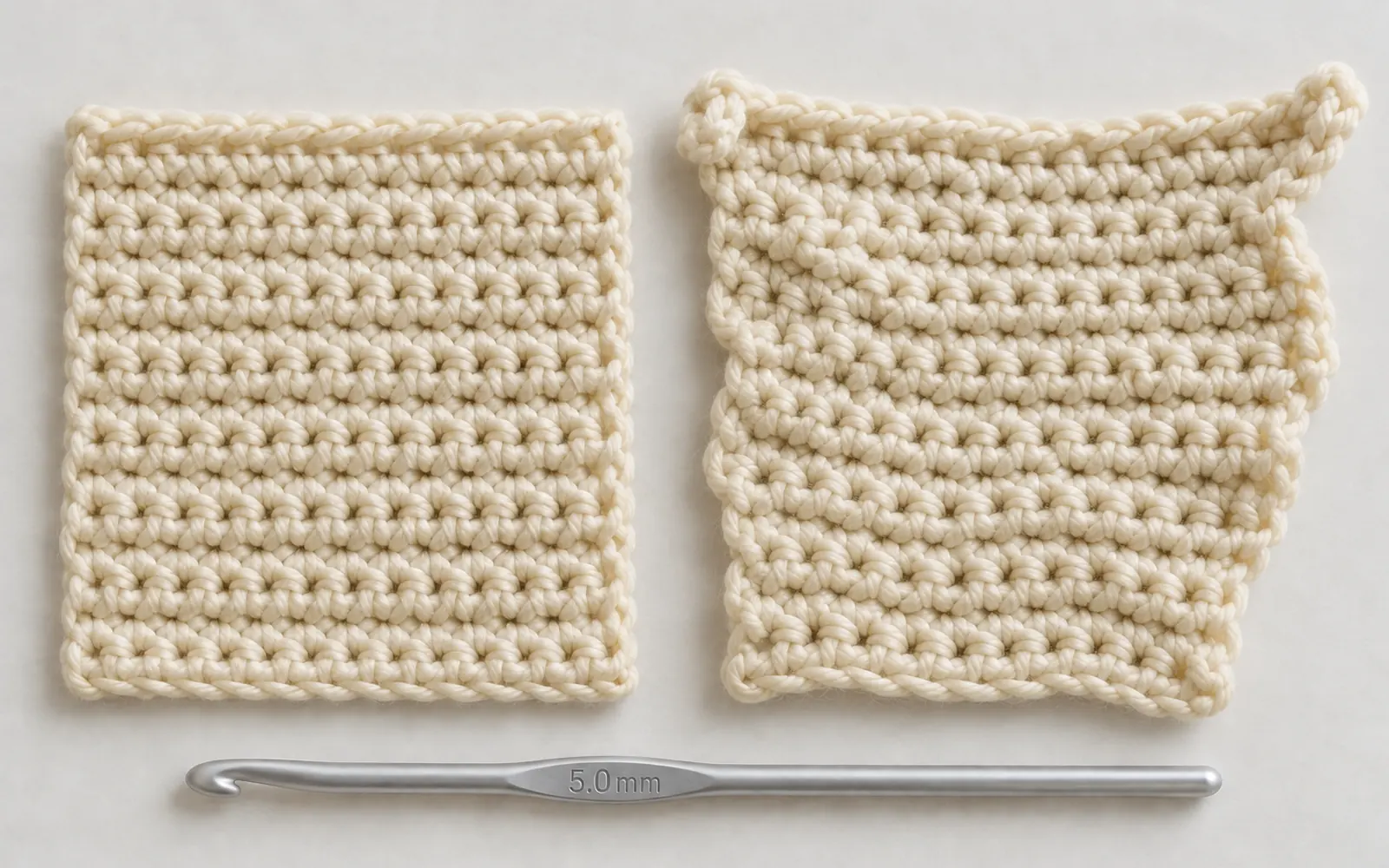
Not counting stitches at row ends and skipping the abbreviation key leads to wavy edges and wrong shapes, so count at the end of every row and read the key first. A wavy edge usually means the stitch count drifted several rows ago. Common crochet mistakes has the fixes, and how to read a crochet pattern explains the key.
This plan uses sessions of 20 to 30 minutes, three or four times a week. Treat it as a suggested rhythm and slow down whenever you need to. For how each stitch is made, see crochet stitches and techniques.
Finish each week’s goal before you move on, even if it takes an extra session.
There is no firm evidence that one is faster to learn. Crochet uses one hook and one working loop, while knitting uses two needles and keeps many stitches on the needle at once. Opinions differ on which is easier to start. Some people say crochet’s single hook is simpler, and others say knitting’s stitches are easier to check. Sources disagree, and this page cannot give a time difference between the two. The honest answer is that it varies by person, so choose the craft you will actually practice. Whichever you pick, a smooth worsted yarn and a comfortable hook make early stitches easier to see. Either way, the first weeks feel clumsy, and the same rule applies: short, regular sessions.
In the first session, most beginners can make a slip knot and a chain of about 10 stitches. Comfortable basics, meaning single, half double and double crochet and counting your stitches, usually take a few weeks of regular practice. These are estimates for someone who practices a few times a week. The four-stage timeline above lays out each step.
Yes, the very basics. In a weekend of a few short sessions you can learn to chain and work single crochet, and you may finish a small project such as the Heart Keychain. Feeling comfortable with the basics takes longer. These timings are estimates, and the weekend section above lists quick projects with their library times.
A first small project can take under an hour once you know the stitches: the library lists the Heart Keychain at about 20 minutes and the Minimal Frog Amigurumi at under two hours. Your first attempt may take longer, which is normal. Each pattern’s own page shows its time, and free crochet patterns for beginners has more projects.
That is normal. Pace depends on practice hours, prior experience with similar crafts and your setup of yarn and hook, not on talent. Instead of comparing yourself with others, run the five-signs check above. If one of them keeps failing, the section on what slows beginners down has a fix for each common cause.
There is no firm evidence either way. Crochet uses one hook and one working loop, while knitting keeps its stitches on two needles. Sources disagree about which is easier, so choose the craft you will actually practice. The comparison section above sets out both sides without ranking them or claiming a time difference.
Short sessions several times a week work better than one long session. A good suggestion is 20–30 minutes, three or four times a week, until the basics feel automatic. That is a suggestion, not a rule, and the four-week plan above shows one way to use those sessions.
For the whole path from first stitch to first finished project, start with the Beginner’s Complete Guide to Crochet.
Ad-free, printable, and ready for your project bag. We'll also send you one new free pattern every week.
No spam. Unsubscribe anytime.
Written by
Designer & founder
Linda has been crocheting for over 15 years and designs cozy, beginner-friendly patterns that anyone can finish in a weekend.
Keep reading
Twisted chains, wavy edges, wrong stitch counts: the common crochet mistakes beginners make, how to spot each one and how to fix it.
Read More: Common Crochet Mistakes and How to Fix ThemCrochet tools for beginners, simplified: the six you need, the extras that can wait, and a starter kit that avoids wasted money.
Read More: Crochet Tools for Beginners: Need vs. Nice to HaveAre ergonomic crochet hooks worth the price? An honest look at handle shapes, popular brands, who benefits and how to try one cheaply.
Read More: Ergonomic Crochet Hooks: Are They Worth It?