
🧶 Yarn Calculator

Try

Visit our Etsy Shops

Pick a shop to browse. Each one opens on Etsy in a new tab.

Color & Design

Colorblock Crochet: Stripe and Block Placement Guide

Colorblock crochet: stripes versus blocks, how many colors, solid or variegated yarn, blanket layouts, sweater placement, borders and color changes.

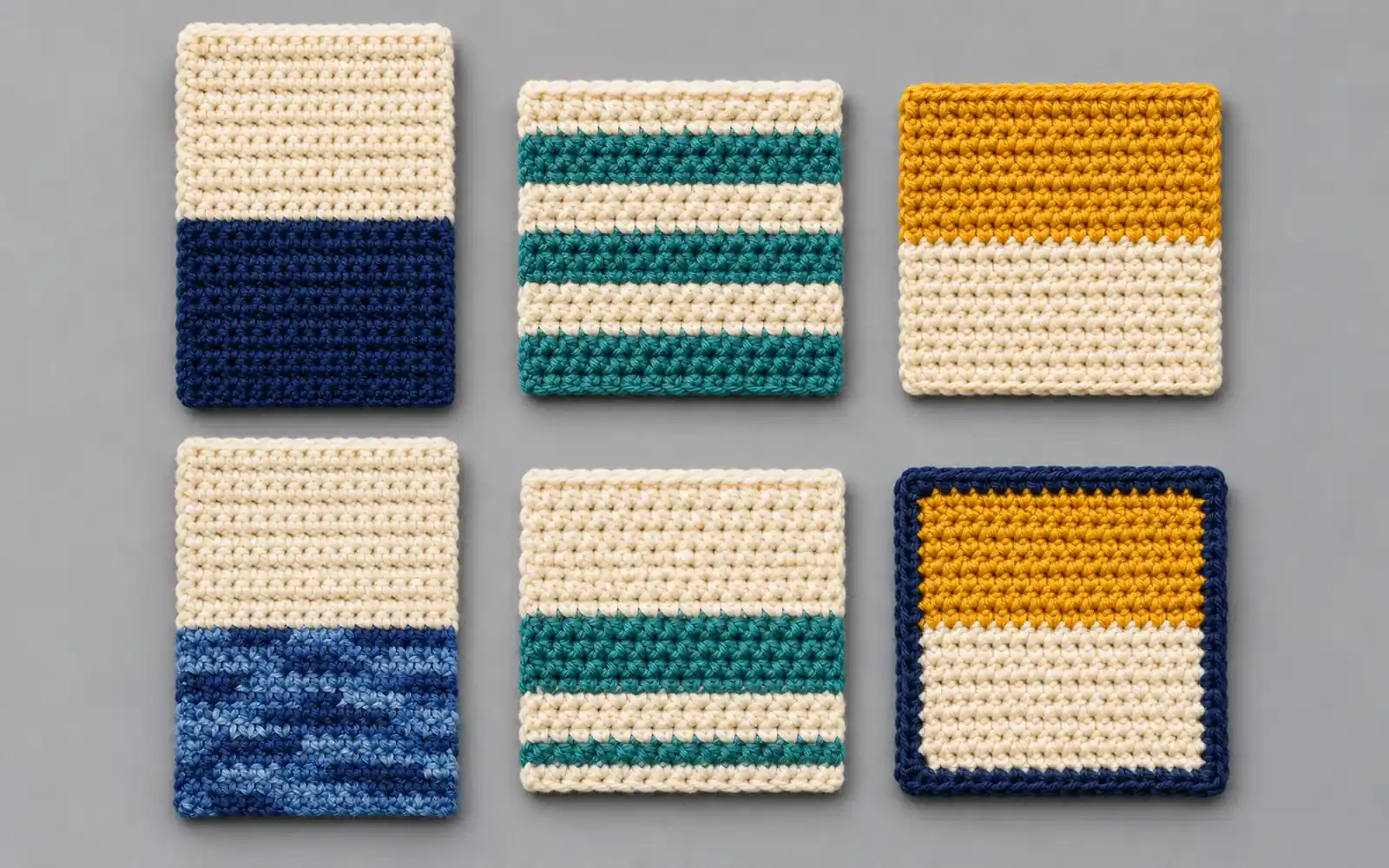
Six crochet swatches showing colorblock and stripe layouts in cream, navy, teal and mustard
Table of Contents
  1. Stripes Versus Color Blocks
  2. Limit the Palette and Pick the Yarn
  3. Block and Stripe Layouts for Blankets
  4. Colorblocking a Sweater or Cardigan
  5. Frame the Blocks With a Border
  6. Where Color Changes and Ends Fall
  7. Key Takeaways
  8. Frequently Asked Questions

Quick answer: Colorblock crochet uses a few large areas of solid color instead of many narrow stripes. Limit the palette to two or three colors, use solid or near-solid yarn, plan where each block goes before you start, and consider a border to frame the work. Changing color every few rows makes stripes, not blocks.

A colorblock project looks planned when the colors are in the right places and unplanned when they are not. The same two colors can look sharp as three wide blocks and busy as a dozen narrow stripes. Where each color goes is a choice patterns often leave to you.

This guide explains colorblock crochet: stripes versus blocks, how many colors to use, and which yarns keep blocks clean. It covers blanket layouts, stripe widths, sweater colorblocking, borders that frame the work, and how to change colors and handle the ends.

Before I buy any yarn for a colorblock project, I sketch the blocks on paper and write the color in each section. Then I can see the amounts before I commit.

Stripes Versus Color Blocks

Stripes and color blocks use the same colors in different amounts, and the number of color changes decides which one you get. The crochet color theory guide covers the color words. Two parts follow: where the line falls, then which projects suit blocks.

Where the Line Falls

Colorblock crochet divides a project into large areas of solid color, and changing color every few rows gives stripes, not blocks. One roundup describes color blocking as large, solid-colored sections instead of gradients or stripes, with bold blocks that sit next to each other. It says the sections are strips or regions, not small squares. A knitting post adds that very frequent changes produce stripes and that too many colors turn blocks into stripes. A stripe is a band of one color that repeats, and a block is one color over a large area. No page gives a fixed number of rows where a stripe becomes a block.

Projects That Suit Blocks

One roundup says blankets, throws, pillows, baskets and bags show colorblocking well because the large areas show off the divisions, and sweaters, cardigans, shawls, hats, cowls and scarves work too. For a first try, it names ribbing, a contrasting final section or a different-colored yoke as simple places to start. Wide, flat pieces such as blankets make the divisions easiest to see. A small project such as a pillow or a basket lets you test a layout with less yarn, and a block needs enough area to read as one color before the next begins.

Limit the Palette and Pick the Yarn

A clean block needs a small palette and a yarn that reads as one color, so the palette and the yarn decide more than the layout does. The how to choose yarn colors guide covers the schemes. Two parts follow: two or three colors, then solid or variegated yarn.

Two or Three Colors, and the Value Question

Keep a colorblock palette to two or three colors, and note that sources differ on contrast: one roundup wants strong contrast, while a knitting post picks similar values. The roundup says two or three strongly contrasting colors give the clearest effect, that neutral pairings and complementary colors each give a different mood, and that same-hue shades are the most subtle. The knitting post picks similar values, even in different hues, and checks by photographing the yarns in black and white; see contrasting colors in crochet. A neutral can be one of the colors; see neutral crochet colors.

Solid, Near-Solid or Variegated Yarn

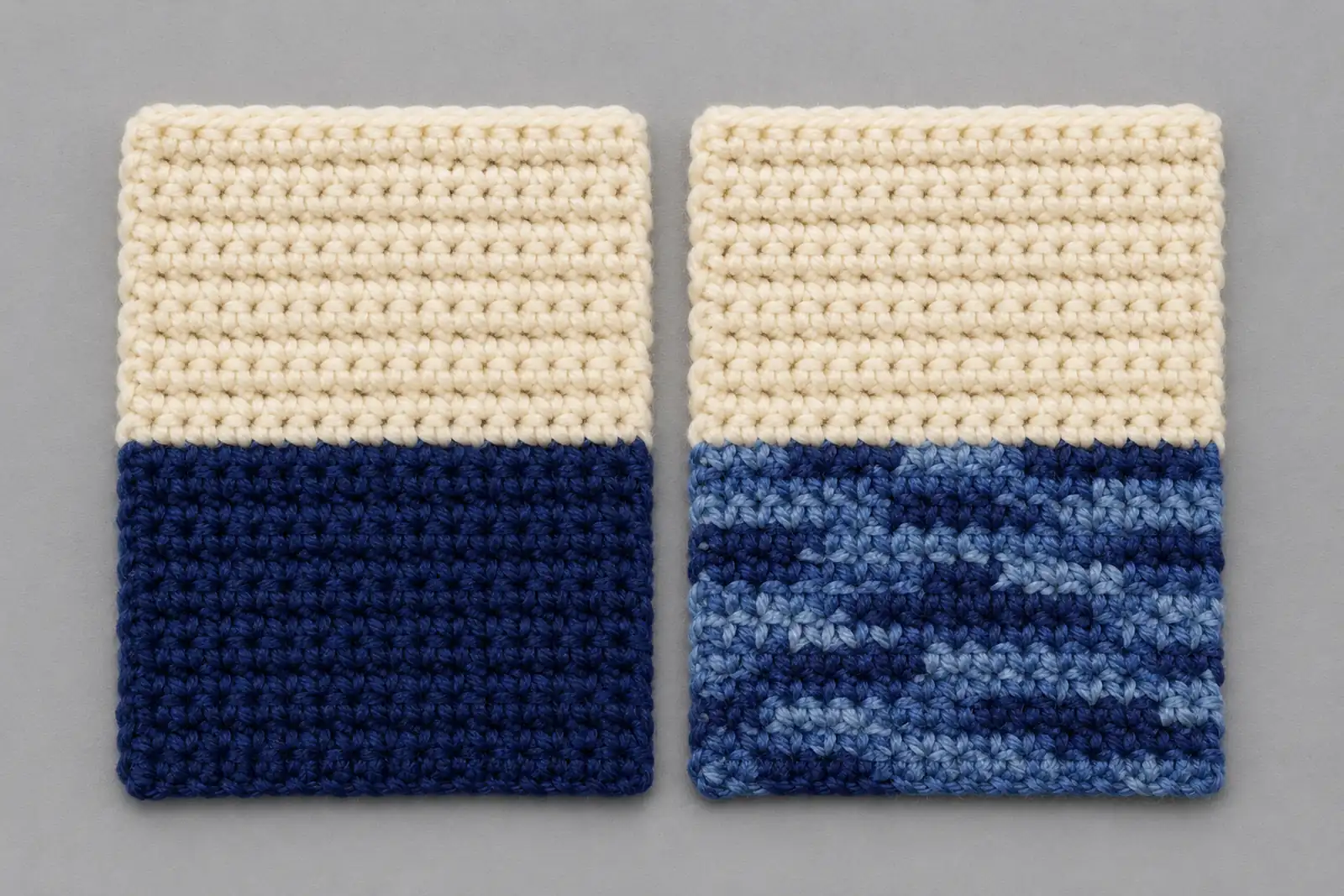
Solid and near-solid yarns read as clean blocks, while variegated yarns break the blocks up, according to a knitting post. It says solid and heathered yarns work well, and almost-solid kettle-dyed colorways read as solid blocks. Buy all the yarn for a project at once, because some guides say different dye lots can differ slightly in shade. One guide rates bold dark colors such as blue, red and black the highest bleeding risk, so test a swatch in lukewarm water for at least 20 minutes before you put one beside cream. The photo shows a solid block and a variegated block, each next to cream.

Two cream and blue crochet swatches for colorblock crochet, one with a solid navy block and one with a variegated blue block A solid block and a variegated block, each next to cream.
Block and Stripe Layouts for Blankets

A blanket gives you the most room to place color, and the layout comes down to a few clear shapes. The crochet baby blanket guide covers blanket sizing and safety. Two parts follow: layouts to try, then stripe widths and proportions.

Layouts to Try

A blanket layout can be even stripes, two blocks side by side, one large and one narrow block, or a large block with a corner section in a second color; the diagram draws all four. This is a general description of what block blankets do, not a rule. One roundup says to plan where each color goes and to confirm you have enough yarn for each section, and a learner book’s blanket page says to make a color sketch and crochet a few sample squares before buying any yarn. Browse blankets and throws for more.

Even stripes Two blocks Large and narrow Corner section
Four blanket layouts: even stripes, two blocks, one large and one narrow block, and a corner section.

Try the Rainbow Afghan or the Boho Rainbow Baby Blanket.

Stripe Widths and Proportions

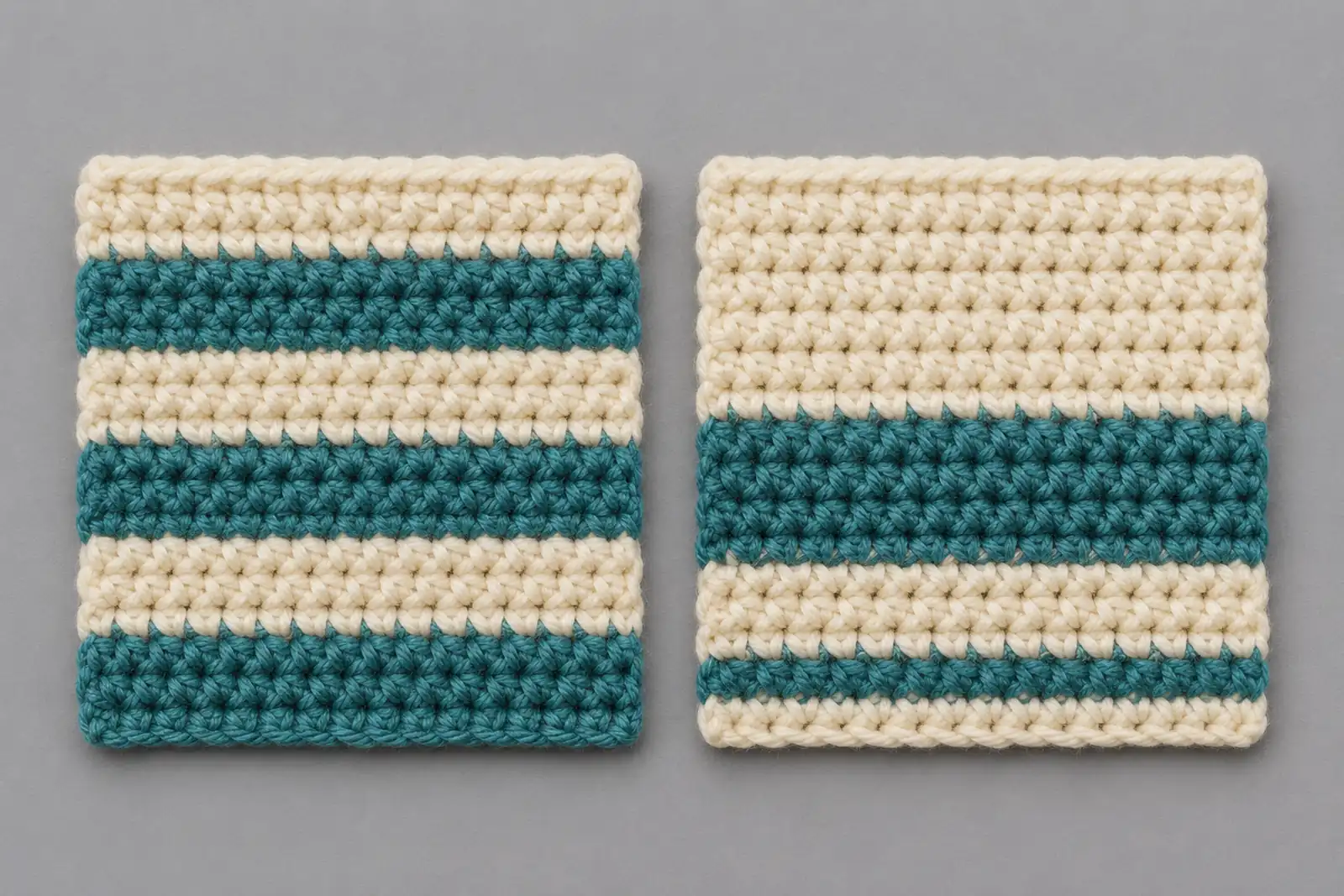
Stripe widths can be equal, graded or random, and one knitting post used the Fibonacci sequence (1, 1, 2, 3, 5 and on) for a sweater’s stripes as the designer’s own choice, not a rule. It used a random stripe generator for the sleeves, so each one starts at a different point. Graded stripes grow wider in steps, and equal stripes repeat one width. One guide’s blanket pattern repeats a stripe of two rows each in three colors. Spike stitch makes textured color stripes; see spike stitch crochet. The photo shows equal-width stripes beside stripes that grow wider.
Two teal and cream crochet swatches side by side, one with equal-width stripes and one with stripes that grow wider from bottom to top Equal-width stripes beside stripes that grow wider.

Colorblocking a Sweater or Cardigan

A garment has natural places for a color change, and those places are where the shape changes, such as a yoke, a cuff or a hem. The how to make a crochet cardigan guide covers sizing and construction. Two parts follow: where to put the change, then planning the amounts.

Where to Put the Change

Garment colorblocks usually sit where the shape changes: at the yoke, the cuffs, the lower body or the edging, or above or below the full bust line. One crochet sweater page puts the second color on the lower body, cuffs and edging, so the lines fall where the body and sleeves change direction, and it advises two contrasting shades. A knitting post lets attached parts such as sleeves, pockets and hoods contrast with the body. One roundup names ribbing, a contrasting final section and a different-colored yoke as simple places to start.

Try the Colorblock Cardigan or the Patchwork Sweater.

Plan the Amounts

Decide where each color goes before you cast on, and check the yarn for every section, because each change adds ends to weave in. One roundup says to confirm you have enough yarn for each section and warns that every color change leaves tails, so expect more ends than a single-color project. Note each section on its label so you know which skein goes where. Buy all the yarn at once and keep the labels, since some guides say different dye lots can differ slightly in shade. A larger block needs more yarn than a narrow one.

Frame the Blocks With a Border

A border is the last color decision in a colorblock project, and it can frame the blocks, neaten the edges and hide carried yarn. This section covers color and edges, not stitch patterns. Two parts follow: what a border does, then choosing its color.

What a Border Does

A border straightens wavy edges, gives all four sides a uniform look and hides carried yarn, and its first round sets how flat it lies. One guide says the edges of flat work can turn wavy from fluctuating tension, and that a border of double crochet straightens the sides and makes all four edges uniform. Another adds that an edge or border hides carried strands. One crochet page says a border can pull the whole design together, and that too many stitches along the sides cause ruffling. A border is a band of stitches worked around the edge of a piece.

Choose the Border Color

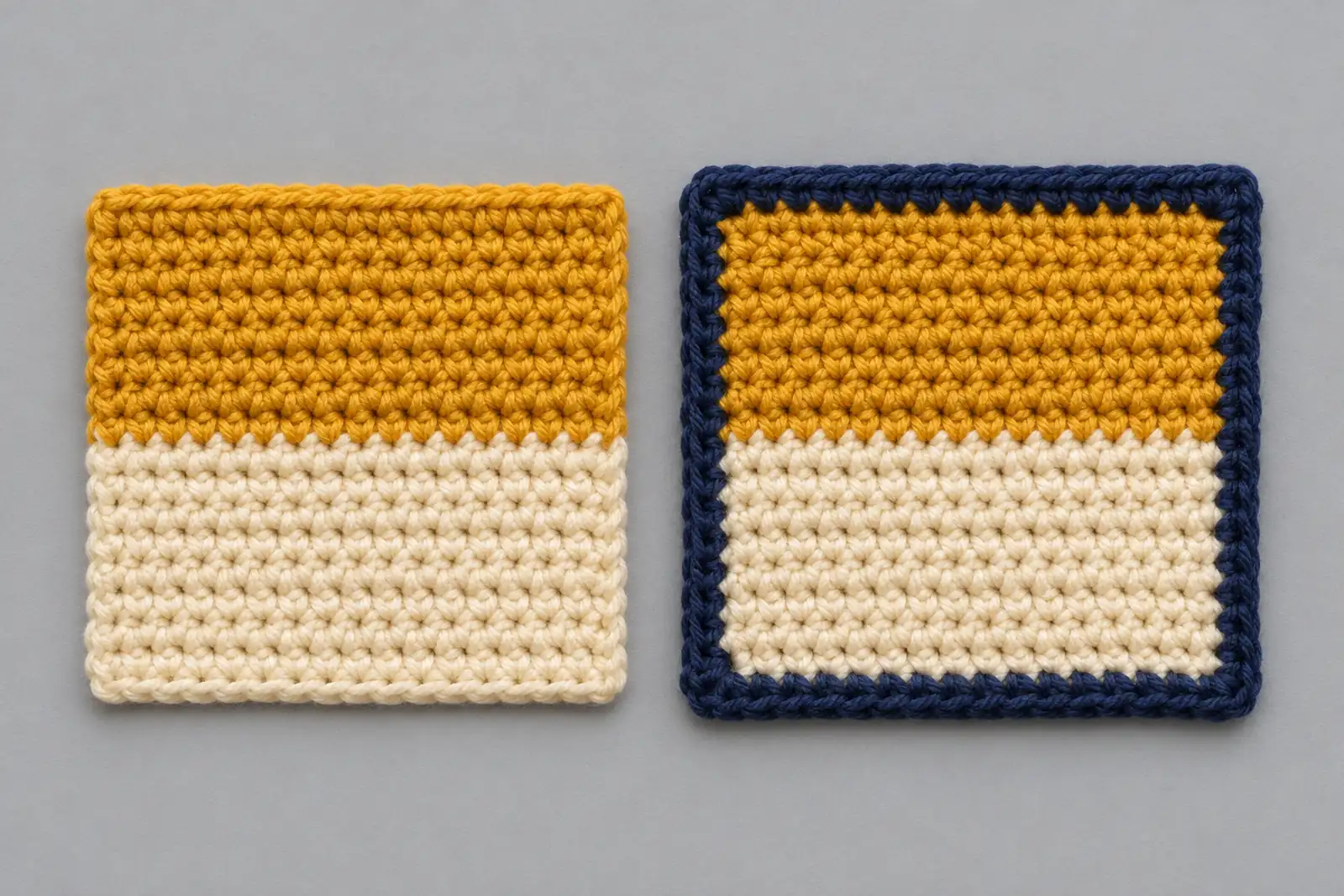
A border in the same color as the work neatens it, while a contrasting border stands out, so a block color or a neutral are the simplest picks. One guide says a same-color border gives a seamless look and a contrasting one adds character. I frame the blocks with a border in one color. A border in one of the block colors repeats the palette without adding a new one, and a neutral border can sit behind the blocks. The photo shows two blocks without and with a one-color border.
Two crochet swatches of cream and mustard blocks side by side, the left without a border and the right framed by a navy border The same two blocks without and with a one-color border.
Where Color Changes and Ends Fall

Colorblocking means few color changes, but each one has to be clean, and where you change decides how much yarn you carry or cut. The how to change yarn color in crochet guide covers the technique. Two parts follow: the edge of a block, then the ends.

Change at the Edge of a Block

The easiest place to change color in a colorblock project is between full sections, usually at the start of a row, because mid-row changes mean managing several strands, like intarsia, one roundup says. To have the new color ready for that row, finish the last stitch of the previous row with it, as one guide explains; the color change guide has the steps. Another guide says never to start the new color with a new stitch, so the join flows instead of showing as a break. Tapestry crochet changes color mid-row from a chart; see the tapestry crochet tutorial.

Carry, Cut and Hide the Ends

For a wide block, cut the old color and leave a 6 inch (15 cm) end to weave in, because long floats snag and carried strands show on the edge unless a border hides them. One guide says to carry the old color loosely along the side for narrow stripes. Another says to carry along the edge for stripes changed every row or so and hide the strands with a border, and that cutting creates more ends to weave in. One roundup warns that every color change leaves tails to weave in.

Key Takeaways

  • Colorblock crochet uses a few large areas of solid color, and changing color every few rows makes stripes instead.
  • Keep the palette to two or three colors, and note that sources differ on whether to pick strong contrast or similar values.
  • Solid and near-solid yarns read as clean blocks, while variegated yarns break blocks up, according to a knitting post.
  • Put garment color changes where the shape changes, and plan the yarn for each section before you start.
  • A border straightens edges and hides carried yarn, and for wide blocks you cut the old color and leave a 6 inch (15 cm) end.

Frequently Asked Questions

What is colorblock crochet?

Colorblock crochet divides a project into a few large areas of solid color instead of gradients or narrow stripes. One roundup says blankets, bags, pillows and sweaters suit it, and most projects use two or three colors, each in its own area. Changing color every few rows gives stripes, not blocks. The Stripes Versus Color Blocks section above has more.

How many colors should a colorblock project have?

A colorblock project works best with two or three colors, because too many colors turn blocks into stripes, a knitting post says. One roundup says two or three strongly contrasting colors give the clearest effect, while the knitting post picks similar values, so check the pair in a black-and-white photo. See the contrast guide. The Limit the Palette and Pick the Yarn section above has more.

Can I use variegated yarn for colorblocking?

Variegated yarn is not the best choice for colorblocking, because a knitting post says it breaks up the blocks, while solid, heathered and almost-solid kettle-dyed yarns read as clean blocks. Swatch a variegated yarn next to a solid one before you commit, and compare how each reads from across the room. The Limit the Palette and Pick the Yarn section above has more.

Where should the color change go on a crochet sweater?

Where the shape changes. Common places are the yoke, the lower body, the cuffs and the edging, or above or below the full bust line. One crochet page puts the second color on the lower body, cuffs and edging. Check you have enough yarn for each section before you start. The Colorblocking a Sweater or Cardigan section above has more.

Do I cut the yarn at each color block?

For wide blocks, yes: cut the old color and leave a 6 inch (15 cm) end to weave in. For narrow stripes, carry it loosely up the side, where an edge or border hides it. Long floats snag, and a carried strand shows on the edge unless a border covers it. See the color change guide. The Where Color Changes and Ends Fall section above has more.

Portrait of Linda Davidsen

Written by

Linda Davidsen

Designer & founder

Linda has been crocheting for over 15 years and designs cozy, beginner-friendly patterns that anyone can finish in a weekend.

Keep reading

All posts